
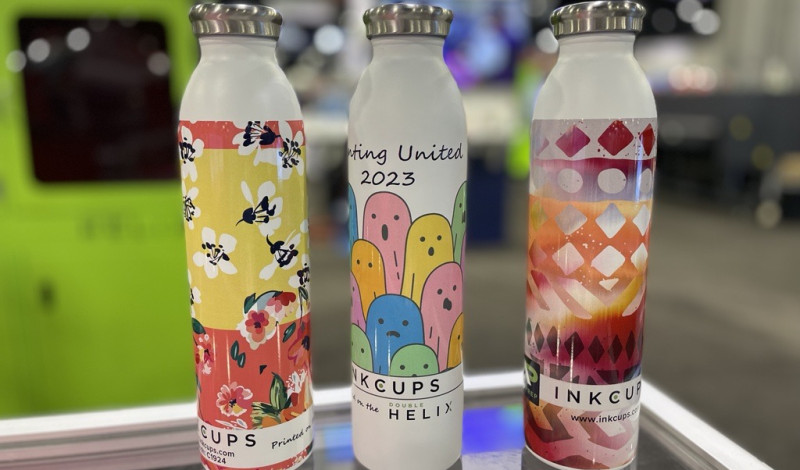
Personalized Drinkware Taps into Gen Z’s Desire for Sustainable Luxury
Editor’s Note: This article was written for Promo Impressions. For more content on promotional products decoration, be sure to subscribe to the biweekly newsletter at PromoImpressions.com.
Between #WaterTok, the Stanley Cup craze, and Starbucks’ widely-publicized announcement about phasing out disposable cups, reusable drinkware has had a high profile across social media and consumer news for the past year or two. For TikTok-savvy Generation Z, many of whom want to both be and be seen to be environmentally and socially conscious1, reusable drinkware — sometimes dubbed the emotional support water bottle — has become an everyday essential.
Set against this backdrop, the insulated drinkware market is experiencing rapid growth, with a CAGR of between 5.6% and 6.7% forecast by 2030. The factors contributing to this vary from region to region. In the U.S. and Australia, for example, a growing health and self-care culture is a big driver of growth, while in Europe the move away from single-use plastic plays a considerable role. Overwhelmingly, this market growth is being driven by consumers looking to make more sustainable choices.
Consumers are not alone in seeking out reusable drinkware. Brands are also capitalizing on the trend, illustrated by the widely publicized queues and in-store tussles over limited edition Starbucks and Target Hearth & Hand with Magnolia Stanley cups. Unsurprisingly, the Advertising Speciality Institute (ASI) named the Stanley Quencher its Product of the Year for 2023, while SAGE’s monthly ranking of most popular promotional product categories in the USA included tumblers and bottles in the top eight throughout 2024.
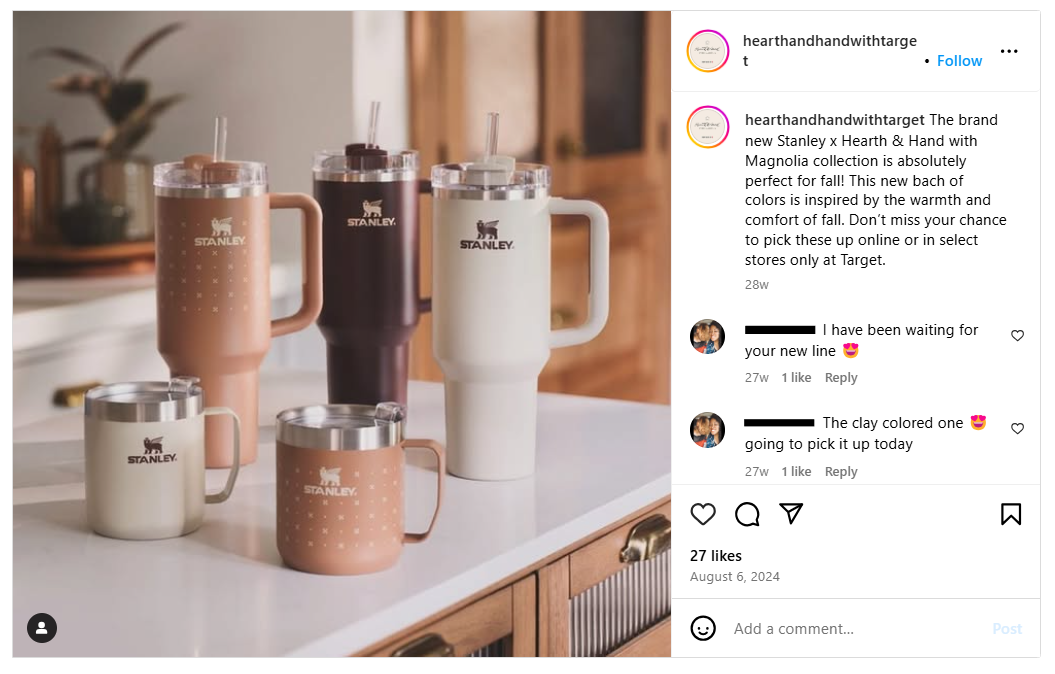
Hearth & Hand with Magnolia Stanley cups. | Credit: Instagram by Hearth & Hand
Conscious Consumption
Gen Z is a generation that considers Greta Thunberg as one of its biggest cultural icons, so it is unsurprising that sustainability is an important factor in their purchasing decisions. Research by First Insight and the Baker Retailing Center at The Wharton School of the University of Pennsylvania reported that 81% are willing to pay at least 10% more for sustainable products, while 75% value sustainability over brand name when choosing a product.
Members of Gen Z, currently mostly aged between 13 and 28, are well known for their preference for brands and companies that are taking action to improve their sustainability by reducing waste, using more renewable and recyclable materials, or investing in more ethical production methods2. Significantly for brand owners and product managers, this is a generation that makes values-based shopping choices, boycotting brands whose values or actions they disagree with and getting their friends and, increasingly, other generations to do the same.
This is also the “recommerce” generation, frequently opting to buy secondhand to satisfy their need to consume while keeping their consciences clear. As Gen Z’s buying power increases, this is expected to accelerate, with growth in the global secondhand clothing marketplace expected to dramatically outpace that of fast fashion in coming years.
All of this points to one overriding theme for Gen Z: Consumption needs to be conscious. Millennials, who currently make up the biggest proportion of the U.S. workforce at 36%, are also increasingly seeking ways to satisfy their consumer urges in more sustainable ways, with Deloitte reporting that more than 70% of both Millennials and Gen Z are likely to make purchasing decisions based on their social and environmental values. 90% of both generations are also making efforts to reduce their own impact on the environment.
A Little Luxury
While consumers’ brand preferences and purchasing decisions are undoubtedly becoming more environmentally and socially conscious, reusable water bottles, cups, and tumblers have become something of a status symbol among Millennials, Gen Z, and even Gen Alpha. Driven by social media, with videos of Stanley Cup unboxings and huge collections on TikTok receiving millions of views, insulated drinkware is tapping into Gen Z’s appetite for “affordable luxury.”
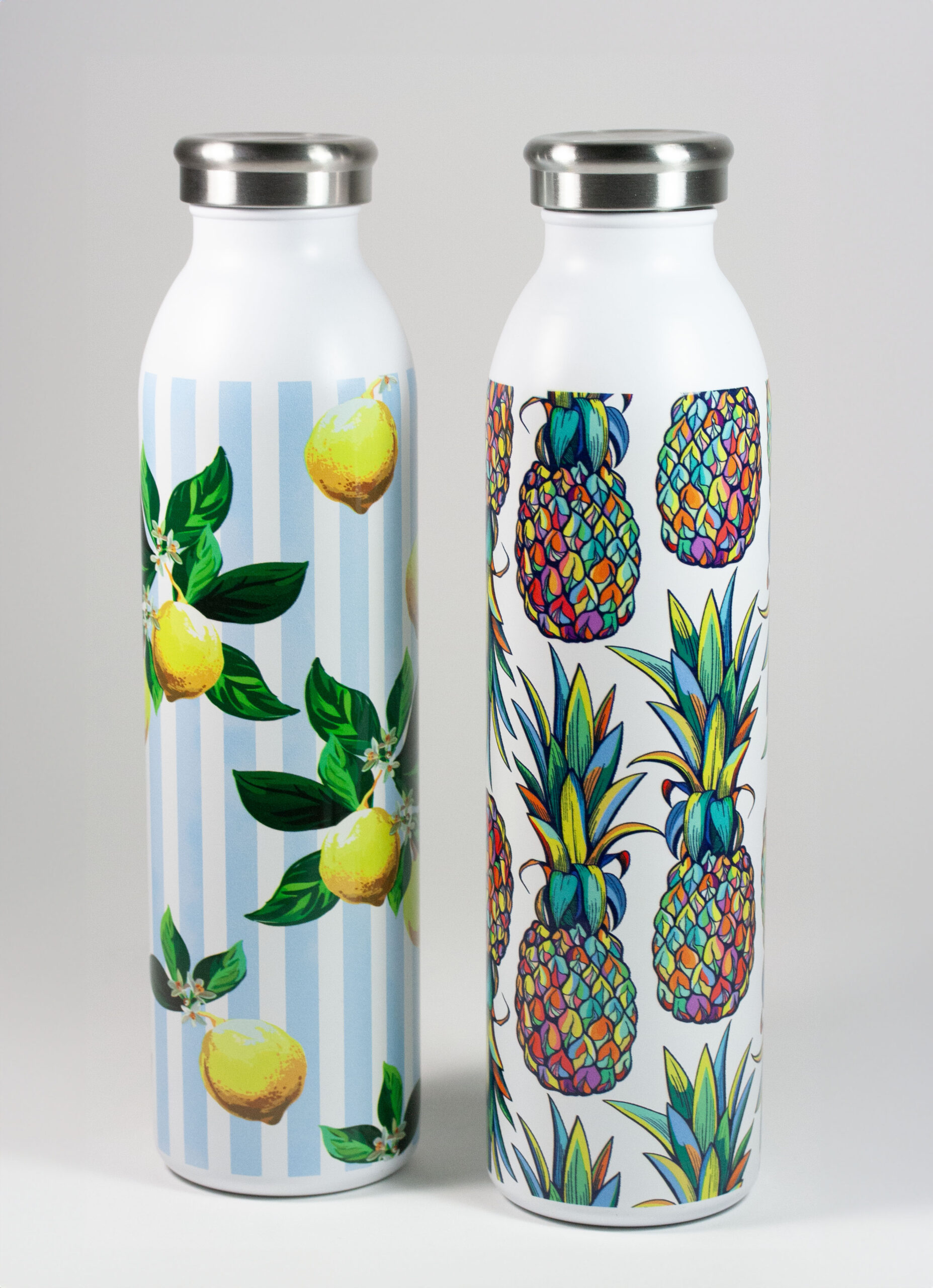
Credit: Inkcups
Gen Z consumers are much more attracted to luxury brands than previous generations were at the same age. On average, they begin consuming luxury goods at 15 — three to five years earlier than Millennials. This is a result, in part, of a successful long-term project by the luxury goods market to attract a younger market. To some extent, their engagement with luxury products has become a form of self-expression.
For Gen Z though, that need for self-expression gives luxury a slightly different, more values-based meaning. Luxury items are about setting themselves apart, not about joining a brand’s cult following, so the items they choose still need to reflect their values. Reusable drinkware taps into that need, enabling consumers to demonstrate their commitment to sustainability while also opting for models, styles, and even customization options that speak to who they are.
Personalization Makes it Luxe
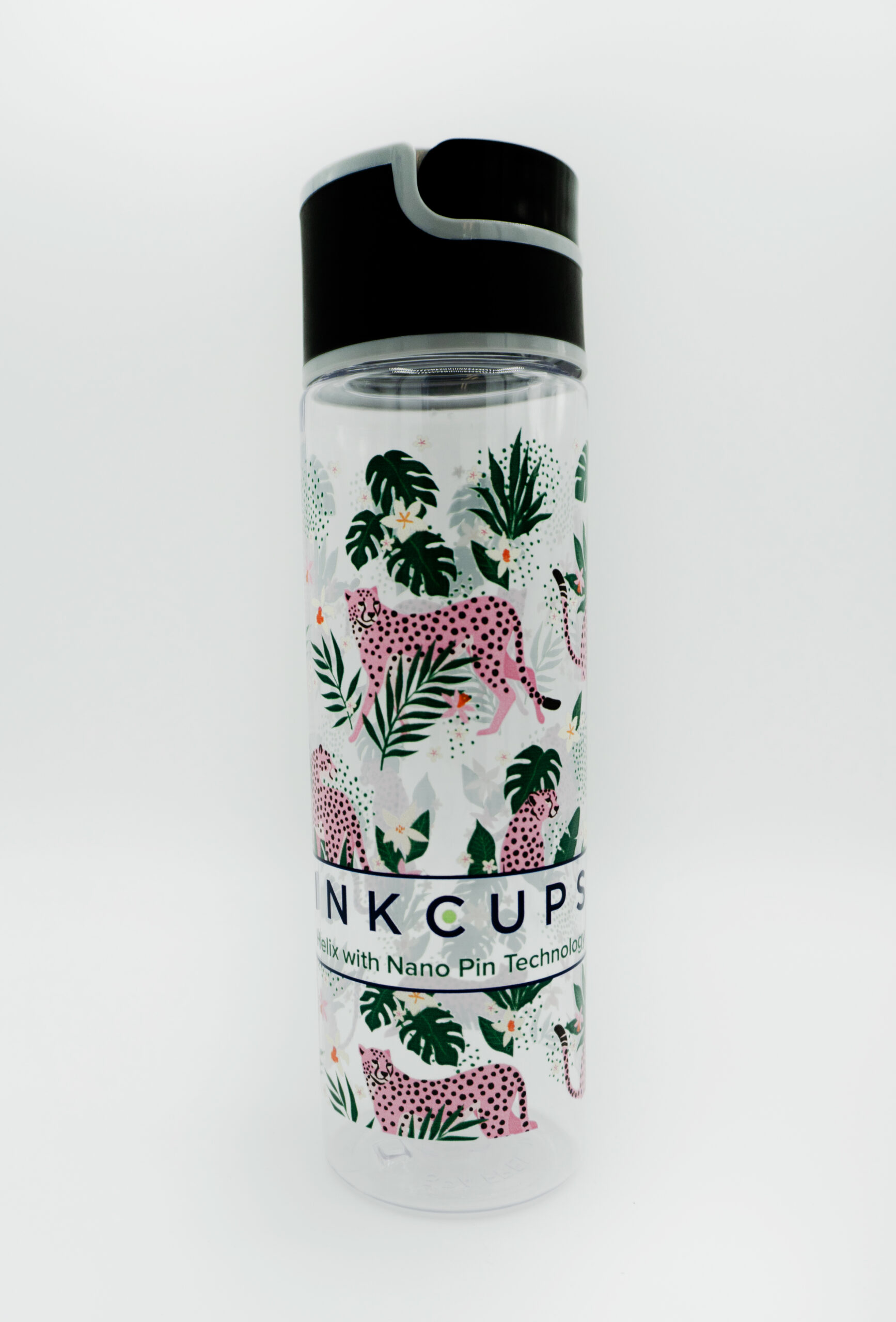
Credit: Inkcups
While insulated drinkware may not previously have been considered a luxury item, the perceived cachet of ownership is rapidly elevating water bottles and tumblers to that level. Taken alongside Gen Z’s preferences for environmentally friendly products, social responsibility, authenticity, and individuality, these coveted cups and bottles represent a big opportunity for brands, promotional goods manufacturers, and B2C print businesses.
Some brands are looking for opportunities to be at the center of the next frenzied tussle for insulated cups in the aisles of Target, while Stanley itself rode its wave of popularity throughout
2024 with new colorways and new products. Gifting branded drinkware to social media influencers may be a likely step for some, while we’re also continuing to see other brands and companies investing in reusable drinkware for promotional purposes at events, around holidays, or for employee swag.
Personalization represents a really exciting opportunity to further elevate the luxe appeal of higher-end drinkware, making personalized, reusable drinkware products into the new ‘It Bottle’ as consumers seek ways to individualize their purchases.
Consumers and brands alike are looking for ways to curate their personal brand, so having the option to customize their emotional support water bottle of choice with share-worthy, Grammable designs is likely to have a strong appeal. For print businesses and producers of promotional goods who can offer personalization using direct-to-object printing, this represents a huge opportunity.
1 Kadence International. 2022. “The Definitive Guide to Gen Z.”
2 Kadence International. 2022. “The Definitive Guide to Gen Z.”


