
AI Generative Art in 2025: Integration, Ethics, and Originality
AI generative art has moved beyond novelty. Explore ways to integrate AI tools into workflows and how to navigate ownership and ethics.
We're now three years deep, and we've evolved past the honeymoon phase. That initial dopamine rush when Midjourney or DALL·E painted a whole world from a text prompt has been replaced by something more grounded and nuanced. Now, the questions are how to integrate, collaborate, and ultimately push the boundaries of this generative medium in ethical, personalized, and meaningful ways. Or do we choose the path of not engaging at all? We're not in a golden age but in a threshold moment. And the questions are getting heavier: Who gets paid? Who gets called "original" in a remix culture? Can we exist together in these extremes without becoming another polarizing topic on top of all the other issues?
From Toys to Power Tools
In 2022, generative art became everyone's favorite toy. Tools like Midjourney, Ideogram, and Stable Diffusion created fast-food image-making. Midjourney, in particular, became the darling of the digital art world, exploding from 1 million users to over 20 million by late 2024. They added personalization features that allowed users to build a rapport with the AI. Suddenly, your Midjourney knew your vibe.
Ideogram responded with Canvas, letting users surgically edit generated images and make batch generations, a leap forward in control. Adobe went mainstream with it, integrating Firefly into Photoshop and Illustrator and adding generative tools to Adobe Stock. The native support made it the go-to for commercial creators. I watched as Stable Diffusion, a complex GPU beast, became a Photoshop plugin.
Recraft brought high-fidelity vector-generated graphics to the table. Vector output is a game-changer in design-heavy industries like screen printing and merch. Also, you can train Recraft with your art, rip off, and duplicate yourself. Meanwhile, platforms like Canva turned generative art into a drag-and-drop experience. Its Magic Studio suite has become the default playground for non-artists and entrepreneurs.
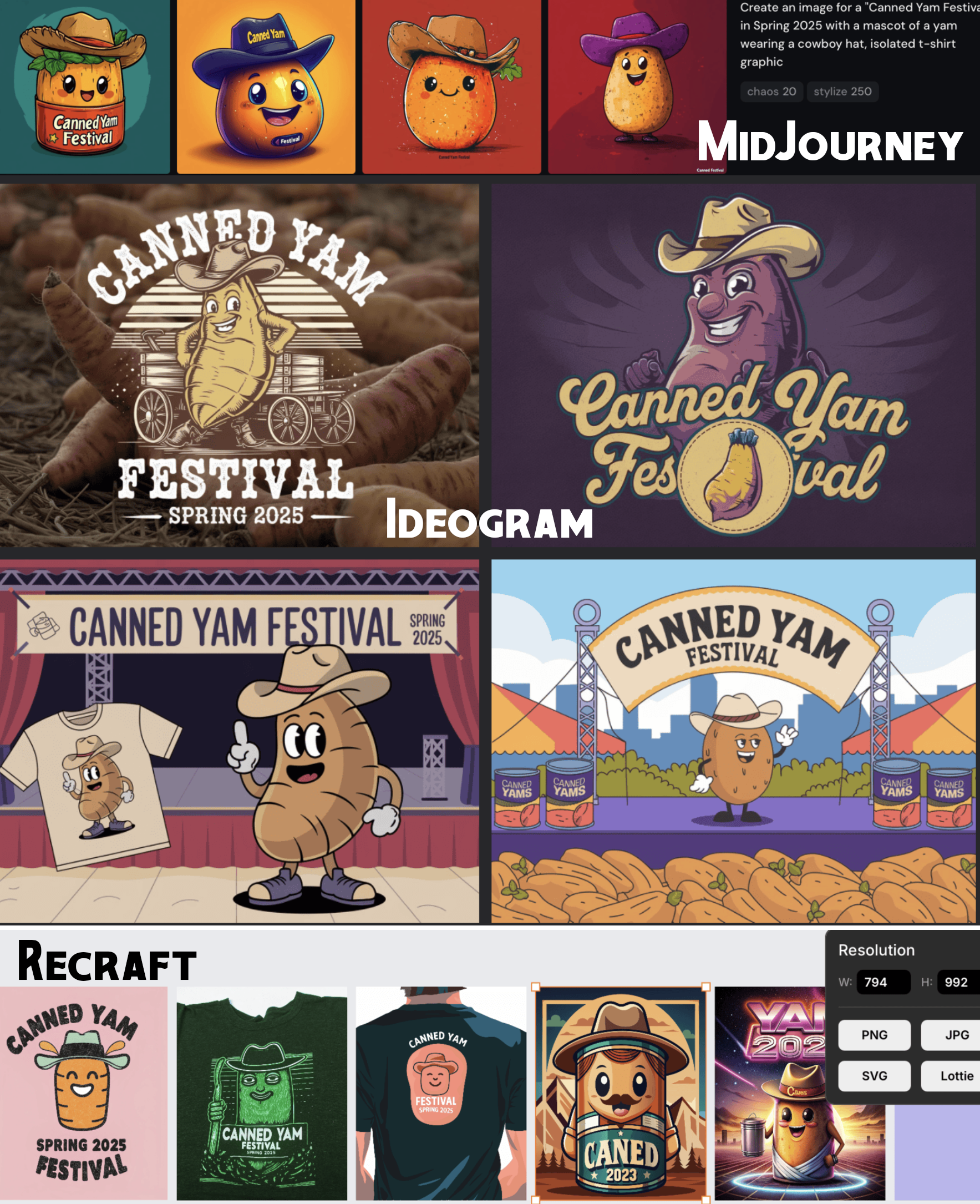
Artwork for a Canned Yam Festival by three different generators: MidJourney, Ideogram (the best speller), and Recraft. They each take their own unique perspectives, which is why it's best to have all the options at your disposal if you can afford the subscriptions. MidJourney is $10/month minimum. Ideogram is $8 unless you want to do batch generation, then it's $60, and Recraft is $10 minimum. | Credit: Michelle Moxley
ChatGPT Image Generator
As of early 2025, ChatGPT's image-generation capabilities are impressively detailed and prompt-sensitive. This AI system understands nuance from text and can modify images based on new input. You can upload an image, give it directions ("Make the graphic red, white, and blue; add elements of stars and stripes"), and iterate. It doesn't just generate; it collaborates.
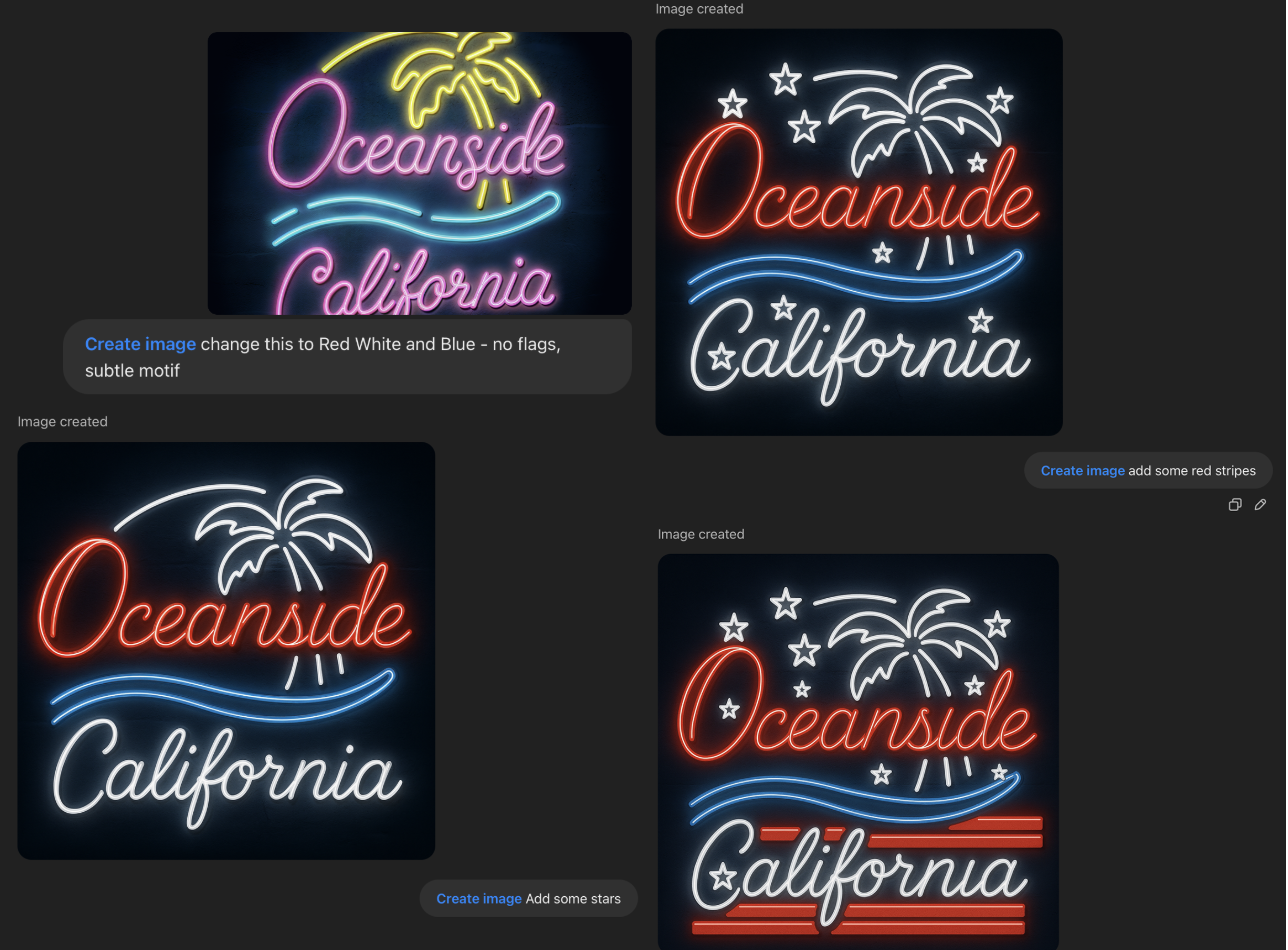
Here, a simple image was reworked in ChatGPT, incorporating a patriotic theme while honoring the original. As always, small, simple steps yield the best results. | Credit: Michelle Moxley
This is especially true of customer changes. In some scenarios, I've created an image, and I love it, but the customer wants me to rework some areas. They seem vague in what they want, but they know what I've created is not it. At this point, I've put hours into it. So, I upload the original image in ChatGPT and make all the nuanced variations they wanted. Then I know where I'm going with my original — quickly and easily.
Build Your Own Art Engine
Tools like Automatic1111 for Stable Diffusion, InvokeAI, and even local LLM + image model setups via RunPod, Oobabooga, or LM Studio have unlocked a new autonomy paradigm.
Artists, especially those concerned with privacy, copyright, and sovereignty, can now run entire generative workflows offline. You choose the model, fine-tune it with your dataset, and output artwork 100% yours.
This shift isn't just about performance; it's about ownership. Some creatives build hyper-niche models that understand their aesthetic (I have not tried this yet), while others remix open-source models with DreamBooth or LoRAs (I am working here).
As recently as three to four months ago, I was wary of investing in new AI-enabled computers, but I've changed my tune and invested in an Apple M4 Max. Now, I can build my own generative models locally. I train the AI with my art. It takes time, but I have local models built on my aesthetic.
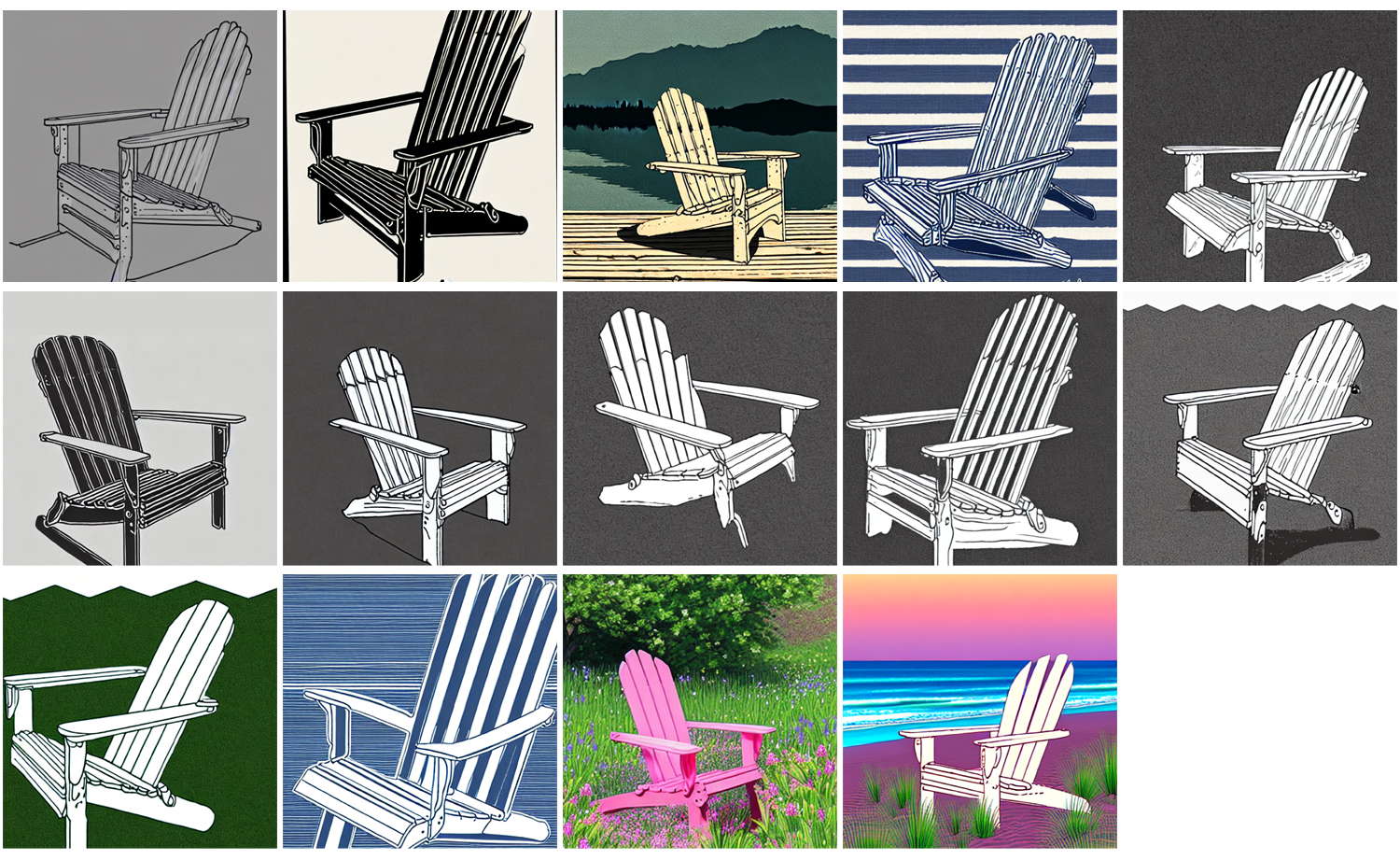
This was a simple model built to generate contour drawings of Adirondack chairs. Some advantages of generating this way: You are building your own clip art machine and as you refine, you can consider this more ethical than other systems when it is localized. Some issues: This particular method (LoRA) is not as advanced as some of the enterprise options, and it cannot spell. | Credit: Michelle Moxley
Ethics, Opt-Outs, and Artist Advocacy
As the tools advance, the ethics conversation gets louder. In 2024, the TRAIN Act sought to hold developers accountable for unauthorized data scraping. Adobe doubled down on its promise of ethical training with Firefly, claiming all its data comes from licensed content. It launched a Firefly Contributor Bonus to support contributors, rewarding Adobe Stock artists whose work trained the model. The average payout was around $10. Some see it less as compensation and more as lip service.
Content credentials — Adobe's solution for transparency — are clever in theory. They embed metadata that flags AI involvement, but if someone copies the file or runs it through any typical graphic production process, those credentials vanish. We also saw high-profile backlash. When bands used AI art for concert posters, fans revolted. Bands issued refunds and swore off AI altogether. That's our climate today. In response, some artists began watermarking their work with Glaze and Nightshade, projects from the University of Chicago that poison training data. These tools aim to give artists some semblance of control, but adoption is low, and integration isn't seamless. Most people still don't even know they exist.
The Future
The future must be about protection. Fair use, licensing, clear opt-outs, and enforceable metadata should not be optional. The novelty has faded. But now we enter into something deeper: integration. AI is no longer an alien creative partner. It's part of our studio, our brainstorm, and our workflow. Just like any studio intern, it needs rules, training, and boundaries. We stand at a crossroads where technological sophistication meets artistic soul. And that's where things get interesting — in the messiness of collaboration, control, and creativity. The question isn't whether AI will change art. In this author's opinion, it can't. Art is human. It's whether you'll let it collaborate with you and how you present that collaboration to the world.
The Power of AI-driven Tools for Personalized Print Design
By Wacław Mostowski, Antigro Designer
Artificial intelligence (AI) is revolutionizing print personalization by making it easier than ever for businesses and print buyers to create unique, high-quality designs with little to no understanding of the design process required. By enabling faster and more streamlined designs and enhancing the user experience, AI-driven tools allow printers to capitalize on the opportunities within print personalization and customization, boosting profitability and revenue.
AI-driven Smart Design Features
Generative AI, a form of AI that generates text, images, and other content, is particularly powerful for customization as it brings intelligent automation to design tools. It enables users to create high-quality products with minimal effort or expertise. Customers who may not know what they want or how to design it can simply describe their ideas, and AI will generate bespoke product designs, making creativity accessible to everyone.
For personalized sticker design, for example, AI enables the creation of complex designs that would otherwise be time-consuming or difficult to achieve manually. AI is also used to generate cut lines for custom shapes. Another benefit of AI-powered tools is they can detect and isolate elements within an image, such as faces or objects, eliminating the need for manual background removal. Similarly, in photobook creation, AI-powered smart cropping and image placement ensure customers can design professional-looking albums effortlessly. By automating these processes, AI reduces wait times and minimizes the risk of cart abandonment.
Most print personalization design tools also offer mobile-friendly interfaces, allowing users to quickly upload images and designs straight from their mobile phones. However, combining this on-the-go personalization with AI-driven design features can make personalized print creation more seamless and user-friendly than ever.
The Business Impact of AI
Leveraging AI in design tools enables print service providers to streamline operations, reduce manual effort, and deliver a more engaging user experience. The ability to provide on-demand, highly customized products gives businesses a competitive advantage in a market where run lengths are shrinking and demand for fast turnaround times is increasing.
One of the biggest challenges in the print industry is the aging workforce and a lack of skilled labor. AI-driven automation simplifies personalized print design for both customers and businesses. As a result, instead of requiring extensive design expertise, users can rely on AI-powered tools for layout adjustments, background removal, and intricate cropping. This automation frees up time for businesses to expand their product offerings without increasing production complexity.
AI is not just enhancing personalized print design; it is redefining it. By simplifying complexity, improving efficiency, and enabling a new level of customization, AI-driven tools are transforming the print industry. As technology evolves, AI’s role in personalization will continue to grow, enhancing customer experiences and increasing revenue for businesses willing to embrace it.
The creative future is personalization: tools that know your aesthetic and rhythm and respond like a collaborator instead of a calculator. We're training models to understand our voice, our color palette, and our imperfections. This is where it gets intimate and a little uncomfortable because if a machine can echo you, where does your originality go?