
The Shifting Sands of Sustainability: Part Two
While quite a bit of progress is being made when it comes to sustainability, several greenwashing scandals and mismanaged marketing efforts have created additional challenges in the apparel and textile industry.
In the first part of this article series, experts took a long, hard look at laws and legislation that are making their way into our lives. When it comes to sustainability in the apparel and textile world, these laws have become crucial turning points — turning points that must happen for real change to take place.
Some have failed and fizzled; some, while leaning the right direction, are unrealistic to implement; and some have become laws. And like it or not, it’s likely apparel decorators and textile printers will be forced to comply with more eco-friendly laws in the future.
Regardless of your political thoughts on that, the cold hard truth of sustainability is that apparel waste is real and it’s getting worse.
Compounding the problem is a big, green, and yes, ugly giant. This giant is green for all the wrong reasons.
What is Greenwashing?

We’re talking about greenwashing. Merriam-Webster defines greenwashing as “the act or practice of making a product, policy, activity, etc., appear to be more environmentally friendly or less environmentally damaging than it really is.”
Greenwashing is detrimental in many ways. As companies struggle to implement real action into their practices, some have failed and even been called out. Unfortunately, the call to change wasteful practices globally has also put the spotlight on companies who are not actually doing anything despite public claims that they are.
Over the past several years, lawsuits have been filed against fashion behemoths such as H&M and Nike for supposedly making false and misleading sustainability remarks about various products. (Editor’s note: Both lawsuits were ultimately dismissed.)
Recently, Stand.earth submitted an anti-competition complaint to Competition Bureau Canada after Lululemon's reporting showed that the company had doubled its carbon pollution since beginning its "Be Planet" marketing campaign in 2020. According to a report shared by Yahoo! News, Stand.earth gave the athletic apparel giant a “C” for its practices related to the use of renewable energy and a “C-” regarding low-carbon materials.
And like the root problem of textile waste, the results of these greenwashing challenges are leading to additional legislation aimed at stopping such claims from running out of control.
“There are certainly shared core principles between the various greenwashing laws in Europe, the USA, and other markets, and there have been some very high-profile examples of non-compliances where companies have faced product recalls and fines,” explains Garry Bell, Chasing Better Consultants Inc. and consultant to the U.S. Cotton Trust Protocol. “I would say fear of the consequences of being caught offside to these laws is helping stem the amount of greenwashing.”
It is, however, unfair to assume that all greenwashing occurrences are born out of malice. Many issues arise because we simply aren’t at a high enough level of understanding within the giant scope of sustainability and what strategies will lead to change. “I think the industry is getting better at more clearly understanding what’s allowed and what’s not, but we are not quite all the way there yet,” Bell believes.
“Greenwashing is dangerous, and a lot of companies do it, as being a green company is really difficult, especially in an industry as wasteful as the print and apparel industry,” adds Ryan Schraffenberger, owner of Promotions Guy and sustainability advocate. “This is obviously a practice-what-you-preach scenario.”
A Brief Look at Anti-Greenwashing Efforts
According to Sara Osorio, environmental, health and safety affairs coordinator for PRINTING United Alliance, there are some anti-greenwashing laws already surfacing in the U.S. “Generally, the legislation and regulations help level the playing field when companies want to make claims about their operation or the products they produce,” she explains. “They establish the baseline from which a claim can be made about a product or process.”
As stated earlier in the article, these laws and regulations are a result of companies making false or misleading claims when it comes to eco-friendly practices and products. “Misleading claims cause consumers who put their trust in such claims to devalue the worth of a product or company,” says Osorio. “Those not making accurate claims jeopardize their reputation and are subject to substantial regulatory and litigation risks.”
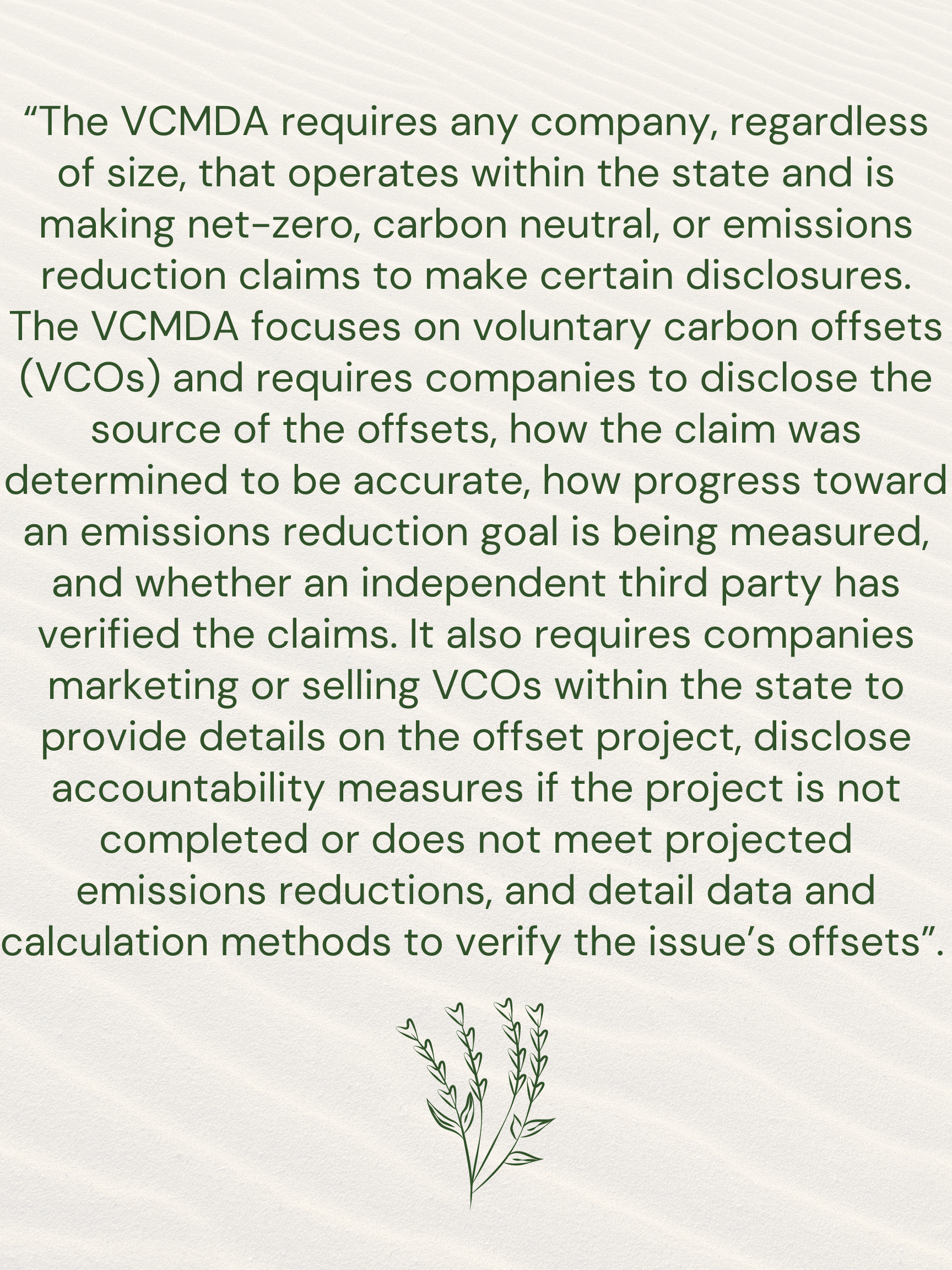
Like sustainability laws, we first saw anti-greenwashing laws pick up steam in the EU. But in recent years, the U.S. is seeing more of them. Osorio lists California’s recently passed Voluntary Carbon Market Disclosure Act (VCMDA), which she believes is the “most prominent anti-greenwashing law enacted in the U.S.”
Bell notes that sometimes sustainability laws can inadvertently cause backpedaling and greenwashing scenarios. “Unfortunately, as a result of the risks associated with being offside to these laws, we sadly see companies pulling back sustainability marketing while they build the capacity to be compliant,” he notes. “I attended a conference recently and a large European ad agency shared that 2023 saw 50-60% less sustainability claims publicly communicated from companies than the previous year. This is alarming to some extent because companies may have less incentives to invest in sustainability if they cannot get outward credit for those investments.”
The Real Challenges of Sustainability
It’s a Catch-22 if ever there was one, and therein lies the challenge for many apparel and textile printers. Not only are many hesitant to make the leap into sustainability for reasons such as physical costs and new training, but some are afraid of being penalized when they aren’t compliant, whether on purpose or by accident.
It’s not a completely unfounded fear. “Enforcement of companies that are perceived to be ‘greenwashing’ has increased dramatically over the past several years, with thousands of lawsuits being brought in the U.S. and across the world,” notes Osorio. Despite being mostly aimed at large retailers in the fashion and textile space, she does state that decorators aren’t immune from this.

“There are two areas of concern for decorators,” Osorio states. “The first is the claims that they want to make about their company’s operations and those that will be made by their customer. The customer is going to expect that their [decorators] provide them accurate information about the products and services they are purchasing from them. Inaccurate or misleading information can be troublesome for individual decorators and their customers. Companies will have to undertake due diligence to confirm and support any environmental claim.”
She goes on to explain that for those decorators in California specifically, the VCDMA law will affect any company that is in state or does business in the state that makes greenhouse gas emissions reduction claims. This includes apparel decorators.
“Beyond the penalties that can be imposed by the state of California, which can be up to $2,000 a day, there has also been a steep increase in the number of lawsuits being brought against companies for alleged greenwashing,” Osorio says.
Despite that looming threat of punishment, greenwashing shouldn’t scare shops so much so that they do nothing. Bell says that, like implementing basic sustainable strategies, it all comes down to research and action.
He encourages shops to first understand greenwashing. “Generally, it refers to being truthful and accurate in the things you say about your business and products you sell,” he explains. “One way to think of it is to not say anything outwardly that you are not able to and or willing to prove. As an example, if you have started using a water-based ink and want to tell your customers of the environmental benefits of it, make sure you get the correct information from your suppliers and don’t embellish beyond that when communicating to your customers.”
Sometimes, as Schraffenberger notes, it’s simpler than you think. Maybe even as simple as networking. “Pay attention to new trends and watch what other shops are doing,” he suggests. “I think the screen-printing industry is really fun and eager to help one another. … Most shops are excited to talk about the way they do things. This is an industry full of creatives that want to learn; don’t be afraid to ask for help and to help others.”
But to really cover your bases, Osorio says turn to the numbers. “From an operations perspective, having metrics that are based on supporting data (e.g., gas purchases, electricity consumption, etc.) are the gold standard,” she believes. “Companies need to conduct due diligence on any claims provided to them by outside parties such as carbon reductions or offsets.”
That point is also applicable to the blanks side of things. “From a product perspective, request copies of certifications, listings, and other supporting documentation that demonstrates that the claim is legitimate,” Osorio advises. “In addition, the Federal Trade Commission’s (FTC) Green Guides are a great resource for any company that wants to market their sustainable efforts.”
In the end, it takes effort, but as the cool kids say, you have to work for anything worth having.