
The State of Sustainable Apparel and Decoration
As textile regulations advance and sustainable resources become more accessible, decorators are realizing that investing in eco-friendly materials is not just beneficial for the planet but a must for long-term business success.
With stricter environmental policies in the U.S. and E.U., growing consumer demand, and better product options, sustainability is rapidly shifting from a buzzword to a serious business strategy for apparel brands and decorators.
“Sustainability isn’t fringe anymore — it’s becoming the norm, especially as younger generations take the reins,” says Marshall Atkinson, a business consultant at Atkinson Consulting and Shirt Lab. “Why are you moving toward sustainability? For your customers? For your employees? To be more profitable? If you start with your ‘why,’ the path gets clearer.”
The Newest Impactful U.S. Regulations
Several new regulations in the U.S. and E.U. are influencing sustainability efforts in the textile and apparel industry. In the U.S., regulations like California’s Responsible Textile Recovery Act and the proposed New York Fashion Act are pushing brands toward greater transparency and accountability.
“At the federal level, there’s growing pressure for Extended Producer Responsibility (EPR) programs that would require manufacturers to manage textile waste,” says Jaime Griggs, business development director at Hohenstein. “While no national EPR law for textiles exists yet in the U.S., several states like California and New York are considering policies requiring companies to take responsibility for textile waste.”
California’s Responsible Textile Recovery Act (SB 707), which was signed into law in 2024, requires textile and apparel manufacturers to take more responsibility for their products’ environmental impact and end-of-life management. This law created an EPR program for textiles in California — the first of its kind in the U.S.
The Act encompasses a wide range of textile products — including apparel, uniforms, footwear, and handbags — and mandates that manufacturers fund and implement textile reuse, repair, and recycling programs by 2030 to promote a circular economy.
This law affects manufacturers, importers, brand owners, licensees, and retailers who sell covered textile products in California. Textile and apparel manufacturers must register with a Producer Responsibility Organization (PRO) by July 1, 2026, and be fully compliant by July 1, 2030, or face penalties for failing to manage end-of-life collection and recycling.
The proposed New York Fashion Act would require fashion manufacturers and retailers doing business in New York and with global revenues over $100 million to track at least half of their supply chains, be transparent about environmental and social impacts, and set targets for reducing emissions.
The Fashion Act would encourage textile producers to provide better supply chain transparency and traceability, and apparel manufacturers may need to rethink sourcing, production, and materials to satisfy labor and emission standards. For decorators, this might create demand among brands that want eco-friendly inks or threads, sustainable garments, or better supply chain transparency.

Regulations to Watch in the EU
In the E.U., the Strategy for Sustainable and Circular Textiles (2022) mandates that textiles sold within the E.U. must be durable, repairable, recyclable, and made from recycled fibers by 2030. This strategy also addresses microplastic pollution and greenwashing, pushing manufacturers to adopt more sustainable practices. There are several regulations and proposed efforts to support this initiative.
“In the E.U., the Ecodesign for Sustainable Products Regulation (ESPR) and the Digital Product Passport (DPP) will require brands to provide detailed sustainability and traceability information about their products,” Griggs says.
The ESPR is a proposed E.U. regulation that sets environmental and circular design requirements for almost all physical products sold in Europe. The goal is to make them better quality, reusable, and recyclable. The ESPR also requires a DPP to provide transparent, standardized information about a product’s materials, lifecycle, and sustainability to support a circular economy.
“The Corporate Sustainability Due Diligence Directive (CSDDD) and Green Claims Directive (GCD) are also making greenwashing more difficult by mandating verifiable sustainability claims,” Griggs says. “For decorators and manufacturers, these regulations mean they must prioritize sustainable sourcing, traceability, and product durability throughout their supply chains while preparing for stricter labeling and reporting requirements.”
The CSDDD is another upcoming E.U. directive requiring larger companies to identify and address environmental and human rights risks in their processes and supply chains. The GCD is a proposed law that will reportedly stop greenwashing and improve consumer marketing by requiring companies to back up environmental claims like “eco-friendly” or “carbon neutral” with documented scientific evidence.
“We’re finally seeing some accountability pushed onto the industry, especially in the E.U.,” says Eric Henry, CEO of TS Designs. “Extended producer responsibility — where brands are responsible for what happens to their product after it’s sold — is gaining traction. That kind of regulation forces us to think beyond just selling a T-shirt. It’s about closing the loop and owning the entire lifecycle of what we produce.”
A Notable Industry Shift
Many businesses are no longer viewing sustainability as a passing trend. Instead, they see it as a smart long-term strategy to reduce costs, create new revenue streams, and connect with customers.
For instance, adidas has pledged to use only recycled polyester in all its products, and Patagonia has committed to using 100% recycled materials. Circular economy models are also gaining traction. Brands like Patagonia and Eileen Fisher now run take-back programs that turn old garments into new ones.
Patagonia’s Worn Wear Program, which revives and resells used clothing to their customers’ delight, has saved $5 million in annual material costs and $10 million in revenue.
Eileen Fisher’s Renew Program, which recycles old garments into new products, saved the company $1.6 million in transport costs in 2019. The company, an early adopter of take-back in 2009, used a product lifecycle calendar to bring gently used clothing to storefronts with the slowest and most carbon-friendly methods.
Transparency has also become a key focus, with apparel brands seeking certifications like GOTS (Global Organic Textile Standard) and Fair Trade to meet regulatory requirements and consumer demand. “More brands are coming to the table now asking real questions — not just about pricing, but about traceability and environmental impact,” Henry says. “It’s not just about checking a box anymore. There’s still a long way to go, but the pressure is shifting from regulatory to consumer-driven.”
Key Sustainability Certifications
As governments, supply chains, and customers expect real transparency, there are certifications to look for in textile and apparel production.
“An OEKO-TEX ECO PASSPORT certifies the sustainability and safety of chemicals, inks, dyes, and auxiliaries for use in textile and leather production,” says Jaime Griggs, business development director at Hohenstein. “Having these certifications not only ensures compliance with sustainability regulations but also enhances brand credibility and strengthens consumer confidence in sustainable claims.”
Other important standards include:
- OEKO-TEX STeP: Verifies sustainable and socially responsible production practices.
- OEKO-TEX STANDARD 100: Certifies finished textiles are tested for harmful substances and safe for human health.
- OEKO-TEX ORGANIC COTTON: Confirms compliance with organic farming practices, traceability, and harmful substances.
- Textile Exchange Global Recycled Standard (GRS): Verifies recycled content and responsible, social, environmental, and chemical practices.
- Textile Exchange Recycled Claim Standard (RCS): Verifies recycled content only.
Griggs points to the biggest shifts she sees for apparel brands and decorators as they treat sustainability as a business necessity:

- Increased demand for certified materials: “More businesses are choosing OEKO-TEX-certified textiles to ensure compliance with restricted substances and sustainability claims,” she says.
- Greater transparency in supply chains: Companies are investing in traceability tools and expecting suppliers to share material origins, chemicals used, and environmental impact.
- Durability over disposability: “With regulations discouraging fast fashion and textile waste, brands focus on longevity and recyclability in product design,” Griggs says.
Henry believes that certifications can be helpful, but they’re not a silver bullet. “We’re a Certified B Corp and part of Green America because those align with our values of transparency and accountability,” he says. “But I always tell people to ask hard questions. Don’t rely on certification logos — look at the practices behind them. That builds real trust with your customers.”
These shifts aren’t just about compliance. They’re becoming part of companies’ competitive strategy and consumer promise.
“The movement’s driven by companies — especially ones led by younger generations — who care about sustainability,” Atkinson says. “It’s evolving into a core value where they want to work with similar vendors. When you’re a sustainably-minded company and align with vendors and customers who care about the same thing, it’s a perfect match — and they’ll pay you what you’re worth.”
How Manufacturers Make Sustainable Products More Accessible
To satisfy this growing demand, manufacturers are ramping up R&D to make sustainable fabrics that meet — or even exceed — traditional textile performance. Some advances in fiber technology make recycled polyester almost exactly like virgin polyester. “One of the biggest misconceptions about sustainable materials is that they compromise performance,” Griggs says. “The shift is moving from seeing sustainability as a cost to seeing it as a value driver.”
Textile and apparel brands are addressing this by:
- Enhancing fiber strength and longevity: “Innovations in fiber blends and textile treatments improve abrasion resistance, elasticity, and pilling resistance,” Griggs says.
- Advancing recyclability: “Circular design principles ensure that garments and textiles can be more easily recycled into new products without degrading quality,” she says.
- Improving dyeing and finishing processes and using safer inputs: For example, OEKO-TEX ECO PASSPORT-certified chemical formulations are certified to minimize environmental impact.
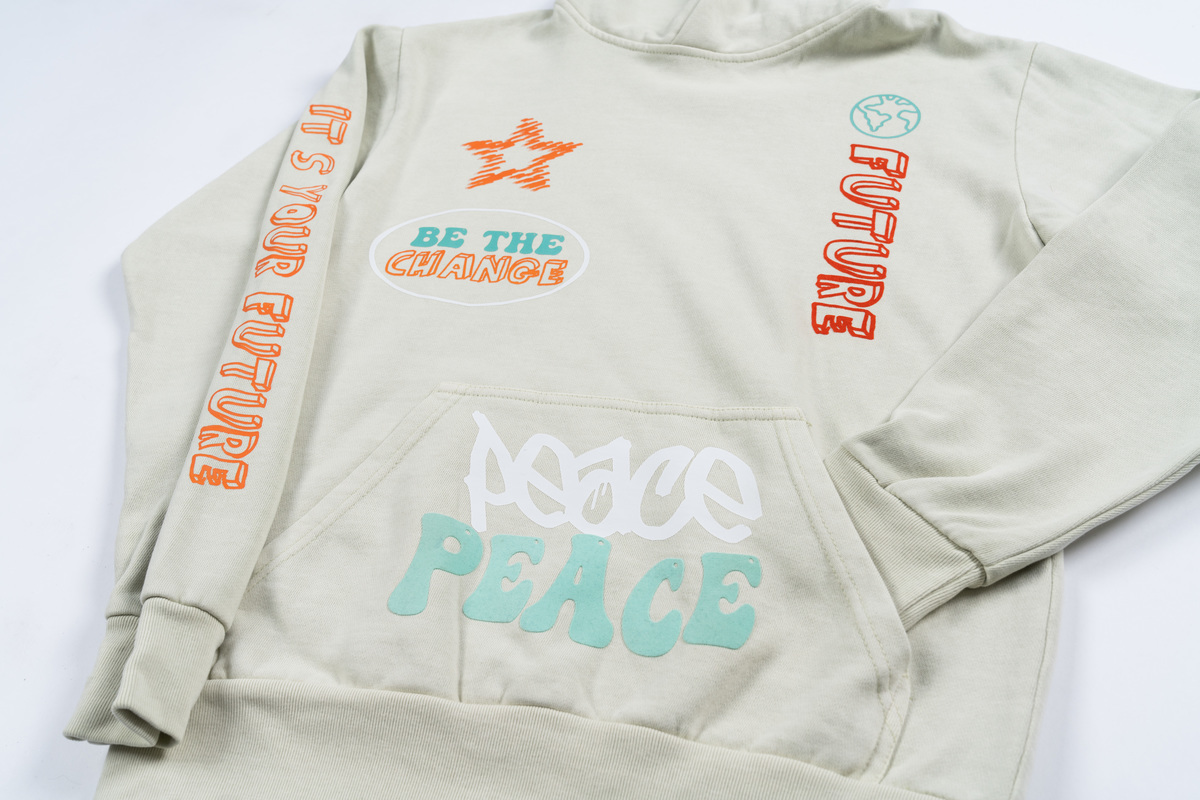
Ryan Schraffenberger, “Promotions Guy” at PromotionsGuy.com, has visited multiple factories and seen manufacturers working to create better products that last. “Automation is helping with accuracy as equipment is always improving,” he says. “It's wonderful when every garment can be made the same, quality control is there, and new equipment is getting to that point.”
Henry likes natural fibers — especially U.S.-grown organic cotton — as a foundational sustainable material. “One of the biggest barriers to textile recycling is blended fibers,” he says. “When you mix natural fibers like cotton with synthetics like polyester, it’s difficult — if not impossible — to separate them later. That’s why we try to avoid fiber blends. To build a circular system, you must design from the start for the end of life.”
More eco-labeled decorating supplies are increasingly available for decorators, as well. Companies like Madeira offer eco-friendly embroidery threads made from 100% Lyocell.
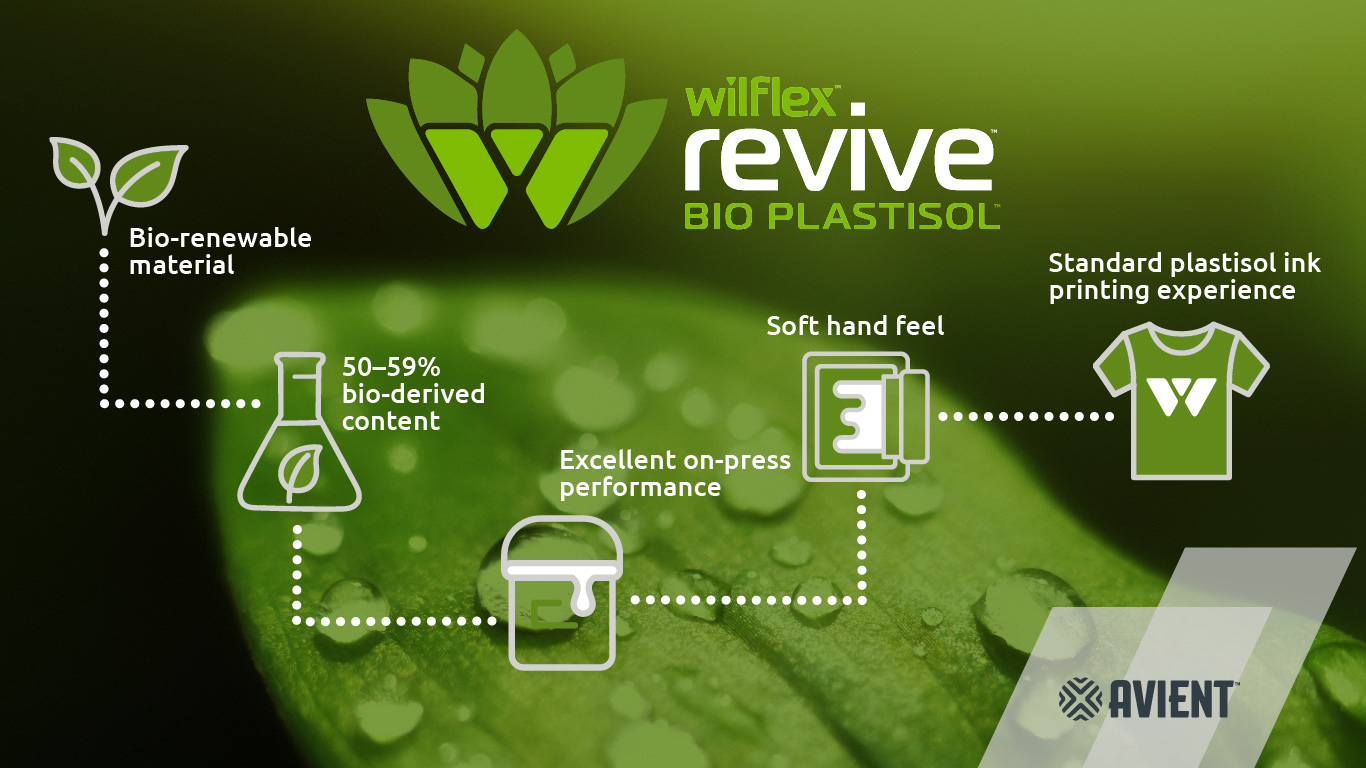
Atkinson highlights Avient’s Revive ink, a plant-based plastisol alternative, as a good example of emerging eco-conscious chemistry. A bio-based ink made from algae, Living Ink, is another alternative. “Plastisol is petroleum-based,” Atkinson notes. “But if you’re serious about sustainability, it’s worth testing a plant-based alternative.”
Schraffenberger is a fan of water-based ink. “It’s tried and true,” he says. “It’s incredibly comfortable to wear as it has such a soft hand. The major benefit is the elimination of many chemicals.”
While decorators see innovations in water-based inks, recyclable transfer films, and compostable packaging, they must look beyond the product. “We have to ask, what happens to this when it’s done being worn or used?” Henry says. “That’s the real test.”
Decorators should jump in and start testing eco-friendly supplies and apparel now. “You won’t know if a sustainable product works until you use it. People are afraid to try, but the ones who do are often surprised,” Henry says. “Sustainability doesn’t mean compromise; it should mean building things to last.”
Do Decorators Still Think Sustainability is Too Expensive?
The good news is that shop owners’ views of sustainability as too costly are changing thanks to several factors. First, the cost of materials like recycled polyester has dropped by 20% since 2018 as customer demand has increased. “While the product may be a little more expensive, it lasts longer, so it’s worth it,” Schraffenberger says. “Still, not every end-user wants it. There’s a need for all types of apparel, and quality sustainable goods are becoming more attainable at a fair cost.”
Government incentives, such as tax rebates and grants for sustainable practices, make it more cost-effective and attractive for small businesses to become more environmentally friendly. “People look at it with the telescope turned backward,” Atkinson says. “They’re stuck thinking, ‘Sustainable equals more expensive.’ But if you behave like a sustainable company — switch to LEDs, add motion sensors, and eliminate waste — you save thousands. It makes your shop more profitable.”
End-customer demand for sustainable products and practices also allows brands to charge higher prices to offset higher costs. “People are still trained to shop for the cheapest price, but that’s a broken model,” Henry says. “If you look at the real cost — what it costs the environment and workers — that so-called ‘cheap’ shirt is expensive.”
“The conversation is starting to shift as businesses realize that investing in sustainable practices can also mean investing in better quality and longer-lasting customer relationships,” Henry adds.
Start Small with Sustainable Shop Practices
Sustainable practices can reduce waste, labor, and energy, adding to profit. Overall, at TS Designs, Henry and his team have focused on shortening the supply chain by bringing more of their processes local, which cuts down on both cost and carbon footprint. “There’s an upfront investment, but long term, it creates efficiencies that benefit both the business and the planet,” he says.
For example, TS Designs is developing a dye-on-demand model to help reduce inventory waste — part of a longer-term shift toward sustainable, agile apparel production.
“We’re working on a new model that lets us dye white T-shirts on demand for print jobs,” Henry says. “The idea is to drastically cut down on pre-dyed inventory, which often ends as waste. It’s still in development — probably a year or so out — but we believe it’s a game-changer. It gives customers more flexibility and helps us build a more responsive, less wasteful supply chain.”
Being sustainable starts with trying new products and processes in your shop — even if they’re outside your comfort zone.
“People get hung up on the fact that it’s not what they’re used to, and that stops them from discovering the upside,” Atkinson says. “Print-on-demand is another area. Instead of printing 1,000 shirts and selling 737, just print 737. That’s 263 fewer garments going to the landfill. It’s automatically more sustainable.”