
Take Embroidery the Extra Mile with Special Effects
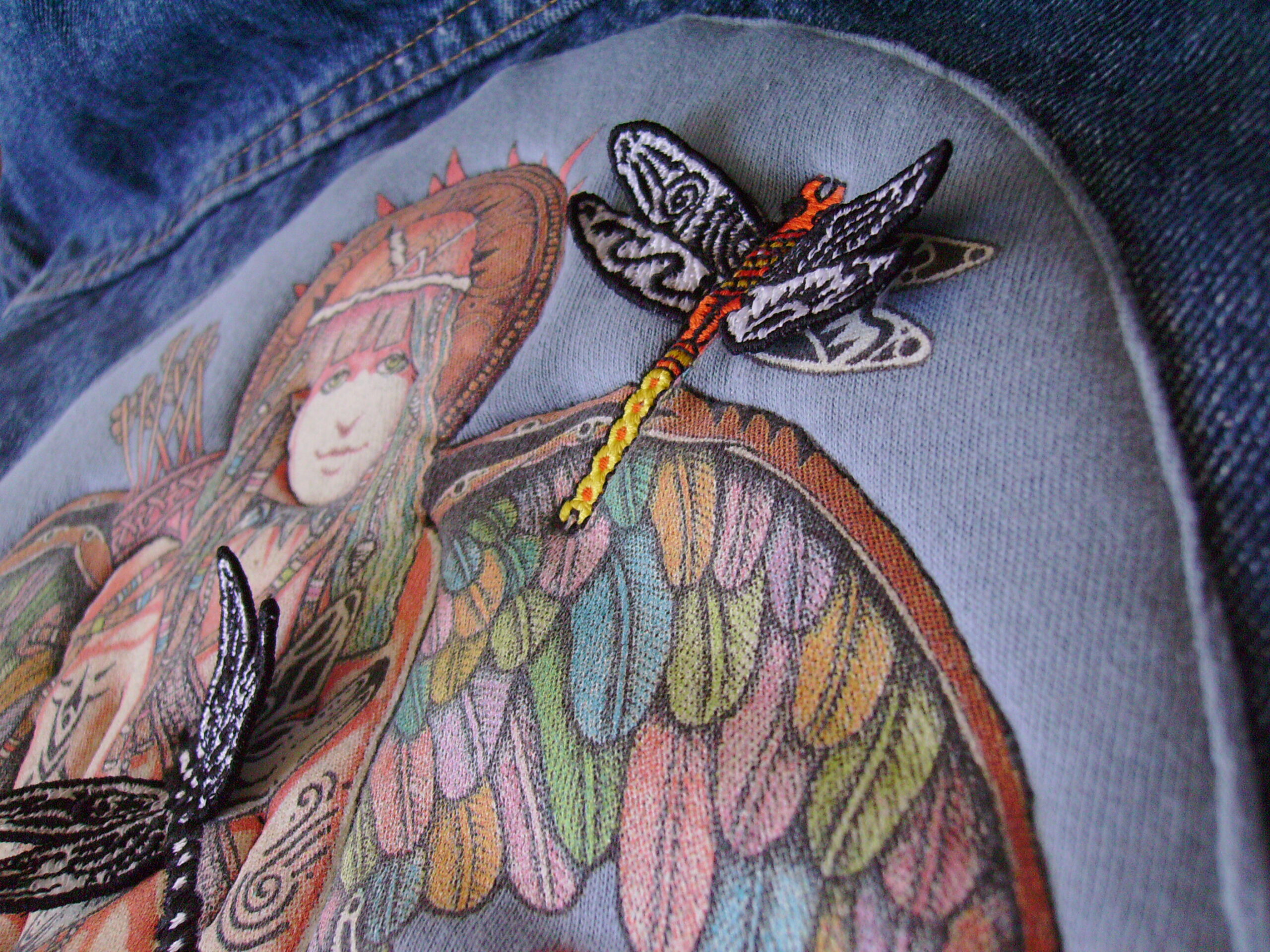
While it requires extra thought to digitizing details and pricing, special effects embroidery can elevate designs from plain to perfection
“Give me something different. Something cool.”
These vague orders summon dread for many embroiderers. As much as our days might be filled with mind-numbingly standard marketing and lackluster logo-slap orders for left-chest and hat-front decorations, we can feel a little dazed by a customer who wants ‘cool’ but can’t define it. Luckily, embroidery has more than a little life left in it.
Though we may have recently felt like going the extra mile is a misstep with the bankruptcy of one of the most interesting special effects additions to the space in the way of Coloreel, there’s much more you can do aside from dyeing thread to create interesting colors, textures, and treatments. With its inherent ability to add dimension and texture, there’s a short jump between standard embroidery and special effects embroidery, usually requiring little more than a meager investment in materials and/or sliding some sample images to a digitizer who knows their stuff.
Special effects have been a part of the machine embroidery world from its inception, and with the consumer crowd ever more conversant in design and merch marketing, there’s never been a better time to make yourself a consultant rather than a commodity by offering these specialty solutions. From the simple addition of specialty threads to non-standard stitch types, to appliqués of all description and bold 3D foam to multi-application multimedia treatments, embroidery offers a wealth of opportunities for creative execution.
Effort and Effectiveness
Before we delve into the deeper reaches of specialty techniques, it bears repeating that commercial embroidery is just that: commerce. Though specialty embroidery can improve our ability to sell, enhance the eye-catching nature of our work, and differentiate our offerings from commodity embroidery, if we don’t charge appropriately for our efforts, it can become a cost rather than an asset.
With any of the following, you must make sure to take account of not only your material costs, but the increased time spent in production and the creative process when pricing these out-of-the ordinary jobs. If you don’t measure and make sense of your expenditures, creative work is at best subsidized by simpler jobs, and at worst, a loss.
Remember that opportunity cost counts, too. Time in communication, design, and execution needs to be sold as part of the value proposition and paid for by those who want something more. You can’t have something beyond the basic if you aren’t willing to be part of the exchange.
Breaking the Standards
Decorated apparel can look staid and stolid largely because the nature of building profit for most decorators is to stick to standards. There’s nothing necessarily wrong with that concept. It’s easy to stick with garments that perform predictably; threads of the same content, sheen, and thickness that require no re-tensioning or special needles; and processes that are comfortably achievable and require as little creative fiddling as possible. Even in digitizing, we see the standard in an adherence to common, automated stitch types, unbroken areas of flat fill that reduce the number of objects one needs to draw, and thick overlapped “coloring book” borders that mask registration issues.
Though these standards can result in greater efficiency, they can produce underwhelming outcomes that don’t let embroidery’s strong suits enhance the decoration. We need to stretch a little creative muscle in our execution. The great thing is that it often only takes a small deviation to greatly alter the look of any given decoration. By addressing a combination of the following standards, we can greatly vary the look of our finished work, even before we alter the original art.
Materials Matter
The long-standing standard 40wt polyester thread is far from the only option when it comes to stitching designs. Even before we address alteration of the design itself, even swapping out from the standard, high-sheen polyester can greatly change the character of an embroidery.
Matte-finish threads with the standard thickness, thicker and thinner threads that require some alteration of density and stitch length to use, or threads with different fiber content, fuzzy sheen, twisted variegated, ombre color treatments, or even the simple shine of metallics can change the character of your design. Add to that the world of texture and tone you can achieve by adding appliqué (from PU leathers, to felt, faux fur, and the retro class of tackle-twill), and it’s easy to see how small alterations can make a major difference.
For most of these swaps, there are few changes to the standard method of digitizing or operating. Thick threads require using vastly reduced density settings and thicker, larger-eyed needles. However you decide to incorporate interesting materials, make it clear to your digitizer before they set a single stitch. Decisions on design interpretation can differ greatly in some instances.

Make it Multimedia
Though we’ve already discussed appliqué as the classic addition to embroidery, so much more can be brought to the table to refresh our decoration. We’ve already seen decorators taking a note from retro stylings to move from direct embroidery to applied emblems. The addition of woven decorations, labels, and tabs can take even a standard embroidered piece into the realm of a retail treatment.
With little alteration aside from planning for registration (or creatively for the lack thereof), prints can be used as a base layer through which one can stitch, adding a textured and dimensional touch to the printed piece. Whether a direct print, sublimation used on polyester panels for appliqué, or even sublimation printed directly on white polyester embroidery, it takes little more than a heat press and purchased transfers to add print to a stitched piece.
Moreover, with a little thought for order and placement, anything from dimensional molded badges, to placed rhinestones and studs can be incorporated into an embroidered design. The textural contrast and variation can make the dimensional nature of embroidery even more impressive.
Dive into Dimension
Though it’s been with us for decades, implementing 3D foam has continuously caused consternation for embroiderers. That said, the last few years has seen a wealth of enhanced execution in 3D designs, from multi-layered pieces that bring designs into the realm of sculpture, to seemingly simple but intensely satisfying textured treatments.
From the simplest application of motif stitches over foam that renders surface into a knit-like texture to the scaled appearance of the multi-angle “serpent” stitches, textured 3D foam treatments have enhanced the appeal of these dimensional designs.

In the previous examples, most of the embroidery varied little from standard settings and execution. Three-dimensional foam designs must be created for the material, both to ensure that the stitching perforates the foam in a way that allows the removal of excess materials, and in that these specialty textures are not currently available as an automated setting.
Though you will find pre-made designs and fonts that exhibit these specialty stitches, custom logos and type will require a digitizer who knows the techniques. With 3D foam more than any other treatment, your choice of materials and your post-stitch finishing have tremendous consequences for the designs’ finish. Select high-density foams, discuss the intended thickness(es) with your digitizer, and invest in an adjustable heat gun. After removing excess foam, a quick pass with heat cleans up additional fuzz and creates a clean, retail finish.
We’ve seen 3D foam move from classic athletic letters in full-width satin stitch as the rule to a world of textured treatments, enhanced appliqué-over-foam plaques, and even applications under the ground that approach the look of classic embossing. There’s more to 3D foam than cap-front monoglyphs.
Tweaking Texture
Even if you don’t like the idea or the added difficulty of adding specialty materials, we can achieve a great deal by simply altering the way we fill areas of color with stitches. Though this starts by recognizing that any contiguous area of color in your art doesn’t need to be one block of stitching with the same type, settings, and stitch angles, we can take our interpretation even further than that first step of contrasting stitch angles and textures in our standard stitch types.
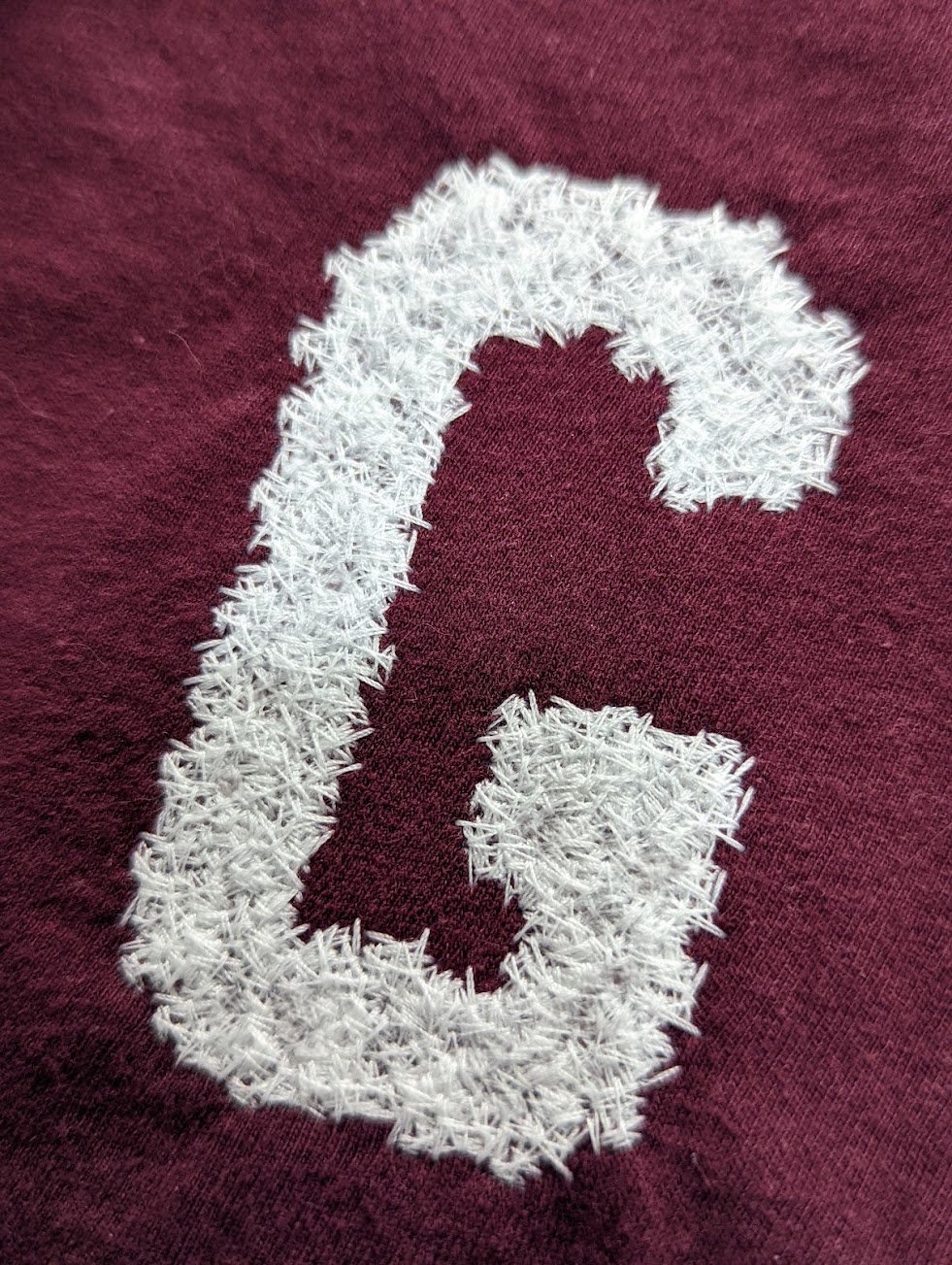
Recently, we’ve seen a rise in specialty stitch types that greatly vary from the shiny satins, regular smooth fills, and marching run stitches common to commercial embroidery. Using specialty motifs and techniques, we can create everything from faux knits and chain-stitch to a textural treatment that evokes the feeling of chenille embroidery, and all executed on our standard equipment.
Vintage stitch types and styles have increasingly become part of the digitizer’s toolkit, with some software adding whip or multi-pass satin stitches to make mock thick-thread treatments even with our old 40wt thread. It can also create technique toolchains that use existing filling types and stitches to add these interesting finishes, and has automated tools that create uneven coverage, stitch lengths, and angles made to evoke a hand-made feeling without redrawing designs. Again, accessing this sort of technique is all about knowing what you are looking for and how to ask.
Tying it Together

Though this has only exposed a fraction of the possibilities of embroidery and likely left you wanting education on any number of subjects that break through the established standards, it’s enough to understand that there’s a lot more to what’s under our needles than three-stitch types and polyester threads. Consider the nature of embroidery, its ability to reflect light at differing angles, the natural dimension as it layers in sequence, and the physicality of thread. Get to the essentials of embroidery, combine it with other techniques, and lean into what it does best. You’ll find that specialty work is a natural extension of the embroidery we’ve always known.