
Soft Substrate Sublimation: What You Need to Know
This sublimation guide covers fabric types, common issues like ghosting and press lines, plus expert tips on color and mixed media applications.

From apparel and soft signage to accessories like hats, bags, and even promotional products, sublimation printing offers a way to print soft substrates with vibrant, long-lasting colors. While it has some limitations, sublimation allows apparel decorators and print service providers (PSPs) to tackle full-color polyester products with ease.
In this soft substrate sublimation guide, we’ll share fabric considerations and mistakes to avoid, plus intel on when to opt for sublimation printing over other methods. Plus, don't miss top tips from experts and a word on mixed media applications. Sublimation printing just might fill a gap you didn’t know you had in your capabilities.
Why Sublimation?
First, why does sublimation make sense for PSPs? It opens the door to a number of product possibilities and at a low production cost, Darci Jeffrey-Andersen, business development specialist at Millcraft, says.
Whether you’re a small shop doing single items or a larger operation outputting jobs in the thousands of pieces, dye-sublimation works. It makes sense for apparel and promotional products businesses, e-commerce, web-to-print, on-demand needs, and mass production, she shares.
“Sublimation is very scalable,” she adds. “You can start with very little investment and space, or you can be a mid-size shop wanting to add it into your existing portfolio of product offerings for a reasonable investment cost. If you want to do larger items, such as blankets, flags, and apparel that a seamstress will be assembling, your investment will be higher.”
When considering small- versus large-format dye-sublimation, Sean Stewart, technical sales and support for American Print and Supply, advises print businesses to consider a few things:
- What can I afford that is not going to have me losing sleep at night?
- Where am I selling?
- What is my target demographic?
- Do I want to be able to take my show on the road?
Like with any new piece of equipment, you need a business plan. Will you be doing live activations or going the cut-and-sew route? These are two very different scenarios, so knowing the answers to those questions can help you decide the right path.
Explore Mixed Media Applications
More and more, apparel decorators are looking for ways to stand out, and mixed media might be the ticket.
“Mixed media applications are a huge perceived value and low-cost way to drive up sales,” Sean Stewart, American Print and Supply, says. “Because with dye-sub we are dying the fabric — and doing so at 400 degrees — there are a ton of options for mixed media. Think spiritwear decorated with dye-sub, glitter vinyl, and rhinestones. There are endless possibilities.”
That said, he warns that each decoration process requires different application temperatures, so order matters. Dye-sublimation happens at higher temps, and you don’t want to damage other applications, so it’s important to sublimate first, and then do glitter and rhinestone applications after.
One important note: Consider how much time you spend on mixed media applications to ensure it makes sense from a cost perspective, sublimation veteran David Gross advises.
"That said, delivering unique looks and value can separate you from the pack,” he adds. “For instance, sublimating onto an embroidered design that uses white polyester threads.”
Fabric Considerations for Sublimation

Credit: Getty Images by Kwangmoozaa
Now, let's get into the nitty-gritty details.
The one thing you may already know about sublimation: It requires polyester for it to work. The ink on the sublimation paper turns into a gas when heated to the right temperature, and that ink embeds into the polyester fabric during pressing. Through this process, the ink becomes one with the fabric, which means you never have to worry about it peeling or cracking.
David Gross, sublimation veteran and former president at Condé Systems, tells apparel decorators and PSPs to get samples from suppliers and test/evaluate products for clients and their applications.
“It is difficult to state exact rules for cotton/poly blends due to the methods used to manufacture the fabric, so I recommend sticking to 100% polyester products if possible or high polyester content (80% or above),” Gross advises. “This is because cotton is a water-loving molecule and will not accept disperse dyes. The less polyester, the more muted the image will be. Any dye that can’t bond with polyester will either not transfer or simply wash away.”
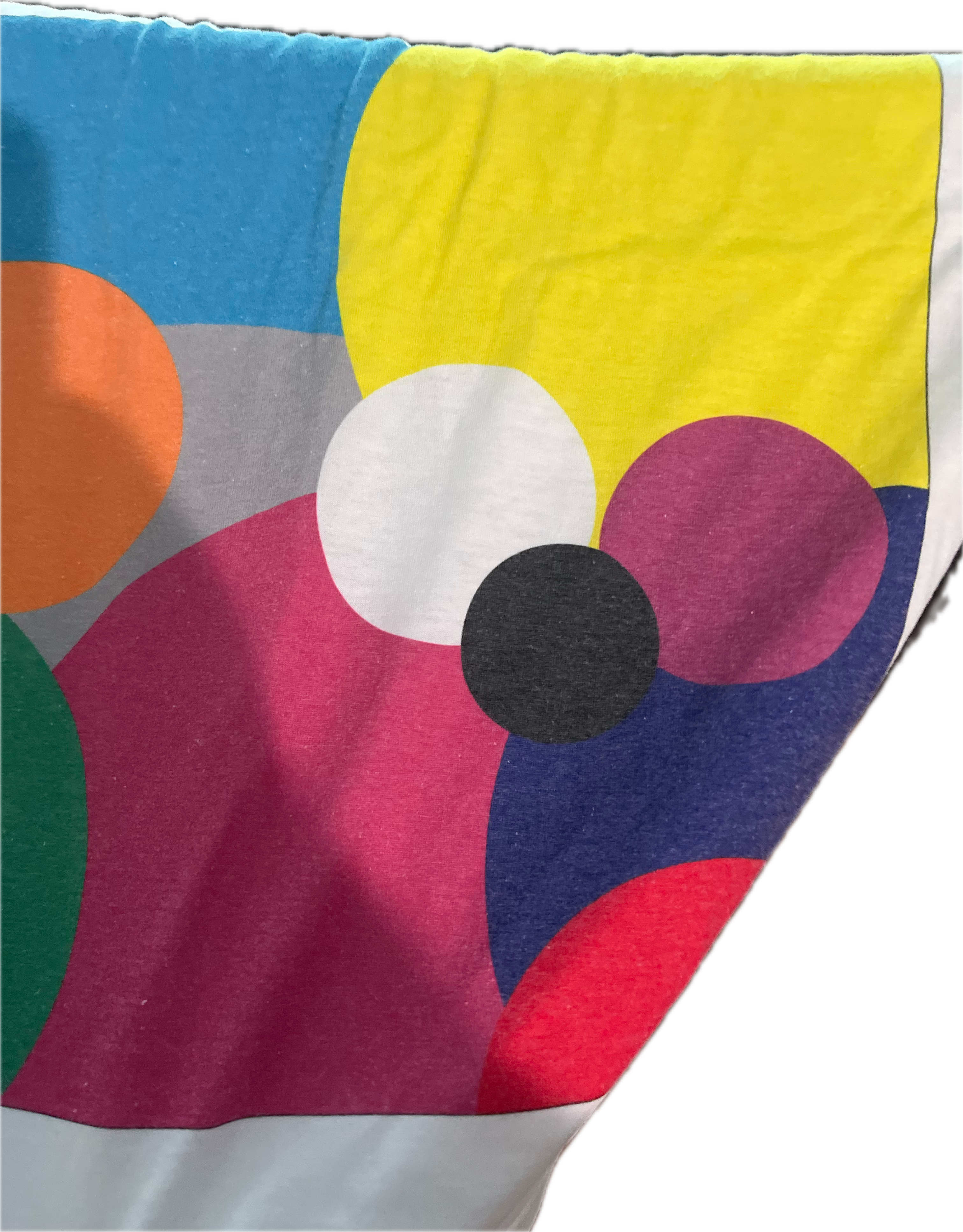
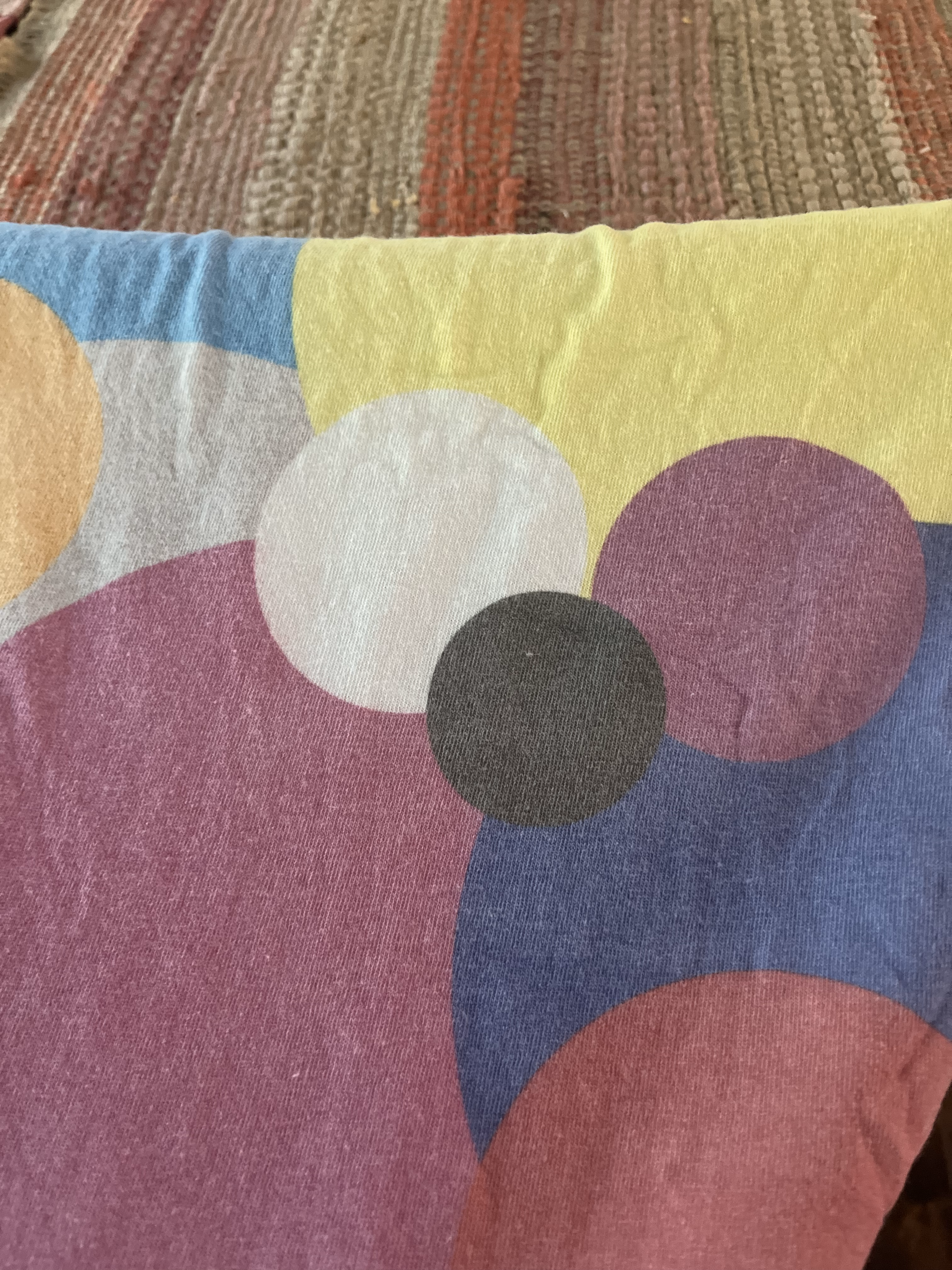
That said, Jeffrey-Andersen breaks down polyester content, what works, and what doesn’t.
100% Polyester: Yields the best results and “the most vibrant long-lasting prints.”
Polyester-Spandex: Compatible with dye-sublimation, but elasticity can cause image distortion. This fabric is often used in activewear for its stretch. Because of this, Jeffrey-Andersen highly encourages prototyping and testing your prints.
Polyester-Rayon (varies): Results vary, but it balances softness and durability, Jeffrey-Andersen says. “The higher the polyester content, the better the print quality,” she points out. “But you want to be cautious that you don't overheat the fabric during production. Rayon can be sensitive to the high heat needed for the sublimation process.”
Polyester/Cotton Blends: Results vary, and percentages matter here. “For example, 65% polyester/35% cotton works well, but colors may appear slightly less vibrant due to the cotton content,” Jeffrey-Andersen notes. “When you move to 60% polyester/40% cotton — sportswear and work uniforms — the color vibrancy will become less, and when you get into a 50% polyester/50% cotton, we are in the vintage area look.”
Product Variety
Whether apparel decorators and PSPs opt for small- or large-format dye-sublimation, it allows them to expand their product offerings. Some products to consider include:
- Cut-and-sew fashion or upholstery items
- Home decor
- Lanyards
- Mousepads
- Performance/spiritwear
- Pet products (bandanas, leashes, apparel)
- Soft signage
- Socks and accessories (headbands, scarves)
- T-shirts
- Towels
Beyond the presence of polyester, fabric color also matters. Stewart points out that because there is no white ink in sublimation printing, decorators and printers want to start with a white fabric. While other colors are possible, it will impact the color of the finished product.
“Imagine putting blue on red, for instance — you get purple because you are dying the fabric rather than putting the transfer on the surface,” Stewart says. “If you are doing cut-and-sew, you will always start with a white bulk fabric and high polyester content. With all of the fabric available, textile mills will generally send you swatch books of all that they offer, and I would advise everyone to take advantage. If you are pressing to finished, colored garments, you will want to test to see what you can get away with color-wise. Black will work on red, but red won't work on black, and so on.”
Common Mistakes to Avoid in Sublimation
From press lines, ghosting, and color issues to the wrong heat press temperature, there are plenty of opportunities for error in sublimation beyond fabric content and color. The good news: These are easy fixes to avoid a ruined substrate.
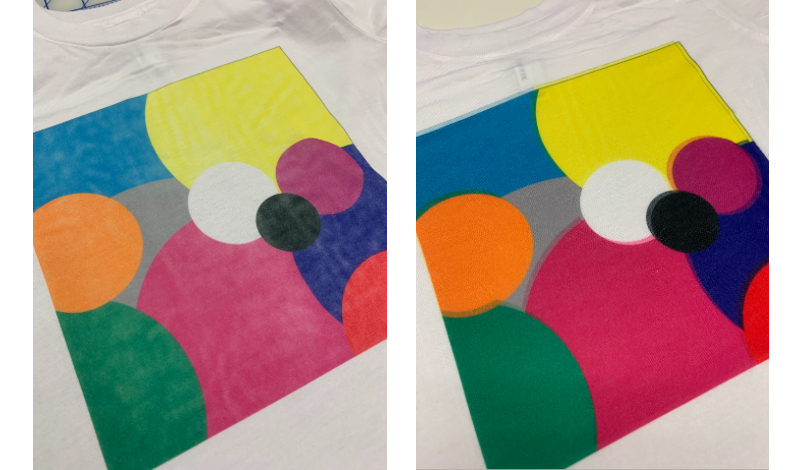
One of the top mistakes in sublimation is ghosting. “Ghosting is typically a sign of a beginner or sloppy operator,” Gross says. “As the heat press opens, air rushes in, causing the transfer to lift and move. Since some ink is still on the transfer, as it lands on a new spot, it creates a shadow image.”
You can ensure this doesn’t happen by, 1) anchoring the sublimation paper with heat tape or spray; or 2) using high-quality dye-sublimation paper with built-in tack or adhesive. Luckily, with advances in media, Stewart says decorators can choose from a number of tacky media options on the market.
“The tack is not something that you can feel on paper when you are printing with it,” Jeffrey-Andersen assures decorators. “It becomes activated under the heat and helps the fabric lightly tack to the paper, thus keeping it from moving around and causing the second print, also known as ghosting.”
Top Tips to Keep in Your Back Pocket
- If decorating finished garments, build a raised surface to avoid press lines.
- If doing a full bleed image — meaning you cover the entire substrate with the image — be generous with the overprint in the design aspect.
- Different color profiles require different dye-sublimation paper — ensure they match up.
- Keep a sublimation journal to document your print recipe.
- Use a quality swing-away heat press for help with consistency.
- Check heat press temperature every six months using a digital pyrometer.
- Print and press a color chart and use it to find your client’s color. Modify the RGB values from the chart in your design, if necessary. (Email wdavidgross@gmail.com for the two charts he uses.)
- Sell based on value not markup.
Another common issue is dreaded press lines. We all know them; we’ve all seen them. You press a design or left chest logo on a T-shirt, you lift the press, and you've been scorned with press lines.
Stewart shares two ways to fix this issue. The first is using a special platen on the press that works well for the substrate you’re printing. If you don't have one, you can build up a raised surface under the image area only. This allows pressure to be placed only where the image is.
“For example, if I am pressing a 4x4" image and the sheet is 5x5", I can make a plateau that is 4.5x4.5" and the press line is gone,” he explains. “The second method I refer to is embracing the chaos. Make the edges part of the design, make a starburst with the edges and use heavy pressure and you have added what could be perceived as another design element and mixed media.”
Temperature and time are also part of the sublimation equation, and both can easily affect the amount of time you save, and therefore money that goes in your pocket.
“When not enough [temperature] is used, the colors appear washed out,” Jeffrey-Andersen shares. “When working with new fabric, my first step, even before printing and pressing, is figuring out what is the highest temperature the fabric can take without scorching. The higher the temp, the less time it takes under the heat source. And time is money. For example, if I can make a product in 15 seconds at 400 F versus 30 seconds at 375 F, I'm going with the 15 seconds at 400 F.”
Dialing in Color for Consistency
That leads to a larger conversation on color — the one thing PSPs struggle with across the board, no matter the printing technology or substrate. While old ink or uneven heat can be the culprit of color issues, which can be identified with heat test strips, the issue could be happening pre-press.
“Inconsistent colors can be a number of things,” Stewart shares. “You will want to make sure that you have a proper profile for the media or paper you are printing to and that you have a good nozzle check. There are a number of profile test charts that should be used when you are installing your printer to make sure colors are good.”
Pro tip: Get profiles dialed in and then create a backup folder just in case a system update wipes out your data.
“The tools are also available to write custom profiles, and the big shops will profile not only the different media or paper but also the different fabrics because the finished product is the final color,” he explains. “When writing color profiles, you need to print and transfer before reading color swatches because, as I like to say ... proof is in the pudding.”
Color Management Professional: Dye-Sublimation Certification
For those looking to take a deep dive into color, specifically for textile dye-sublimation, PRINTING United Alliance's Color Management Professional: Dye-Sublimation Certification on the iLearning+ platform is the resource for you!
Whether printing on roll goods or hard surfaces, this course will cover inks, transfer papers, fabrics, hard surface materials, printers, and heat presses. Print operators will understand the variables that must be managed for consistent, predictable, and repeatable color results.

While sublimation has its quirks, decorators can begin to figure out the best technique for their substrates with these considerations in mind.
And no matter what route you go — small vs. wide-format — phone a friend, Jeffrey-Andersen advises. “Working with someone who understands the process can help you with equipment and can aid in streamlining your overall production workflow,” she adds. “They should be your sublimation partner, behind the scenes.”