
Sublimation Printing: Opportunities in Hard Goods
In the fall 2023 State of the Decorated Apparel (SODA) Industry survey, 44.2% of respondents said they wanted to expand into a new market in 2024. We’re hitting the halfway point of the year, and you may still be contemplating what exactly that might be and where to start. Because apparel decorators likely already have some of the equipment needed for sublimation printing, the jump into hard goods can be a short and potentially profitable one. However, that’s not to say it won’t come with challenges.
Expanding any business can be tough, but Our Success Group Founder Aaron Montgomery encourages decorators. He says, “It is always more profitable to offer more products to existing customers than it is to try to gain new customers. By adding new opportunities, you now can reach out to your existing clients to let them know about your new capabilities.”
The major concern is the learning curve that comes with any new process, but we’ll get into that a little later, and why finding an outsourcing partner might be your best option before investing in equipment. Whether you’re looking to take on hard goods sublimation in-house or outsource, there are what seems like endless products in the marketplace. Some research will do a decorator good, and if you do decide to bring hard goods sublimation in-house, we’ll go over the essential equipment you need and the challenges you might face along the way.
Products to Consider
While adding product offerings and new print processes can be attractive, you also want to ensure they have the profit potential. David Gross, a sublimation veteran and former CEO of sublimation supplier Condé Systems, says the key to focusing on what will make the most profit is not letting your own opinions cloud your judgment. Maybe you don’t like a product or aren’t familiar with it; don’t let that deter you because your clients could have a different opinion. Letting opinions on a product creep in can “get in the way of making money,” he says.
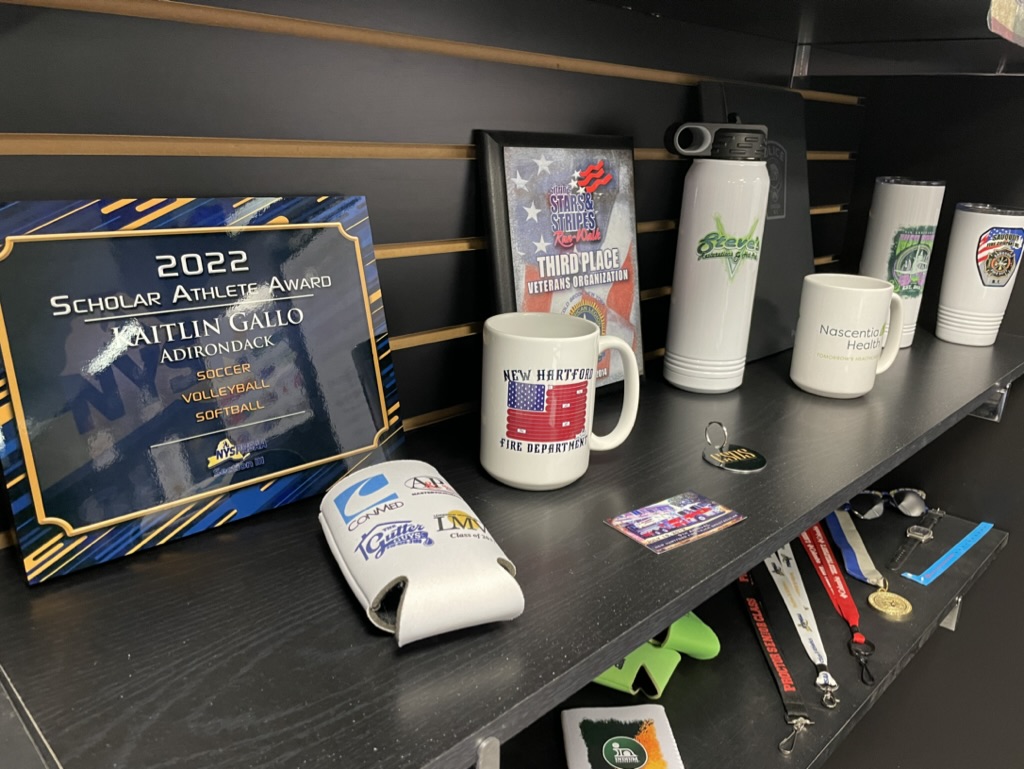
Howard Potter, CEO of A&P Master Images, a full-service branding company, says tumblers, pens, lip balm, note pads, and padfolios are just a few of the products he’d suggest apparel decorators try first. “Most of these are top-of-the-mind awareness items that people will use to keep brand awareness out in front of everyone at all times,” he shares.
Credit: Howard Potter
 Gross suggests exploring door hangers, tumblers and tumbler toppers, and corporate awards and recognition items like plaques and name badges, which he says can be a high-profit item — selling for $6-$8 per badge.
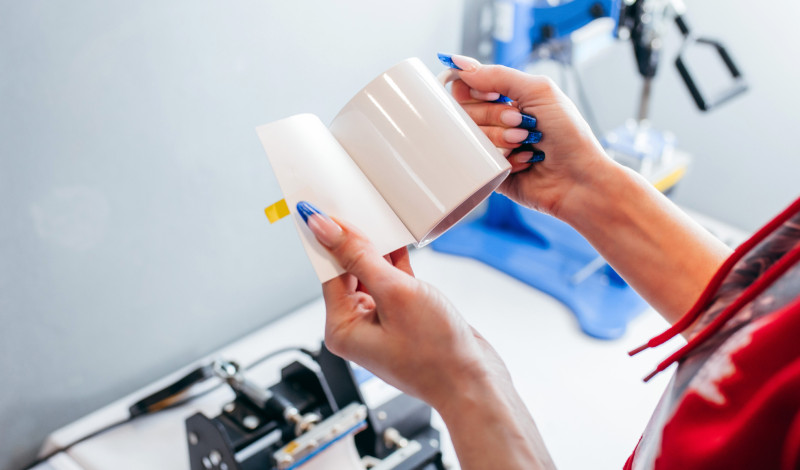
And we can’t talk about hard goods sublimation without mentioning the No. 1 staple: the coffee mug. Montgomery says it’s been a go-to item for the last 15 years, and it’s not going out of style anytime soon. Coffee mugs work great for corporate and new hire gifting as well as personal gifts, so you can’t go wrong with this product addition. One big pro: Mugs offer a large imprint area for your client’s logo or custom design needs.
Once decorators find a sublimation blanks supplier they want to use, Gross says it doesn’t hurt to ask for samples. Decorators can practice on these pieces, present new products to clients, and gauge interest. “That’s probably the best way to grow your business — horizontally and vertically — to just experiment with new products,” he says.
Essential Sublimation Equipment
Credit: Getty Images by Djavan Rodriguez

Credit: Howard Potter
So, you’ve eyed the product(s) you want to explore and want to get decorating. There may be some ancillary or extra equipment and supplies needed to get started. If you’re already doing sublimation on soft goods like apparel, you likely have some of the necessary items.
Montgomery says “all sublimation starts with a good sublimation printer and ink,” but to be wary, as all inks are not created equal. On the printer front, Potter suggests a Ricoh printer with a bypass tray that allows for printing up to 13×19″ sublimation paper.
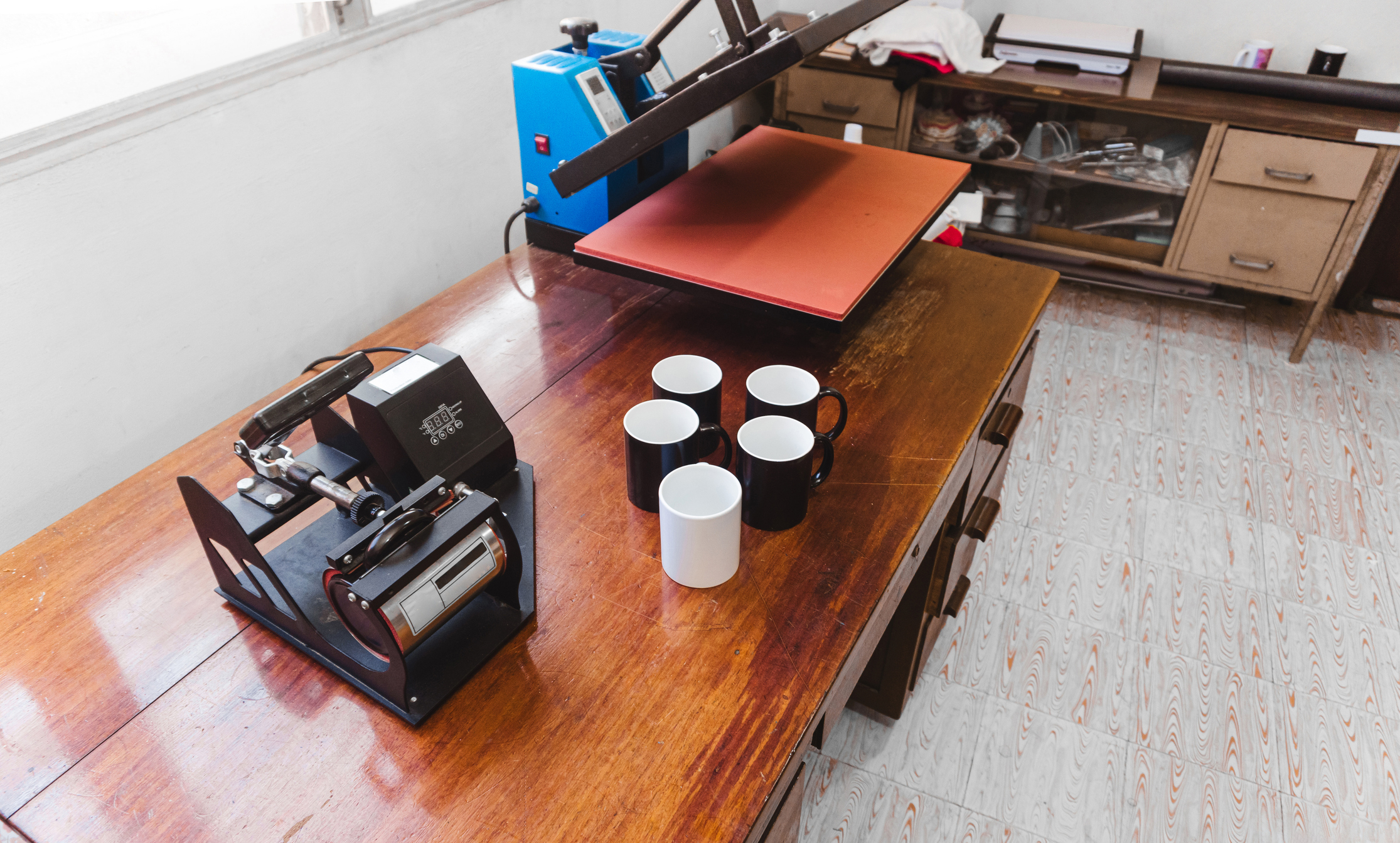
For hard goods, Montgomery and Potter both suggest a swing-away or drawer-style heat press. More specifically, Potter recommends the Hotronix swing-away press because it offers various attachments if a decorator plans to print different products. And if you plan to sell the No. 1 product – mugs – then you’ll need a mug press or mug wraps and a convection oven.
“My preference is the wraps as they are more versatile and are less likely to break down, but either way, you have to have a way to heat and provide even pressure on a round item like a mug,” Montgomery says.
For a more affordable option, Gross suggests buying a convection oven from a department store. After placing the artwork on the drinkware, decorators can use a sublimation shrink-wrap bag, a heat gun, and the convection oven to get a beautiful edge-to-edge print. A convection oven also allows for sublimating more than one item, whereas a mug press can only press one at a time.
A few other ancillary items include:
- Heat-resistant tape to position sublimation transfers
- Heat pads to ensure even heat distribution for non-flat items
- Heat-resistant gloves to handle hot items
Looking at costs, Montgomery and Potter both agree that $5,000 or less can get a decorator going if they don’t already have the necessary equipment, while Potter says an all-in professional setup with stock on hand for practice can creep into the $10,000 range.
“So, for a $200 per month loan you can be in business customizing thousands of products,” Potter adds. “You can make $200 in a day easily with this one process.”
While this may sound like a good chunk of money, especially when budgets are tight and rising costs have impacted just about everyone, the barrier of entry is extremely low compared to other more costly print processes. Still, this might sound like more than you want to spend upfront or you might be unsure how hard goods fit into your current production setup. In that case, apparel decorators can dip their toes in the water by outsourcing these services and learning more about the process over time. This allows a print shop to see where demand is among its customers before going all in.
“I know it seems like you won’t make as much profit, but you come out ahead by creating systems to manage the new product line without the headache of the learning curve, which makes the start-up spoilage much less,” Montgomery explains. “It also provides the benefit of building a market first before investing in a piece of equipment that might be a flash in the pan for your business.”
Building sales and a customer base first allows you to focus on production systems for when you bring the process in-house. This is a low-risk way to enter the space.
“Before taking a big job and then making promises you can’t keep, you will need to vet potential partners to ensure quality and reliability,” Montgomery says to those who plan to outsource. “ Request samples and confirm they can handle the specific items you need. Also, make sure you have a contact you can reach to discuss their production timelines and ensure the communication lines are clear and responsive.”
»» How to Find the Right Outsourcing Partner
Important Notes
 For those going the in-house route, Potter stresses the importance of time, temperature, and pressure. Quality equipment that ensures even temperature and pressure distribution plays a large part in successful sublimation. Beyond that, it’s important to test each new product you plan to add to your list of offerings.
“The wholesaler will give you a basic setting to work from for your pressure, temperature, and time,” Potter shares. “You most likely will have to tweak the settings to your work environment, but that can be done in a day easily.”
If you still need print help, many manufacturers and suppliers in the industry have YouTube channels filled with educational and how-to videos to help you troubleshoot any print problems. And this isn’t true just for heat presses. Turn to your ink suppliers, paper sources, etc. for help dialing in each part of the sublimation printing process. To ensure they can give you the best advice, take notes on the different settings you’re using and the results, so they can pinpoint the issue(s).
Outside of the printing, Gross says he sees decorators struggle the most with the business side of sublimation. “I think many people struggle with sales and marketing,” he says. “You’ve just got to get out there and show people what products you can make. That’s really the key — is to show them what you can do.”
If decorators aren’t sure what products to sell and to what markets, Gross encourages them to think about their areas of expertise or hobbies. What do you know a lot about? Are you an avid golfer outside the shop? What products within that market could you offer? Maybe you play pickleball as a hobby? Sublimated pickleball paddles could be your latest offering. Tapping into those customer bases and knowing what they like and want can be a great start to business expansion, and it might turn into your next big profit center.
“In my years of working with sublimation, many apparel decorators look at sublimation as an answer for short-run apparel, but what most of them quickly realized is the potential beyond apparel was the real magic bullet of the technology,” Montgomery says. “It’s the myriad of hard goods that made their investment in sublimation a success.”


