Big Ten Tournament and March Madness 'Hot Market' DTF Printing with Campus Ink’s Steven Farag
Steven Farag, CEO of Urbana, Illinois-based Campus Ink and NIL Store, is a veteran of the college sports apparel scene. Since the inception of Campus Ink’s NIL Store arm in 2021, his company has arranged licensing deals with more than 160 colleges and universities as well as 30,000 individual athletes. He’s even attracted funding from billionaire entrepreneur, investor, and television personality Mark Cuban.
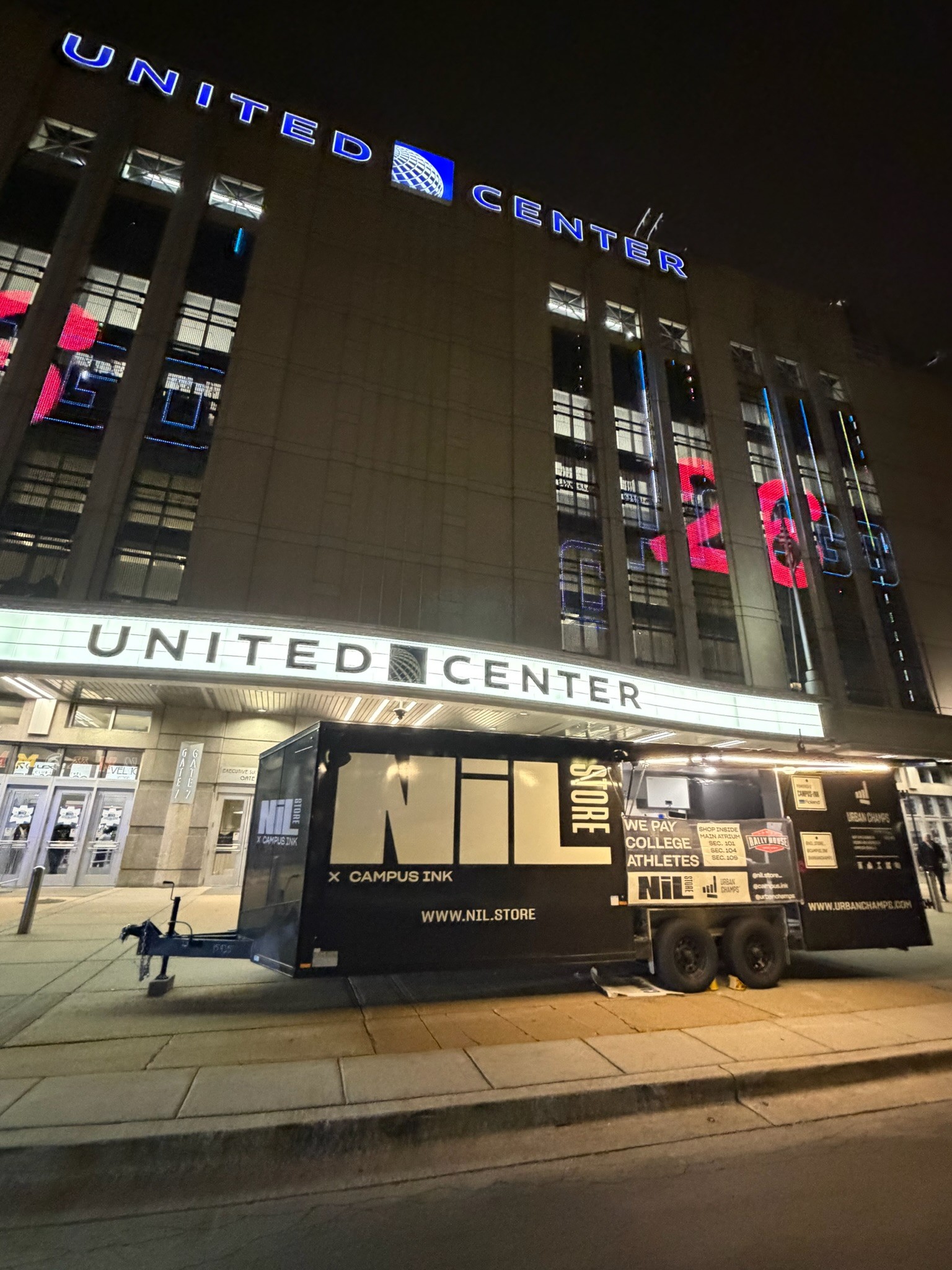
Steven knew he wanted to produce up-to-the-minute apparel for the 2026 Big Ten Tournament and March Madness series. So, he loaded a trailer with the needed supplies and a Roland DG TY-300 direct-to-film (DTF) printer and hit the road.
We asked Steven what challenges he encountered, how he handles the demands of on-site production, and how fans are reacting to real-time “hot market” apparel design and production.
Roland DGA: Tell us about the Big Ten Tournament and your production outside the United Center in Chicago.
Farag: This year for the Big Ten Tournament, we had 18 teams whittling down to two. For every round, there are different fan bases coming in. You’ve got Michigan fans, you’ve got Illinois fans, and so on.
It’s very hard for the retailers that are running concessions in the stadium to gauge and forecast what they’re going to need. Eventually, they’ll run out of one thing and have a ton of something else left over. What we wanted to be able to do with a DTF machine on-site in our trailer is help those retailers chase the right opportunities and hedge their inventory risk.
At the Big Ten Tournament, our trailer was completely stocked and essentially on call for “Hey, we need more of this design,” and then we could push more product right into the stadium.
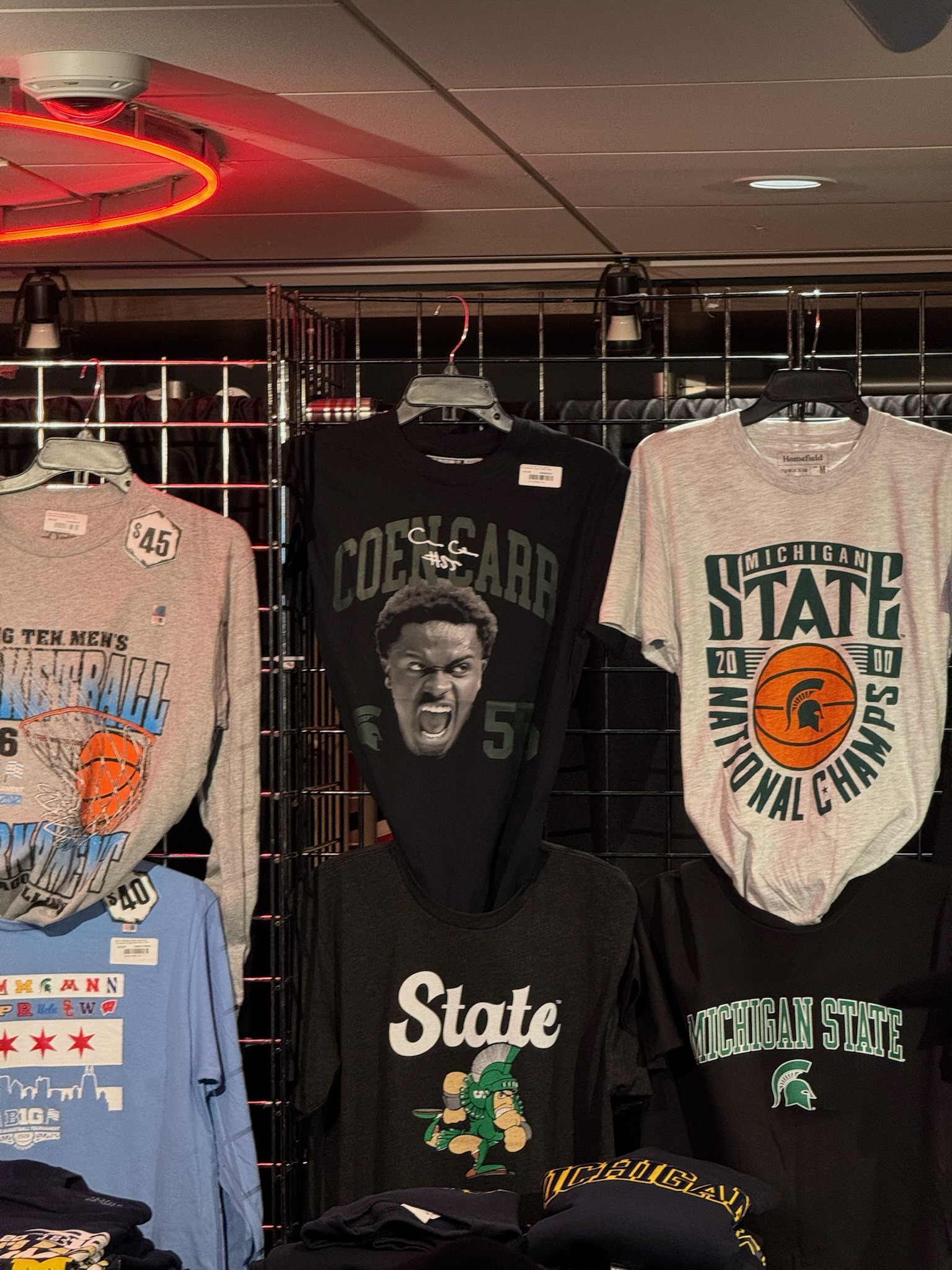
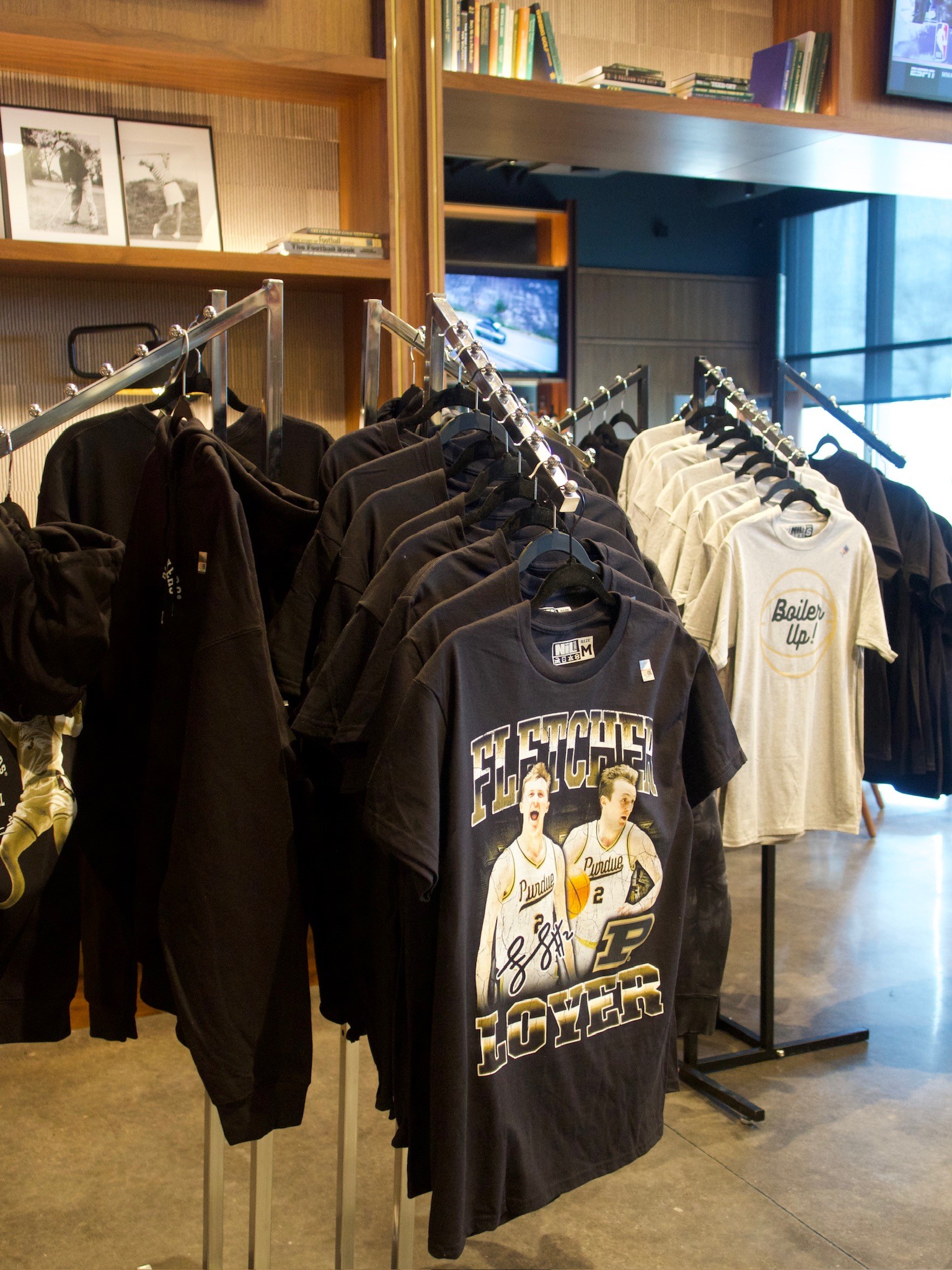
We are also able to do limited-edition shirts. For the last game of the tournament, we took the top player from Michigan, the top player from Purdue, put them both on a shirt, got that approved by all the different licensees overnight, and had that in the stadium the next morning.
Our on-site production allows us to bring manufacturing closer to the consumer, eliminates so much waste, and hopefully bolsters sales as well.
Roland DGA: Why did you select the Roland DG TY-300 DTF printer for your on-site production?
Farag: In the DTF space, there are lots of manufacturers that have flooded the market with printers that are not very stable. They’re very, very hard and fickle to use. To even imagine transporting one of those printers is outlandish.
The beauty of the TY-300 DTF printer is that it truly is very plug and play. It fits into the entire Roland DG ecosystem. The Roland DG color libraries are the same across devices, so our TrueVIS VG-540 eco-solvent printer prints like our TY-300. And that is what made the light bulb go off for me, where I was like, ok, I can run the DTF printer and the color profiling is all the same. I just have to dial in my humidity and temperature, and we should be good to go.
Roland DGA: How did you equip the trailer to be able to transport and run a production DTF machine?
Farag: First, we insulated the entire trailer and put in baseboard heating. DTF printers need to run at a certain humidity. Daniel Valade from Roland DGA worked with me, and we would “nerd out” on how to get our climate perfectly dialed in.
I’ve been able to run every day that I’ve wanted to run the TY-300 — even in some of the coldest conditions, like when it was 20 degrees out in Connecticut. We’ve been able to have consistent, high-quality production for everything we wanted to produce.
We also wanted to be very careful about transportation. Printheads have a lot of chips and controllers, and trailers don’t have great shock systems. We built an air ride shock system in the trailer to make sure that if we hit a pothole, the printheads weren’t going to break.
Power was another concern. For DTF printing, you need power for your printer and your powder unit. The Roland DG system all ran off 110 voltage, so we could run everything with one generator.
When you turn a printer on, you have to run nozzle tests — that's when you see if you have all your colors. I think we've had perfect nozzle tests every time we fired it up, which is pretty much unheard of in the printing world.
The last concern was exhaust, because typically DTF dryer/shaker units put out fumes; however, the dryer unit that came with the Roland DG system doesn’t produce exhaust, so we didn’t have to worry about it.
Roland DGA: How fast was your on-site production? Were you able to keep up with the demand?
Farag: On-site, our production was pretty magical. There were three of us heat pressing, printing, and cutting as fast as we possibly could. I was pushing the printer pretty hard, and it kept up.
The hardest morning we’ve had so far was the Sunday of the Big Ten Tournament, which I want to say was a run of 800 pieces. We started at 8 a.m. and finished around 1 p.m.
Roland DGA: How do you think on-site production is changing the fan experience?
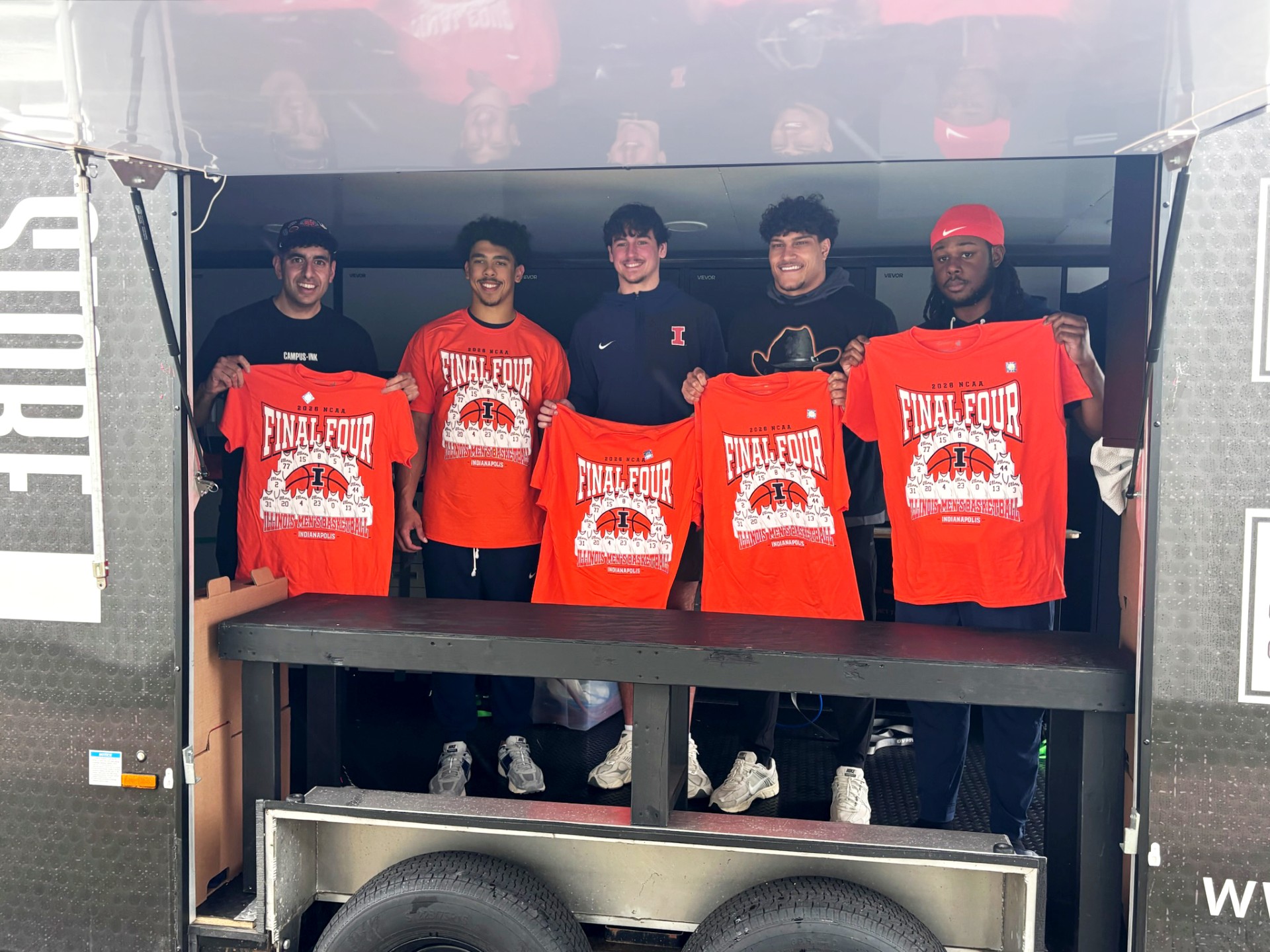
Farag: Merchandise is now becoming an experience, and how something’s made is just part of that experience. You’re seeing on-demand personalization, on-demand customization popping up at events more and more — we're taking it a step further by being able to design on the fly and show customers how it's made.
We had athletes in our trailer, checking it out, working with our artists. Sometimes we'll show people an artist designing a shirt right there and then rip it out in the trailer.
When fans see that process, their eyes light up and they’re like, holy cow, that’s actually how it’s made. And it definitely drives fan behavior. I mean, when people can see the craft and we get to share it, it definitely gets people lining up.
At the Big Ten Tournament, one of the announcers made a comment after Michigan player Yaxel Lendeborg had an awesome three-pointer — he called it a “Triple Yaxel.” We put that on a shirt, and it was available in the United Center the next morning. So that’s kind of how we do it — we’re able to be hyper-reactive to whatever the moment is in sports.
Roland DGA: What are you looking forward to as March Madness continues?
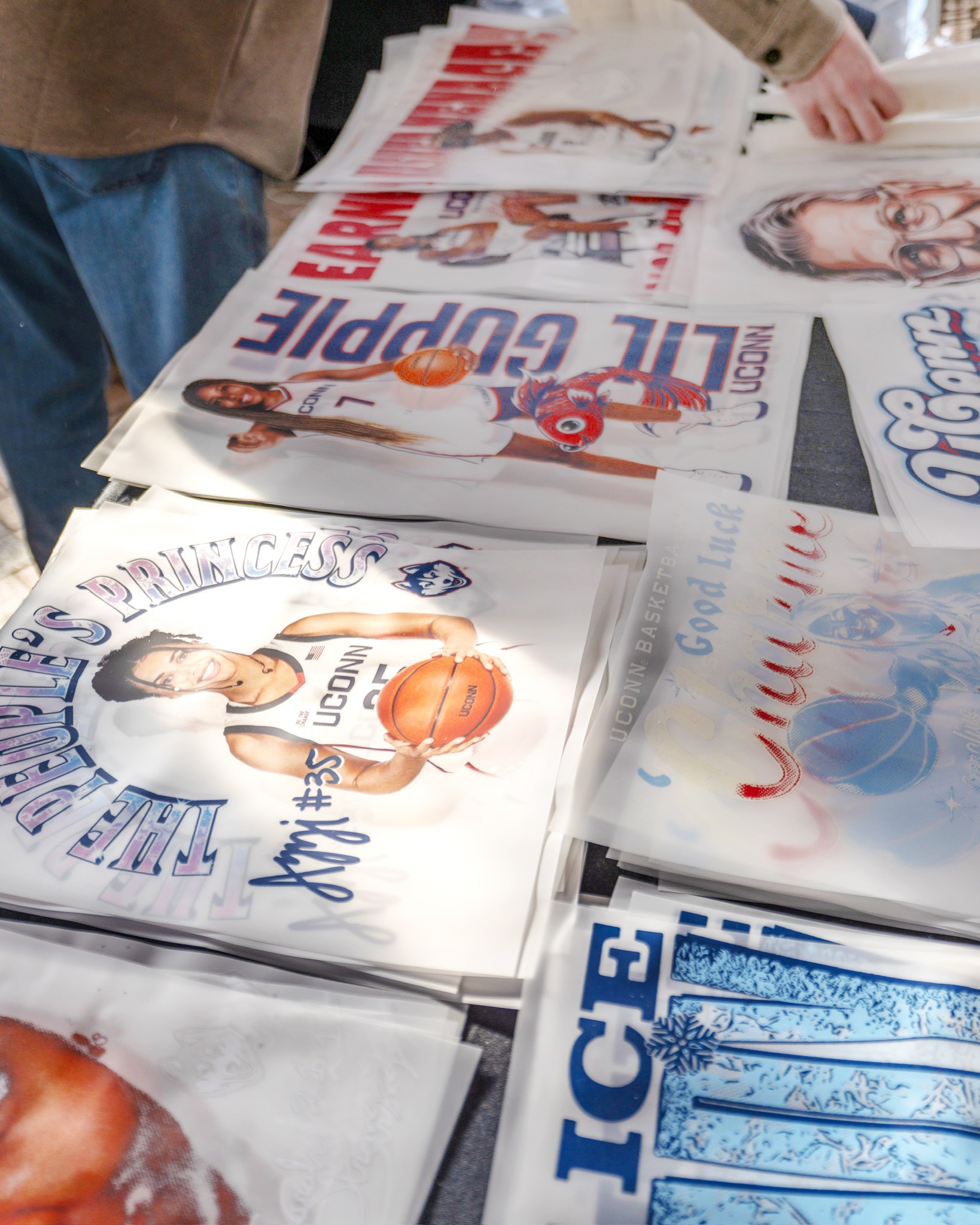
Farag: During March Madness, we’ll be supporting a total of 87 teams on the men’s and women’s side. With 15 or 16 players per team, that’s over 1,300 players. We have to be able to print a design on the fly for each of them.
With our on-site DTF capability, we can print designs and get the product to the customer within minutes. It helps the sport and makes money for the teams and athletes.
We’ll continue to chase more opportunities and moments just to show and teach people, hey, this is what we did at the Big Ten Tournament, this is how we designed on the fly. It’s a huge shift in the printing industry to be able to get closer to the consumer and show them how on-demand customized apparel is made.