
Adding Dimension: A Guide to Screen Printing Puff Ink

Special effects inks are one of the easiest ways to elevate a basic print, and puff ink remains a favorite for decorators looking to add texture and visual impact. When cured correctly, puff ink expands and rises off the garment surface, creating a soft, dimensional effect that stands out both visually and physically.
While it may look advanced, puff printing is straightforward when you understand the fundamentals. Here’s a simple step-by-step guide to adding dimension to your prints using puff ink.
What Is Puff Ink?
Puff ink is a plastisol-based system that contains an expanding agent. When heated to its activation temperature, the ink rises and creates a raised, 3D effect.
You can work with:
- Premixed puff inks, which are ready to print and offer consistent results.
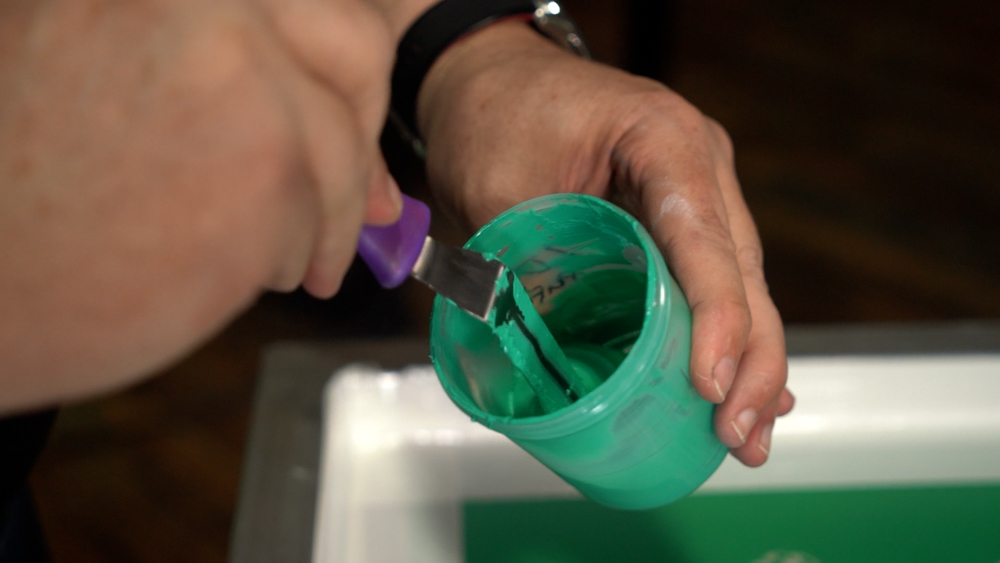
- Puff additives, which are mixed into standard plastisol inks, typically at 10-20% by weight.
For printers new to puff printing, premixed options can be easier to use but are often limited to basic colors. Additives allow you to create custom colors but require precise mixing and testing.
For subtle texture and light dimension, mix puff additive at 5-10% by weight. For bold, high-profile effects, use 10-20%. Avoid exceeding 20%, as too much additive can weaken the ink structure and cause flaking.
What You’ll Need
Before getting started, make sure your setup supports a heavier ink deposit:
- Puff ink, premixed, or additive system
- 86 to 110 mesh screen
- A thicker stencil than standard prints
- 60 to 65 durometer squeegee
- Flash dryer or conveyor dryer
- Laser temperature gun for checking surface heat
The key to successful puff printing is ink volume and controlled heat.
Step 1: Design with Expansion in Mind
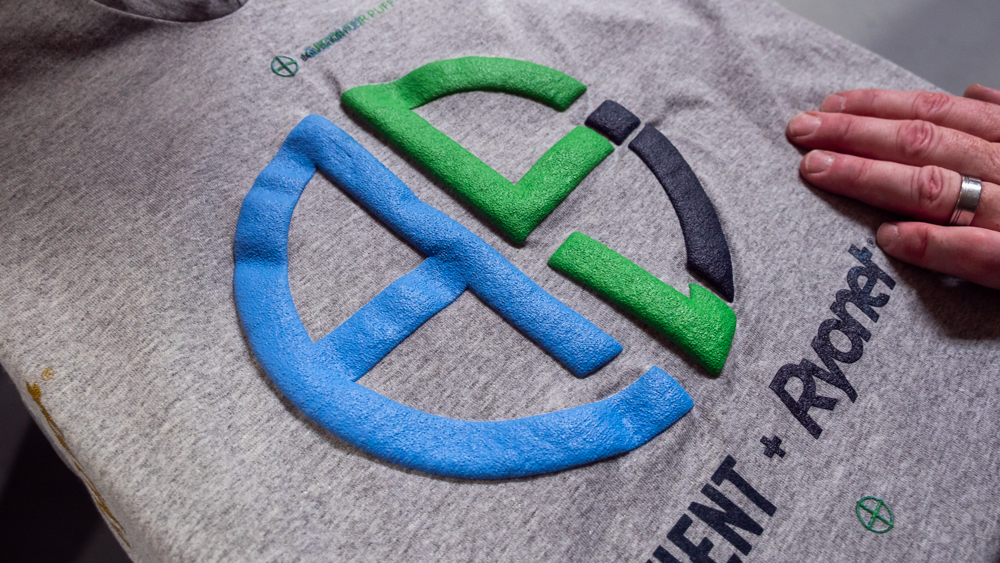
Puff ink expands outward as well as upward. Fine lines and tight details can close up once the ink rises.
For best results:
- Use bold shapes and solid fills.
- Open up negative space.
- Avoid extremely thin lines placed close together.
Simple, graphic artwork typically produces the strongest dimensional results.
Step 2: Build a Heavier Ink Deposit
You cannot achieve a strong puff effect without enough ink on the garment.
Mesh Selection:
Use frames with 86 to 110 mesh. Higher mesh counts restrict ink flow and reduce loft.
Stencil Thickness:
Apply a slightly thicker emulsion coat than you would for standard plastisol printing. A thicker stencil creates a deeper “well” for ink to sit in, increasing deposit and allowing a fuller transfer of ink to the garment.
The goal is for the ink to sit on top of the fabric, not drive into the fibers.
Bonus Reading: Special-Effects Thread: Tips, Tools, and Best Practices
Looking at special-effects embroidery thread, decorators can optimize the options to create an even higher-end final product.
Bonus Reading: Mastering Glitter Heat Transfer Vinyl Application
Working with glitter HTV can be intimidating for many people. But quality glitter is no harder to work with than standard HTV materials.
Controlling Your Puff Height
The amount of loft you achieve is controlled by two main factors:
- The thickness of your ink deposit
- The percentage of puff additive in your mix
A thick ink deposit with a low percentage of puff will produce moderate lift. A thin deposit, even with a high percentage of puff, will only expand so much.
Maximum loft occurs when you combine a generous ink deposit with a properly mixed percentage of puff additive. Understanding these two variables makes puff printing far more predictable and repeatable.
Step 3: Adjust Your Print Stroke
Your printing technique matters just as much as your setup.
- Increase off-contact slightly to improve snap-off.
- Use a softer squeegee, around 60 to 65 durometer.
- Perform a heavy flood stroke.
- Follow with one or two steady print strokes.
- Avoid excessive pressure.
After printing, you should see a visible layer of ink resting on the surface of the garment. If the print looks thin and flat before curing, it likely will not produce much lift.
Step 4: Cure to Activate the Puff
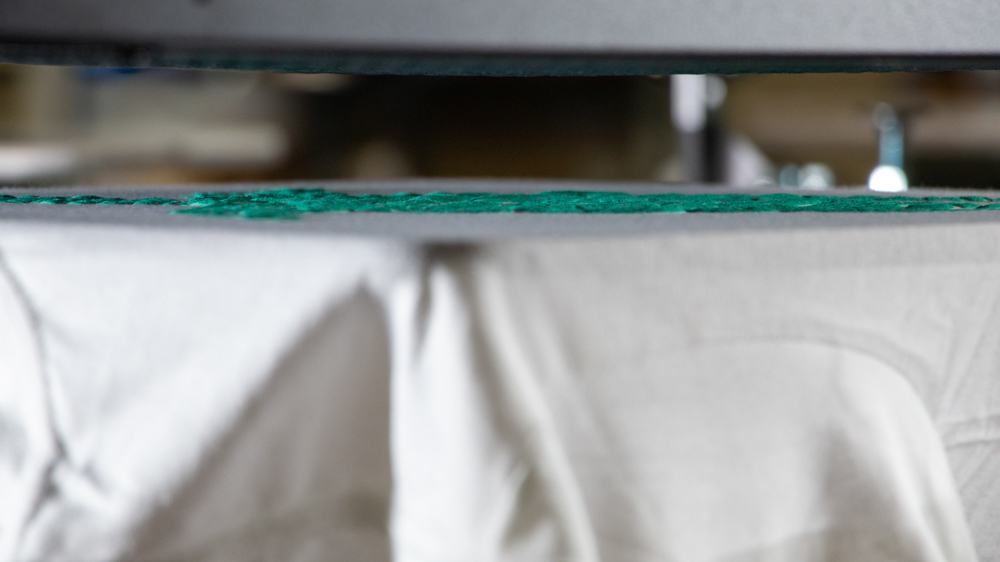
This is where the dimensional effect develops.
Many puff systems activate in the mid-200 F range at the ink surface and fully expand near their recommended cure temperature. Some standard plastisol systems may require a higher final cure temperature after expansion.
A few key tips:
- Measure surface temperature with a laser temperature gun.
- Do not rely solely on dryer settings.
- Avoid overheating. Excessive heat can rupture the expanding agents and cause the puff to collapse.
When flashing puff prints, keep the heat low and even. Avoid activating the puff during the flash stage. Premature expansion can lead to over-curing and collapse in the conveyor dryer. Raising your flash unit slightly or flashing in shorter intervals can help maintain control.
Once expanded, ensure the ink is fully cured according to manufacturer specifications for wash durability.
Common Puff Printing Issues
Even simple processes can run into problems. Here are quick fixes for the most common ones:
Flat or Weak Puff
- Not enough ink deposit
- Mesh count too high
- Too much squeegee pressure
- Ink did not reach activation temperature
Wrinkled or Collapsed Puff
- Over-curing
- Excessive heat dwell time
- Too much puff additive in the mix
- Puff activated prematurely during flash
Garment Puckering
- Thin polyester or lightweight blends
- Expansion force exceeding fabric stability
Switching to 100% cotton or heavier garments often reduces distortion. Printing puff over an underbase creates a smoother, more controlled loft and minimizes puckering compared to printing directly on fabric.
Final Thoughts
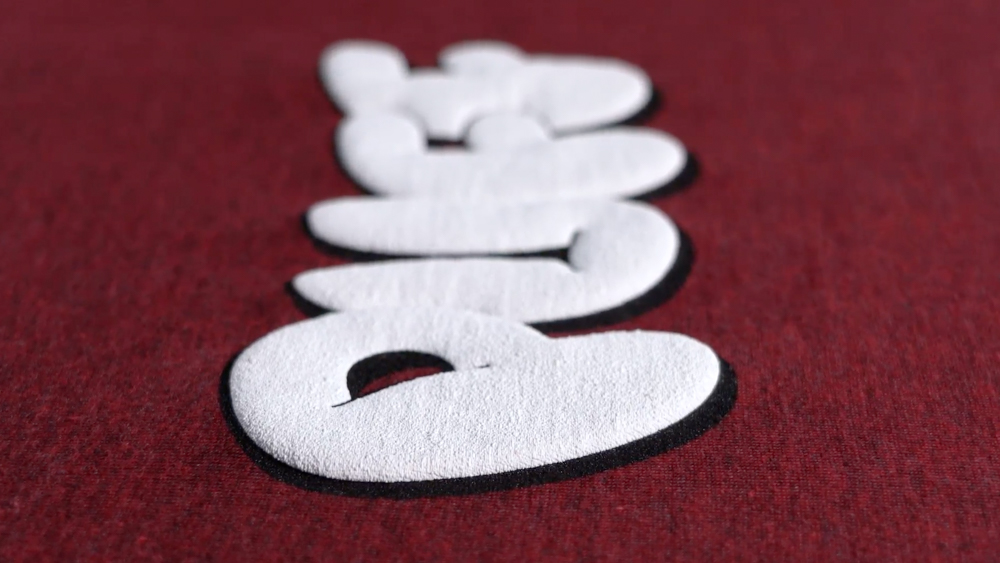
Puff ink is one of the most approachable specialty effects in screen printing. It requires only minor adjustments to your standard ink workflow, yet it delivers a high-impact, retail-friendly finish that customers immediately notice and feel.
With the right mesh, a heavier deposit, thoughtful mixing, and controlled curing, puff printing becomes consistent and repeatable. As with any specialty technique, test before full production runs and dial in your temperature and deposit for each garment type.
Adding dimension does not have to complicate your workflow. With a solid foundation and a little experimentation, puff ink can quickly become a dependable tool in your shop’s specialty lineup.