

Help Customers Make a Statement with These Patch Trends
Patches, in one form or another, have been statement pieces for decades, if not centuries. From the red crosses that Crusaders wore on their doublets, to the smiling taco or peace sign patch that’s covering a hole in your jeans or jacket, patches can signal allegiance, tell people what you like or care about, or simply add a bit of color and fun to the items you wear or carry.
While patches have been around for quite a while, they tend to fade in and out of fashion. The following is an outline of what’s trending today when it comes to these statement pieces.
How Patches are Used
Currently, the trend is toward the use of patches. There are a couple of reasons why patches are currently on trend.
One is the fact that patches are versatile. They can go on a tote bag, a hat, or any item of clothing. Patches can also be sublimated, embroidered, screen printed, or be made of rubber or silicon, so the weight and material can be versatile as well and can be used to create a specific look.
The advent of custom-cut patches also allows for unique shapes. Instead of a square, rectangle, or circle, you can have a flame or a windmill or a rainbow. Custom-cut patches may be a bit pricier, but they provide the opportunity to express individuality through shape and, depending on how they’re made, through color and design.
Patches are also in fashion — high fashion. Designers like Burberry, Gucci, and Marc Jacobs have used patches in their runway designs. If your customers like high fashion but don’t have the budget, patches are a less expensive way to potentially duplicate looks, or perhaps create their own look that mimics what’s happening on the runways of New York or Paris. While not everyone can own a designer creation, a designer patch might be more within the range of most people’s budgets.
Patches: A Sustainable Solution
Another trend that is helping increase the popularity of patches is reusing or recycling clothing. We’ve all seen stories about the waste that builds up when clothes are discarded and how charities that take clothing donations are at a loss of what to do with all the garments they receive.
The price of clothing has also increased, and people are now looking away from fast fashion and clothing that is cheaply made and wears out quickly. The idea is to get maximum use from your garments, and patches can help extend that useful life. A handy patch can cover a hole, a fray, or just rejuvenate a garment that might have lost its pep.
Patches Make a Passion Statement
Another trend that’s starting to come back is the patch as a statement of interest or commitment. In the ‘70s, patches were a way to show allegiance to an idea, or that you were part of the counterculture. Today, they are again taking on some of that role.
The patch you wear might be about a political or ideological cause, warning about global warming, or protecting women’s rights. Some people wear patches promoting their membership in particular groups, clubs, or organizations. It could be that the patch promotes a favorite television show or movie franchise.
Part of personalization is letting others know what you care about and like, and a patch is an easy, and visible, way to do that.
The Advent of Versatility
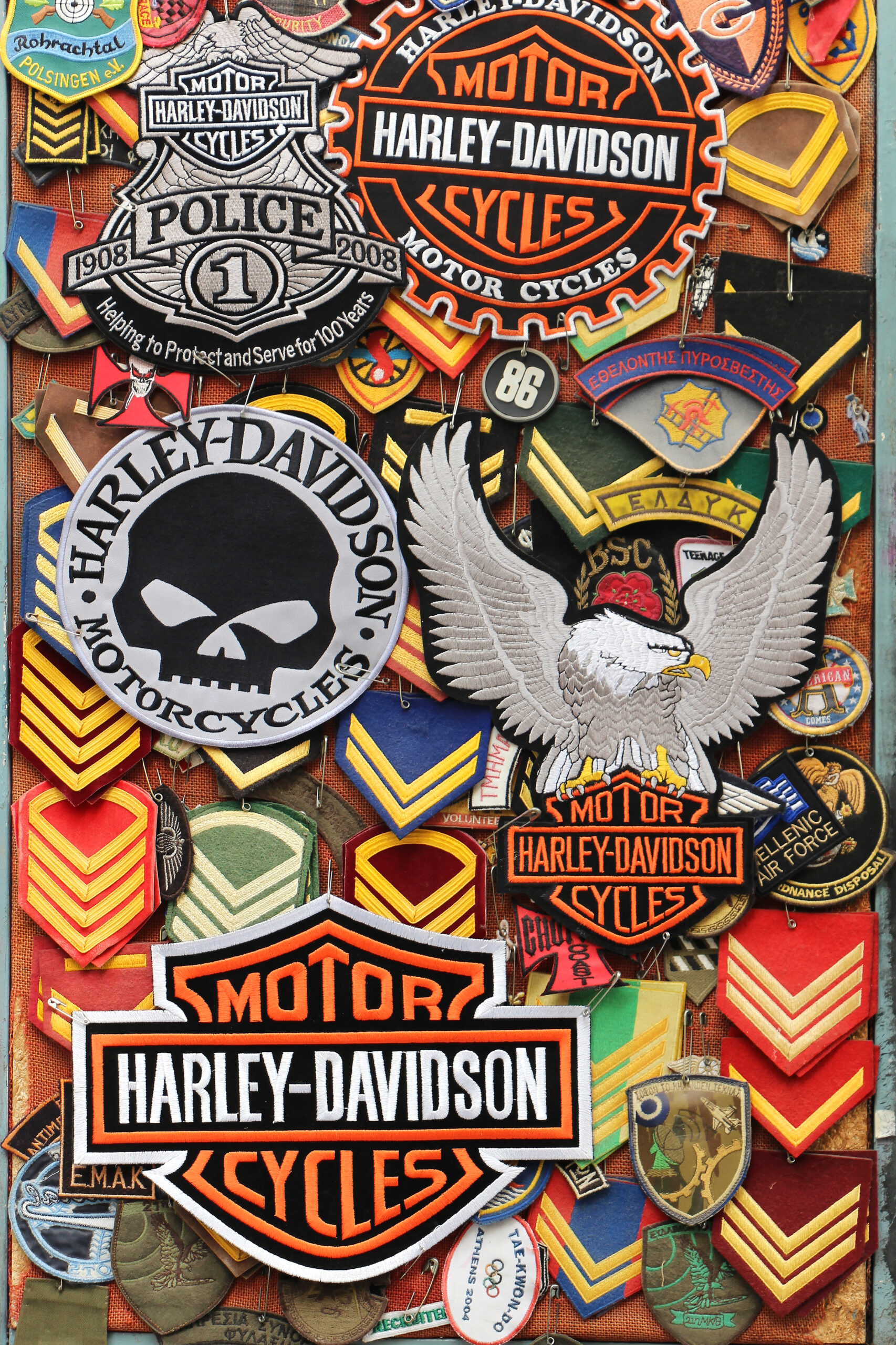
Credit: Kristine Shreve
While patches have a long and storied history, one way that today’s patches buck trends is the expanded options for construction and shape. It used to be that most patches were standard shapes: a circle, a square, or a rectangle. Those types of patches could be die cut and, while you could get dies that were other shapes, those dies were often more costly to fabricate. There was less call for patches in those shapes, so many patch manufacturers didn’t bother.
With the advent of laser cutters, hot knives, and other cutting options, creating custom-shaped patches became much easier. Patches with sharp edges, custom curves, and unique shapes could be created because cutting options allowed much finer manipulation.
Color options and color durability have also increased when it comes to patches. While embroidery is still considered the gold standard when it comes to patch decoration, the advent of polyester thread means that patches are now more colorfast. An increase in thread color palettes has also led to more color in embroidered patch design.
The advent of sublimated patches allowed for the creation of gradients, small details, and photo-realistic patches, and also increased the number of color options and shading that could be offered on a patch. Adding foam to the patch design process has also allowed for the creation of 3D patches, which stand up from the garment or hat to which they are added. Patches today certainly come in more varieties and with more options than ever before.
Along with versatility in shape and construction, patches also offer decorators versatility in terms of where they can be used. Almost every garment decorator has a story about the one job they did where they had to get extremely creative to get the decoration on the item. Maybe it was holding a blanket up with binder clips or disassembling a chair to get the back on the machine. Maybe they undid the pocket on a dance bag. The stories are endless, but patches can help solve all those nightmares.
A patch can be decorated and then sewn or heat-sealed onto the item in question. Suddenly a job that takes hours and requires a lot of thinking outside the box can be done in record time and with ease.
Wherever patches are used and for whatever reason, they add personality, color, and life to the items on which they’re placed. Given the recent trends of recycling and upcycling, patches can be used to extend the life of a piece of clothing, keeping it out of a landfill and from contributing to the waste problem our world is facing.
Patches can also help people make connections, allowing others to see what you stand for and the things about which you care. For some pieces of cloth and thread or ink, a patch can do quite a lot.


