
Technology Talk: A Look at Some Apparel Decorating Options
There are a variety of apparel printing options — understanding each is crucial to your shop’s success
Textile printing is a versatile, fast-evolving industry. Some techniques have been around for centuries, while new technologies, like digital printing, entered the market only a few decades ago, generating a complete revolution with continuous expansion possibilities. Printers are looking for ways to combine the benefits of both digital and conventional technologies. Since printing images on apparel can be done in many ways, let’s break down some of the options.
Screen Printing: A Basic Breakdown
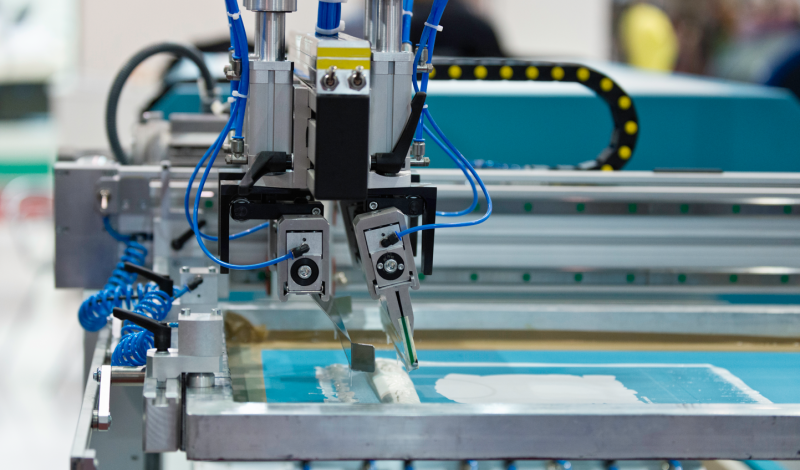
Screen printing is a method that involves creating a stencil then using it to add layers of ink on the garment, except in areas made impermeable to ink by a blocking stencil. One color is printed at a time, so several screens are required to produce a multi-colored logo or image.
Since taking off over a century ago, screen printing has been continuously developed and automated, though the basic concept remains the same. Screen printing can be done on many types of substrates, such as textiles, plastic, latex, and various hard and soft surfaces. The appropriate ink is formulated to high wash resistance and applied in an opaque thick layer, giving bright colors even on dark shirts, with beautiful details and long-lasting graphics. The opacity of the layer of white ink applied between the fabric and other colors is key.
The initial setup and investment in a professional facility can be expensive; however, the more prints are made, the cheaper this process is.
The Advantages of Screen Printing Transfers
For certain projects, printing on a transfer film or paper instead of on the garment directly has become widespread in apparel decoration. A screen-print shop earns money when a T-shirt is printed, so the more efficient the process, the better. Using a transfer allows the shop to separate printing from application on the garment to complete the finished product with a heat press.
Transfer technology requires two essential consumables: First, a film or paper sheet to provide perfect holding of ink and design during printing, while allowing for smooth and easy peeling after application of the transfer onto the fabric by heat press. The second is an adhesive layer added on top of the printed design to ensure bonding on the fabric.
The adhesive used can be either in powder or liquid form. Both types of adhesives, thanks to the shape memory of their elastomeric particles, yield highly flexible transfers with soft touch and great stretchability, which are ideal for jobs such as high-end sportswear applications.
The apparel industry is largely regional and local — meaning decorators typically serve local and regional clients. The use of transfers created a new type of business model, with specialists focusing on transfer manufacturing and wearable print shops applying such transfers for end-customers.
Differentiation becomes important for each producer: fast lead time, customization support, small minimum order, superior performance for specific end-uses … On the latter, high-end sports apparel and workwear have special requirements, with dedicated inks and adhesives often needed to fulfill these orders.
For specific garments like sublimated polyester for sportswear, the screen-printed transfer co-exists with other methods. The key to a value-added and long-lasting heat transfer is also well-chosen ink, which printers can find at certified and specialized suppliers producing consumables for this purpose.
There are plenty of machine manufacturers supplying semi- or fully automatic screen-printing systems for ink and adhesive application on the transfer sheet, as well as conveying and curing. The initial setup and investment in a professional facility can be expensive; however, the more prints are made, the cheaper this process will be over time. Once all relevant machines are calibrated, the process runs smoothly.
The strong demand for customization with complex designs, multiple colors, many details, and personalized prints doesn’t always match well with multiple screens needed in traditional screen printing, with related costs and setup time.
The Revolution of Digital Textile Printing
Digital textile printing is a newer process where artwork is designed on a computer then printed either directly on a transfer film or paper, or directly on the fabric. This was introduced relatively recently in the early ‘90s and has evolved a lot since, with several ways of transferring the image on an object (direct-to-object), or a textile with a direct-to-garment (DTG) printer.
Many DTG printers are turnkey solutions for wearable print shops, with full-color and fully customized direct printing, but the garment requires pre-treatment. Printing speed can also create waiting time for the operators.
Digital printing also takes advantage of the transfer technology, with different approaches depending on artwork size or number of transfers to produce. It intends to keep key functions for colorful and durable heat transfers: an easy-to-peel transfer film or paper, a high opaque white layer, and a performing adhesive.
For small print jobs, manufacturers developed digital transfers for white toner printers. The initial investment is low, but consumables can be expensive. It consists of a transfer film, or paper, with two sheets: one to print the transfer and another to transfer the adhesive on the first sheet. The white toner is used to provide the white layer for opacity between the full-color toner artwork and the fabric.
For medium-size print jobs, direct-to-film (DTF) technology is rapidly becoming the new standard for wearable digital prints. DTF printers realize a digital print with inkjet print heads for CMYK colors and for white color, printed in multiple passes on the film roll to get minimum opacity. Adhesive powder is sprinkled over the fresh print before going through a basic flash curing oven.
Maintenance is required, and currently many of the printers come from the far East (China). That often means lack of technical support, impacting the productivity of this method. While transfers for apparel made with DTF fulfill most requirements, it doesn’t always meet standards for workwear industrial washing, or the performance expected from heat transfers made for sportswear.
Editor’s Note: DTF transfers are getting better and becoming more common in the apparel decoration world. While many companies still do not utilize this method in-house, there are several suppliers that print these transfers for use, and as the technology advances, expect to see changes in its performance.
Digital printing is ideal for items requiring high detail, many colors, and complex images. Digital printing generates a modern, fresh, and sharp finish. It makes it easy to personalize transfers, and it’s a quick option for certain jobs.
It is particularly suited for swift turnaround for orders of smaller quantities. For decorators, the number of orders that can be produced through DTF or DTG is higher nowadays than when first introduced due to improvements and automation added over the years. This method is great for customers that expect fast delivery of their T-shirts with the selected image.
However, for large volumes of transfers, whether with DTG or DTF, equipment needs to be multiplied, which increases the upfront investment. Potential pitfalls of insufficient maintenance or infrequent use include costly production due to excess of manual manipulation or nozzle clogging as inks dry rapidly outside of operation.
When a higher quantity of prints is required, digital printing could be a more expensive option compared to traditional screen printing, which can be fully automated when using transfers.
Digital/Hybrid Heat Transfers
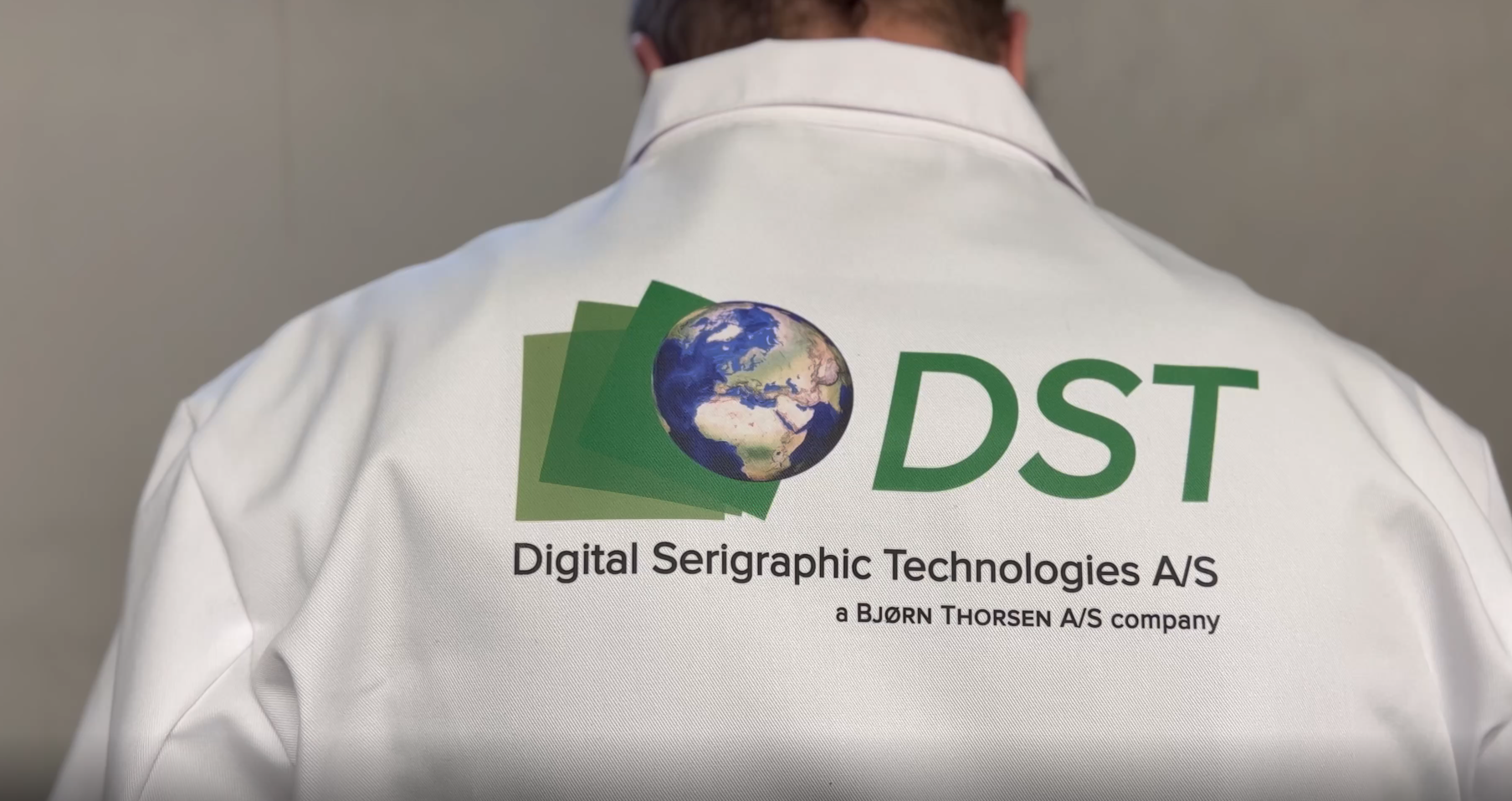
A digital hybrid transfer on workwear.
Hybrid printing typically combines several printing and converting techniques in a single-pass process. It merges certain capabilities of conventional and digital printing methods, like the association of flexo and digital printing. Hybrid printing can also mean integrating elements of traditional screen printing with the creative possibilities of digital printing in an industrial way as explained further on in this article.
Hybrid printing for heat transfers is called digital screen-printing transfers (DST) or digital smart screen transfers (DSST). DST/DSST has been used commercially for over 20 years.
Hybrid transfers are manufactured by merging digital image printing onto film or paper liners and the application of inks and adhesives via a developed screen, as in traditional screen printing. For industrial use, the digital printer can be a professional toner printer, such as those from Ricoh, OKI, Xeikon, Xerox, or even an HP Indigo electro-ink printer to name a few.
DST or hybrid printing has emerged as a solution for heat transfers that leverages two printing worlds, for medium to large-size companies, especially in demanding apparel, sportswear, and workwear market.
New Possibilities
Hybrid/DST is a good option for large transfer orders with multi-color and highly detailed designs. Associating the two technologies gives printers the possibility to have complex images or logos transferred on textiles with thicker layers of ink, which can improve transfer quality and wash resistance.
Hybrid printing uses powder or liquid/printable adhesives. The latter are recommended for use with sportswear, where customers seek properties that such liquid adhesive can deliver: stretchability, shape memory, durability, and a soft hand. It also comes with all the benefits of digital printing, such as metallic or fluorescent effects, hidden elements, etc., together with new screen-printing inks developments, such as biobased or inks for highly demanding textile applications.
The setup requires large upfront investments in one (or more) professional digital printer, screen development and wash equipment, inks, and adhesive application machinery, preferably all automated and installed in a workshop with controlled environment. It is more affordable for bigger printing facilities with the capabilities and flexibility to operate with both digital and traditional screen-printing transfer.
Hybrid/DST is a complex process involving multiple steps, requiring significant training. This is, however, easier for those who are already seasoned in traditional screen printing.
In the end, the choice of which way to go will depend on customer requirements, existing skills, and investment capabilities.


