

From the Industry Front Lines: What's Driving Apparel Decorating Trends Today?
PRINTING United Alliance’s State of the Decorated Apparel Industry Report, Winter 2026 (SODA), provides an overview of the current business conditions for apparel decorators. The report is based on responses from 68 participating companies and highlights the key challenges and opportunities affecting the industry.
The participating companies represent a wide range of business sizes. Annual sales from all revenue sources range from less than $250,000 to more than $20 million. The respondents are geographically diverse, with companies located across the United States and one respondent from Canada. Most participating companies use multiple in-house decoration technologies in their operations.
The report analyzes several important industry indicators. These include trends in sales, operating cost inflation, prices, and profitability during the first three quarters of 2025, as well as expectations for business conditions in 2026. It also examines topics such as the impact of tariffs, capital investment plans and objectives, major business risks, print-on-demand (POD) sales and profitability, and sustainability practices, including the benefits and challenges.
PRINTING United Alliance members can download the State of the Decorated Apparel Industry Report, Winter 2026, here.
Sample Findings
The majority of SODA participants report continued pressure from sluggish sales growth, rising operating costs, and profitability that remains flat at best. Figures 1 through 3 summarize results through the first three calendar quarters of 2025 for all apparel decorators surveyed. Notice, in particular:
Growth was limited and skewed. Sales increased 2% on average, growing for 39.7% of respondents but flat (26.5%) or down (33.8%) for 60.4%. Cost inflation generally outpaced price increases. On average, operating costs rose 8.1% due solely to inflationary pressures (excluding changes in production volume, product mix, or productivity), while average selling prices increased by 7.1%. Nearly 81% of surveyed apparel decorators reported higher costs driven by inflation; however, only 73.5% were able to raise prices, as intense competition limited pricing power.
Further underscoring these constraints, 25% of respondents held prices steady, and approximately 1.5% lowered prices in an effort to maintain market share (Figure 1).
Pre-tax profitability (pre-tax profits as a percentage of sales) increased for 26.7%, significantly less than the 73.3% for whom profitability was flat (45%) or down (28.3%) and the 39.7% for whom sales increased, underscoring the difficulty of getting growth from the top line to the bottom line.
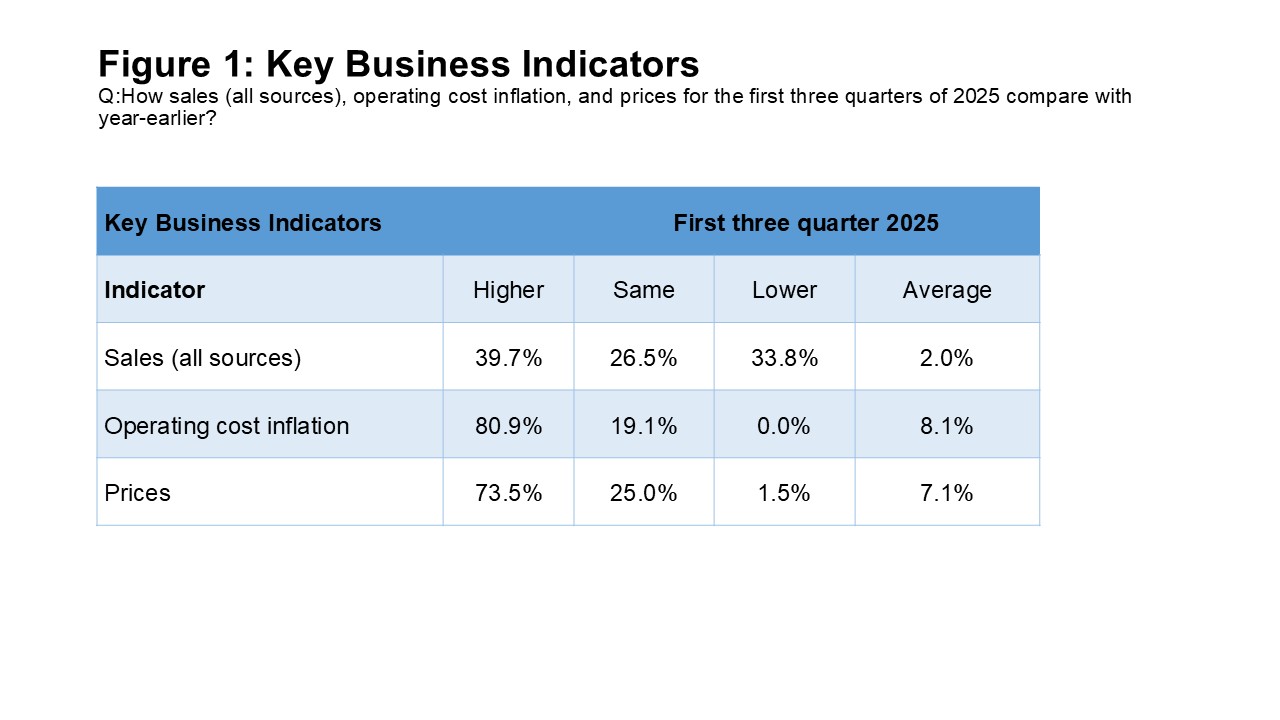
Figure 1. | Credit: Alliance Insights
Expectations for overall business conditions are mixed, reflecting both cautious optimism and elevated uncertainty. More than one-third of respondents (35.5%) expect conditions to improve in 2026, while a similar share (32.3%) anticipate business conditions will remain about the same. A smaller portion (11.3%) expect conditions to worsen.
Notably, 21% report that there is too much uncertainty to form a clear outlook, underscoring ongoing volatility and unpredictability in the operating environment (Figure 2).
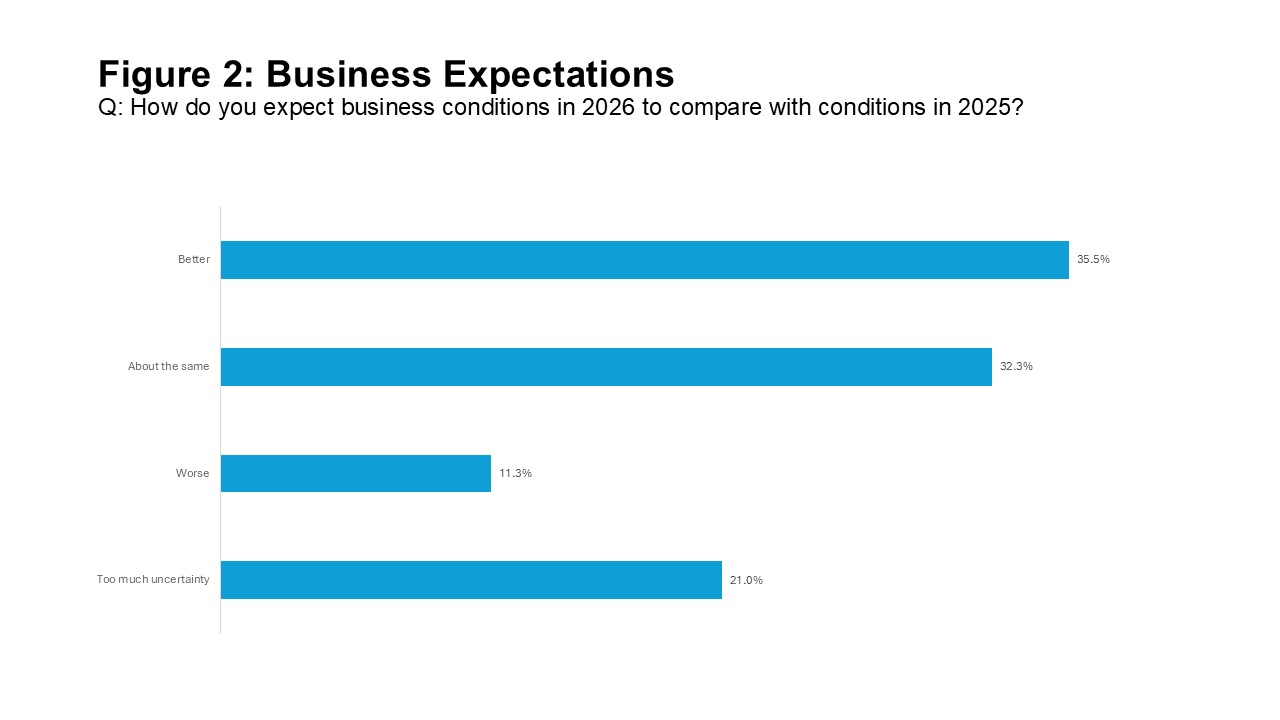
Figure 2. | Credit: Alliance Insights
Top Priorities for 2026
Looking ahead to 2026, participants shared a clear and consistent set of top priorities, centered on improving efficiency, controlling costs, and strengthening financial performance.
The most frequently cited priority is productivity, identified by 74.2% of respondents, followed closely by cost control (72.6%), reflecting ongoing pressure from inflation, labor challenges, and tight margins. Growth-related initiatives also feature prominently among participants’ priorities.
Marketing and brand-building — including promoting capabilities and articulating customer value — are priorities for 50% of respondents. Nearly half (48.4%) plan to invest in automation, while 45.2% aim to increase production speed and throughput, reinforcing the industry’s focus on operational efficiency.
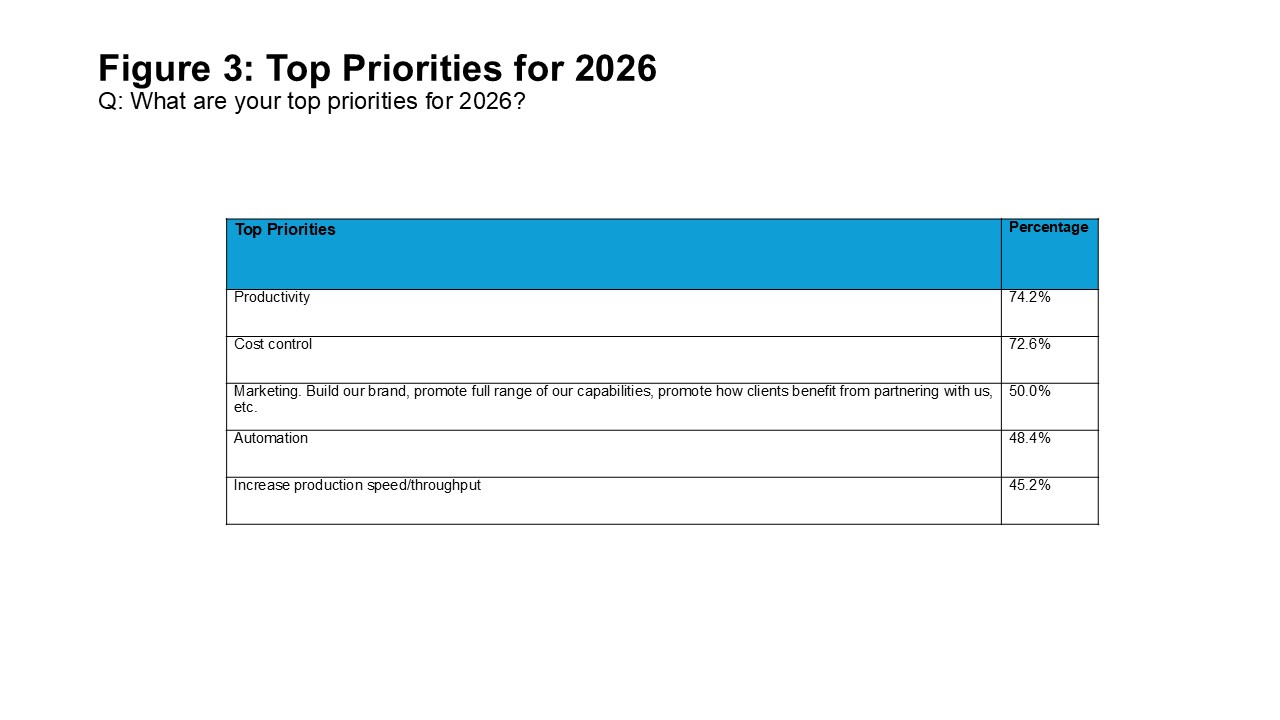
Figure 3. | Credit: Alliance Insights
Biggest Concerns
As the industry heads into 2026, apparel decorators’ concerns are dominated by cost pressures and economic uncertainty. The most frequently cited issues are rising labor costs and the overall economy/business conditions (both 51.6%). Nearly half of respondents are concerned about rising substrate costs and maintaining profitability (both 48.4%), while 45.2% cite challenges related to cash flow and rising ink or toner costs.
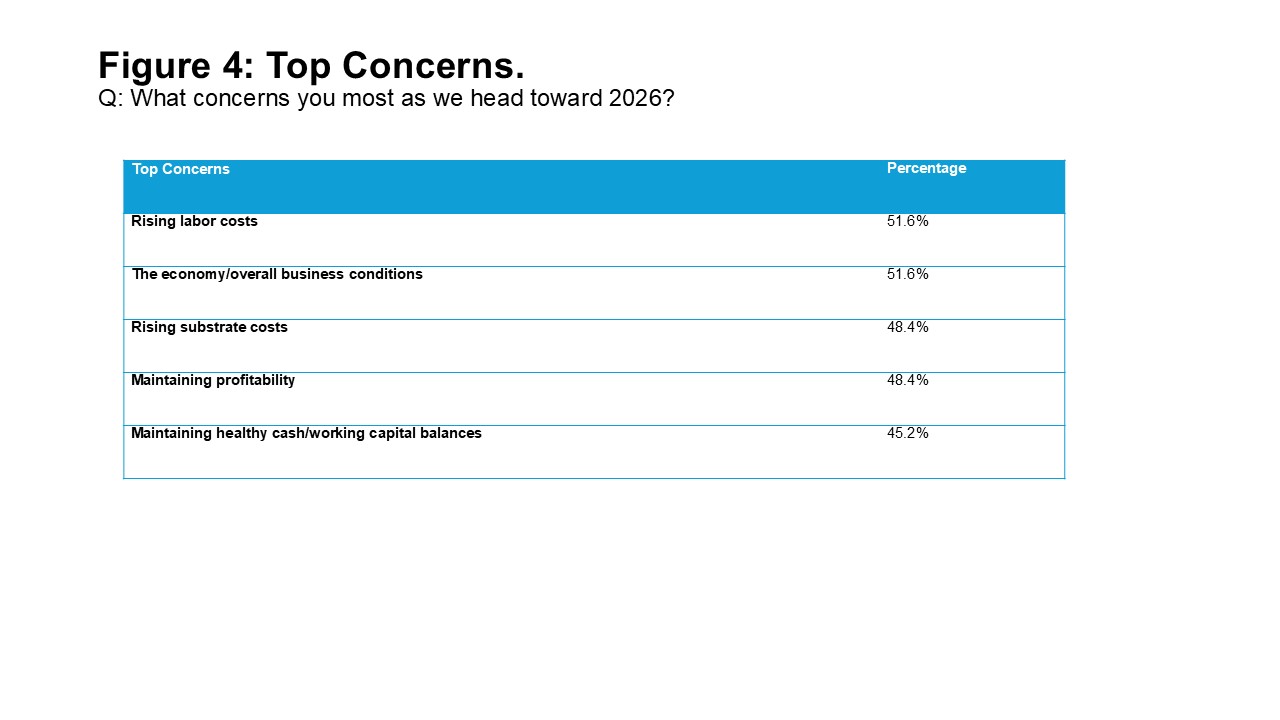
Figure 4. | Credit: Alliance Insights


