
The Big Picture: Economic Planning and Forecasting for Decorators
With 2025 being so economically tumultuous, it’s a good time for decorators to prepare for 2026.
“The shops that will thrive in 2026 are making their financial moves today,” says Adam Tanaka, a founder, growth partner, and keynote speaker at AdamTanaka.com. “They’re building cash reserves, securing equipment financing, and positioning themselves for growth opportunities while others are still figuring out what happened to 2025.”
We asked financial experts what shops learned this year and how to turn those lessons into next year’s advantage for decorators.
Lessons From 2025 to Build Resilience
The headline lesson of 2025: Market disruptions can happen at any time and take many forms. “During the last five years alone, we’ve had disruptions caused by erratic tariff policies, the most rapid inflation in decades, a global pandemic, and artificial intelligence,” says Andy Paparozzi, chief economist at PRINTING United Alliance.
During the pandemic, decorators learned the importance of proactively planning for a variety of unexpected outcomes.
“Decorators who can wargame the current complex geopolitical and economic environment, and be prepared for whatever happens through scenario modeling, will enjoy first-mover advantage in implementing those plans when their competitors will be scrambling to come up with a response,” says Alex Chausovsky, director of analytics and consulting at Bundy Group.

Preparing for disruption, whether economic, technological, political, or biological, requires decorators to scan their entire environment. According to Paparozzi, this includes:
- Researching trends you’re hearing about but haven’t experienced yet. “Don’t assume that something that isn’t affecting you today won’t affect you tomorrow,” he says. “Artificial intelligence is a great example.”
- Expanding your networks beyond people in your market segments and the decorated apparel industry. “We exclude outsiders, no matter how successful, because we assume they just don’t ‘get’ our business,” Paparozzi says. “But hearing views that are different from our own and aren’t limited by ‘that’s the way we do it in this business’ thinking stimulates creativity and innovation.”
- Building effective risk management and opportunity evaluation. Tools such as the Cagan Opportunity Assessment, Lean Canvas, and Product Opportunity Evaluation Matrix provide a review of which options best fit a shop’s specific resources, capabilities, and circumstances. “You’ll also learn which aren’t currently a good fit, no matter how much buzz they’re creating, and what’s required to make them a good fit,” Paparozzi says.
Finally, resilience should be built into every layer of a shop’s operation. “Decorators should learn that relying on a single supplier, customer type, or most importantly, revenue stream, leaves them exposed,” Tanaka says. “Going into 2026, the most successful shops will diversify their client base, strengthen relationships with suppliers, and keep a closer eye on cash flow.”
Paparozzi notes that shops should build flexibility across their companies so they can respond effectively to change:
- Finance: Maintain 90-day rolling cash flow projections and an emergency liquid reserve of three to six months of operating expenses.
- Operations: Automate, cross-train, and use flexible staffing through employment agencies.
- Costs: Convert fixed costs to variable costs wherever possible by building relationships with outsourcing partners.
- Supply chains: Diversify to reduce risk.
- Revenue: Diversify income streams by applying opportunity evaluation tools.
Tariffs Are the Biggest Surprise of 2025
Experts flagged tariffs as the most significant negative surprise of 2025, both in terms of scale and intensity. “Tariffs are clearly raising the cost of doing business for decorators, and the uncertainty around the future path of tariffs is causing firms to delay investment and, at some level, destroying end-market demand,” Chausovsky says. Some measures in the One Big Beautiful Bill Act (OBBBA), including accelerated depreciation and R&D credits, may offset part of the pressure.
In PRINTING United Alliance’s Effects of Tariffs on the Printing Industry Survey, nearly 90% of apparel decorators report that tariffs have affected their business. While 17.7% expect tariffs to increase demand for their products by “leveling the playing field” and reducing foreign competition, far more report reduced profit margins, increased operating costs, and disrupted supply chains.
One respondent summed up the planning challenge: “As anyone who ever ran a company or created marketing programs or invested in the stock market knows, the number-one thing people need is stability and certainty. What we have now is chaos. I want to run an aggressive promotion to offer a special pricing opportunity and attract new customers. How can I do that if I don't know the prices for T-shirts? My customers are already acting like they’re afraid to plan and afraid to order.”
Tanaka says print shops didn’t expect tariff hikes on imported apparel blanks, inks, and equipment, which sent material costs soaring and forced many shops to raise prices or absorb thinner margins. “Persistent high interest rates compounded the strain, making it harder for small businesses to finance upgrades or weather slow-paying clients,” he says, leading to the rapid adoption of AI and automation tools.

With 61% of PRINTING United Alliance State of the Industry Report (SODA) 2025 participants delaying or considering delaying capital investment due to uncertain business conditions, the sentiment may be to wait.
Focus on Positive Forward Momentum
Even with tariffs, interest rates, and uncertainty, financial experts say print shop owners can find bright spots if they focus on what’s working and where growth is occurring.
Despite headwinds, consumer demand on the retail side continues to create opportunities in branded merchandise, teamwear, and retail pop-ups. Retail sales excluding autos rose 0.5% in September (after +0.7% in August), and up 2.5% year-over-year.
“As long as the labor market avoids contraction, which should be the case if layoffs remain subdued as they have through the fall, the resiliency seen in the retail environment should continue into 2026,” Chausovsky says.
Productivity gains from automation are also at play, as companies of all types focus on maximizing automation and production speed, while minimizing inefficiencies.
State of the Decorated Apparel (SODA) Industry Survey Series
When you become a member of PRINTING United Alliance, you gain access to our SODA survey reporting and data. From insight into what your peers experience to where the profit opportunities lie, the SODA survey offers real data and reporting into the apparel decoration industry specifically.
Click here to become an Alliance Member

“Immediate expensing measures in the OBBBA will strengthen the cycle by encouraging capital investment despite the uncertainty created by erratic tariff policies,” Paparozzi says. “And if rising productivity and moderating energy costs tamp down inflation, short-term and long-term interest rates will decline, further encouraging capital investment.”
Print-on-demand (POD) stands out as a bright spot. According to SODA, 53.7% of participants are already enthusiastically offering POD in-house and expect sales of those services to increase 15.8% this year, accounting for 19.6% of print shop profits.
Focusing on Agility and Risk Management
Now is the time for decorators to strike a balance between cautious planning and the agility to adapt quickly when unexpected disruptions arise.
Print shop owners can focus on better understanding how to run a successful decorating business rather than just focusing on the day-to-day in the trenches. Tanaka recommends learning about financial planning, hiring a skilled accountant, and developing a comprehensive growth strategy, whether you’re selling or scaling.
Today, effective planning under all business conditions means turning to risk management and opportunity evaluation strategies. For example, Paparozzi points to tools such as risk registers, risk heatmaps, and scenario planning to help apparel decorators identify and rank the internal and external risks most likely to affect them during a specified period.
The next step is focusing on the most likely, high-impact risks for their shops.
“Opportunity evaluation addresses the question, ‘What’s really an opportunity for my company?’” Paparozzi says. “In apparel decoration, as in the printing industry at large, the gamut of opportunity is expanding, but the margin for error is shrinking.”
Chausovsky also recommends simulating and preparing action plans for various scenarios. This includes supply chain mapping with location, tariff impact, and Harmonized System (HS) codes, which are used to classify imports and determine tariff rates. “Make decisions based on data rather than fear, anxiety, or emotional response,” he says.
Smart Financial Strategies for 2026
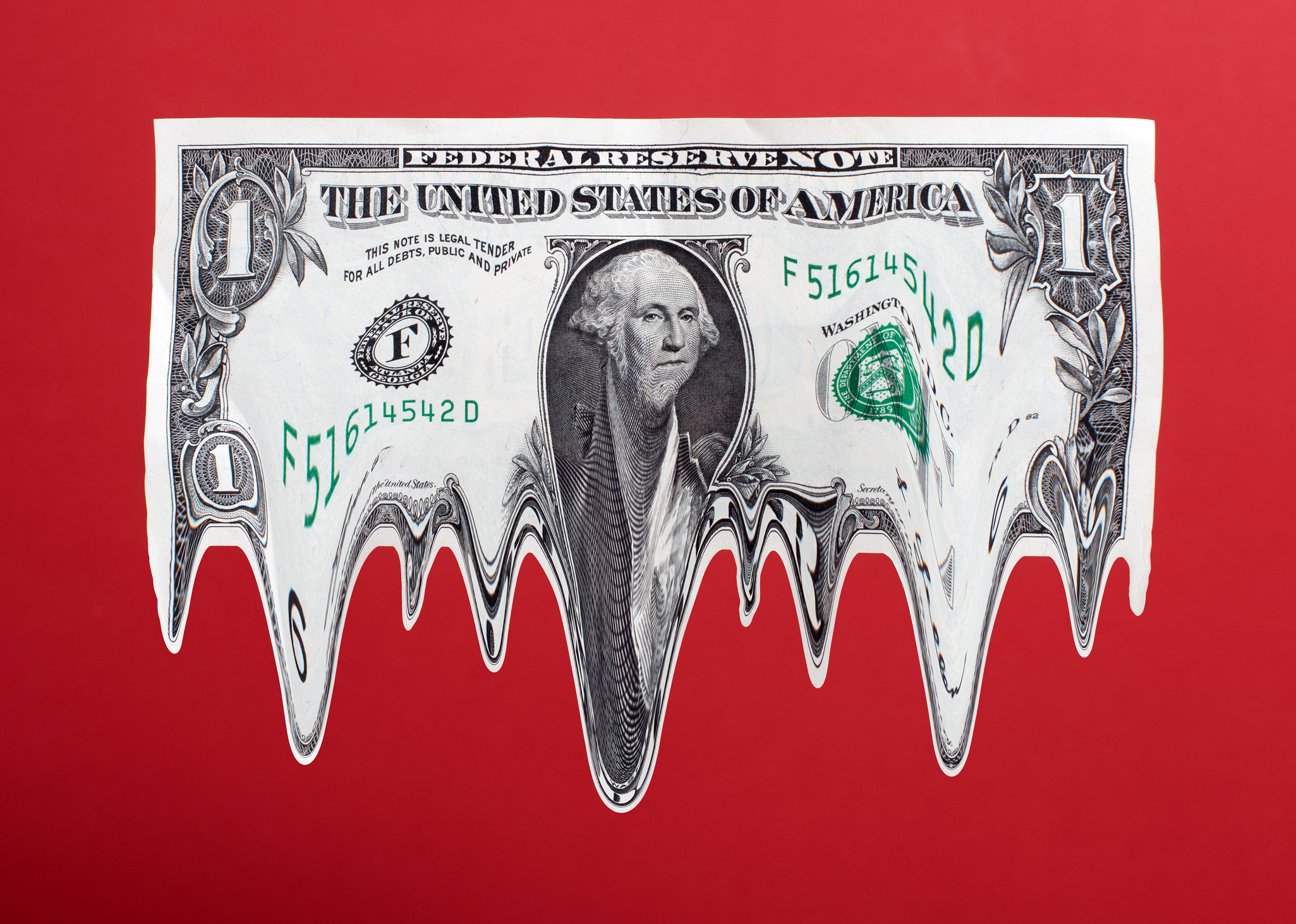
Tanaka points to a critical reality: many decorator shops are “flying blind when it comes to their finances.” He notes that they confuse being busy with being profitable, mistake gross revenue for actual earnings, and treat financial planning like an optional luxury rather than the business survival tool it actually is.
“If you can’t quickly tell me your gross profit margin, your average order value, and how much cash you have available for the next 30/60/90 days, you don’t have a financial foundation,” Tanaka says. “You have hope and hustle, which aren’t sustainable business strategies.”
Apparel decorators should also focus on maximizing productivity, not just in production but companywide in 2026. “Expect the pressure on profit margins to continue next year,” Paparozzi says. “Fortify your margins through capital investment that supports automation, smooths workflow, and boosts production speed.”
Cost control goes hand in hand with these other strategies. “Find the leaks and plug them,” Paparozzi says. “Find unnecessary steps and processes and eliminate or streamline them.”
Finally, exploring artificial intelligence is a must. “AI can enhance every mission-critical function from prospecting to production to cybersecurity, and automate routine, time-consuming tasks that weren’t automatable until now, freeing time for activities that create the greatest value for clients, employees, and the company,” Paparozzi says. “There’s no need to rush into anything, since AI is complex.”
The only thing worse than rushing into AI is ignoring it.
Looking to Technology and Automation
Video Credit: janiecbros, Getty Images
Serious shop owners are using the word “efficiency” as they head into the new year, with a strong focus on automation.
“Tech automation should already play a role in every shop at this point, but they should strongly consider AI in various departments as a practical advantage,” Tanaka says. “AI will help decorators stay flexible and profitable by automating repetitive, time-consuming tasks and turning raw shop data into actionable insights.”
For example, Tanaka notes that on a shop’s front end, AI-powered assistants can suggest print placements or sizing optimized for specific garments. In quoting and sales, AI tools can analyze historical data to recommend pricing strategies that protect margins while staying competitive.
“Beyond the efficiency part, the real power of AI lies in decision-making,” Tanaka says. “Shops can use AI-driven dashboards to understand which clients, products, or print methods deliver the highest profitability and adjust accordingly. It allows smaller teams to operate with the precision and insight once reserved for larger operations.”
That’s why print shops should have an eye toward investments that boost productivity, production speed, workflow, and automation. That emphasis on efficiency is clear in the latest PRINTING United survey results, where apparel decorators reported which investments they’d most like to make over the next 12 months. E-commerce solutions (52.1%) and workflow software (50.7%) were the most frequently cited.
“When we asked about their investment objectives — as in, what they most want their investments to achieve — ‘increase productivity,’ cited by 87.5%, was the most frequent response,” Paparozzi says. That was followed by “increase production speed” (68.1%) and “automate operations” (52.8%).
Make Your 2026 Financial Moves Today
After a year like 2025, clarity and discipline are what separate shops that thrive from those that struggle. Focus on forecasting beyond just sales, accounting for supply chain delays, financing costs, and seasonal slowdowns in your planning.
“Have a plan outside of just getting customers and printing orders,” Tanaka says. “Shops that thrive and those that barely survive have one differentiator. It isn’t luck or location. It’s the discipline to plan and the courage to face their numbers head-on.”