
12 Economic Planning and Forecasting Areas to Tackle
A 2025 shop plan for apparel decorators to follow in order to ensure success now and in the near future
As we approach 2025, businesses like yours start to wonder what next year might be like. What should we be thinking about, what economic planning should we do, or what should we be concerned about? To help explain some of this narrative, let’s look at a fictional shop, Lizard King Graphics, owned by a fictional owner, Jimmy Morrison.
Jimmy has been feeling the pressure to adapt to the changing landscape of the decorated apparel industry. He started his screen printing business in 2009 and has built a strong reputation. His shop has 19 staff members, including sales, art, production, and management. They do in-house screen printing, embroidery, digital printing, and most recently, they have been curious about incorporating direct-to-film (DTF). In the last two years, the company has sold more promotional items than ever to increase its average order revenue.
However, with evolving customer demands, technological advancements, and some economic uncertainty, he has become increasingly worried about keeping his shop competitive. Let’s explore how Jimmy and his team (i.e., you and your team) can tackle these concerns with a dozen ideas to ensure Lizard King Graphics thrives in 2025 and beyond.
No. 1 - Industry Trends: Smaller Orders, Bigger Challenges
Concern: How can we adapt to the trend of smaller but more frequent orders while maintaining profitability?
Suggestions:
- Integrate software to automate order processing, streamline order entry, file setup, and workflow. For example, Jimmy could move from using spreadsheets or manual tracking to a system with automation tools, a CRM platform, and an information database. This software can be coupled with API integration tools like Zapier to automatically perform tasks, handle drip marketing, or handle other labor-intensive tasks.
- Invest in workflow optimization. Jimmy should create standardized workflow templates for all processes in-house. The continuous improvement program would eliminate downtime and waste in every department. KPI tracking ensures new ideas create the desired results.
- Develop an action plan. Since more customers are asking for faster turnaround times with smaller quantities, Lizard King Graphics should investigate how to create a more effortless ordering experience that is aligned with how each order can be produced faster.
Action: Jimmy should assign his production manager, Sandy, to coordinate efforts with suppliers, internal stakeholders, and outside consultants to build a better workflow and effective environment. Adding new equipment, such as a DTF printer, is only one step. Sandy can create a more holistic approach to problem-solving that is set up to scale.
No. 2 - Technology and Innovation: The Age of AI

Concern: How do we use AI tools to improve?
Suggestions:
- Integrate ChatGPT (or other content AI). Jimmy can use AI to help build a marketing plan, respond to common customer questions, write SEO-friendly production descriptions for website offerings, or even construct an employee handbook.
- Use AI image creation tools. Carlos, the artist at Lizard King Graphics, can employ Midjourney to help create unique images, backgrounds, textures, and other visual elements for designs quickly. Patterns and textures work well as backgrounds inserted into shapes or logos for digital printing or DTF jobs. It is an easy and profitable way to be different.
- Automate DTF prep. One way to increase productivity with less labor in the DTF arena is to utilize AI-driven software such as Caldera to automate the image prep, arrangement, and film-printing placement for DTF transfer printing.
Action: Jimmy should task Carlos with testing different AI tools with small experiments to learn how to use them. Part of the research will compare the time savings by using the AI tools compared to handling the tasks initially. From there, the financial savings can be calculated.
No. 3 - Focus on Value, Not Price
Concern: Jimmy has been worried about the recent influx of customers complaining that they can get what he offers cheaper elsewhere. He doesn’t want to be a commodity. Instead, he wants Lizard King Graphics to shift the business focus to providing more high-value, experience-driven services that will generate more profit per customer.
Suggestions:
- Create a VIP program. Jimmy should conduct an 80/20 deep-dive into his customer base to determine his best customers. This means his top 20% of customers provide 80% of his shop's total revenue. Jimmy and his team need to strengthen … and clone these relationships. What matters most to each of these customers? Be purposeful in creating happiness.
- Offer time-saving solutions. How can they create a frictionless and easier workflow for Lizard King Graphics clients? Look at things from the customer's point of view and build ways for them to save time with the process. Usually, this starts by simplifying sticky points. Be creative and find solutions that work.
- Upsell with higher quality. Instead of competing on price, Jimmy’s team could educate customers on the benefits of higher quality garments, interesting and newer decoration techniques, post-production ideas such as packaging or fulfillment, or bundling items with promotional marketing merchandise.
Action: Jimmy’s marketing intern, Katie, should develop educational content highlighting more profitable work. This content should be dropped into an automatic drip marketing program so new customers will enter the marketing sequence when they start using Lizard King Graphics. Katie should have all of its customers in a marketing drip 100% of the time.
No. 4 - Operations: Effectiveness is Everything
Concern: Lizard King Graphics feels stuck in the “way we’ve always done it.” Jimmy knows they haven’t kept up with newer production techniques or methodologies and wants to change, but he is unsure where to start. Here's where key economic planning can help.
Suggestions:
- Build key performance indicators (KPIs). It is nothing new or fancy. Jimmy and Sandy must measure production steps to form a baseline for their team’s performance. In every instance, measure “how many” and “how fast.” Improvement steps start when the entire team wants to eliminate wasted motion, time, and consumables. Everything has a number. The question is, “Is it a good or bad number?”
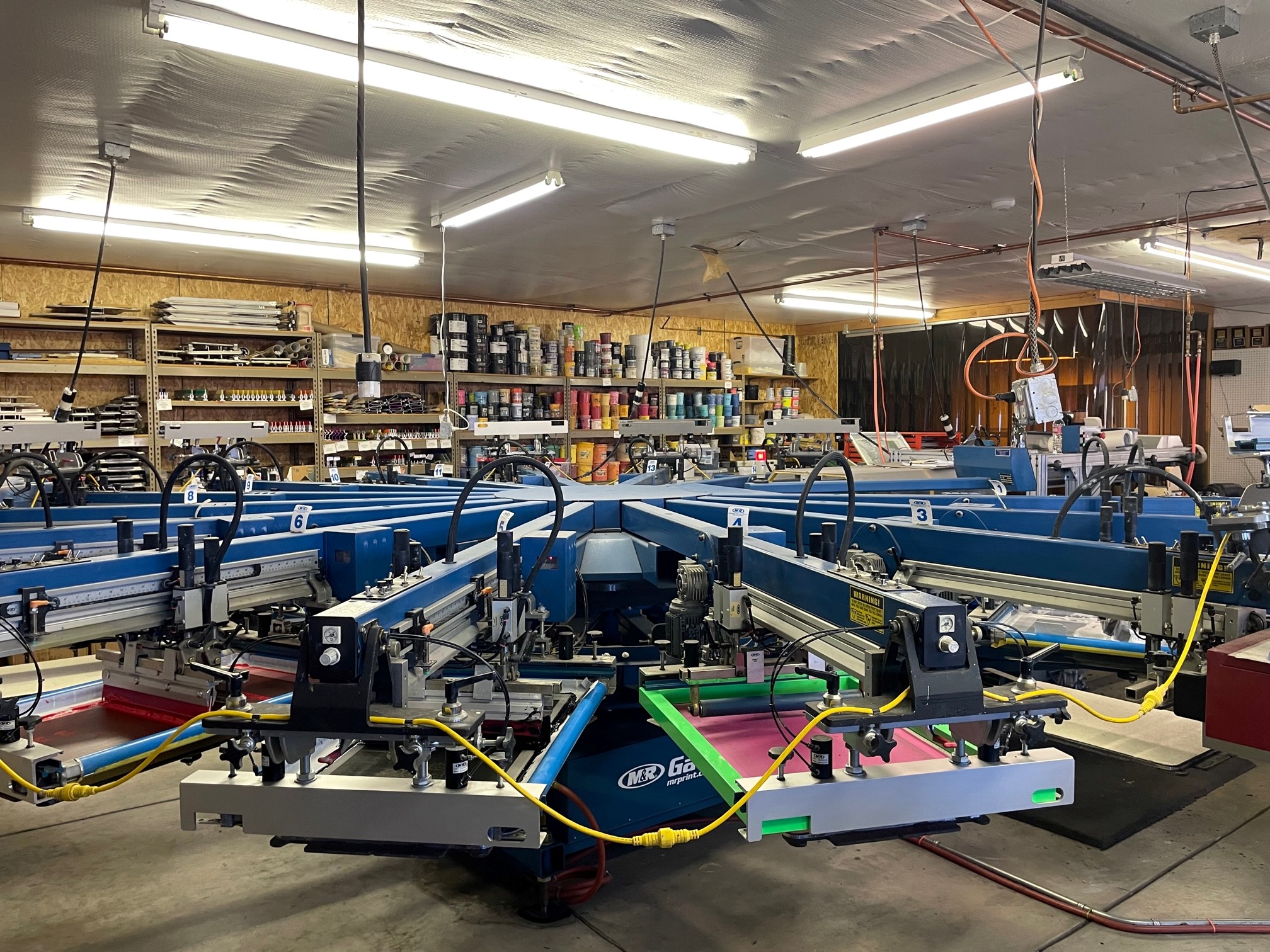
- Reduce downtime. Sandy can list why the equipment isn’t running production. The goal is to eliminate the reasons — and excuses — why they aren’t printing or embroidering at any given time.
- Efficiency versus effectiveness. One thing to champion: be effective. This is different from being efficient. Jimmy knows all too well what it is like to have production blitz through a job at record speed, only to discover later that they printed the wrong design on the garment. Efficiency is doing things quickly. Effectiveness is doing them correctly. To produce more per day, the emphasis should be on being more effective throughout the company. This leads to higher profits.
Action: Jimmy should hold consistently scheduled meetings with his key staff to review KPI data and collectively brainstorm on improvements as a team. Small improvements, with consistent effort, stack up. If five departments make one small change each week, Lizard King Graphics will have made 260 improvements to the business in a year.
No. 5 - Balancing Talent and Labor
Concern: Jimmy is concerned about the job market. Last year, a few key people left to take higher paying jobs, and he couldn’t match their compensation package even if he wanted to. With the influx of technology, some team members distrust using tools like AI as they fear they will replace them.
Suggestions:
- Invest in employee training. Jimmy should use new technologies to build training programs for his staff. For example, Carlos can use Midjourney to help with the design load, while Sandy can use ChatGPT to analyze production performance and make recommendations.
- Offer growth opportunities. Lizard King should double down on creating a solid bench of cross-trained employees. Employees who show promise should advance to the next level by getting experience in roles they will be challenged with next. For example, Katie might be placed in charge of an extensive marketing campaign that she designs while Carlos preps a new series of designs for key customers that Lizard King will sample to help increase sales.
- Focus on company culture. Instead of an “Exit Interview” when an employee leaves, Jimmy should conduct a “Stay Interview” to discover why his employees work for him. What drives them and makes them excited to come to work every day? By focusing on the company culture, Jimmy can create a positive work environment to maximize his retention goals.
Action: Set up employee performance reviews twice a year. These should be based on the hire date. Compensation increases are on the annual meeting only. The main topics in each review are job performance, employee satisfaction, and company culture. Performance goals are set to be achieved by the following employee review in six months. Managers are evaluated on the ability to get their staff to achieve their goals as outlined in the reviews.
No. 6 - Maximizing Reach with E-Commerce
Concern: Jimmy knows other shops in the industry that have traveled deep into creating client webstores and coupled that with a print-on-demand (POD) experience. He feels that he’s lost out and won’t be able to catch up.
Suggestions:
- Just start. It’s not too late! Jimmy needs to work with his team to develop a templated process for selling, building, maintaining, and processing webstores. Start with creating one for Lizard King Graphics to understand how everything works. He can have his crew use the platform and order the next round of shop shirts. Then, he can collect feedback. Once Jimmy feels they have a good foothold on the process, he can take the online webstore idea out for a sales spin.
- Other sales. E-commerce could also offer another avenue for incoming revenue. Jimmy could build a brand around Lizard King and offer apparel and merchandise for lizard and iguana pet owners. These could be sold on Shopify, Etsy, or Amazon. Diversification with revenue is always a good idea.

- Production logistics. Jimmy needs to consider how to scale if the different sales avenues succeed in any POD scenario. These orders typically expect a tighter turnaround time, so automation steps and solid processes will benefit. Carlos must map out a solid process to stay on track and minimize labor.
Action: As any sailor knows, you must adjust your sails with the wind to travel faster. It is not too late for Lizard King Graphics to enter the e-commerce game. Many industry suppliers are eager to help and support them in their efforts. Jimmy simply needs to take the first step.
No. 7 - Financial Planning
Concern: Jimmy feels that as an owner, he is not generating the profit he should be and sometimes struggles to meet financial goals and obligations during the year. Economic planning plays a key role here.
Suggestions:
- Require 100% payment upfront. Lizard King Graphics is not a bank. A big part of the problem is the constant ebb and flow of the accounts receivable (AR) list. While most months keep customer payments under 30 days net, a few customers have gone past 45 days without paying. Getting all the money upfront will strengthen their financial position and help them meet their financial obligations more efficiently.
- Implement profit first. Mike Michalowicz's best-selling book “Profit First” has inspired many of Jimmy’s industry colleagues to adopt this financial strategy. Jimmy needs to find a Profit First Professional accountant to help reorganize the financial infrastructure in his area. This move will help create a solid foundation for better financial health for Lizard King Graphics.
- Set financial goals. Jimmy has operated his business since 2009 and has never set a budget, sales, or profit goal. The company has simply evolved over the years, and although successful, Jimmy hasn’t worked on this part of the business. One thing that will help Jimmy is consistently managing numbers. Constant focus on total revenue, gross profit, and net profit as Lizard King Graphics moves through the year will help Jimmy understand the company's current health. Setting and working to achieve financial goals could be a step in the right direction.
Action: Jimmy needs to work with his new accounting team to develop a financial dashboard that can be used to review the business's current fiscal health. It doesn’t have to be fancy, but it does need to be constantly updated with real information. Understanding what just happened can help Jimmy make better decisions for the future.
No. 8 - Preparing for Uncertainty
Concern: Jimmy constantly fears that the economy and market will collapse under him. He monitors reports and reviews trends but can’t shake the feeling that a big shoe is about to drop. This is a slightly different approach to economic planning.
Suggestions:
- Create a worst-case scenario plan. What would happen if the bottom dropped out like when COVID-19 struck? Entire businesses were wiped out. But not all. What would Jimmy need to do to survive another market collapse? He could build up a war chest of cash in a savings account for at least six months of expenses. Get loans and credit cards paid off, and minimize the amount of financial obligations for Lizard King Graphics. Jimmy could also think about how he might use this as an opportunity. His competition might go out of business, or real estate opportunities around him could surface. What would he need to do to be prepared to take advantage?
- Create a best-case scenario plan. What happens if everything Jimmy and his team is working on takes off? Unbelievable success is at their door. Do they have the production infrastructure to get all of the orders out the door with quality? Are processes in place? Would they need to hire or use temporary workers to augment their current team? How will they scale the company?
- Pricing and planning. Historically, Jimmy has used an average of all the shops around him, but lately, that hasn’t generated the money he wants to make. Reviewing the shop financials, his team needs to arrive at real numbers for what it takes to do the work. Pricing matrices are built using real numbers of what it costs the shop to operate, and a determination of how much profit each order should generate. This is constantly reviewed and adjusted.
Action: Jimmy should dig into the math behind all of Lizard King Graphics' work. What should they be making with that effort? As part of a new sales effort, Jimmy needs to push for sales with better clients who will happily pay for the value his company delivers and say no to unprofitable orders.
No. 9 - Diversify the Supply Chain

Concern: One nagging challenge that keeps creeping into a major concern is that some of the suppliers that Lizard King Graphics relies on have been out of stock on items or don’t seem to provide the same level of service as previous years. This has caused Jimmy to apologize to customers more than once for something out of his control.
Suggestions:
- Establish new relationships. Jimmy should research and set up accounts with several more suppliers for any critical purchases. Discover what it is like to order from them. Do they make it easy? Are the orders received accurate when they come in? Are they on time?
- Test new products regularly. It’s easy to get into a rut and use a favorite consumable or garment blank. However, there may be a better product on the market or one that is just as good that you can use when something is out of stock. The only way Jimmy’s team will know this is if they keep their heads up and test on a regular basis. They should do this before they need to.
- Avoid overbuying. While it is tempting to stock up on materials, doing so comes with a challenge: It ties up cash in excess inventory. Jimmy’s financial team should set limits and constraints on purchasing. The team could also use an app like Sortly to manage inventory levels of virtually everything in the building.
Action: Consumables and blank inventory can tie up a large chunk of cash, so Jimmy and his team should schedule a quarterly audit of what’s on the floor. Understanding usage cycle times could help minimize expenditures and free up cash for other uses, helping Lizard King Graphics stay nimble.
No. 10 - Sustainability
Concerns: Jimmy has long advocated for sustainability as an avid outdoor enthusiast. Protecting the environment and doing things better always seems to be at the top of his mind. However, he has yet to push that into his business priority list. It now seems like more of his customers are focused on sustainable options, so this feels like the right time to start.
Suggestions:
- Know your ‘why.’ For Jimmy to get this initiative off the ground, he needs help in the shop. It will be a business-wide effort. One place to start is with a Sustainability Committee that works on the “why.” Everyone on the committee may have different ideas, so it is important to build an agreement on the “why” for the shop as a whole.
- Eliminate waste. One easy way to start a sustainability effort is to reduce waste. This could be wasted time, energy, or products and consumables. In Jimmy’s shop, any time they have to do something over or rerun an order due to a mistake is an example of waste. The first step in the process is to go around and name the waste. Jimmy could have every department name their top three waste examples and start working on those.
- Research and get help. Jimmy’s team could contact many industry sources for more information. Better products, methods of working, techniques, and technologies are available. One fantastic source is the Sustainable Green Printing Partnership.

Credit: Getty Images by Andriy Onufriyenko
Actions: Jimmy and his team simply need to start. For sustainability, look to improve three areas. People - how people think and act about being sustainable at Lizard King Graphics. Process - how they perform their tasks, their decisions, and their consumables and tools. Envelope - the building and grounds on which Lizard King Graphics operates. What better choices could the team make in these three areas?
No. 11 - Sales: It’s All About Relationships
Concern: Sales used to drift into Lizard King Graphics almost automatically. It seems like those days are past. Jimmy puts a lot of money into pay-per-click and social media boosts, but he doesn’t feel it works like it should.
Suggestions:
- Find your bullseye. Jimmy needs to rewrite his business plan and determine his ideal customers with specificity. Once Lizard King Graphics fully understands who they want to target, they can develop a Top 50 or Top 100 customer list to pursue. This is a relationship-based industry. You must establish personal trust with people to acquire orders that move the needle on sales goals. Jimmy should revamp his sales effort in this direction.
- Customer retention. It’s always easier to keep a customer than to acquire a new one. Jimmy needs his sales team, led by Martha, to develop a customer retention plan. This should be an active personal campaign focused on developing relationships and experiences with Lizard King Graphics.
- Show up. Jimmy and his team should actively work on where and how they show up for their top customers. Can they conduct a workshop on new ideas to help drive revenue with merchandise for a brand or company? Do they help support a customer with their non-profit fundraising goals? Could they teach classes and show off the latest trends in workwear to a group of HR professionals at a luncheon or trade show?
Actions: Sales success is directly proportional to the effort put in with intent. Previously, Jimmy ran his business like an oyster on the bottom of the ocean, where sales would simply drift down and land in their open mouth. With markets changing and new competition, Lizard King Graphics should operate more like a barracuda and hunt for better clients and new opportunities.
No. 12 - Collaborations: Expanding Opportunities
Concern: Jimmy has been tuned to the number of collaborations happening around him this past year. (Think Liquid Death + Yeti or Nike + Ben & Jerry’s.) There is some FOMO, and he’d like to do something. The question is, where to start?
Suggestions:
- Partner with local influencers. You don’t have to partner with a huge corporation. Scale down the collaboration and partner with someone your own size. Try finding local influencers, artists, musicians, or well-known people and build something unique together. This could be a limited-edition garment, design, or live activation event.
- Co-brand with local businesses. Team up with local restaurants, breweries, distilleries, art galleries, or event spaces to offer co-branded apparel to drive sales and open new doors to new markets.
- Cross-promote. Lizard King Graphics could collaborate with other local businesses to promote complementary goods and services. Jimmy would send work their way, and they would send apparel orders back.
Action: Jimmy should seek out collaborations first by being social. He should have lunch with or buy someone a beer or coffee and compare interests and creative thoughts. His new collaborator or partner is only a handshake away!