
AI Print-on-Demand: The Future is Now, But Proceed with Caution
The print-on-demand (POD) industry is poised for another revolution thanks to groundbreaking technological advances in artificial intelligence (AI). While traditional POD methods have served businesses, AI is set to revolutionize the industry by automating processes and unlocking new capabilities.
As with any disruptive technology, AI in POD presents benefits and risks that demand careful navigation. In this article, we'll delve into the pros and cons of AI print-on-demand automation in today’s market.
The Print-on-Demand Revolution: Tradition Meets AI
In the ever-evolving world of retail, the print-on-demand industry has been merging customization and flexibility. On one side, we have traditional print-on-demand, which involves some automation combined with a hands-on approach. Employees handle orders in tandem with automation, such as when sending design files to printers and shipping products to customers. This method allows for a high degree of customization but can be time-consuming and labor-intensive.
By harnessing the power of artificial intelligence, the AI approach further automates the entire process, from analyzing orders to generating art and print files and managing production and fulfillment. It's potentially a streamlined solution that enables businesses to handle more orders faster and more accurately.
Eliminating manual or repetitive tasks frees up valuable time and resources. It gives your business the gift of foresight to catch potential issues well in advance while giving you more time to focus on innovation projects that advance your business.
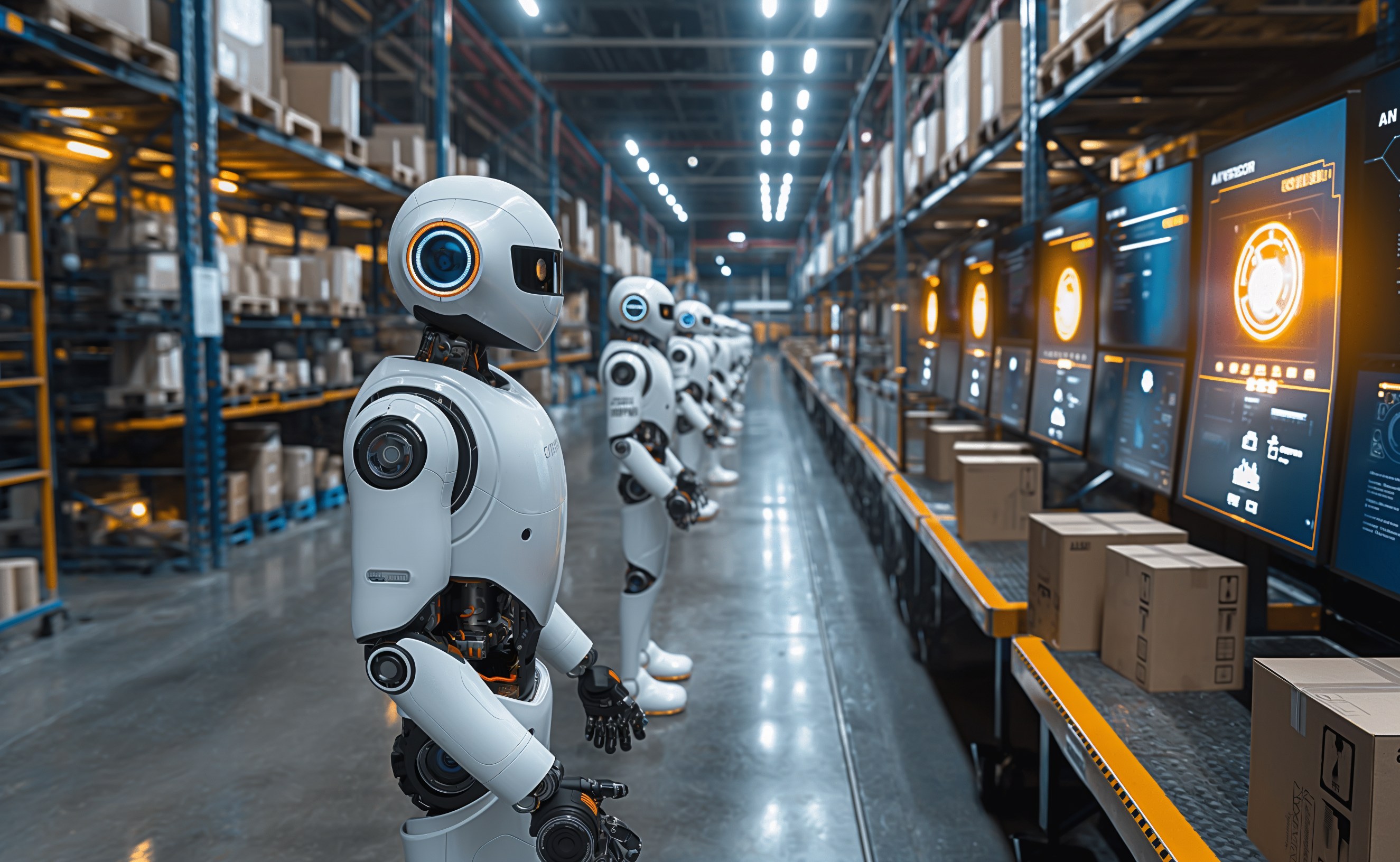
Of course, “traditional” print-on-demand has its merits. With lower startup costs, it remains an attractive option for those just starting or testing the waters because of low or no AI tech investment. As AI becomes more accessible, it's clear that the future of print-on-demand lies in AI automation. Businesses that embrace this technology will be well-positioned to thrive in an increasingly competitive market.

The Upside: Efficiency, Scalability, and a World of Creativity
The primary advantage of AI print-on-demand is its ability to streamline the entire process, from order processing to fulfillment. By leveraging machine learning algorithms, AI can automatically analyze customer preferences, generate personalized product recommendations, and optimize dynamic pricing strategies.
One of artificial intelligence's primary goals and benefits is to enable seamless automation — the ability to perform tasks with minimal human intervention while maintaining and improving quality. Moreover, AI is opening new creative possibilities for POD businesses. Tools like Midjourney, Ideogram, and Stable Diffusion enable the rapid generation of product mockups and designs. This means shops can get new products to market faster than ever before.
Some ways AI can benefit print-on-demand:
- AI-powered press monitoring systems detect issues and adjust real-time settings to maintain quality. This is something to look for at vendor events and trade shows.
- Workflow automation handles order processing, shipping, inventory management, and other repetitive tasks.
- AI-driven target marketing enables highly personalized campaigns to attract the right customers.
- AI inventory management forecasts demand, automates replenishment, and communicates delays.
- Dynamic pricing uses AI to adjust prices based on demand and competition intelligently.
- AI systems can help prevent customer loss and identify poor service quality.
- AI-powered systems can automate many low-level, repetitive tasks, such as providing automated, conversational customer support through AI chatbots.
- Generating personalized product recommendations for customers.
- Scheduling and sending automated email campaigns. We’ve all likely experienced this during our current U.S. election cycle.
- AI quality control is in early development. Still, it offers an AI assist to QC to improve yields and efficiency on fabrics, prints, packaging, and any aspect of the business to optimize quality.
- AI for consumable and waste analysis means lower operating costs and carbon footprint.
Businesses can free up valuable time and resources by delegating these routine, high-volume operations to intelligent automation. This allows them to instead focus on higher-level strategic initiatives, creative work, and other tasks that require uniquely human skills and judgment.
AI systems are designed to perform these tasks with the same or improved accuracy, consistency, and timeliness as manual human effort. The algorithms powering the automation learn and optimize to enhance performance over time. In this way, AI enables businesses to achieve greater efficiency, productivity, and customer satisfaction — all through seamless, intelligent automation of repetitive, labor-intensive processes.
Better Security
Print shops rely on many file transfers, representing a cyber security risk, but AI can help mitigate the danger. Advanced analytics allow AI to monitor your network for anomalies, which can reveal security breaches before they become a significant problem. Fraud detection and prevention machine learning algorithms can analyze millions of transactions in real time, quickly identifying patterns and anomalies that indicate fraudulent activity.
By adapting to evolving fraud techniques, AI-powered systems significantly reduce financial losses for businesses. They can detect attempts at identity theft, payment fraud, fake reviews, and more. While implementing a full-scale AI fraud prevention solution may require significant investment, it is necessary for businesses looking to protect themselves and their customers as online fraud continues to rise.
As technology advances, the scope and impact of this automation will only grow.
The Downside: Quality, Uniqueness, and Legal Risks
Keep in mind that AI also creates a lot of fraud and questions.
Concerns exist about the market becoming saturated with AI-created designs that fail to meet customer expectations. AI-generated art often requires adjustments to make it truly unique and sellable.
Additionally, businesses must be cautious about copyright issues when using AI-generated content. While technology advances rapidly, it's crucial to ensure that AI-created designs are sufficiently modified to avoid legal troubles.

Data Privacy and Security Concerns
AI algorithms rely heavily on consumer data to power personalized recommendations and predictions. However, collecting and storing this data raises concerns about privacy and protection. AI also introduces new security risks for companies, potentially leading to accidental leaks or breaches of proprietary intellectual property.
High Upfront Costs
Implementing AI solutions requires substantial initial investments in infrastructure, talent, and ongoing maintenance. Businesses must carefully evaluate whether the potential benefits will yield a positive ROI. The high costs can be prohibitive for many smaller operations.
Risk of Poor Customer Experience
When executed poorly, AI-powered customer service can lead to frustrating user experiences. Chatbots and virtual assistants may need to provide the same level of empathy, nuance, and problem-solving ability as humans. This can cause friction, dissatisfaction, and even reputational damage to the business.
To overcome these challenges, companies must thoughtfully approach AI adoption. Robust data governance policies, cost-benefit analysis, and focusing on enhancing rather than replacing human interactions are critical.
Human Job Displacement
Using AI to eliminate repetitive tasks and streamline efficiency can be very alluring. It is essential to consider the ethical implications of adding AI to any aspect of a business, not only in terms of human job displacement but also in understanding that relying on an AI to fulfill the role previously held by a human means a loss of human knowledge.

While AI will develop over time, the rules and regulations regarding AI are still being determined, so they will change, meaning any displacement that has already happened may have a negative outcome for a business primarily focused on AI for displacement.
The EU is ahead of the U.S. in developing regulations for AI. This means some European businesses have invested in ethical measurement when adopting AI. Rolls Royce has offered The Aletheia Framework as a tool for implementing ethical AI, which may provide companies with a way to advance AI safely ahead of future regulations.
The Bottom Line: Proceed with Caution
As with any significant business decision and disruptive technology, implementing AI in your POD operations necessitates thoughtful consideration. While the allure of increased efficiency and creativity is undeniable, balancing them against the risks of lack of uniqueness and legal entanglements is crucial.
Successful AI adoption in POD hinges on striking a delicate equilibrium — harnessing the technology's capabilities while upholding high standards of quality, originality, ethics, and compliance. Businesses that can navigate this balance will be primed to thrive in the AI-driven future of print-on-demand. However, it's important to note that the long-term viability of AI-heavy POD strategies remains to be seen.
As the technology and market evolve, businesses must stay nimble and adaptable to ensure their AI investments yield a positive return. AI is undoubtedly poised to reshape the print-on-demand industry in the future. But for those seeking to harness its power, proceed cautiously and always keep the customer at the heart of your decisions. If you want to learn more, follow Fahrenheit AI Vlog @InkKitchenYouTube.