
What Apparel Styles, Cuts, and Colors are on Tap for 2026
2025 was the year of personalization, direct-to-film (DTF), sleek minimalism, and bold graphics. So, as we close the door to 2025 and usher in 2026, what’s staying, what’s going, and what should the apparel decoration community be keeping a close eye on?
We chatted with Tami Miller, director of creative marketing for LAT Apparel, and Milissa Gibson, director of sales for Lane Seven Apparel, who look into their crystal balls for 2026. Find out what they foresee as the big trends in blanks.
Nostalgia is Key
As we continue to face a world filled with economic, social, and political uncertainty, apparel decoration insiders like Miller believe consumers will turn to vintage apparel to help anchor them in these wavering times.
“In 2026, several aesthetic themes will shape decorated apparel, driven by shifts in consumer mindset and spending behavior,” Miller says. “Nostalgic minimalism — vintage washes, heritage graphics, and simplified layouts — will resonate as consumers seek comfort and familiarity in an unpredictable economy.”
Gibson shares a similar sentiment. She believes that as people continue to seek connection and familiarity from the 1970s and ‘80s that a surge of puff embroidery, patches, etc., is going to be apparent in the new year.
“Everyone wants their old grandpa’s John Deere hat, right?” Gibson says. “And that had an embroidered patch on it, right? And you know, kind of that old-school ‘70s, ‘80s aesthetic was a lot of patches, and you’re seeing that apparel is getting really elevated with 3D logo emblems and heat transfer and silicone.”
Essentially, Miller believes that techniques like embroidery, patches, appliqué, and puff prints will continue to gain momentum because they add texture, depth, and a premium hand-feel that digital-only prints can’t fully replicate — evoking feelings of nostalgia.
Music is a Driving Force
For Gibson, she believes apparel trends are being driven by music and cult classics merch.
“I think almost ‘Devil Wears Prada,’ that infamous scene where she’s like, ‘That color blue is because Balenciaga used it five seasons ago.’ It’s still the case, but what’s driving them is the aesthetic that musicians like Pharrell, Tyler the Creator, Taylor Swift, Kendrick Lamar, all of them are having massive effects on how apparel is being decorated and the fit and the aesthetics that are happening all over the place,” Gibson says.
It’s because of music’s influence on apparel decoration that Gibson thinks we’re going to continue to see big, bold ‘90s graphic prints, along with a shift in T-shirt weights as people seek to achieve the “old-school” look.
“You’re seeing kind of a mix of like old-school rock’n’roll mixed with a little bit of grunge,” she says. “And you’re seeing a lot of textures, corduroy, thermal … And you’re seeing weights kind of even out where we were going into extreme weights like 8-, 9-, and 10-oz. T-shirts. Now it’s kind of shuffling its way back down into a 6.5- to 5.5-oz. range.”
Neutrality is In
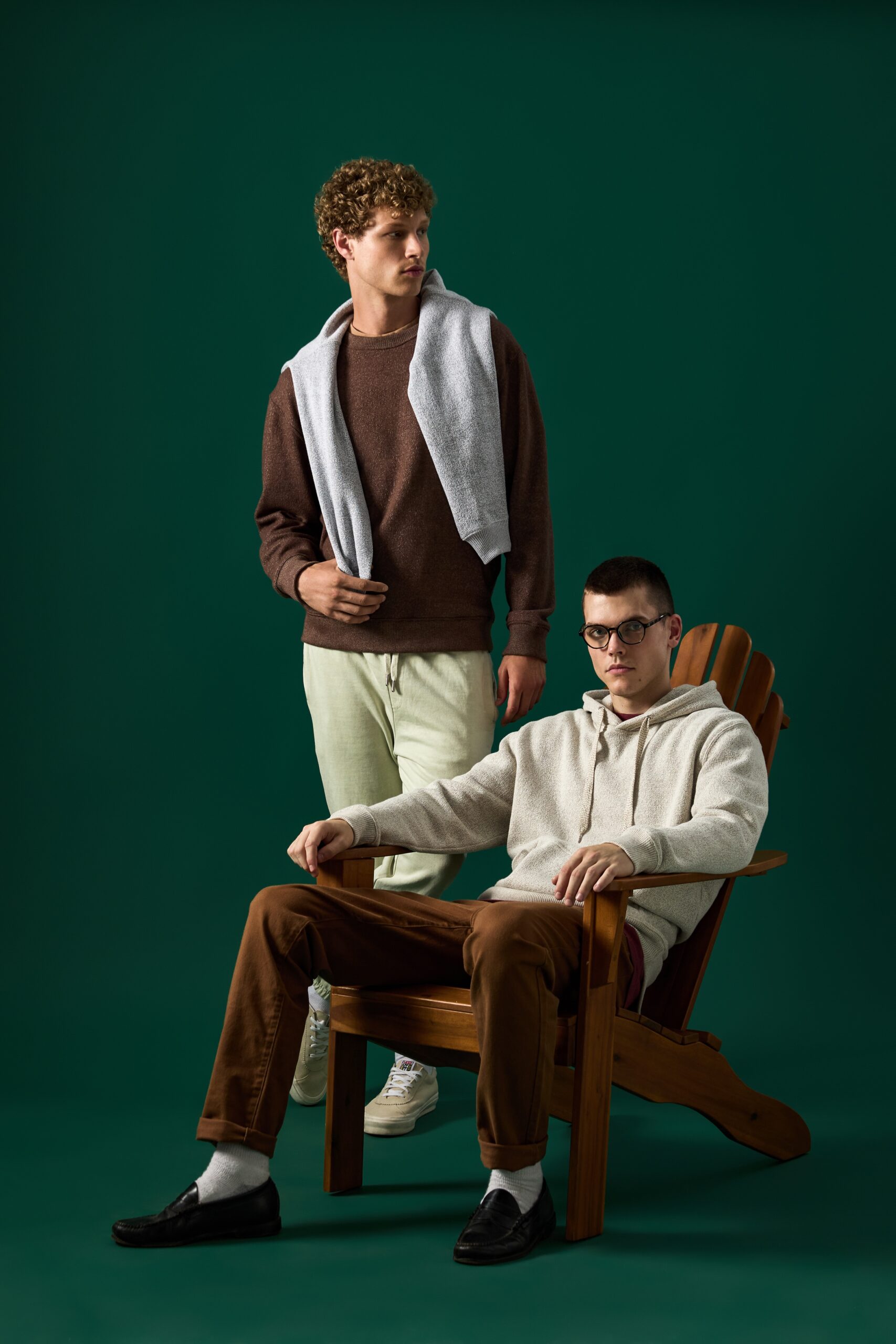
Neutral earth tones will dominate in 2026 — especially as sustainability remains a constant in everyone’s minds. | Credit: Lane Seven Apparel
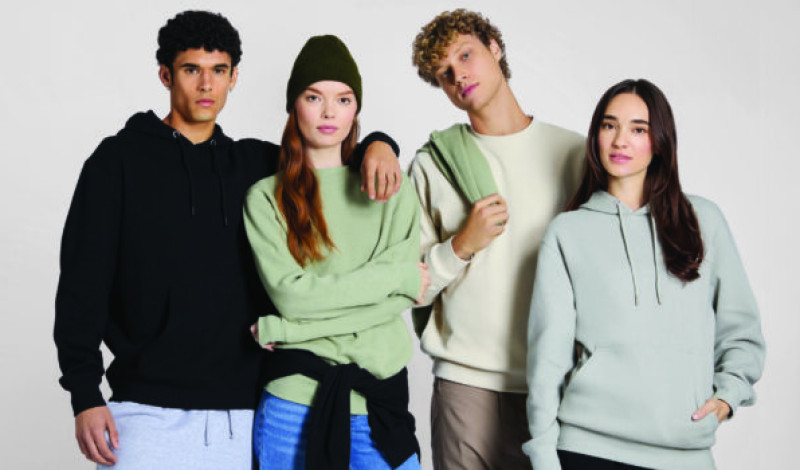
Now that Pantone’s color of the year 2026 is white (everyone, hold your applause), Gibson and Miller both suspect that neutral earth tones will dominate in 2026 — especially as sustainability remains a constant in everyone’s minds.
“Increased interest in natural, understated aesthetics — earth-tone palettes, mineral-inspired dyes, and softer, low-impact washes that visually signal sustainability,” Miller says. “Designs that feel ‘organic’ or handcrafted, such as tonal prints, textured finishes, and simplified graphics, will also grow as consumers associate these looks with authenticity and reduced waste.”
Gibson shares a similar sentiment, but again, because of music’s influence, she thinks that neutrality and grungy color palettes will co-exist.
“You’re going to see some kind of shift into tonality,” she believes. “I think that’s a trend that’s here to stay where you’re seeing a lot of tonal. As the color, there’s one way to write your way into irrelevancy, but I think you’re going to see a lot of neutral still trend with some like deep, dark, moody colors.”
Personalization is Top of Mind
Even though subtly and minimalisms’ popularity is rising, that doesn’t mean the demand for big, bold graphics is diminishing. With the rising popularity of DTF and print-on-demand (POD), Miller says she is seeing momentum for individuality and self-expression.
“As consumers increasingly expect products that reflect their identity, we’re seeing a shift toward modular designs, customizable colorways, and artwork that can be easily adapted for niche audiences or one-off pieces,” Miller says. “Digital tools and POD platforms are enabling faster experimentation, which is driving more bold graphics, expressive typography, and hyper-targeted themes that would have been too risky or expensive to produce in traditional bulk runs.”
For Gibson, she believes that the flexibility DTF provides is exactly what the apparel decoration industry was missing.
“DTF is still taking hold in the print-on-demand space, and thanks to that you’re able to be a lot more flexible on the garments that you’re able to print-on-demand and do in lower quantities, which is fantastic and something the industry really needs,” Gibson says.
Miller also mentions that advancements in digital printing are enabling decorators to produce more unique work without the confinement of traditional screen printing.
“It allows apparel decorators to print richer colors with finer details and more complex artwork without the setup limitations of traditional methods. This is opening the door for bolder graphics, layered textures, and more intricate storytelling on apparel,” Miller explains.
And this push for personalization is also heightening the popularity of specialty inks, metallics, matte finishes, and tonal effects.
“All of those are also being used more strategically to create subtle, retail-inspired dimension. This shift is driven by consumers’ desire for products that feel personalized, crafted, and more ‘boutique’ in nature,” Miller says.
2026 Trend Predictions
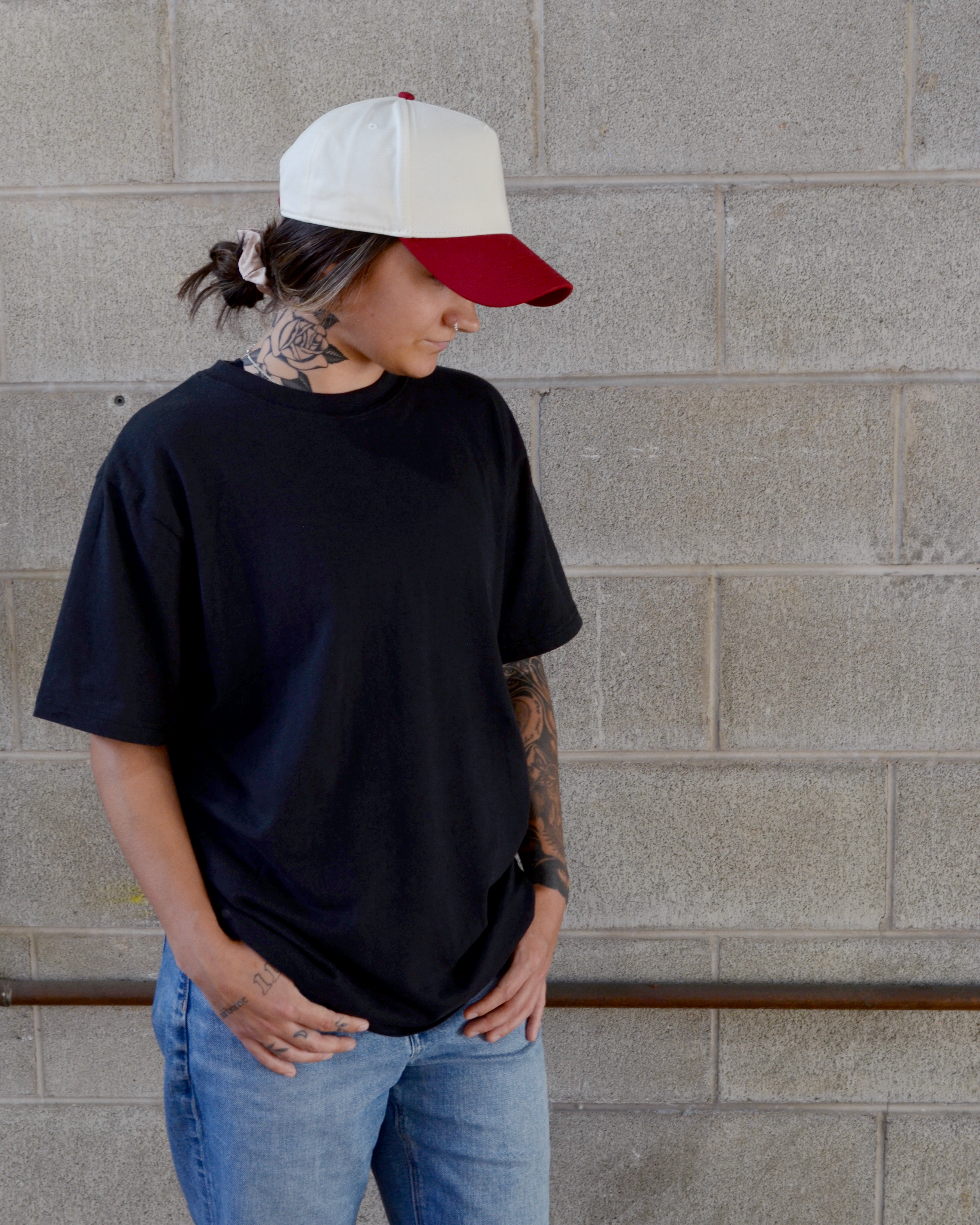
The C100 garment-dyed T from Culture Studio features a label-free design. | Credit: Culture Studio
When asked about their predictions for 2026 for apparel trends, Gibson and Miller offer the following:
- Elevated Personalization: “I believe premium blanks paired with highly customized, niche-driven graphics made possible by advanced digital and DTF technologies are going to shape 2026. Consumers want products that feel uniquely theirs,” Miller says.
- Puff Embroidery: “I think one thing apparel decorators should prepare for in 2026 is puff embroidery — it’s just everywhere,” Gibson says.
- Embossing: “I think that embossing will definitely trend, but it is an expensive venture to get into. Do I think it will be around for a long time? No. Is the equipment extremely expensive? Yes. So, for that, I’d say find a good partner who does it to help you out,” Gibson says.
Overall, it appears 2026 will be the year of seeking personal expression while also craving connection and cohesiveness. “2026 will blend elevated simplicity with individuality — reflecting a cultural desire for both emotional connection and personal identity in what we wear,” Miller says.


