

Exploring the Opportunities of UV-DTF Print Technology
While direct-to-film (DTF) printing technology has boomed in the apparel decoration space — making apparel decoration in reach for any print operation out there — there remains an untapped potential for apparel decorators when it comes to UV-DTF technology.
With traditional DTF, soft goods are the name of the game — tote bags, T-shirts, sweatshirts, you name it. However, UV-DTF opens the door to hard goods. Items like pens, rigid signage, and drinkware all become available, and as the worlds between print and promo become more entwined than ever, UV-DTF might just be worth a shot.
What is UV-DTF Printing?
Taylor Landesman, vice president of Lawson Digital Screen Printing, says that UV-DTF allows print service providers (PSPs) to print on promo products without investing in other equipment, such as screen printing. “UV-DTF allows you to print on cups, water bottles, mugs, lockers, baseball bats, baseball helmets,” he says.
So, what makes it different than DTF? Landesman explains that instead of being more heat-based, it’s pressure-based.
“Regular DTF is heat applied on soft goods, so you use a heat press and you press it, and then you peel the transfer,” he explains. “UV-DTF is pressure applied, so you apply the transfer to the item, you press it on, and then you kind of press it and rub it and then peel the backing off.”
If you ask Philip Chu, product manager UV and specialty devices for Roland DGA, he’d tell you the best way to describe the difference between the two is that UV-DTF printing can be compared to an “ink sandwich.”
“I don’t think everyone is quite aware of the differences that way,” Chu believes. “So, the best way I can describe it is UV-DTF is essentially an ink sandwich of white ink, CMYK, and gloss on top to kind of encapsulate it like a bubble sticker. You’re basically making a decal with just UV-cured ink, and that way you can put it on items or hard-to-reach places and things like that. It’s essentially a super fancy sticker transfer.”
Watch Philip Chu go through the process here
Chu also explains that because UV-DTF printing is essentially a heightened sticker transfer, it opens up opportunities to print on surfaces like glass, chrome metal, and brass — which typically pose a challenge to UV because these items have low-surface energies and are non-porous.
“Not to mention UV, ink cures with light,” Chu adds. “So, with light bouncing around the inside of the item, you have a tendency to cure the ink on the print head. In order to avoid that, you can look to things like adhesion promoters to help it.”
He continues “But you can also do a transfer, which you can sell bulk, or put on other items … [such as] those very shiny reflective surfaces that you traditionally can’t print on because the light just bounces everywhere. You can use this UV-DTF technology to get some stuff on there.”
Where Does it Fit in Apparel Decorating Shops?
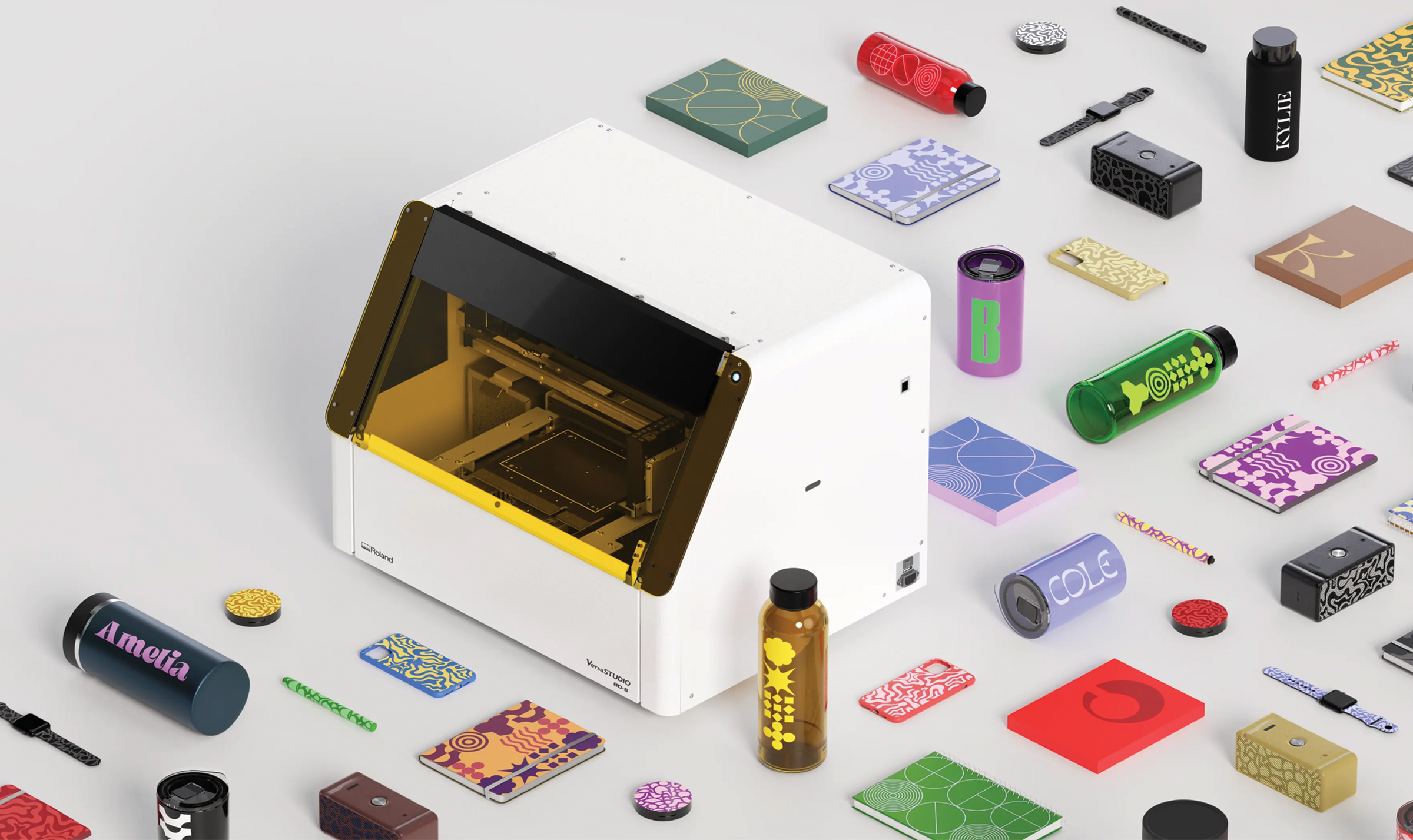
One way to describe UV-DTF printing is to compare it to an “ink sandwich.” Credit: Roland DGA
Now that we’re familiar with the main differences between DTF and UV-DTF printing, the real question is: Why should apparel decorators consider it?
Landesman explains it like this: “This gives apparel decorators the opportunity to become their own centers for promotional products. UV-DTF allows you to print on basically anything, so if you do decide to bring it in-house, you can ask your customers, ‘Is there anything else you want your logo printed on?’”
Chu echoes a similar sentiment and shares that investing in UV-DTF only opens the door to other revenue streams — something that doesn’t hurt smaller to mid-tier businesses one bit.
“I think now, especially with small businesses and other decorators, the more things that you can offer to a customer as a package is going to be better,” he believes. “For example, you get that one corporate logo. Let’s say you can offer some shirts, awesome. Now you have gift boxes or water bottle labels. Now you’re doing all these additional products with one piece of art, and you can get three or four sellable products and be able to charge them for a package deal.”


