

Inside the Booths at PRINTING United Expo
During PRINTING United Expo, Oct. 18-20, in Atlanta, equipment and product manufacturers serving the various sectors of the printing industry showcased the latest technology, substrates, and printing trends.
In addition to big news from ROQ.US, STAHLS’, and AlphaGraphics, exhibitors at PRINTING United Expo had a lot to share. Apparelist caught up with a few manufacturers on the show floor to get the 411 on all things apparel decoration.
Product and Trend Highlights from PRINTING United Expo
BELLA+CANVAS
In addition to Brian Messer, national account executive for the music vertical at BELLA+CANVAS, sitting in on the Pricing Profitably panel for apparel decorators, he also took some time to share some excitement in the blanks world, ongoing trends, and an outlook for 2024.
Just before the Expo, the blank apparel manufacturer released its 100% recycled EcoMax Tee, answering to the ongoing demand for sustainable products in the textile industry. The garment features recycled fabric and thread, including the neck labels and garment tags.
The 65/35 recycled polyester/recycled Airlume combed and ring-spun cotton T is made from unused fabric sent to BELLA’s mill, which is then reprocessed into usable fibers. The recycled poly comes from post-consumer PET bottles that are cleaned and chopped into small flakes that are melted and converted into poly filament and dyed without using water.
-
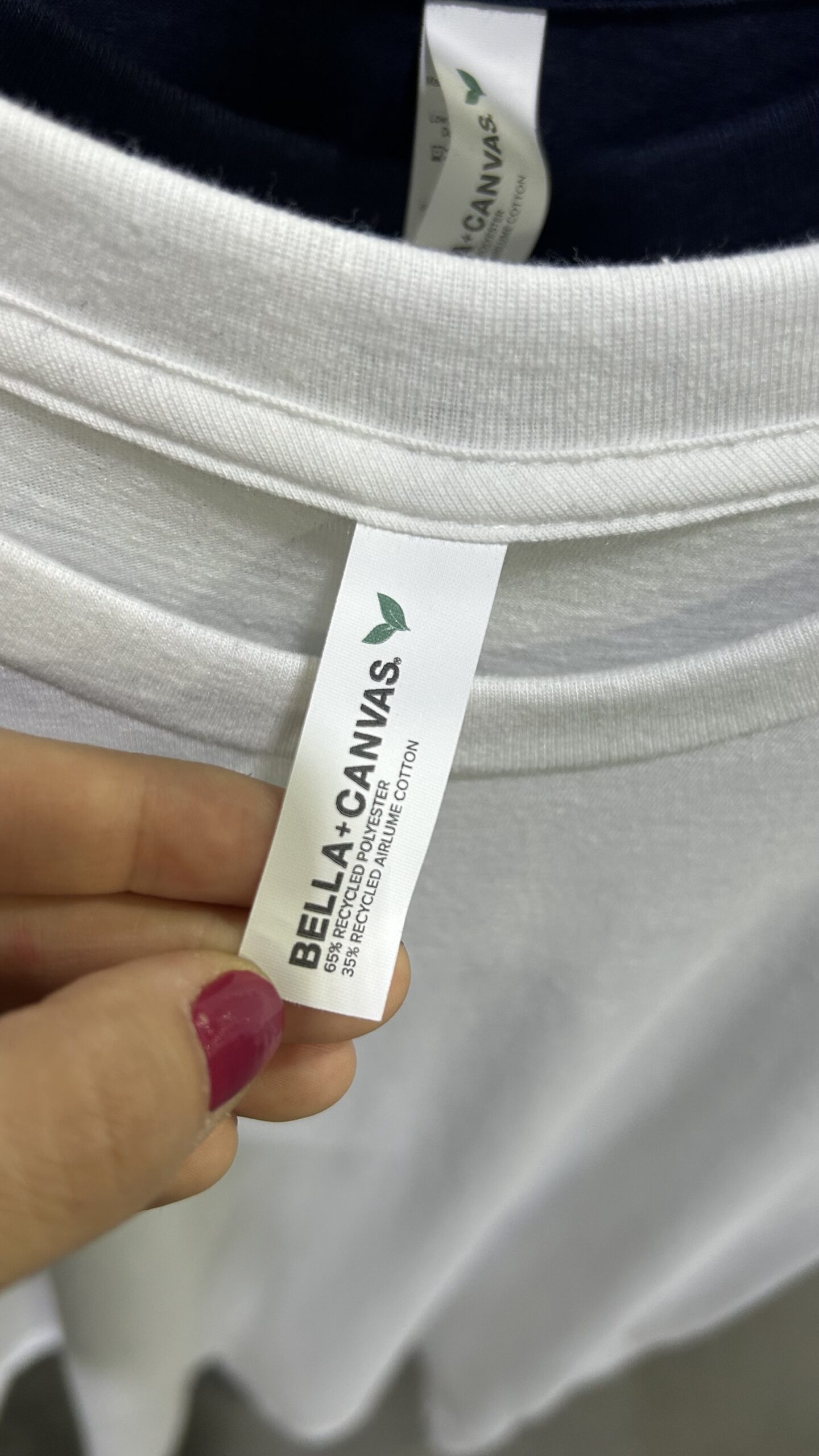
- BELLA+CANVAS EcoMax Tee
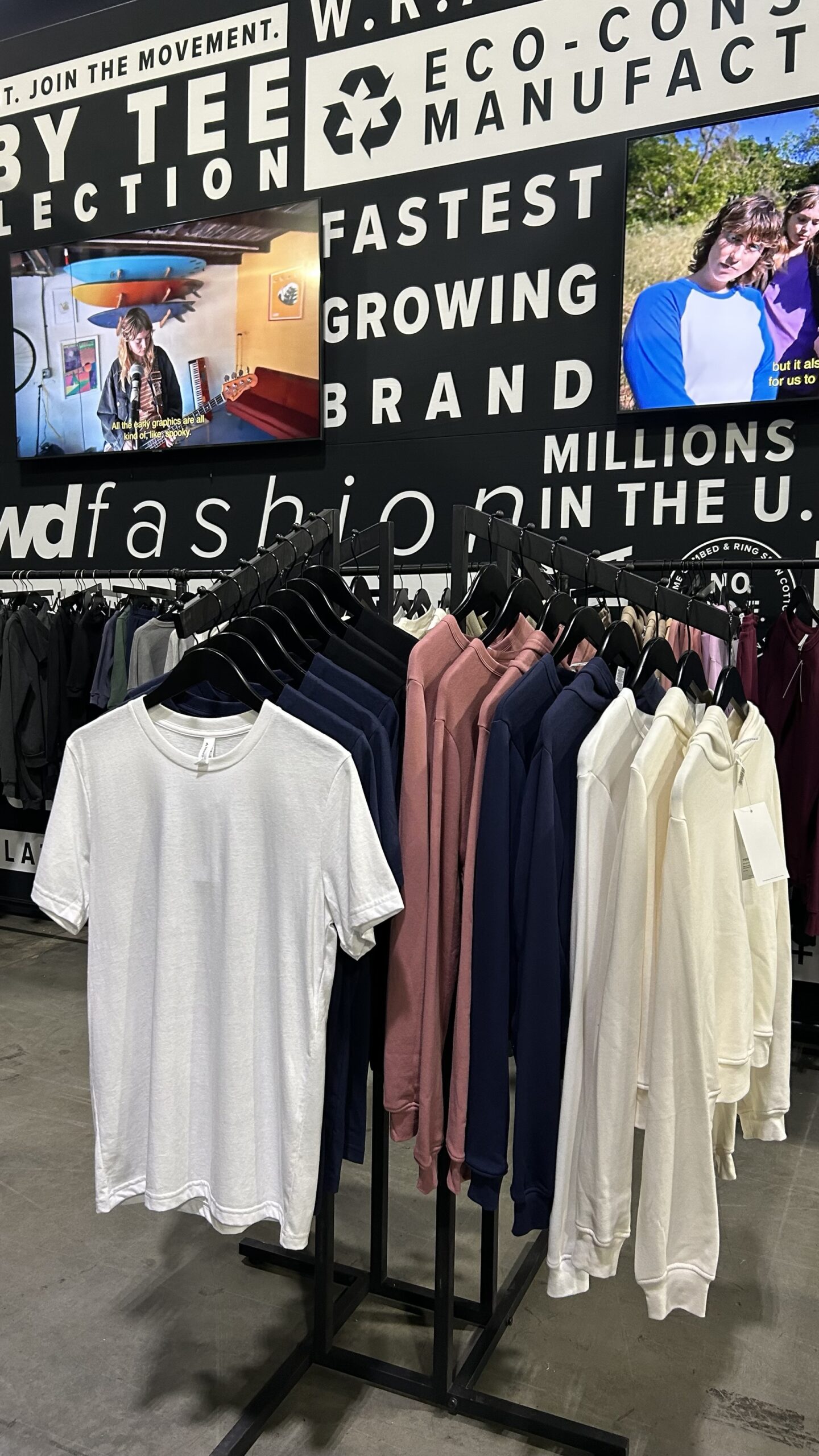
-
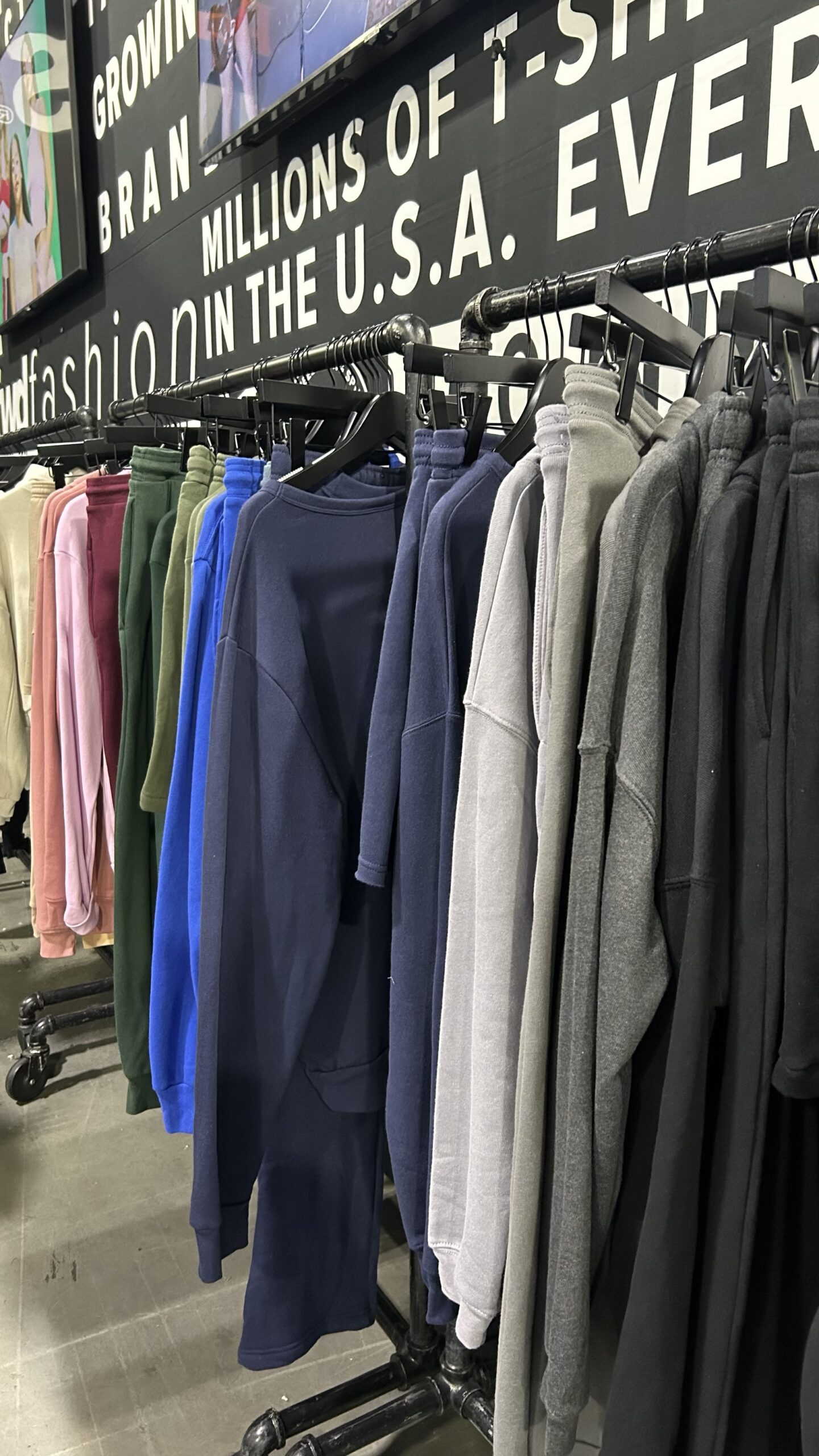
- BELLA+CANVAS fleece sweatpants and crewnecks
In terms of trends, Messer shared there’s “nothing that’s out of the ordinary,” but says heavier cotton blanks are seeing popularity. Talking about color for those items, he says BELLA has been hard at work expanding existing silhouettes with new colors. For example, it added 15 colors to its 3901 fleece raglan sweatshirt.
Asked what can be expected in 2024, Messer hopes to see further fabrication development that explores heavier cotton in short-sleeve Ts, long-sleeve Ts, and fleece.
Ricoma
Ricoma, known for its embroidery machines, has been slowly entering into the printing side of apparel decoration. It formerly offered the RICOH Ri 1000 direct-to-garment (DTG) printer as it entered the space. Now, it offers its own Vision DTG printer in addition to two direct-to-film (DTF) printers (12″ and 24″), further expanding its offerings.
While the addition of print is an exciting step for Ricoma, it also showcased some new technology on the embroidery front, including the 10S series of embroidery machines with a new, responsive touchscreen control panel.
-
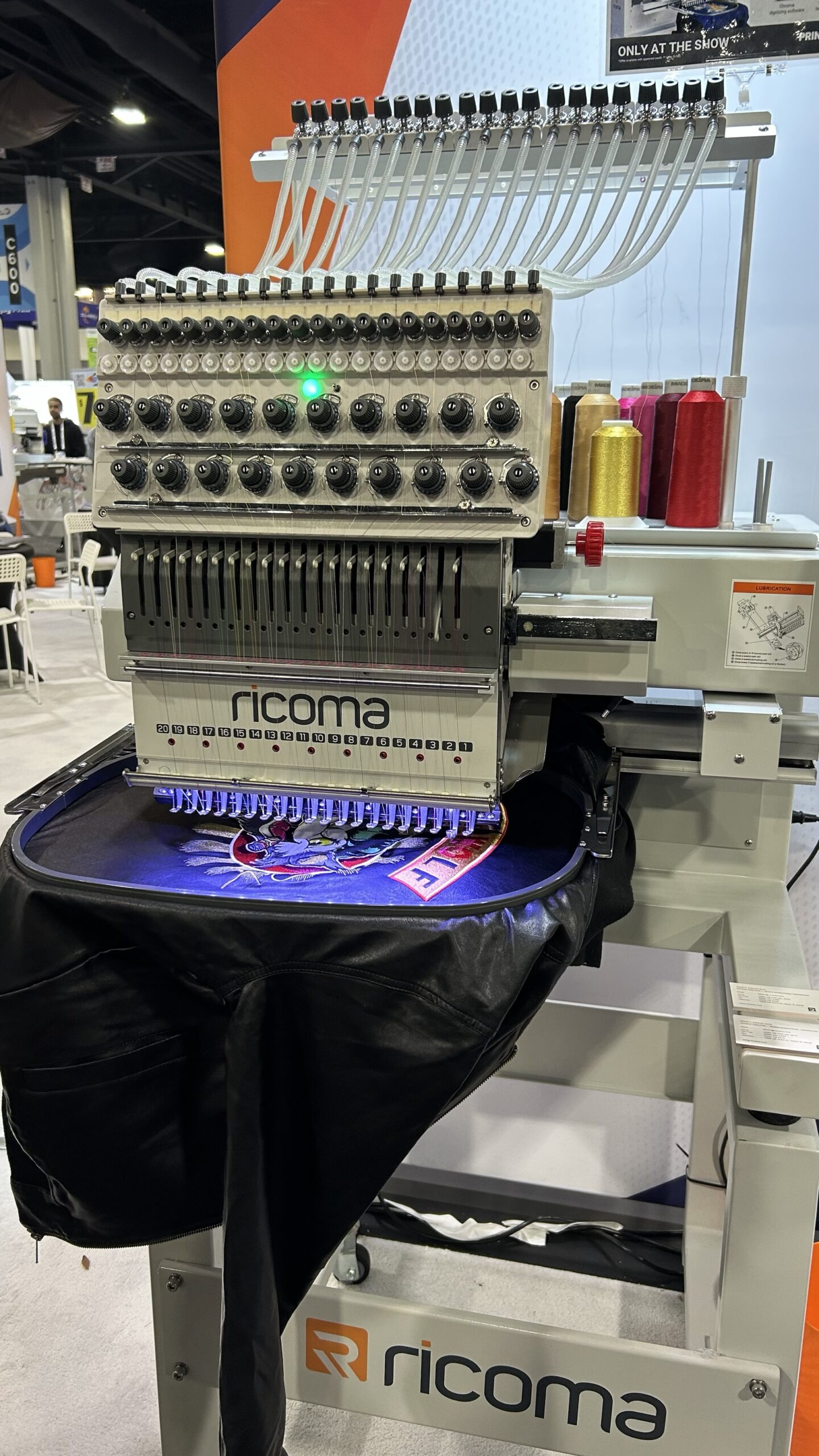
- Ricoma embroidery machine
-
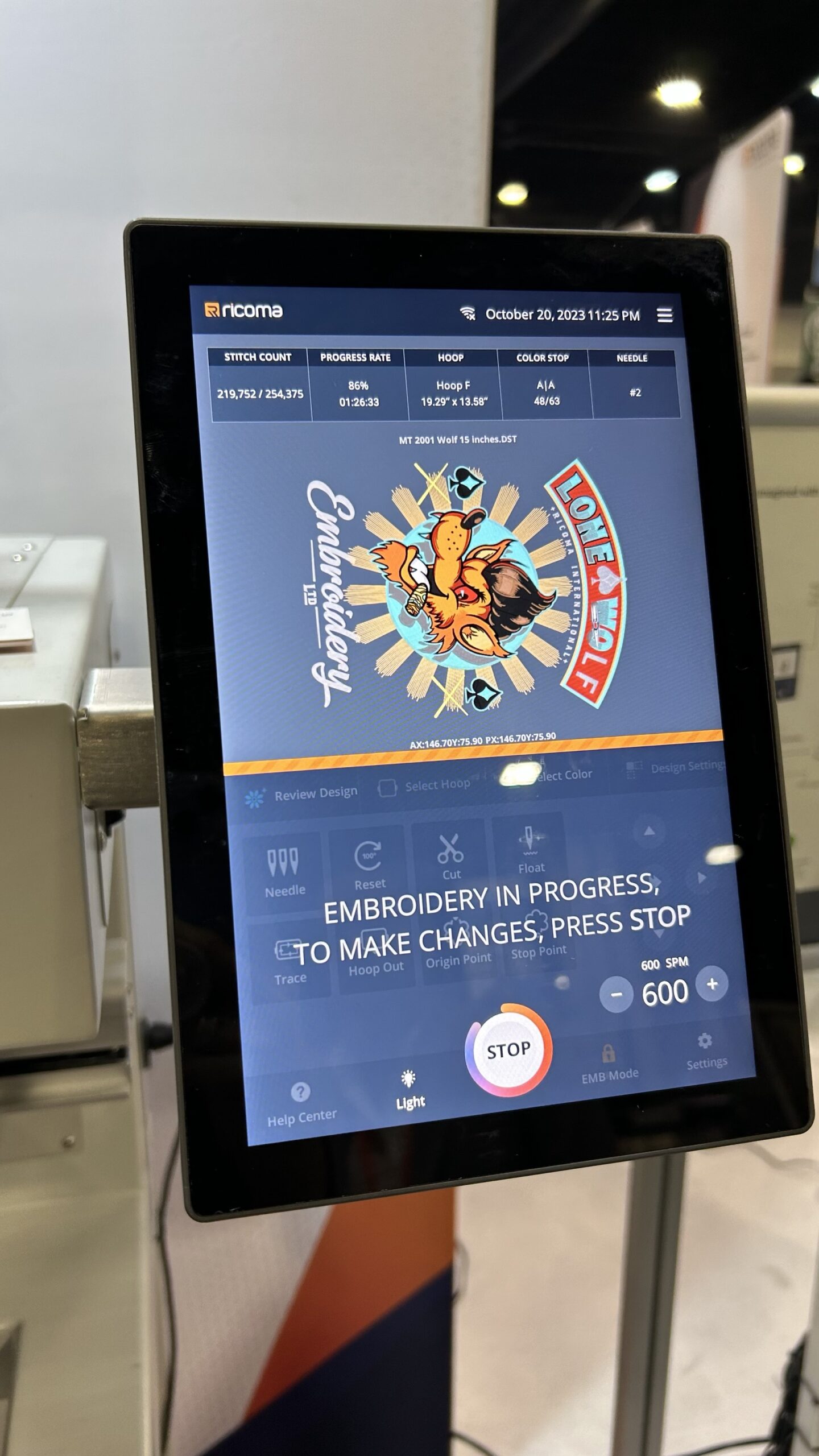
- Ricoma’s new control panel
-
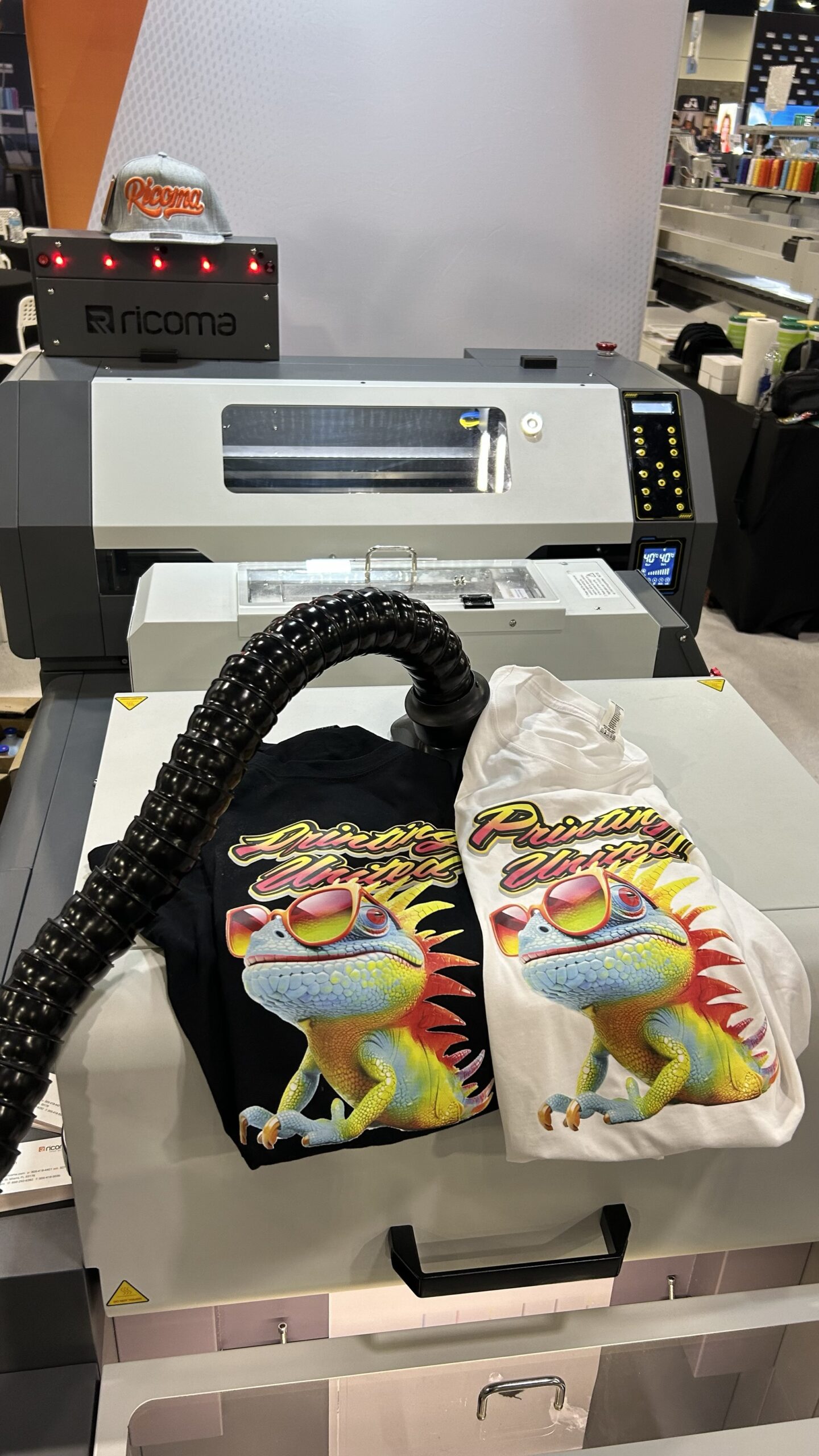
- Shirts printed with Ricoma’s DTF machine
“We’ve developed a new control panel that’s intuitive; it’s very user-friendly,” Miguel Ciarreta, vice president at Ricoma, shared. “It integrates with Wi-Fi, and you can send the designs directly from the computer without needing either a USB or a cable.”
Other functions include naming, sizes, and font managing, as well as a section where users can create and see a maintenance plan and history — ensuring decorators stay on top of necessary oilings, belt changes, etc.
Looking at 2024, Ciarreta anticipates the number of companies offering DTF to begin to shrink. While it’s booming right now, he says some companies won’t be able to keep up with the maintenance and support, so the market — in terms of manufacturers — will get smaller and smaller over time, similar to embroidery years ago.
With maybe 60 companies selling DTF machines right now, Ciarreta says next year might look more like 40 and then 20 the following year.
“Only the companies that are able to sustain the customers are going to be the ones that are going to be successful,” he says. “Most of these machines will do more or less the same thing, but it’s the company that stands behind and helps our customers succeed.”
Ciarreta also sees mixed media growing — combining embroidery with printing in one piece for a more dimensional, stand-out garment. Beyond that, Ricoma plans to grow more on the printing side. To accommodate this growth, it’s expanding its Miami headquarters with a five-story building next to its current footprint. It also has plans to expand its office presence in Texas, New York, and somewhere in the Northwest in the next two years.
STS Inks
USA-based ink developer and manufacturer STS Inks made a significant foray into DTF at this year’s Expo, showcasing its 64″ XPJ-1628D direct-to-film printer, 24″ XPD-724 DTF printer, and TPU powder shakers.
Chris Crear, senior business development manager, explained, “STS is a pioneer in this space and played a major role in qualifying the DTF process for the world market. The DTF process was aggressively pursued by STS’s owners, who believed in its potential early on.” As an ink maker, the company creates compatible ink solutions for major equipment manufacturers, from eco-solvent, aqueous, and latex to UV, DTG, and dye-sublimation. While a large chunk of its ink is sold aftermarket, 40% of the ink the company produces is for OEMs.
-
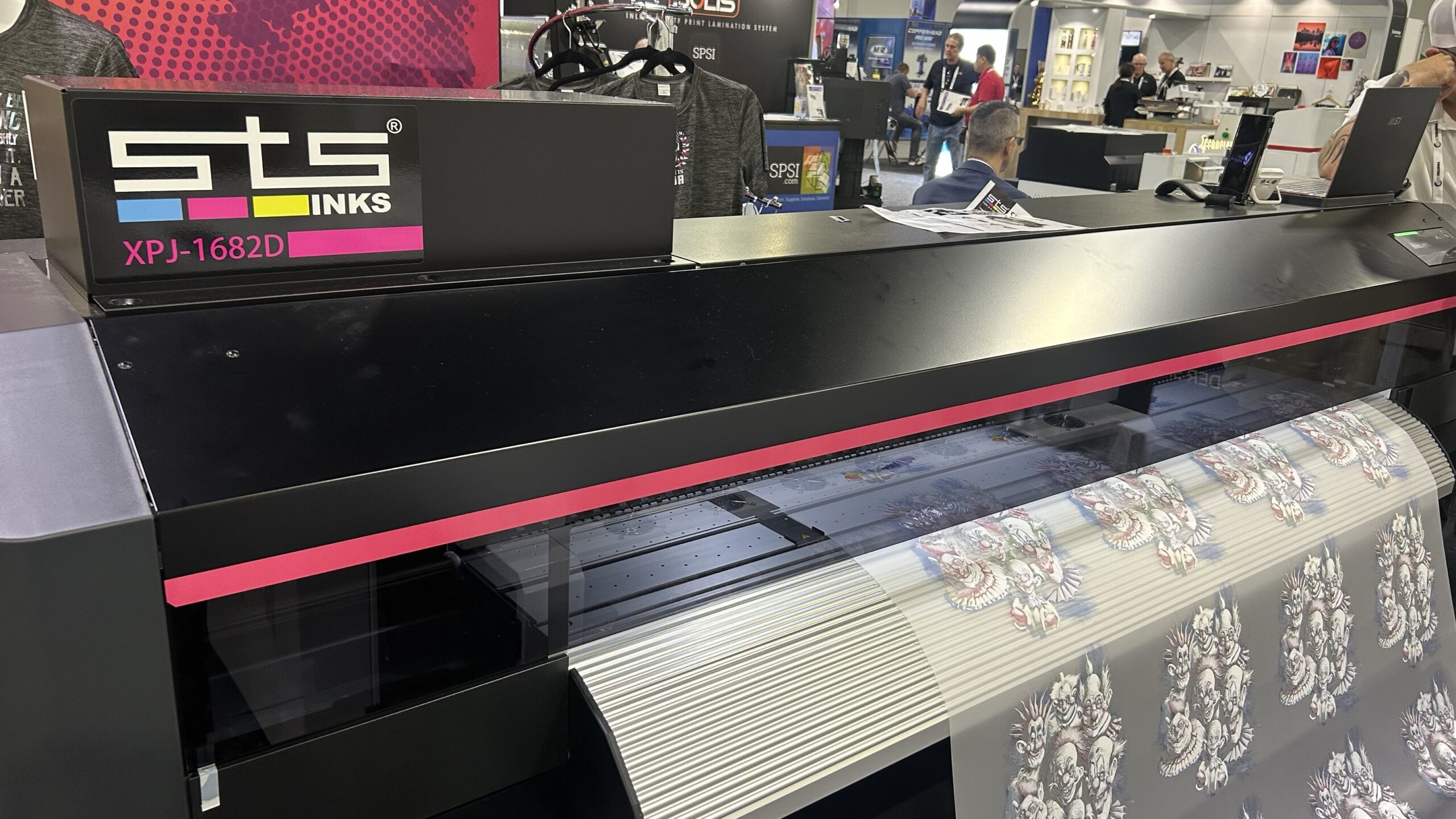
- The STS XPJ 1682D 64” DTF printer
-

- The STS 48″ Automatic TPU Adhesive Powder Shaker
“Pretty much, if it’s digital ink, we make it,” Crear continued. So, how did it find itself in DTF? The journey began in 2019 when STS initiated research and development in the DTF market by manufacturing DTF inks and collaborating with Mutoh Japan to create an entry-level printer. This partnership paved the way for a viable and disruptive market presence, according to the company.
Today, STS offers a line-up of three DTF printers, along with a full range of supplies. Making its debut at the show was the STS D5160 roll-to-roll DTF 64″ printer, exclusively produced by Ricoh Japan for STS. This printer features three industrial-grade stainless steel Ricoh print heads.
Crear explained, “It literally exploded, an overnight success. Everybody and anybody in the space was importing from China, and it wasn’t coming from anywhere else. Most of the companies selling were never in business before, so they didn’t have the experience to service the products they were selling. Quality and service were non-existent, but STS Inks, with 25 years of experience, understood the importance of providing quality service.”
All that to say, he doesn’t see DTF’s allure fading anytime soon. He sees it as a big opportunity for printers not already in garment decoration to diversify, and for screen printers who would otherwise turn down smaller, one-off jobs to consider it.
Kornit Digital
During a booth tour, Matt Meany, Kornit’s presales application manager, walked through Kornit’s on-demand solutions for sustainable fashion and textile production. Its MAX technology was on full display, including its flagship Atlas MAX POLY direct-to-garment printer and its Presto MAX direct-to-fabric printer.
-

- T-shirt printed with neon inks using the Atlas MAX POLY DTG printer. Credit: Kornit Digital
-

- Fabric printed using the Presto MAX printer
The Atlas MAX Poly allows users to DTG print to polyester in addition to incorporating neon yellow and pink inks for prints that pop. Meany added that there’s almost no limit to how much ink a user can build up. The system uses “functional fluids” that allow for stretch and flexibility.
The Presto Max direct-to-fabric, roll-to-roll printer allows users to print white prints on colored fabrics, 3D effects with Kornit XDi tech, and neon colors.
Lane Seven
*Special contribution from Dan Marx, senior content editor at PRINTING United Alliance
Credit: Dan Marx
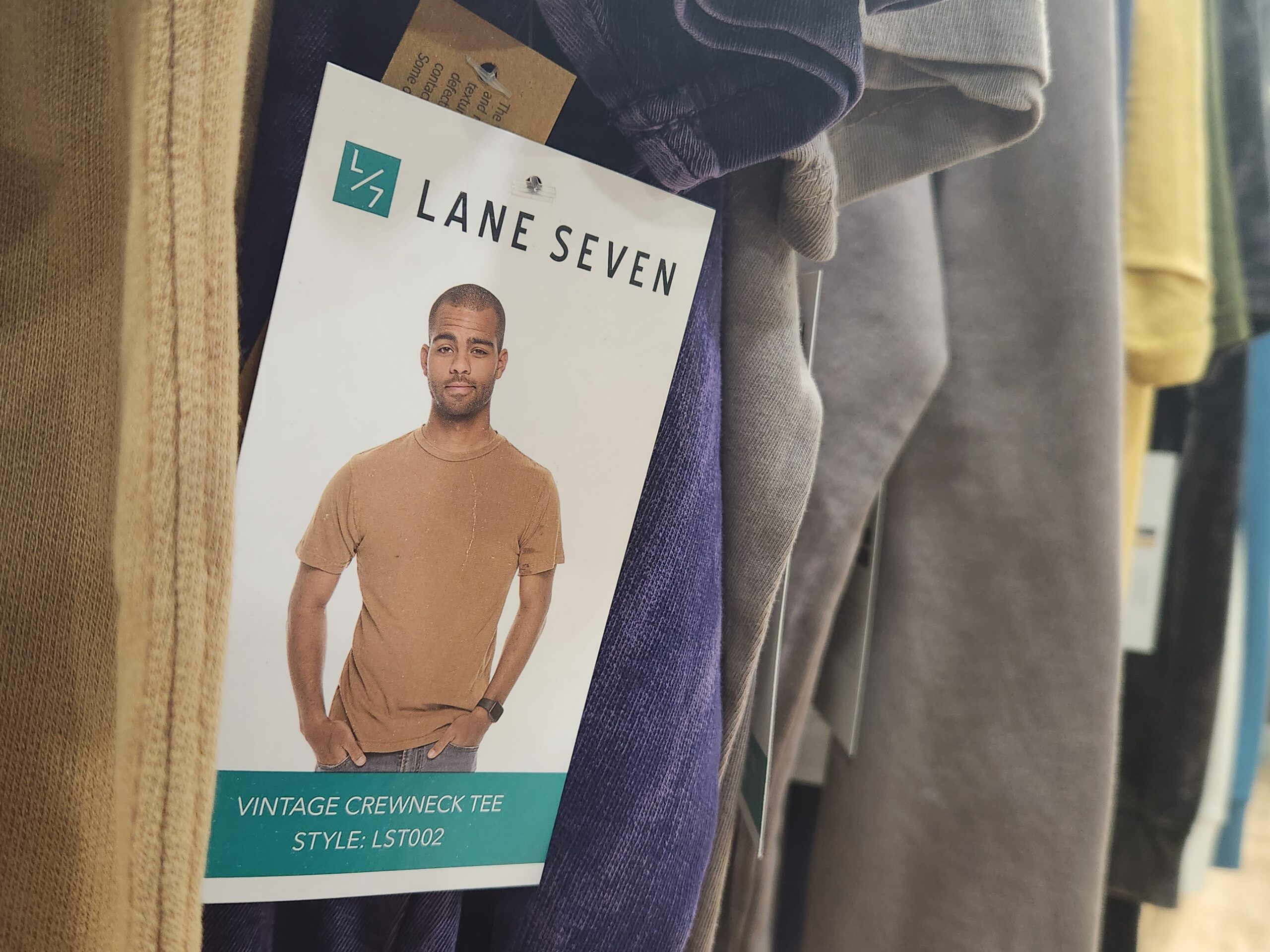
Apparel blank manufacturer Lane Seven Apparel showed a range of new products at this year’s PRINTING United Expo, says Milissa Gibson, the company’s sales director. These include a 100% recycled fleece at a low price point — “under nine bucks” — and a new, blended line of T-shirts.
Gibson says she is seeing a trend toward heavyweight fabrics in the market, as apparel manufacturing shifts to match the preferences of younger generations strongly influenced by what they’re seeing in the retail market. The drive toward heavyweight fabrics may also stem from consumers seeking a more relaxed fit, she said, indicating that the lockdown and limited activity of COVID-19 may have brought about “the COVID 10.”
These preferences, she says, extend across verticals — consumers are seeking similar styles and colors. Nearly all the shades featured in Lane Seven’s booth were muted — muted colors often touching upon hues associated with nature. Gibson expects that trend to continue into next year. For 2024, she says Lane Seven is adding more “collegiate colors” to its offerings to round out its assortment. In so doing, the company will add six colors “close to PMS-specific to answer the call of the collegiate and school market.” A new crewneck will also be added in the year ahead.
Gibson says the quality of the garment product has become much more important to those purchasing them. “For a long time, people got away with less-than-retail quality, but that is changing.”
Asked about trends she is seeing in the apparel decoration segment, Gibson she is being contacted by decorators looking for blanks for DTF printing, and that technology, she says, answers the need for smaller quantities and helps reduce labor costs. She expects that as the use of AI-generated art expands, “we will be seeing more real-life, color artwork. DTF can help with that.” She believes the technology — which is proving to be transformative — removes barriers and fear because it is “very close to a sign-shop application.”
In screen printing, she says she is seeing an increased used of water-based inks: “More shops are going that way.” Finally, she is seeing increased use of specialty applications, such as textile embossing.


