
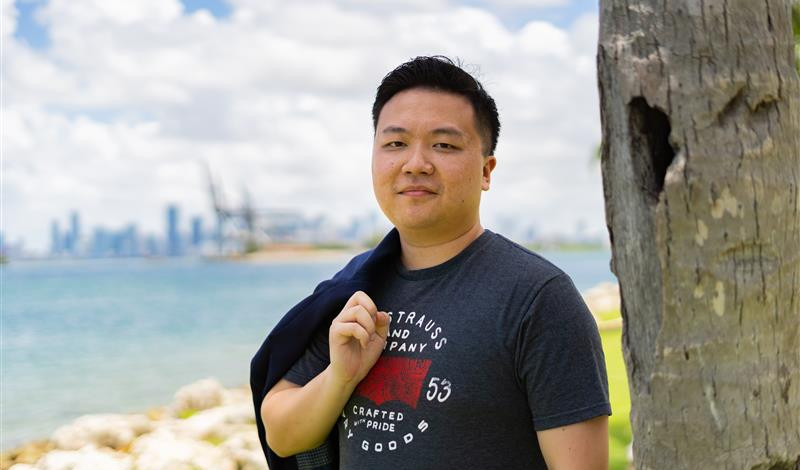
Ricoma Reflects on 25 Years in Business: An Interview with Founder and CEO Henry Ma
This August, Ricoma International celebrates 25 years of serving the apparel decoration industry. The embroidery machine and apparel decorating equipment manufacturer opened its doors on Aug. 1, 1998, in Miami, Florida, with one simple goal: to provide decorators with quality, reliable, and affordable equipment. Today, the company has distributed its products and services in more than 160 countries.
To celebrate the milestone, we caught up with the company’s Chief Executive Officer and Founder Henry Ma to hear his thoughts on the industry, memorable moments from the last 25 years, and how his leadership style has changed over the years.
Looking back on 25 years, what are some of the most memorable moments or milestones that stand out?
Over the past quarter century, we’ve had many moments that stand out to me. I remember in 2008 when we decided to manufacture our embroidery machines and decorating equipment. Up to that point, we had been selling decorating equipment manufactured by other companies to decorators in the U.S. and worldwide. However, as a company, we knew that the only way we could weather the unfolding economic turmoil of the Great Recession was to take direct control of the manufacturing process to ensure the quality of the merchandise and better serve the needs of our customers.
I also remember in 2017, when we first reached $1 million in sales in a month, and not long after that, in 2019, when we first earned $1 million in a day. And, of course, every time you launch a new product it is an unforgettable experience. For example, when we launched the MT-2003, the industry’s first three-head 20-needle embroidery machine. It took years of research, development, and product testing to turn that idea into a reality. Then, after all that work and all that innovation, to finally get to present a new machine that completely changes the industry – there’s no better feeling in the world. So, I guess you can say it’s been a pretty memorable 25 years.
How has the apparel decoration industry evolved in the last 25 years, and how has Ricoma adapted to those changes?
Thanks in part to the rise of e-commerce and improvements in apparel decorating technology, both the demand for and the ease of access to custom apparel has dramatically increased. This has led to a shift in market trends where consumers want their apparel faster and increasingly more personalized to their unique style and specifications. With equipment such as the MT-2003 and the Vision DTG Printer, which can print a vivid full-color design in under 60 seconds, our customers can customize clothing faster and with ever-increasingly intricate designs.
In addition to adding and improving our product line, we pride ourselves on producing a wide range of informative and entertaining content that raises awareness for the industry and teaches decorators how to thrive in it. With everything from videos and articles where we teach decorators about the importance of having different types of machines for different order types to informative decorating tutorials, our goal is to equip every customer with the information and the resources they need to achieve their goals.
Through platforms and services like Garmeo, we’ve been able to help make it easier for individuals outside of the industry to produce quality custom apparel for their employees or special occasions while also helping to bring in more business for decorators in the Garmeo program.

Ricoma’s current Miami office building opened in 2019. | Credit: Ricoma International
How has your leadership style evolved since the early days?
In the beginning, I would say my management style was much more hands-on. As CEO, you have to understand and be able to do a little bit of everything. So, as I was learning more and more about what it took to run Ricoma day-to-day, I would directly get involved in almost every project. As my management style evolved and grew to have a better understanding of how each team operated within Ricoma, I shifted from a tactical focus to a more big-picture, strategic focus. I was able to take a step back and delegate more responsibilities to our company’s various team leaders, coaching and developing them to execute the vision and direction for the next stages of growth for the company.
Can you share a decision or strategy that significantly impacted or shaped the company?
One of the first major decisions we had to make when I became CEO was whether we should outsource our marketing to an agency or do everything in-house. Since this was a new endeavor, the organization had no marketing function, and it wasn’t easy to get alignment internally on which direction to go.
With an agency, you are outsourcing to professionals, but that choice might be more expensive off the bat. You may get results quickly, but the downside is you still have to manage agencies internally. That would fall to me. That was one consideration for feasibility. On the other hand, going fully internal, we had to hire the right people to put that team together, and that entailed a lot of internal training, graphics, video, and social media. That would take a lot of resources and time.
Ultimately, the decision was made that we should create an internal marketing department. We wound up having a marketing team of over 20 people. Making the decision to make that investment on day one and having the determination to take control of our marketing initiatives helped to get us where we are today.
Can you offer any advice to businesses hoping to reach milestones like this?
Going from zero to one is drastically different than going from one to 100. The things you did to get the business started from scratch are unlikely to work when you’re looking to scale. Going from zero to one usually takes a lot of grit and hustle, but from one to 100 will require a completely different mindset to delegate and scale. As your company grows you need to adapt and grow with it. You have to be willing to let go and delegate because you can no longer do everything by yourself. As Mark Cuban says, “Would you rather want 100% of a grape or 1% of a watermelon?” A solid team around you is critical when going from one to 100.

How does Ricoma plan to celebrate its 25th anniversary?
As a special thank you to our customers for helping us reach this tremendous milestone, we are currently running the largest sale in our company’s history. All month long, we’re showing our gratitude to everyone who helped us reach this tremendous milestone by offering huge savings on many of Ricoma’s most popular embroidery machines, printers, and other apparel-decorating equipment. In this way, it is our hope that our existing customers can more easily scale and grow their businesses, and aspiring custom apparel decorators can more easily get started.
What are your hopes and goals for the next 25 years?
Our first 25 years were focused on building our footprint as a leader within the custom apparel industry, particularly with embroidery and sewing. However, over the next 25 years, we want to expand our influence beyond just being known for our expertise in embroidery and sewing technologies to becoming a leader in customization overall, bringing different customization technologies and techniques under one umbrella.
Building upon the foundations we’ve laid, we want to go broader and deeper within different verticals under the customization umbrella to serve the needs of people who need custom apparel, as well as custom home decor, signage, and everything in between. Over the next quarter of the century, we also want to empower more businesses to find financial independence in customization and provide them with more opportunities to bring their ideas and designs to life through customization.
Any insights or outlook on the apparel decoration industry at large over the next 5 or 10 years?
Even in the wake of the global pandemic, fashion remains one of the biggest industries in the world, valued at $1.7 trillion. As e-commerce and technological improvements continue to make on-demand custom apparel more accessible and easier to obtain, the demand for custom apparel will only grow.
From a corporate standpoint, businesses will continue to need branded apparel to look professional, stand out, and generate greater brand awareness. Consumer purchasing habits are changing. These changes are being driven by millennials who are raising their spending on custom designs on their garments such as the increasing demand for T-shirts with slogans or logos of movies, games, and TV series printed on them. This increased demand will surely need a continued wave of vendors to fulfill these needs.
As the demand for custom apparel – particularly printed tees – continues to grow, we will see a greater proliferation of new printing techniques, such as DTG and DTF, that allow decorators to customize items more efficiently. In keeping with recent marketing and business trends, more and more custom apparel business interactions will rely more and more on e-commerce and social media channels to reach and engage with their customers and conduct their business.


