
Why Printers Are Turning to AI For So Much More Than Design
From automating marketing campaigns to analyzing production data, AI is becoming the secret weapon for print shop success.
AI has been a game changer for design, but it’s the behind-the-scenes benefits that really matter for printers. From cutting costs to streamlining workflows, AI is helping printers stay competitive and save money where it counts. Whether making marketing more efficient or analyzing data to improve business strategies, AI is becoming a must-have tool for any shop looking to grow. “AI is allowing smaller shops under $5 million to compete with national businesses,” says Davis Slagle, vice president at BeeGraphix.
Beyond design and marketing, AI analytics transform how decorating companies approach their operations. "By leveraging AI analytics, companies can turn raw data into actionable insights, enabling them to implement lean manufacturing principles without needing extensive training," says Michelle Moxley, consultant at InkKitchen, whose FahrenheitAI YouTube vlog explores how printers use AI.
Read on to learn how your print shop can use AI to become more competitive.

No. 1: AI-Driven Automation for Operational Efficiency
AI is helping print shops streamline key operations and improve workflow automation. “Print queue optimization, forecasting, and inventory management are three areas that hold the most potential for real-world value,” says Dean Biscan Jr., creative and marketing director at iGroup Technologies. For example, AI uses algorithms to prioritize print jobs based on deadlines, complexity, and machine availability, maximizing throughput and minimizing downtime.
"Features like automated seasonal reminders and workflow management systems mean businesses can stay organized without micromanaging,” Slagle says. AI's role in automating tasks like order updates, seasonal reminders, and customer communication helps businesses maintain efficiency while reducing the need for constant human oversight.
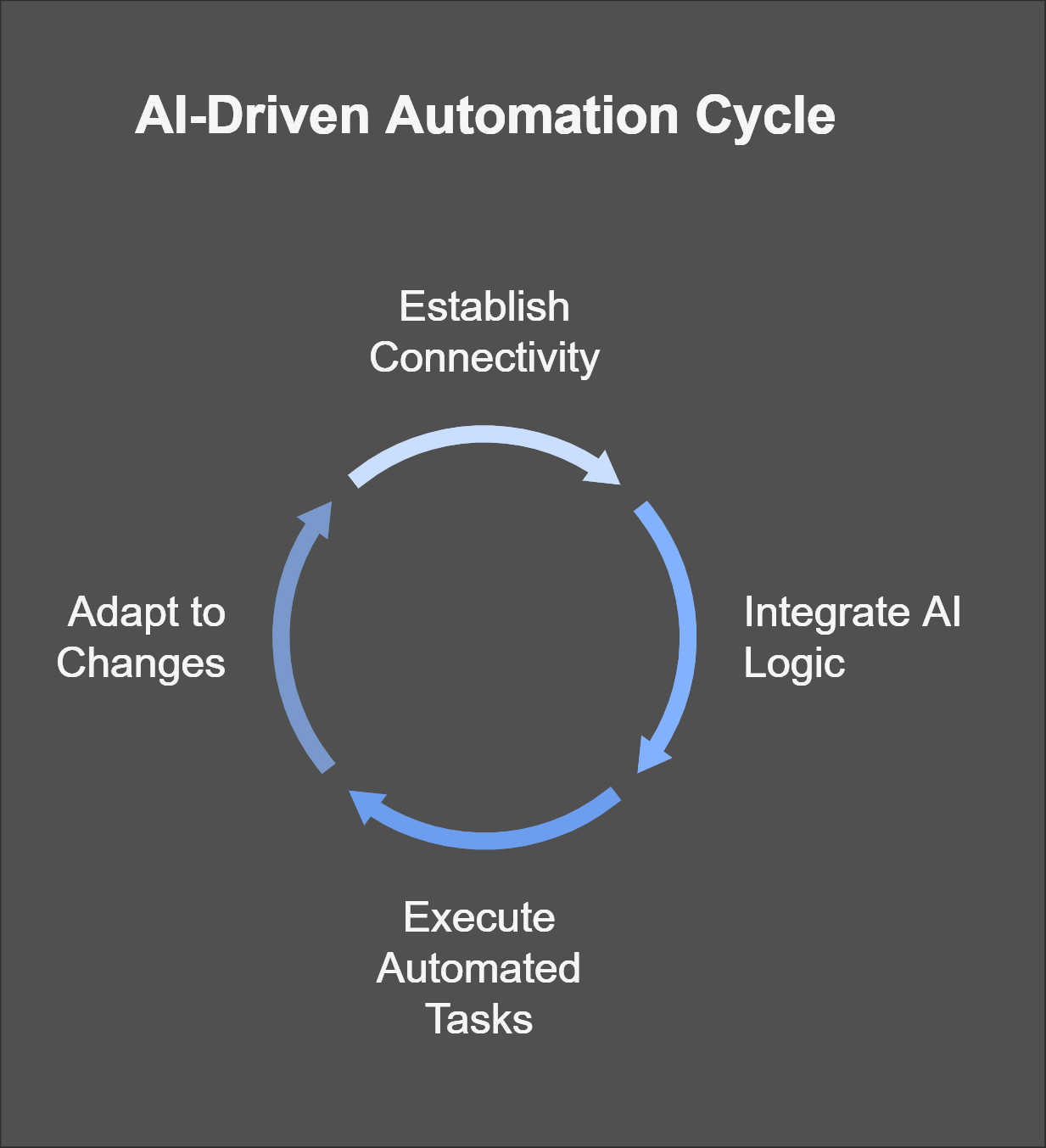
AI doesn’t follow a straight path from point A to point B to point C, though — it adds helpful decision-making capabilities to shop systems. “Connectivity with automation is changing the game,” Slagle explains. “AI adds logic to workflows, like ‘if this, then that,’ allowing businesses to adapt to changes in production needs dynamically.” An example is diverting jobs to other machines if one is experiencing downtime.
AI's impact extends to inventory management, automating stock tracking, and reordering, which frees up valuable human resources. “Instead of having a staffer responsible for reordering blanks, inks, and supplies, AI will trigger the order,” Slagle says. For instance, when a specific T-shirt SKU drops below 200, the system automatically can send a purchase order to restock it to 1,000.
Beyond inventory, AI optimizes logistics like order routing and batching, speeding up operations and reducing waste. “Predictive analytics helps with inventory management by automatically tracking stock levels and reordering supplies when needed, so there's no need for constant manual oversight,” Slagle points out. “AI also optimizes logistics, streamlining processes like order routing and batching, which increases operational efficiency."
Finally, AI offers valuable insights into production metrics, helping shops refine their processes, reduce errors, and allocate resources more effectively. “AI can analyze production metrics like print consistency, turnaround times, and error rates, which helps businesses improve efficiency and reduce waste,” Biscan says. “It also tracks inventory usage and return data, addressing recurring issues like sizing or print flaws. These insights lead to better resource allocation, reduced costs, and a more sustainable workflow.”
No. 2: Streamlining Communication and Customer Interactions
AI-powered chatbots transform customer service by providing instant responses, such as real-time order updates while allowing staff to focus on more complex inquiries. “By adding a bot to your site connected to your system via an API, it can instantly answer questions like, ‘What’s the status of my order?’ with responses like, ‘It’s in production, scheduled to ship on Feb. 1,’” Slagle says.
AI is also reshaping pricing strategies to help businesses stay agile and competitive. One example is dynamic pricing, which is becoming increasingly popular among print-on-demand (POD) printers. “Dynamic AI pricing is gaining traction among large POD printers, mirroring the airline industry's model. This approach adjusts prices based on demand, seasonality, and events,” Moxley says. "This complex pricing model leverages AI to optimize revenue and adapt to changing market conditions, ensuring competitive pricing and maximizing profitability in the on-demand printing space."
AI-powered tools like Jotform and FastField are great tools for data collection. “You can create customizable digital forms that capture rich datasets, which can be analyzed in real time,” Moxley says. From there, you can also trigger personalized customer interactions. “These include tailored product recommendations, real-time design previews, and instant chatbot support,” Biscan says. Moxley adds that you can use AI to enhance presentation materials to close the sale with tools like Tome and PowerPoint's Copilot.
Automated systems can maintain ongoing customer communication year-round, keeping them engaged without requiring constant manual input. This continuous interaction helps build trust and loyalty, increasing the likelihood of repeat business. “We’ve seen major time savings with a CRM that uses AI to create funnels with automated responses and messaging to stay in touch year-round,” Slagle shares. “Our sales team can easily view A and B versions of responses in their inboxes, making it faster and easier to get back to clients.”
For example, Slagle often works in high-demand, “hot market” printing. After a local football team won a championship, his team used AI to pull customer contact details from multiple store platforms, organize them into one file, and craft personalized emails and text messages. These messages scheduled to go out over several days, encouraging customers to purchase, followed by automated follow-ups that informed buyers when to expect their orders. "We took all the online orders and delivered them in two days during a hot-market sale," Slagle says, emphasizing how much time the AI saved compared to doing everything manually.
Ultimately, Biscan believes AI will play an even larger role in customer acquisition and follow-up, particularly in order management systems. “At this stage of AI integration, order handling is one of the biggest opportunities, but even so, the options are still limited with a slow implementation rate,” he explains. “Order management programs are gradually adding more AI-controlled features that will help better track workflow, ultimately freeing up time spent on manual tasks and allowing for more focus on revenue-generating processes or reducing the need for additional staffing.”
No. 3: Quality Control and Production Efficiency
AI-powered tools, such as print alignment systems and predictive maintenance, ensure consistent quality by catching issues before they escalate. This allows businesses to oversee multiple machines with fewer people.
“Camera-based systems for direct-to-film printers spot issues like misprints or alignment problems before they become major headaches,” Slagle says, emphasizing that these tools enable one person to oversee multiple printers while maintaining high-quality standards.
Connected machines further enhance operational efficiency by reducing downtime with predictive maintenance capabilities. “That’s another big win, especially for connected machines like embroidery equipment, which can now send alerts when they need servicing,” Slagle says. “This helps avoid breakdowns and keeps everything running smoothly.”
Automation also streamlines workflows, letting shops produce more efficiently by minimizing repetitive tasks. “Cloud-based workflow is increasing the speed of how people can produce because you’re spending more time on the work and less time on tasks you can automate,” Slagle says.
AI-driven insights allow shop owners like Slagle to analyze large datasets and refine production strategies in real time. “We’re now able to gather insights on average order volume, product quantities, shipping costs, and overall expenses, giving us a clearer picture of our true numbers — something that would have taken hours to calculate manually in the past,” he adds.
Beyond tracking operations, AI empowers shops to forecast demand and align production with customer preferences. “AI provides data-driven insights for smarter decision-making, helping businesses forecast demand, optimize pricing, and develop designs that align with customer preferences,” Biscan says.
AI can give you valuable insights into improving production and help streamline how staff handle various tasks. “Tools like Scribe AI further enhance process documentation, allowing businesses to create standard operating procedures (SOPs) efficiently,” Moxley says.
No. 4: Understanding Customers Better
AI tools can help printers analyze customer behavior and preferences, creating more precise and effective marketing strategies. “By combining data from sales, CRM systems, and social analytics, companies can create detailed profiles of their customers, showing what they buy, how often, and what they’re interested in,” Slagle says. “This helps identify best-selling products, popular designs, and profitable niches.”
Biscan says decorators use AI to elevate their marketing efforts by creating highly targeted, data-driven campaigns that enhance customer engagement and improve conversion rates. “AI-powered tools that are already heavily integrated into the traditional marketing opportunities out there like Meta and Google analyze customer data to segment audiences based on behavior, preferences, and purchase history, enabling the creation of personalized email campaigns with dynamic content and behavioral triggers, such as cart abandonment reminders or product recommendations,” he says.
On social media, AI optimizes strategies by identifying trending topics, predicting optimal posting times, and automating ad targeting to reach the most relevant audiences. “Additionally, AI supports A/B testing, sentiment analysis, and predictive marketing, helping decorators refine their campaigns and focus on high-impact opportunities,” Biscan says. You can also use AI to streamline content creation by generating visuals and templates, while chatbots engage customers in real time on social platforms, answering queries and promoting sales.
“By integrating AI across email, social media, and advertising, decorators are delivering more personalized, effective, and efficient marketing strategies that foster stronger customer relationships and drive business growth,” Biscan says. “While it may seem like a lot to take on or implement, if you don't, all your competitors already hip to the availability of the offer will use it and blow your chances of being seen out of the water."
While AI offers an accessible entry point for marketing, particularly in content creation, Moxley notes that AI-generated content often follows generic formats, necessitating a balance with human-created material.
“A strategic approach involves using AI to automate a portion of social media posts and analyzing engagement metrics to identify peak performance times,” she says. “Create human-generated content for these high-engagement slots and implement A/B testing to compare AI and human-created content. A hybrid method leverages AI's efficiency while maintaining the uniqueness and creativity of human-produced content, optimizing effectiveness.”
No. 5: Data-Driven Decision Making
AI tools make it easier for businesses to make smarter decisions on pricing, promotions, and new product launches. “For example, businesses can analyze sales patterns to identify their busiest days or discover which customers are generating the most revenue and what they’re buying,” Slagle explains. “Predictive modeling helps businesses anticipate market trends and adjust tactics accordingly, making them more agile and responsive.”
When Slagle started using AI to analyze his shop’s data, he asked, “What questions should I be asking based on the data in front of me?” By letting AI guide him, he learned things like his peak sales day and the three-day period that brought in the most revenue. “You can even upload bulk customer data to find out who your top 20 customers are and what they’re buying,” he says.
“Predictive analytics also play a key role in demand forecasting, allowing companies to prepare for seasonal trends and better anticipate customer needs,” Biscan adds.
As AI continues to evolve, more advanced tools are emerging. Moxley notes, “Generating Autonomous Agents that assist with functions like managing quotes, identifying printing methods, creating sales lists, and even handling inventory management is becoming increasingly common.”
Additionally, AI-driven features like automated seasonal reminders and workflow management systems help businesses stay organized without micromanagement. Automation streamlines processes like order updates, seasonal reminders, and customer communication, reducing the need for manual oversight,” Slagle says.
No. 6: Cost Savings and Profit Maximization
AI tools help businesses make smarter decisions and cut down on manual work. "The core advantage lies in the ability to collect, analyze, and act on data quickly, turning information into strategic improvements across the business,” Moxley says.
For example, "Order management programs are implementing more and more AI-controlled features that can help keep track of workflow better and in time, freeing up those traditionally manually handled time sucks to allow for more time to do other processes that focus on revenue generation or free up the need for additional staffing,” Biscan says. "By integrating AI, businesses can operate more efficiently, reduce costs, and stay ahead of market trends, resulting in improved profitability and long-term success.”
Getting Started With AI
Moxley notes that the easiest entry point for implementing AI is to focus on low-hanging fruit without aiming to replace employees. Instead, AI should augment your employees' roles, enhancing their value, she says. For example, a marketing professional can use AI to identify optimal posting times, while a printer can reduce setup times.
To start, identify manageable opportunities for integration, set clear testing time limits and investment parameters, and begin with specific departmental improvements. “Use AI research tools that provide references, like Perplexity and ChatGPT-4o, and always verify their accuracy,” Moxley says. “If employee adoption is slow, consider consulting experts or exploring alternative AI tools. Begin with small projects and gradually expand your AI initiatives, continuously assessing and adapting.”