
When Pantone Picks White: What the 2026 Color of the Year Means for Decorators
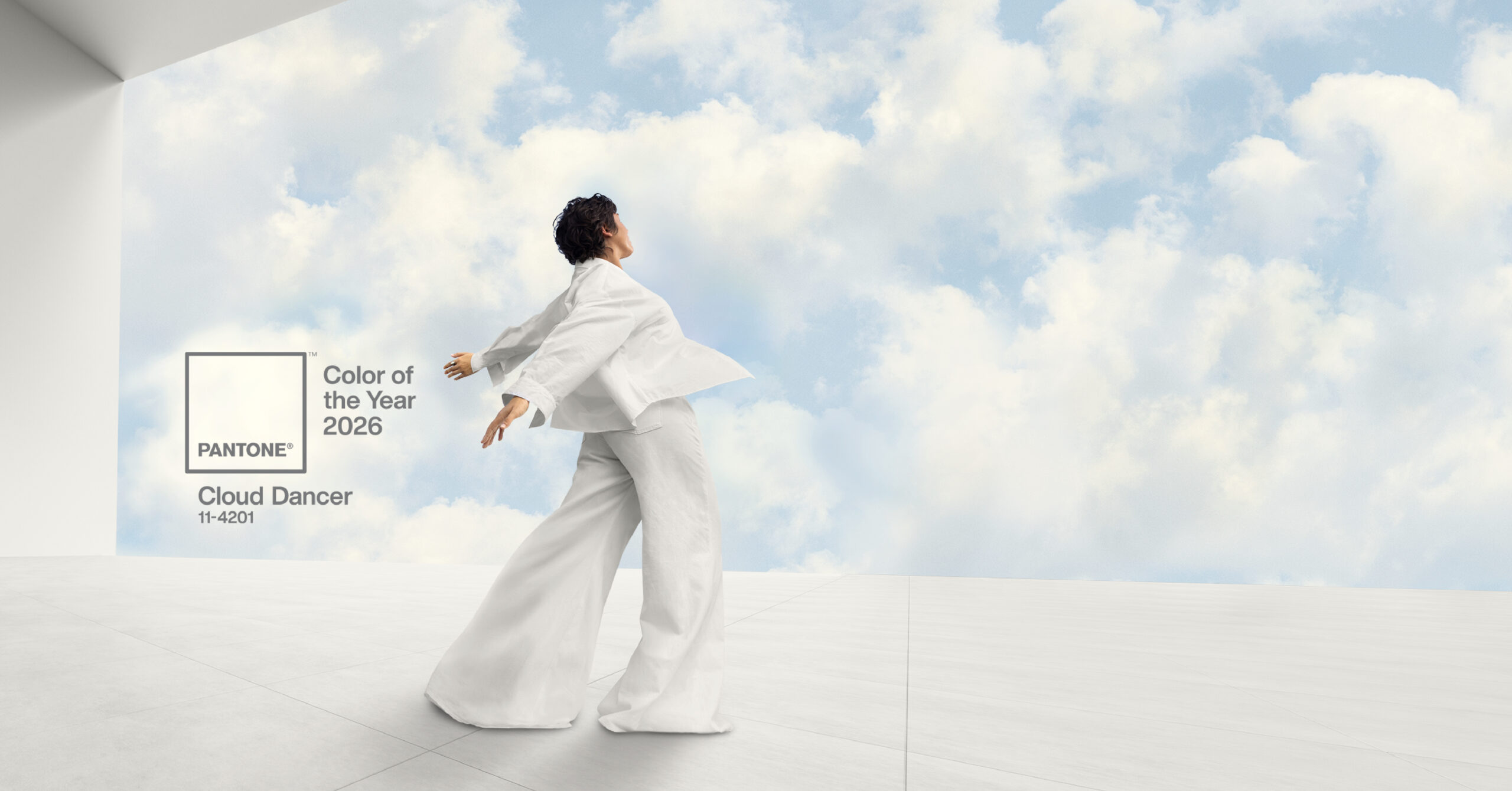
Explore Cloud Dancer, Pantone’s Color of the Year, and its impact and application in the apparel decoration industry.
It’s that time of year. Pantone has released the 2026 Color of the Year — a highly anticipated moment for creatives and anyone in print and design. The annual pick not only reflects trends in design but also shifting consumer attitudes.
According to Laurie Pressman, vice president of the Pantone Color Institute, the program engages designers and color enthusiasts by spotlighting the relationship between culture and color.
This year, that color is Cloud Dancer (PANTONE 11-4201) — described as “a billowy white imbued with a feeling of serenity,” Pantone states in a press release. “An ethereal white hue, PANTONE 11-4201 Cloud Dancer serves as a symbol of calming influence in a frenetic society rediscovering the value of measured consideration and quiet reflection.”

Pressman frames Cloud Dancer as a response to a cultural shift. She says we're living in a time where people are "seeking truth, and a new way of living." She says the hue represents experimentation "beyond traditional boundaries, opening the door to increased imagination and innovation."
Pantone's reasoning behind the choice always sparks conversation, and this year is no exception. Some industry voices applaud the choice, while others argue it fell flat. To understand how this near-white plays out in apparel decoration, we tapped a few color experts, designers, and trend analysts for their insights.
Pantones and Printing
Sharing their technical expertise, PRINTING United Alliance color experts Ray Weiss, vice president of eLearning and certifications, and Joe Marin, senior vice president of education and training, offer insight into the challenges of reproducing a near-white color in print.
“Near-whites like Cloud Dancer can be surprisingly difficult to reproduce accurately, mostly because there’s so little room for error,” they explain. “You’re working in a narrow tonal range where the slightest shift — warmer or cooler, brighter or duller — is noticeable.”
They note that screen printing presents its own challenges, including flash temperatures and over-curing, which can tint the ink slightly, affecting how it presents. "Ink opacity, under base handling, and mesh count all affect how the final color appears,” Weiss and Marin add. “Too heavy, and you lose the softness; too light, and the shirt color starts to influence the result.”
For digital printing like direct-to-garment (DTG) and direct-to-film (DTF), there’s finer control over color, but of course, nothing is foolproof.
“Pretreatment plays a big role in how the ink behaves, and inconsistent application (or poor humidity control) can alter the visual result,” they continue. “And since garments don’t all start with the same base white, you're not just printing the color, you’re also fighting the substrate’s own tone and texture. This color will expose every weakness in your process.”
That said, Vicki Ostrom, futurist and trend editor for Trendependent.com, says Cloud Dancer is the perfect blank canvas to convey any graphic art or message on a T-shirt, sweatshirt, or other garment.
“In a world full of misunderstandings and hyper-complex messaging, there will be no ambiguity, no mistake in understanding what you see,” she explains. “This is the genius of a white ground for any graphic art or text. On the other hand, Cloud Dancer works perfectly as a ‘less is more’ quiet beauty through sculptural, tactile texture. Many brands are realizing their logos can be increased in size and made more prominent in placement if they are texturally expressed through raised lettering and shapes, devoid of any extra color, on a creamy white fabric base.”
As Ostrom explains, Cloud Dancer lends itself to tone-on-tone opportunities, which continue to see popularity in apparel decoration.
How Cloud Dancer Represents Sustainability and Softness
When it comes to how the Color of the Year shows up in fabric and fashion, Ostrom points to Cloud Dancer’s inherently natural appeal. “Cloud Dancer is authentically natural,” she says. Think undyed fibers: “It is the color of wool on the backs of sheep grazing in a field or cotton still in its boll. You can't get much more authentic or real than a color with references like that.”
7 Practical Steps for Reliable Color Matching
BY RAY WEISS AND JOE MARIN
Here’s what we recommend for decorators working with subtle tones like Cloud Dancer:
- Start with a PANTONE-verified reference in controlled light. Don’t rely on a monitor or smartphone. This is one of those colors that demands a physical standard.
- Use consistent pretreatment for digital print methods and make sure it's well-cured. Any blotchiness in the base layer can alter the perceived color.
- Custom profile your printer and garment type. Use a spectrophotometer to measure and build a profile that fits your exact process. This is especially important for DTG/DTF if you're going for repeatability.
- Control your print environment. Keep humidity around 50% and avoid temperature swings, which can affect both ink behavior and pretreatment chemistry.
- Test on the actual garment. Mockups on white paper or different fabrics won’t tell you what you need to know. Print test swatches and compare them under daylight-balanced lighting.
- Use print verification. Whether that’s a control strip, a spot color measurement, or a quick check with a handheld device, get in the habit of checking, not guessing.
- Evaluate everything under consistent, 5000K lighting. That’s where you’ll catch undertone bias before your customer does.
And don't forget to:
- Reset expectations around the word “match.” You won’t get identical results across cotton, polyester, or blends, especially when switching between print methods. What you can aim for is a visually consistent appearance across those variables.
- Educate your team and your customer. From sales to production, everyone should understand that Cloud Dancer may look slightly different on a fleece hoodie than it does on a combed cotton T-shirt. The white point of the fabric, the presence of optical brighteners, and even lighting at the point of sale will all influence the final look.
- Document everything. Once you’ve dialed in the process for Cloud Dancer on a specific garment and method, take notes. That becomes your baseline for reorders — and your shortcut the next time someone sends you another “non-color” to match.
That authenticity resonates with consumers who want to make more sustainably-minded purchases. That could translate to choosing products that avoid potentially polluting dyes, Ostrom adds, something Cloud Dancer naturally evokes.
The color also fits seamlessly into today’s dominant aesthetics, like coastal leisure, for example: a relaxed, sun-washed, salty-air style.
“Thick Cloud Dancer stripes cut across the navy ground of an oversized pullover sweater or become the fresh white, repeating stripes of a fine knit Nautical-inspired T,” she explains. “The relaxed, softened white of Cloud Dancer is the perfect foil for a Coastal Leisure trend story, and you see this trend aesthetic across brands from American Eagle to Aerie to Ralph Lauren to COS to & Other Stories.”
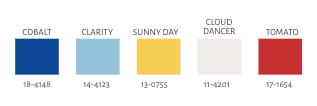
Creating a Pantone Color Palette
If she had to put together a 2026 color palette around Cloud Dancer, she would go for bright and fun.
“Cloud Dancer can either be the hero color that everything else works around and with, or it can just as easily be the supporting player, providing a grounding influence to a palette of bright colors,” Ostrom explains.
Although many designers and analysts view Cloud Dancer as a versatile, symbolic, or even calming choice for 2026, not everyone sees the hue through the same lens.
A Creative's Contrarian Take: Not Everyone Is Sold on Cloud Dancer
To provide a fuller picture of industry sentiment, Jeremy Picker, creative director and founder of AMB3R Creative, offers a different view of the hue — one that challenges both the color’s influence and Pantone’s relevance in today’s rapidly shifting fashion landscape.
He doesn’t see the Color of the Year shaping apparel or decoration trends, noting that “there are very few stock blanks that would even fit the bill for this color.” To him, more established neutrals, like beige, sandy tans, and warm grays will continue to dominate the market, adding that “Pantone fell short in my opinion with this one.”
Picker also questions whether the Color of the Year still reflects consumer preferences at all. “I think it’s becoming less and less relevant and just a way to try and capture more consumer dollars,” he explains.
He points to shifts in the retail environment reshaping how people engage with trends. “In the past, the seasonal cycles used to be relevant and integrated across the board, but with the influx of fast fashion and consumers being more individualistic with style, it's clear there is a disconnect from retail and consumers.”
If he had to pair Cloud Dancer with other colors in a palette, he says any color works, noting that pastels and brights will “still reign supreme” in spring and summer, and autumnal hues like reds, oranges, and yellows, in addition to rich burgundys, greens, and blues, would pair well.
Picker’s final thoughts are candid: “Cloud Dancer is more of a shade than a color. I connect it with my used socks drawer. You know how white socks get that light gray tint because of all the use? All in all, I think Pantone is becoming irrelevant compared to years past. After they left Adobe programs, that was the signal that their days of dominance are numbered. I have been focusing more on the Coloro x WGSN color trends, which seem to line up more with high fashion. Their color of the year is Transformative Teal. Something that has depth and is easy on the eyes.”

Jeremy Picker's Coloro X WGSN color palette. | Credit: Jeremy Picker
Taken together, the perspectives from Ostrom, Weiss, Marin, and Picker illustrate just how multifaceted a “simple” white can be.
For some, Cloud Dancer represents renewal, authenticity, and a clean canvas for experimentation. For others, it raises practical challenges or questions about Pantone’s evolving role in the industry. Whether embraced as a soft, sustainable neutral or met with skepticism, Cloud Dancer is a reminder that color, even at its quietest, still has the power to spark debate and innovation.