
Weaving Family and Community into Apparel Decorating
As Dinesh Wahi steps into the role of board member for the Kornit Konnections event, he reflects on what it means to support each other in the apparel decorating community
In the apparel decoration community, “family” is defined in a couple different ways. In the most obvious sense, many shops are often family-run, with multiple members stepping into various roles to help the business succeed.
But in a more extended sense, the term “family” also includes the community as a whole: it’s the non-blood-related employees that show up every day; it’s the other shop owners that offer help; it’s the people you meet at trade shows and events who become part of your network.
Dinesh Wahi, president of Shirt Hub, knows a thing or two about both definitions of family. Tracing its roots back to his parents and their entrepreneurial spirit, Shirt Hub and its many iterations have long been a family business. But according to Wahi, the value of connecting and learning with industry peers has played a huge role in its identity today.
And Wahi has not been afraid to step into that role for others. As a board member helping shape the upcoming Kornit Konnections event, Wahi believes that it’s one thing to do well in your own business, but it’s an entirely new level of success to help others rise as well.
Retail Roots
Above slideshow:
Dinesh and father Ramesh Wahi. Ι Credit: Shirt Hub
An employee handles shirts at Shirt Hub. Ι Credit: Shirt Hub
Dinesh feels that adding digital technology to Shirt Hub was a game-changer for the business. Ι Credit: Kornit
The Kornit Atlas Max. Ι Credit: Kornit
The Shirt Hub team has embraced a mindset of smart growth, keeping an open mind to new technology. Ι Credit: Shirt Hub
As it stands currently, Shirt Hub is a little over 10 years old, but Wahi points out that its origins lie in the retail apparel space, dating back to when his parents first broke into the T-shirt game. “My parents came from India in the 1970s and were serial entrepreneurs,” he explains. They owned and operated a plethora of businesses, including electronics distribution, liquor stores, and even a retail business that sold high-end watches. It’s that store that ultimately exposed them to T-shirts.
“Outside of our store was a kiosk selling T-shirts,” Wahi recalls. “[The guy that ran it] and my dad became friends … and we had this big store, we had all these expensive watches, and he would outsell us with these T-shirts.” That particular kiosk, as it turns out, was seasonal. “When [the guy running it] was closing, my dad said, ‘Do you mind if I continue it? We want to get into this retail business.’” After various conversations, the family did take the leap into T-shirts, though Wahi didn’t step into the picture until a few years later.
“After college, I went into corporate finance,” he says. “That was a good experience, but I always knew I wanted to come back. … I joined full time around 2012 and saw that retail was tough and felt that we were better at the print side.”
At the time, the business was doing the old-school individual transfers that had to be laid out and weeded, but as the company changed, so did the technology, and they eventually found themselves in the world of direct-to-garment (DTG) printing.
Like many early DTG pioneers, Wahi and family didn’t have the best experience with the technology. But with a willing attitude and open mind, the company kept upgrading, faithfully dedicating themselves to the benefit of growth.
For Wahi, it was (and still is) all about mindset when faced with challenges. “You can have the world’s best DTG machine, but if you don’t know how to extract the most quality out of it, it’s not going to be the same,” he says. Even with today’s automated technology, he feels operators still need to understand things like print head maintenance, what kind of garment is being printed, the pretreat process, and more. And that is where education and networking step in.
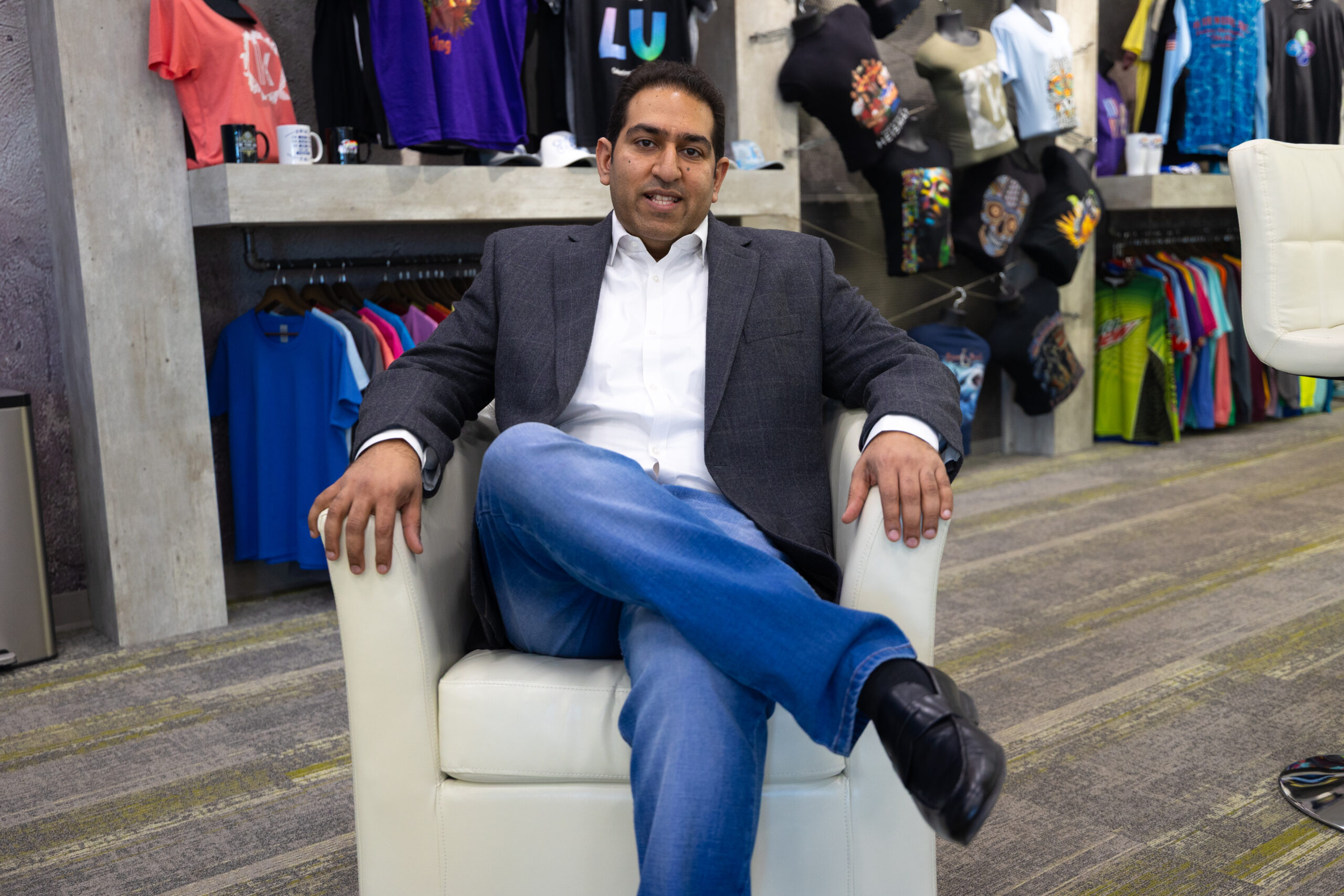
!["A lot of people are struggling with the tariff situation right now, so talking with folks that are going through that, how is it impacting us, is interesting. Being aware of what’s going on to avoid ... problems is important. [Consider] how we work together as an industry to avoid those challenges." Dinesh Wahi; Credit: Shirt Hub](https://www.apparelist.com/wp-content/uploads/2025/03/Dinesh-scaled.jpg "Dinesh")
A Growth Mentality
Wahi notes that the adoption of digital technology was a game-changer for the business, but what’s really propelled them forward is their dedication to learning it. Not only that, it’s the ability to know when and how to grow your business.
“Within the decoration side … [it’s about] adopting technology,” Wahi believes. For example, he notes that in the initial stages of business, they could often manipulate the machines to handle smaller orders of a hundred shirts even with problems. But to scale to the level of thousands of shirts, it required a huge investment of not only higher quality, newer equipment, but also in their employees and production floor processes.
For Wahi, this is where the concept of family extends. He notes that it was great bringing in new equipment, but when they could start elevating their employees’ lives, it created a whole new personal feeling. “When we could start adding … medical, dental, vision, 401K, holiday pay, that personally brought a lot of joy,” he says. “It’s one thing if you’re doing well, but you want to make sure that everybody’s rising … make it a good place [to work].”
That growth mindset applies across the entire business for Wahi. As the pieces of the puzzle fell into place with the right technology, processes, and people, he also calls attention to the company culture they implemented. “We have a ‘do what it takes’ commitment, and customers remember that,” explains Wahi. “We had every buffet of DTG machine [over the years]. If we hit that point where there has to be something better than what we’re doing, we do it. We push that quality.”
Part of that is the ability to lean into the community at large and the education it offers. “Networking is huge,” Wahi believes. He notes that when you’re running a small business, there are so many hurdles along the way — it’s easy to get burned out in your business. But going to an event or a trade show can energize people and connect you to the community in a way that reinvigorates your business. “You need those events to bring inspiration so you don’t just fizzle out.”
Creating ‘Konnections’
It’s that in-person networking energy and family-feel that has inspired Wahi to give back and ultimately become part of the Kornit Konnections event. “Because people helped me, I want to help others,” he says. “All the big trade shows have their role — you need to learn and those events are important. These smaller events geared toward our specific pie of the industry are exciting and need to also exist. In each Konnections event, I have met people that have helped our business, and I try to help others as well.”
For those that plan to attend, and really for anyone in the apparel decorating community, Wahi shares this advice: “The more people you know in the industry, the more it helps you and your business.” Of course, the educational sessions and presentations will always play a vital role, but for so many decorators, it’s about building that community family.
“You know they’re people you can trust and depend on,” says Wahi. “It’s thoughtful of Kornit to bring customers in so we have a greater voice on what we think others will benefit from. What am I struggling with that I can share ... This will be a group that can continue to thrive if they approach this event as something valuable.”