
The Smart Way to Add New Product Categories to Your Print Shop
How do you know when it’s time to add new products or services to your lineup? We asked the experts how to weigh the pros and cons of bringing a new revenue stream in-house.
Key Takeaways
-
Adding a new product category only succeeds when it aligns with your shop’s existing strengths, workflow, and customer demand.
-
The smartest expansion decisions come from data, planning, and operational readiness.
-
Outsourcing first is a low-risk way to validate demand and learn to sell a service before investing in machines or labor.
-
A smooth rollout depends on strong internal preparation, clear sales processes, and communicating the new offering to your warmest audience first.
At one point in time, print shop N The Zone Ink attempted to bring stickers and digital print-cut products in-house. “On paper, it appeared simple, but in reality, it didn’t align with our garment-decoration workflow,” says Deanna Smith, co-founder and CEO.
Smith and her team learned that digital printing requires an entirely different production environment. “Lint, fibers, and the natural messiness of apparel production interfered with the laminate and print quality,” she says. “The equipment demanded far more labor than we expected, and because it wasn’t our area of expertise, troubleshooting stole time and attention from the core departments that truly drive revenue.”
Ultimately, the category became more of a distraction than an asset for N the Zone Ink. In fact, outsourcing proved faster, cleaner, and more profitable.
The lesson for Smith? “New categories are never ‘plug-and-play,’ no matter how simple the sales pitch sounds,” she says. “If it’s not a natural fit for your infrastructure and your strengths, it’ll drain resources instead of adding value.”
So how do apparel decorators know whether it’s a good idea to add a new in-house product or service? If you want to offer promo products, wide-format printing services, or something else, there are business decisions you need to make before leaping. We asked industry pros the right (and wrong) ways to implement new revenue streams.

“Shop owners focus too much on when to expand,” says Marshall Atkinson, business consultant at Atkinson Consulting and Shirt Lab Tribe. “The real question is the ‘why’ behind it. If you haven’t figured out how to sell the new service or support it operationally, you’re just buying a shiny object that turns into a very expensive paperweight.”
One of the first practical cues that it might be time to add a new product is noticing consistent demand — or realizing you’re frequently outsourcing or turning away that type of work.
“It’s all about listening to your ideal audience,” says Jesse Poteet, business coach and screen printer at Startup Screen Printing. “The right time to expand is only when it lets you go deeper with the clients you already have, rather than chasing a new market just for the sake of it.”
For example, Poteet introduced direct-to-film (DTF) printing when his customers needed faster turnaround on items like hats and zip-up hoodies that weren’t ideal for traditional screen printing. “The timing was right when it naturally aligned with serving my existing audience better,” he says.
Smith says the right time to expand is when the data, not the excitement of a new service, says it’s time. “Start by looking at what you’re already selling,” she says. “If you're consistently outsourcing a product or service, ask: How often? What revenue is it generating? And does that revenue justify bringing it in-house?”
Next, evaluate the real operational cost and workflow. “New categories often require dedicated equipment, floor space, training, and sometimes a new employee altogether,” Smith says. “If the additional labor cost — including taxes, training, and coverage when that person is gone — doesn’t pencil out, it may not be the right move. Also ask: Will this disrupt your current production? Does it fit naturally into your shop’s systems, pace, and strengths, or will it create bottlenecks?”
Ultimately, it’s not about what product category a print shop selects. “It’s like, ‘Should we jump into clean water or sulfuric acid?’” Atkinson says. “Otherwise, you’re just jumping blindly into lakes. Shops that bought [direct-to-garment] (DTG) printers and didn’t sell anything had damaged machines with clogged printheads because they didn’t run.”
Whether you want to add DTF, UV-DTF, wide-format printing, laser engraving, or fulfillment services, your decision comes down to whether or not they make sense for your shop’s structure and revenue profile.
Before jumping into a new category, it’s important to create a business plan to see if it’ll be profitable. “Make sure the three legs of your business — production, sales, and admin — can grow together,” Atkinson says. “If one leg lags, the whole operation becomes unstable.”
Atkinson recommends answering questions like:
- What’s the equipment cost?
- What’s the maintenance cost?
- What happens if the laser breaks? (That includes downtime, the repair process, the warranty, and your backup production plan.)
- What’s the profit margin?
- What’s the opportunity with our current client base?
- Are we going to be upselling?
But financial feasibility is only part of the equation. “It’s not just about adding a revenue stream,” Poteet says. “It’s about aligning it with your core offerings and if it enhances the value you’re delivering to your customers. Is it financially viable, operationally sustainable, and strategically a good fit? If it’s going to cause a huge disruption or require a massive learning curve that doesn’t gel with your main business, it might not be the right move.”
From there, look at the practical details, using these questions Smith recommends:
- Will this disrupt current workflows or require additional staffing?
- Does your current team have capacity, or will it stretch them too thin?
- How will this integrate into your order-management software?
- How will you store, warehouse, ship, or manage this product?
- If new equipment is required, who’ll run it — and did you factor that cost into your pricing?
- Is your sales team genuinely excited about selling this? If they aren’t, they won’t push it.
- Does the price point you need to charge align with your market and customer base?
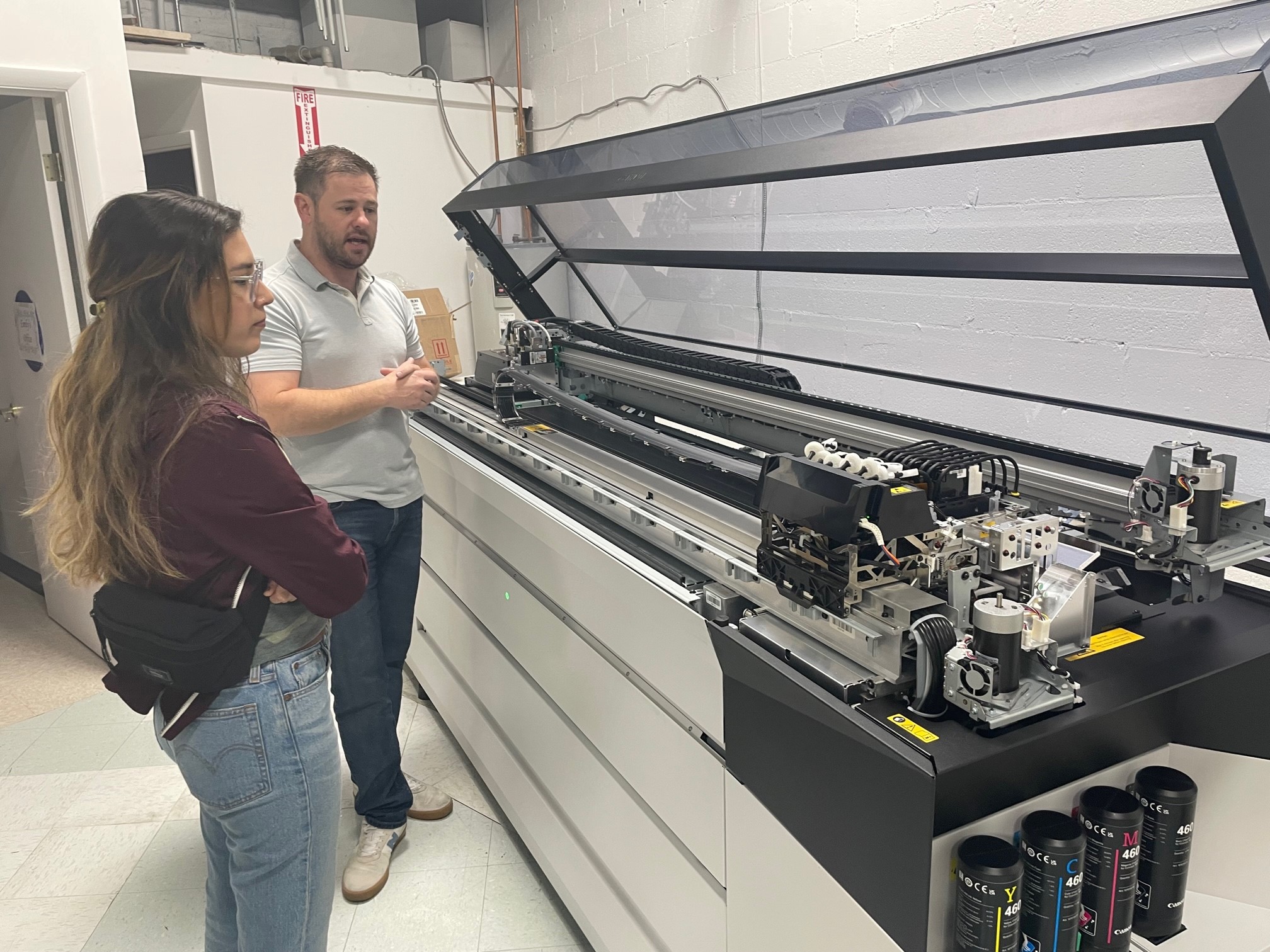
Then, list the advantages of bringing the service in-house. “You don’t have to be the ‘jack of all trades’ to be successful,” Smith says. “You need to be excellent at the core services that actually drive revenue.”
Sometimes the smartest move isn’t buying something new — it’s expanding what you can already do with the tools you have. “Start by broadening what you already have before you spend money, like high-density inks, puff, chenille, lenticular effects, or embroidery effects, without buying new equipment,” Atkinson says. “You’ll end up selling your machine if you don’t figure out how many units you need to sell each month to reach zero.”
Once you’ve written your business plan and are evaluating the machines and software you need to print the service in-house, it ties directly back to knowing your shop’s numbers.
“You shouldn’t purchase equipment based on excitement or trends because it must make financial and operational sense,” Smith says. “Consider: Is this an additive opportunity or a distraction? If the new product or service will disrupt or dilute what already works well in your shop, it likely isn’t the right investment.
Atkinson is a big proponent of not buying new equipment until you genuinely understand how it works, what it costs to maintain, and whether there’s a real demand for it. “The time to learn to sell the product or service is before you own the machine, not after,” he says. “If you can’t sell it before you own it, you won’t after you buy it. Shop owners buy equipment and think buyers will come simply because they added another line to their website.”
Using an outsourcing partner and building a cash reserve gives decorators a low-risk way to validate demand before making a major purchase. “Your customers don’t care that you print or laser engrave the items because they just want it by Friday,” Atkinson says. “When you finally buy the equipment from your outsourced production, you’re not relying on hope or a big loan to pay for it.”
Before bringing any new service in-house, decorators need a structured rollout plan to prevent production bottlenecks and protect margins. “You need a clear plan for who’ll sell, produce, and ship the new offering,” Atkinson says. “Without that, you’re just throwing another task into an already crowded workflow. That’s why one of the smartest ways to add a new service is to outsource it first.”
When you’re ready to market the service, whether you’re outsourcing or doing it in-house, preparation is everything. “Before launching anything, make sure you’ve fully integrated the new category into your existing order-entry process and ensured that your sales team finds it easy to quote, explain and sell,” Smith says.
Poteet uses email marketing to inform customers about new services and why they matter. “When it’s something clients have already expressed interest in, it’s a natural and easy transition to say, ‘Hey, we’ve got this new offering now that fits exactly what you’ve been asking for,’” he says.
While Poteet focuses on customer-driven communication, Smith emphasizes that a smooth rollout starts with preparation inside the shop. “Start by marketing it to your current client base, and announce it through email, social media, your website, and blog content,” she says. “Your existing clients are your warmest audience. Launch there first before spending time or money trying to reach beyond them.”
Smith says the details matter just as much as the initial announcement. If you email clients about your new product or service, include a link to an interactive section of your website where they can learn more or request a quote. “Be prepared with pricing, turnaround details, and clear visuals so you can answer questions quickly,” she says.
Samples are also powerful. “If the cost is low, put a sample and a small postcard with product details in every box that leaves your shop,” Smith says. “For higher-cost items, create a show-and-tell kit for your sales reps and send targeted samples to customers who are a natural fit.”
Planning starts with listening to your customers’ needs, learning to sell the new product or service, and outsourcing before you leap into purchasing new equipment and technology.
Atkinson has seen print shops buy a DTG printer and never sell enough to keep the machine running, instead letting it sit idle so long that the heads clog. “That’s not a new technology problem — it’s a planning problem,” he says.
The shops that win are the ones that plan first and buy second.
Expert Q&A: New Revenue Streams to Consider
We asked business consultant Marshall Atkinson to weigh in on some popular revenue streams.
What’s the best way to know what product or service to add?
MA: “You absolutely have to have one-on-one communication with your customers instead of the hope-and-pray ‘Field of Dreams’ method.”
How do promo products fit into a print shop’s lineup?
MA: “Promo is a natural upsell to decorated apparel, like a restaurant increasing the ticket with an appetizer or dessert. You can use industry platforms to find and curate products. Your value is that you’ve vetted the products, you’ve tested the samples, and you can help your clients make smart decisions they won’t regret. You’re not competing on price at that point, either.”
What else do you see as a natural extension of a print shop’s services?
MA: “One of the most profitable expansions I see right now isn’t decoration at all — it’s fulfillment. Companies will pay a premium for the ability to kit, package, and ship 1,200 branded boxes by next Friday. Fulfillment services are the biggest missed revenue generator; the money is in putting it in a box and shipping it with the client’s branding.”
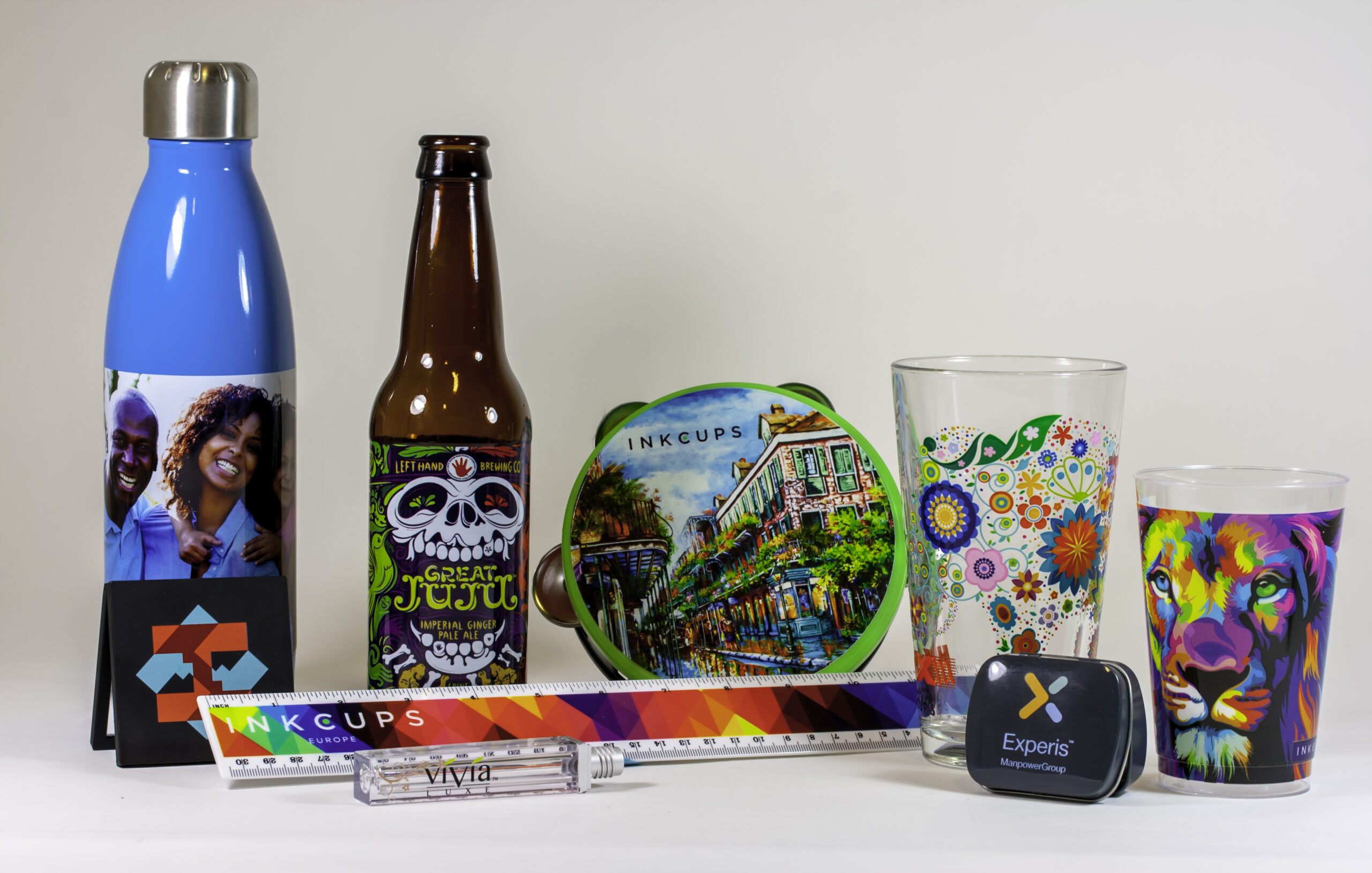
Credit: Inkcups