
The Future is Already Printing
From powderless DTF and AI-powered automation to convergence with promo and wide-format, the apparel decorating community is pushing today’s technologies further than ever before.
Key Takeaways:
- Suppliers are hyper-focused on improving quality, efficiency, and production capabilities.
- Convergence continues to drive growth as decorators expand into complementary markets like promo products and wide-format printing.
- Personalization and print-on-demand are no longer emerging trends — they’re standard operating models.
When an apparel decorator is looking for the latest screen-printing technology, when they want to explore the newest workflow software, and when they want to grow into other print verticals like promotional products and wide-format printing, there’s one thing they do consistently: attend a trade show.
Events like PRINTING United Expo — taking place this year from Sept. 23-25, 2026, in Las Vegas — not only give decorators the ability to see what’s new from a technology standpoint, but they also give insight into what designs are trending, innovations in blanks, and connections to peers and suppliers that they didn’t previously have.
This year at FESPA 2026 in Barcelona, Spain, we put our boots on the ground to see what the apparel decorating community is working with right now, but also what to expect for the remainder of the year.
There were a handful of innovations on display, but the biggest takeaway we want to make sure decorators are aware of is how to push those innovations to their limits … and beyond. From highly-detailed prints to explosions of personalized color, and everything in between, here’s what you should have on your radar.
Trends in Apparel Decorating Technology … and More
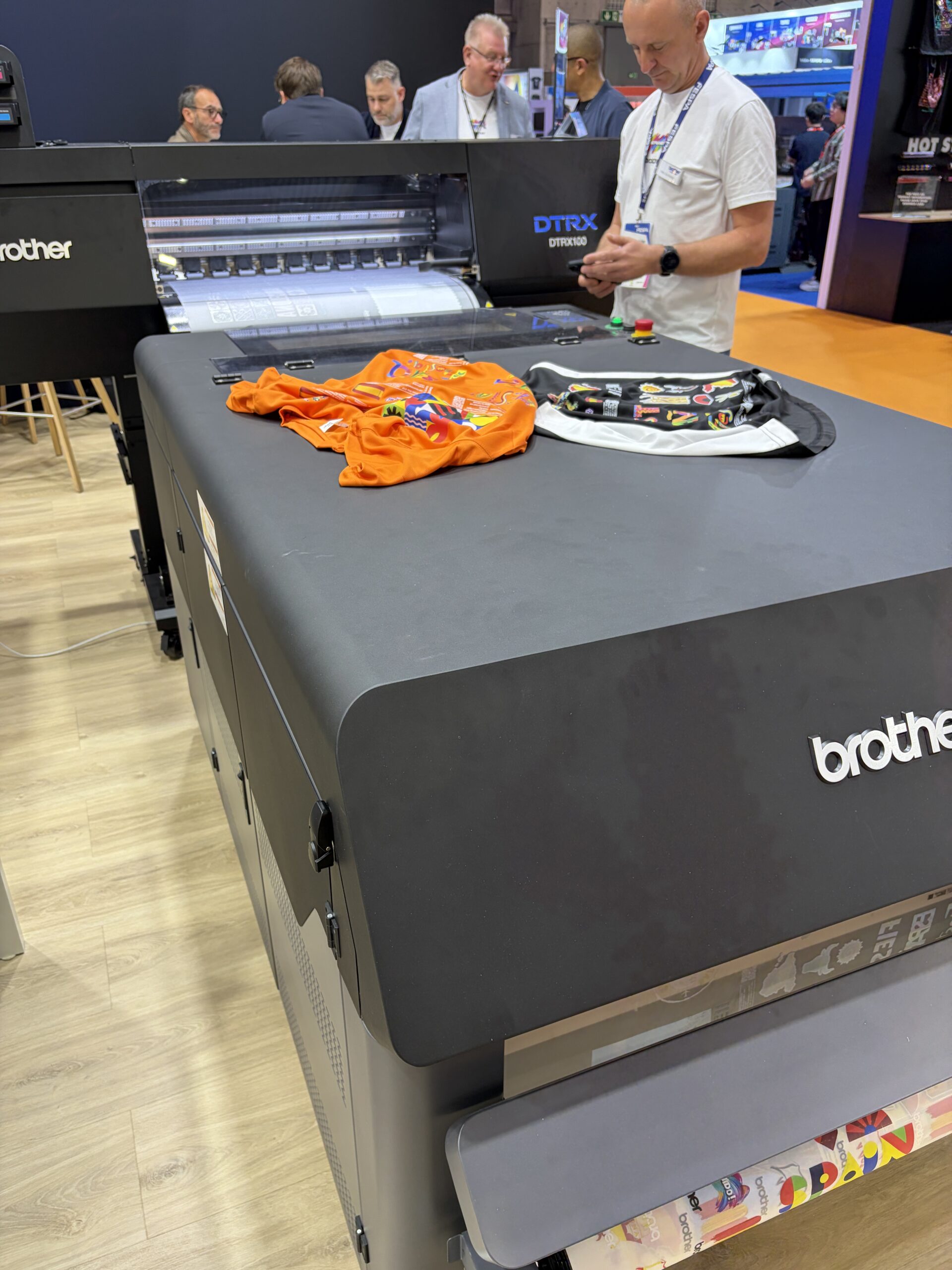
There are several new technologies that decorators should be aware of on display at FESPA. Direct-to-film (DTF) continues to take center stage, though the conversations have changed drastically. While still considered “new” in the industry, the focus was less about it being the latest decorating trend and more about how it has improved.
One major improvement to this technology is in the powderless developments. Polyprint unveiled a new powderless DTF printer at the event, which features integrated liquid adhesive technology using DuPont Artistri’s JA1100 Jettable Adhesive. Other suppliers acknowledged that they are also working on powderless solutions, so expect to see more announcements coming in the near future.
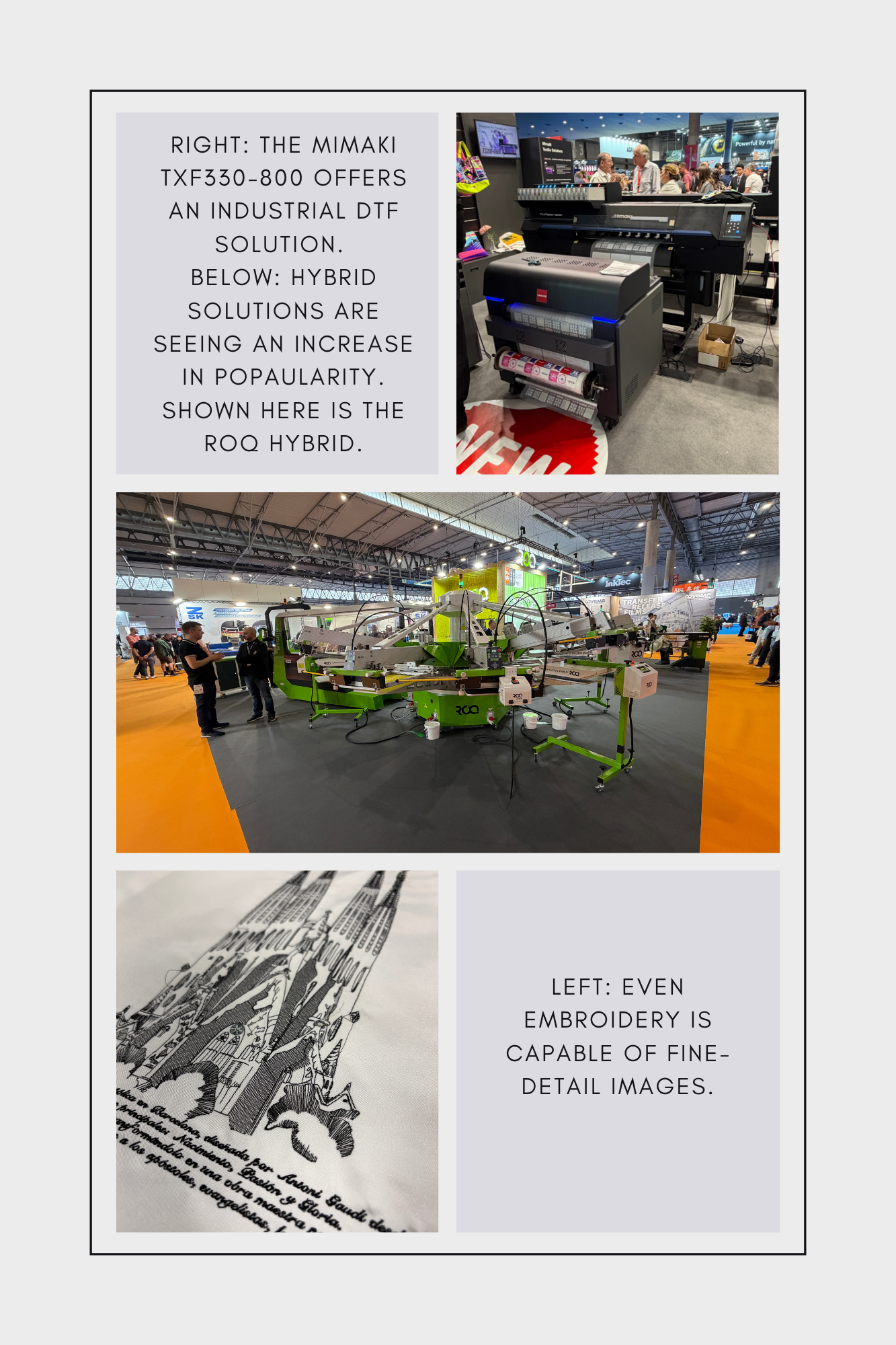
Mimaki also brought a new industrial DTF printer to the scene. The TxF330-800 features expanded color gamut options (four or six color), a 34” print format, and up to 50% faster production speeds than previous models.
Where we also saw advancement in the technology is in the hand-feel. Early DTF printing was often very boxy and stiff; however, several exhibitors showcased prints that were soft yet durable. Ink formulations are improving, but so is the powder application and even the design. All of these factors contribute to softer end print.
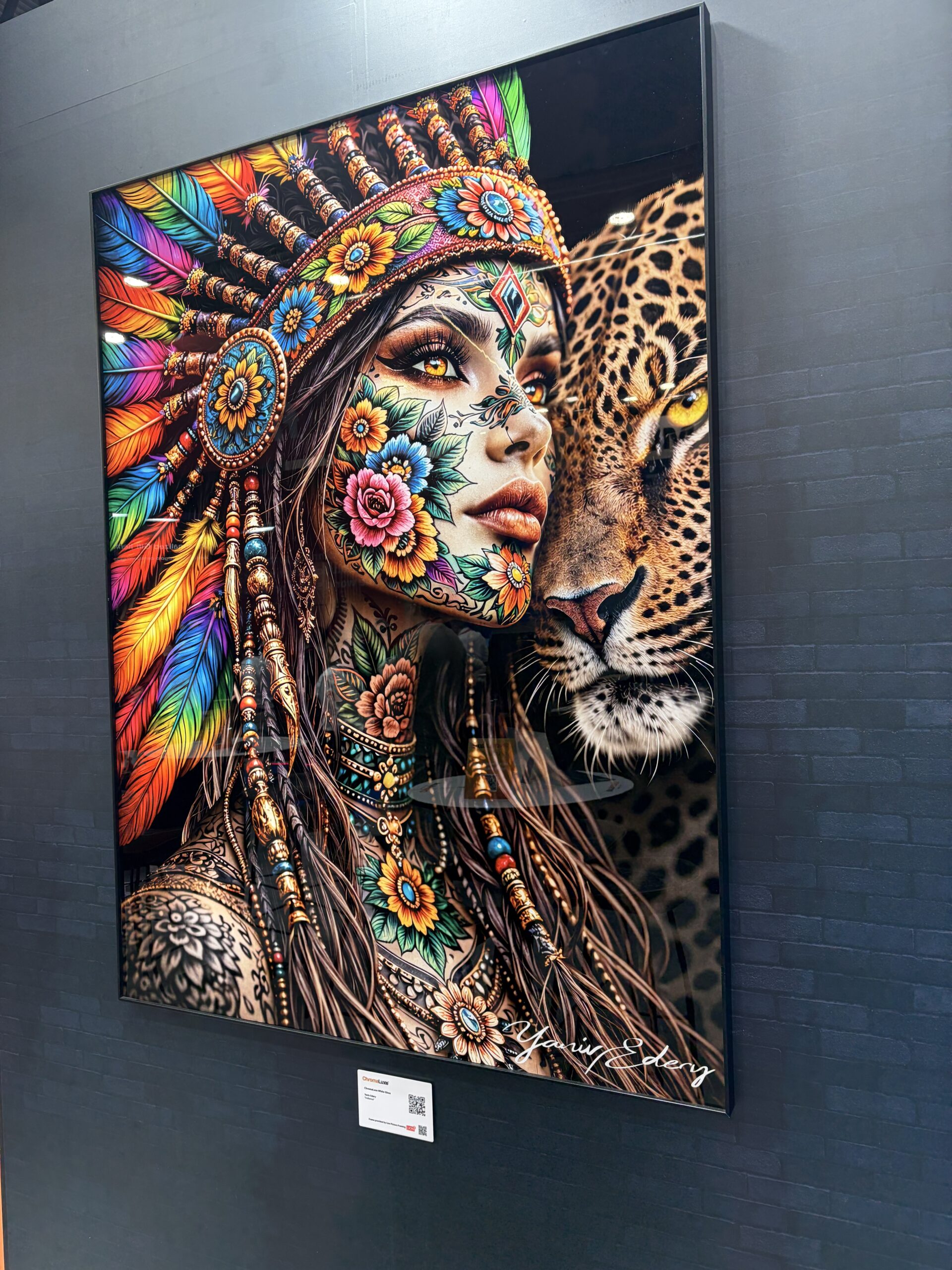
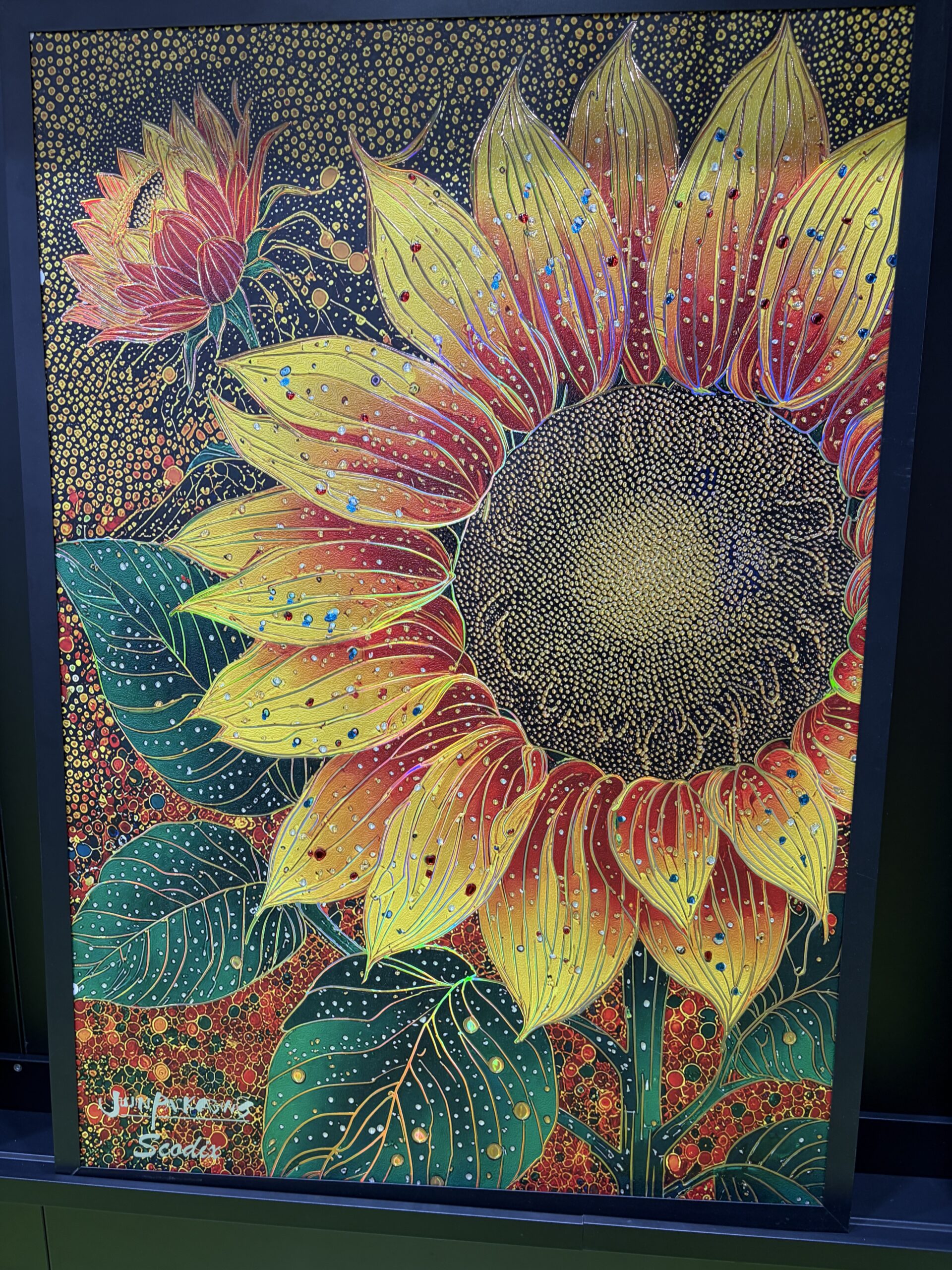
Colorful, high-detailed designs demonstrated how DTF printing can be utilized to create improved prints, but we didn’t just see this with DTF. The floor was alive with prints so detailed, it almost felt as if they were real. Some suppliers, such as Scodix, showcased highly textured prints. Others like Unisub/Chromaluxe showed how even 2D prints can come to life with huge, colorful graphics that could be spotted across the show floor.
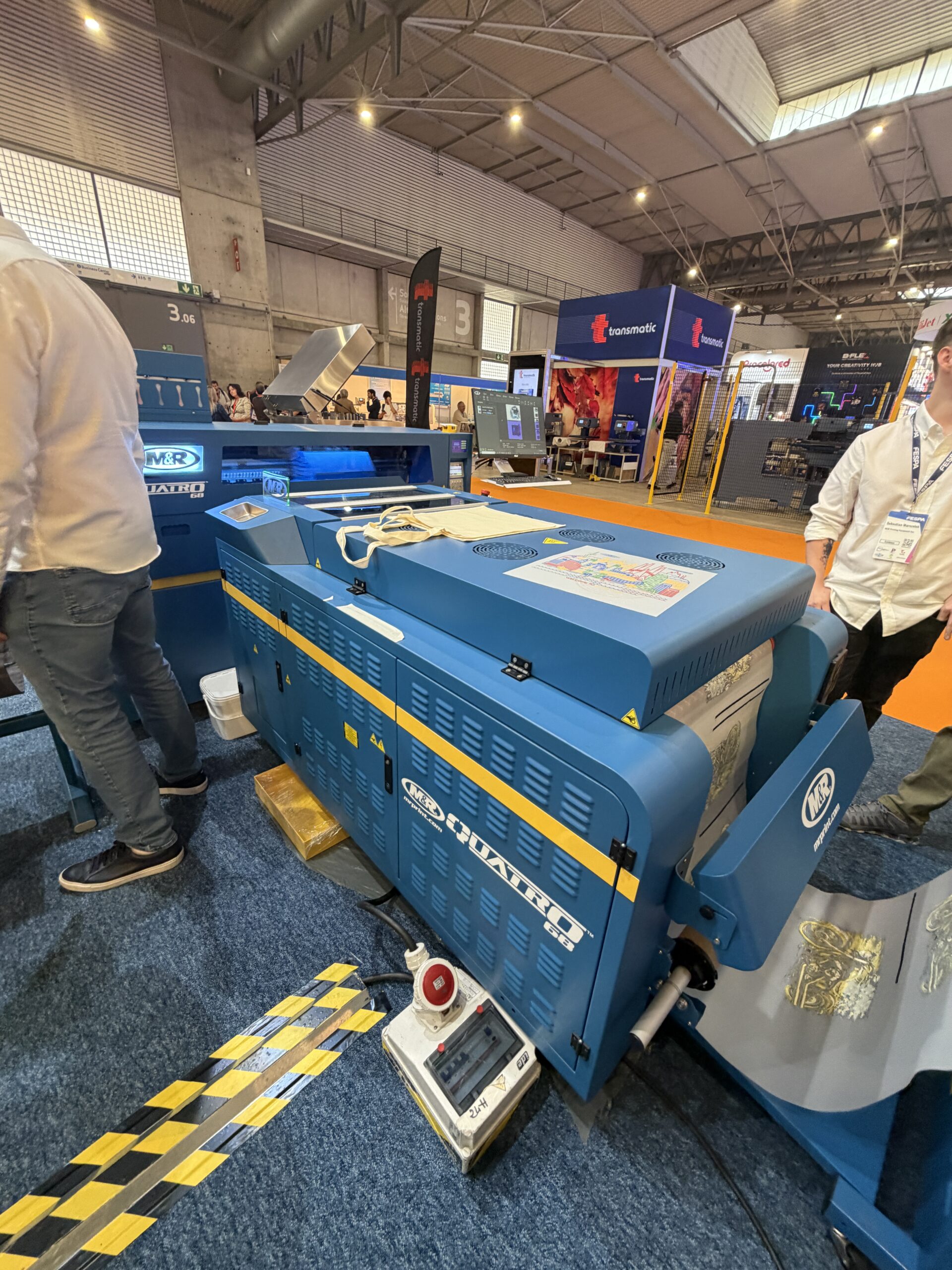
That wasn’t just limited to hard substrates, either. If you thought screen printing was dead, the FESPA show floor proved that is not the case. Several exhibitors, including M&R and ROQ, had automated screen-printing solutions on display, showing printers what today’s technology is capable of, including designs that packed punchy details that could be mistaken for digital prints.
Two specific screen-printing advancements stood out on the show floor beyond highly detailed printing capabilities. First is the increase in hybrid solutions, such as using screen printing to handle the main print, then utilizing DTF to print custom labels or sleeves.
The second standout in screen printing was an auto registration technology powered by AI, which was unveiled by KTK. This trend, of course, leans into the heavy emphasis on automation that is dominating the industry currently.
Not to be left behind in the technology trends discussion are embroidery and sublimation. While not typically known for the ability to create fine lines and high detail, that was not the case for embroidery solutions at FESPA. ZSK and others demonstrated that high-detailed embroidery is possible.
The Future of Sublimation
with Dimple Patel, chief product officer and head of global marketing, Sawgrass
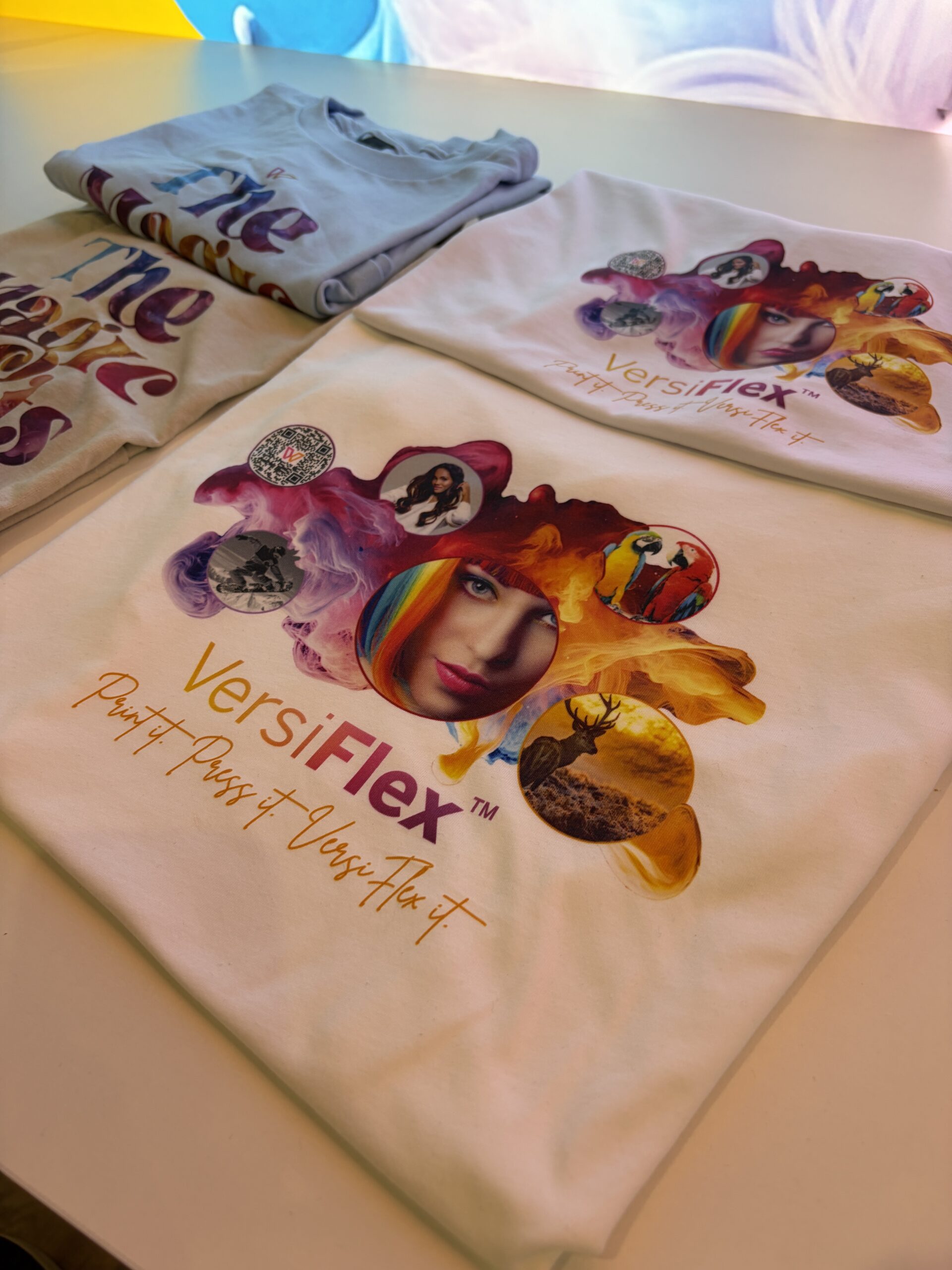
Sawgrass’ VersaFlex technology is reshaping how decorators approach sublimation, driven by real customer behavior and feedback. Demand is coalescing around two core applications: cotton T-shirts and ceramic mugs/polyester-coated products.
“The ink technology allows us, in combination with the capabilities of our software, the capabilities of the actual Versa Flex Light Media, to use a hybrid ink that allows you to have the pop and the vibrancy of sublimation with the ease of being able to use cotton,” Patel says. The important distinction, according to Patel, is that it’s sublimating on cotton, not in.
Pain points around substrate limitations are easing as decorators can pick up blanks and customize on-demand. Trending products still start with ceramic mugs, tumblers, and coasters, but growth is in bundled collections — coordinated sets of drinkware, apparel, and accessories — underscoring that personalized, print-on-demand customization is here to stay.
And in sublimation, Sawgrass continues to showcase its VersiFlex solution, which allows decorators to sublimate on cotton. Dimple Patel, chief product officer and head of global marketing at Sawgrass, explained in an interview with Apparelist why the technology is so beneficial in the apparel decorating space.
“What our data is telling us, and the customer is too, that there [are] really two areas of interest: a solution that allows you to decorate cotton T-shirts, and a solution that still enables you to continue to sublimate ceramic mugs and all of the polyester-coated products that traditional sublimation allows you to do,” she said. “That is where the magic, the growing happens.”
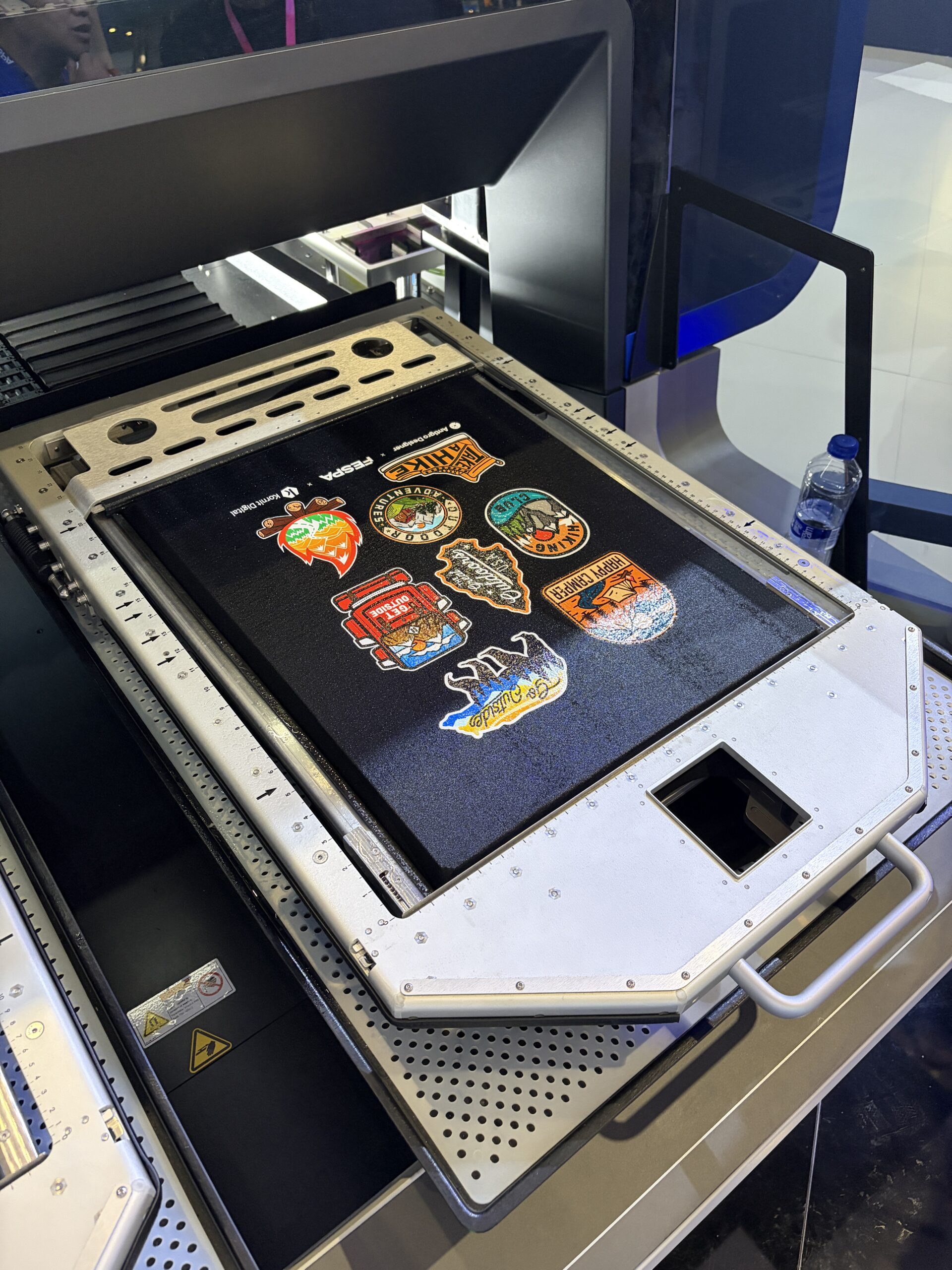
If we’re talking technology that takes a current printing method and elevates it to the next level, the Kornit Digital Atlas MATRIX is worth discussion. The machine allows for digital printing directly on polyester with no dye migration and a soft hand-feel, according to Tali Degani, product and program director for the MATRIX. She added in an exclusive interview for Apparelist that it complements screen printing technology in that it can handle short-run and multi-color jobs.
Convergence as a Game-Changer
In the world of blanks, the push for eco-friendly styles that hold high-quality prints and withstand the test of time continues to hold firm. The E.U. is currently seeing more regulation surrounding textiles than the U.S.; however, the expectation is that it will continue to move stateside.
During a session located in the Personalization Experience area, Peter Bragg, EMEA Sustainability & Government Affairs director, Canon United Kingdom, pointed to the “2025 C-suite Sustainability Report” from Deloitte. In that report, 83% of participants have increased sustainability investments in the last year. Even more importantly, 66% say their priority actions have a positive impact on revenue generation.
In that light, companies across the show floor promoted solutions to help printers be more sustainable. Companies like Biond and Colvas showcased eco-friendly accessories such as films and inks, while garment manufacturer Stanley/Stella partnered with Kornit Digital to show how its blanks serve as an important piece of a more sustainable apparel decorating world.
Everywhere we went on the FESPA floor, people were also discussing print-on-demand (POD). It’s no surprise that this no longer a trend, but a business model with staying power. It wraps into the bigger-picture conversation of automation, sustainability, addressing labor challenges, and the persistent consumer demand for personalized products. Dave Connor, director of product marketing, STAHLS’ Fulfill Engine, discussed it in his presentation, “Adapting to the On-Demand Era: How to Future Proof Your Print Business.”
“It’s not buying a fancy or expensive piece of equipment,” Connor said. “It isn't one magic machine. It is workflows and reducing the touch points.”
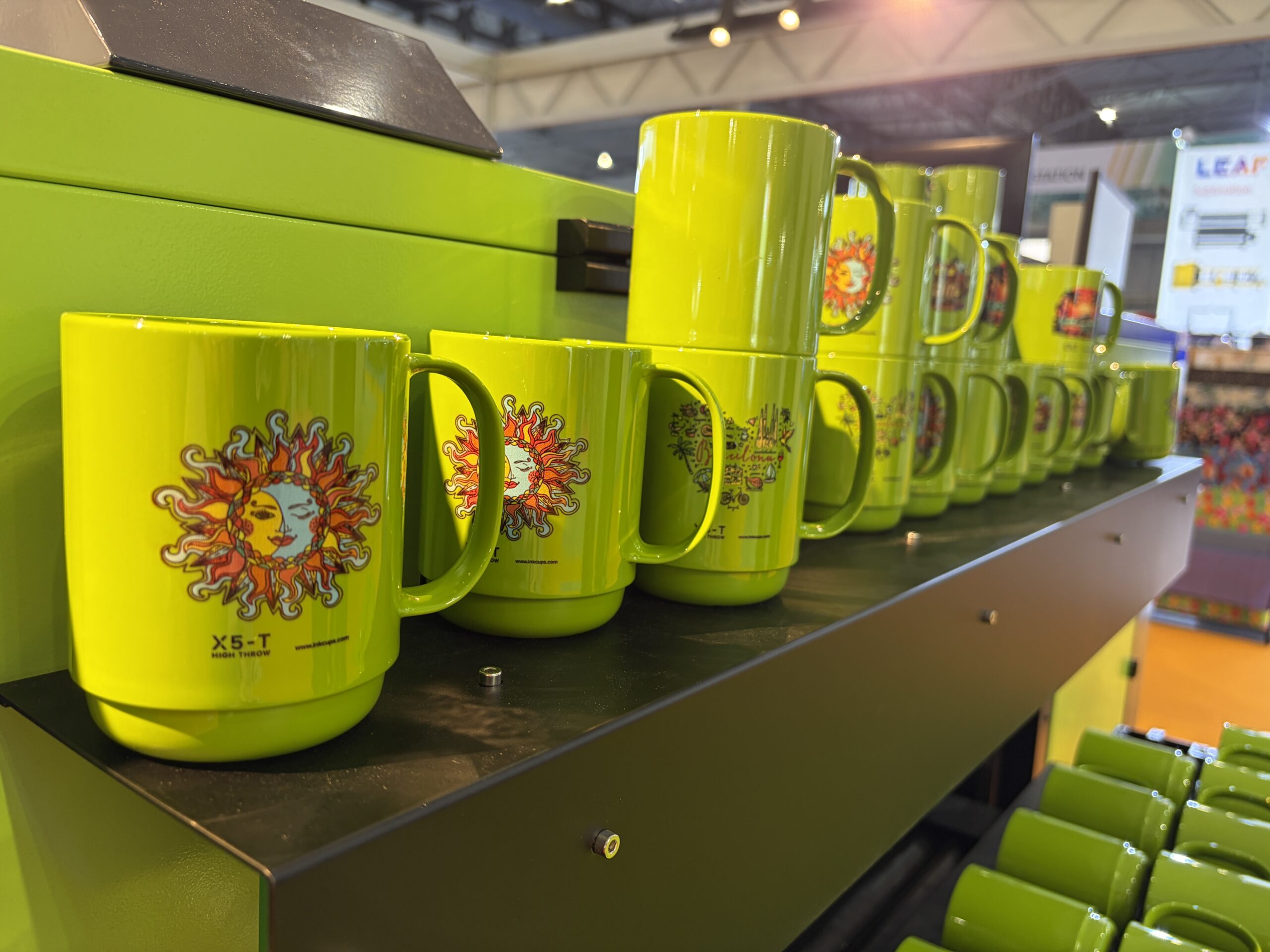
The final major takeaway apparel decorators pulled from FESPA is that of convergence, and it truly was everywhere. Most decorators have already moved into promotional products, with items like drinkware and personalized corporate gifts topping the popularity charts. According to Hendrik Koemans, sales director at Inkcups, the drive for this is also influenced by the POD model.
The POD Business That Scaled Up with Workflow Software
One hot topic in the industry currently is automation, and a specific area this hits apparel decorators is workflow and software solutions.
Founded in 2018, Tidy Merch — based in Stockholm, Sweden — is a POD manufacturer. “We work directly to the end consumer, but also as a white label fulfillment partner for existing big companies who have plenty of volume and want to distribute mainly in Scandinavia,” said CEO Charlie Saunders in an exclusive interview with Apparelist at FESPA 2026. “But we can also access many different regions fast and with many types of decoration techniques like DTG, embroidery, DTF, and sublimation.”
As Tidy Merch began to grow and make strides, Saunders mentioned things were a bit chaotic. “I would say our warehouse was a mess, our machine [area] was a mess … our internal structures for data handling, file processing, and many other things were very under the mud, so to speak,” he said. That’s where GelatoConnect came in.
He said the decision to bring on a platform that would help handle his workflow was easy. Saunders believes many printers and POD fulfillment providers likely struggle with the same thing: ensuring their workflow and IT are shored up and running as efficiently as possible. “We could spend three hours looking at an ink droplet, but then have no clue on how to get more than three shirts out per hour, or have a unified flow,” he said.
In particular, bringing on automation in the workflow process has helped Tidy Merch deal with the plethora of SKUs, something that used to take him hours to upload then match with decoration techniques. “Now we literally spend two clicks on a screen, either on a computer or a phone,” he said of the process running under GelatoConnect.
When it comes to results, Saunders has seen improvement where it counts. “We've been able to basically double our revenue without having to add more staff,” he stated. “I know a lot of people [are] speaking about cutting staff and being more efficient. … But I always wanted to grow, and I wanted to grow with the people who were there from the start. So, for me to be able to grow, keep the same people, and take care of them, take care of my customers, that has been amazing.”
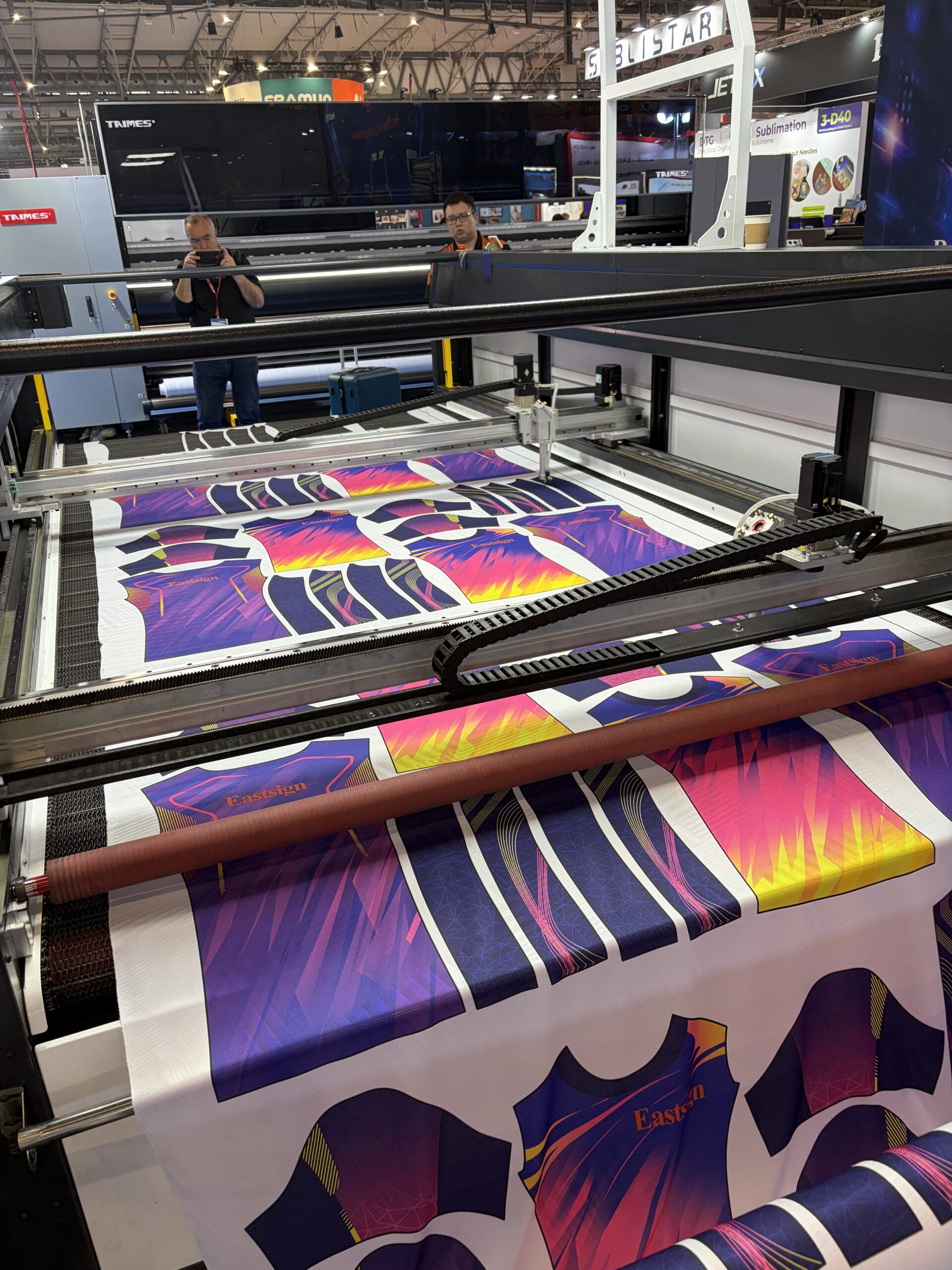
Don’t forget the opportunities in wide-format printing as well. It might not seem as obvious of a match, but decorators don’t have to go too far to explore wide-format printing, particularly in the world of textiles. Companies like EFI brought a selection of new solutions, including textile, to the show. Making its debut at FESPA, the 3.4-meter VUTEk FabriVU 340 i8 dye-sublimation printer offers opportunities for decorators that are ready to make the leap into wide-format but are interested in sticking with textile printing.
As we move into the second half of 2026, there is an overall spirit of optimism in the industry despite continuing supply chain strain and increased prices. Many on the show floor — both exhibitors and attendees — reported that sales are steady and intentional, and scalable growth is the goal.
Why Ink Innovation Matters
Most apparel decorators look at equipment and design trends when exploring the latest and greatest in the industry. But accessories like ink, films, cutters, thread, and more play an equally important role in the success of a shop.
While onsite at FESPA 2026, several manufacturers showcased the latest in ink technologies. Among them was Nazdar, who according to Stephen Woodall, product manager, is hyper focused on innovations in increased color gamut, better hand-feel, optical density, good wash fastness, and good light fastness, with DTG and DTF inks.
As digital printing continues to improve, the ability to meet the same standards as a screen-printed garment drive the development in digital ink. “That can be difficult with digital ink formulations, because of the limitations on the raw materials you have access to, but as technology and understanding of the chemistry advances, we're getting closer to a product that is much closer in the hand-feel and the appearance to a screen-printed garment,” Woodall explains in an interview with Apparelist.
The challenges surrounding digital printing largely stem from the pretreatment process, which ultimately leads to challenges in curing and adhesion. Today’s ink formulations are addressing those challenges. Woodall notes that Nazdar works to optimize its inks — “the active components within the ink, so your polymer, your binders, to give you the wash fastness that's required without the need to have excessive amounts of heat and energy to cure and to dry.”
Ultimately, Woodall believes decorators should pay attention to ink advancements because the final print is what the end wearer will touch, engage with, and love. “Having something that meets all those requirements, in terms of color, in terms of hand-feel, in terms of longevity, is part of the finished garment, part of the finished product,” he says.