
Streamlining Workflow for Growth-Ready Shops
Key Highlights:
-
Efficiency begins with clarity – Many shops chase growth by adding sales or equipment, but real progress often comes from uncovering and removing the hidden friction slowing down everyday work.
-
Small fixes create big wins – A single bottleneck in communication or setup can quietly drain hours each week, but even simple low-tech adjustments can reclaim time, profit, and team morale.
-
Culture drives consistency – Streamlined systems only work when people are aligned; empowering teams with structure, feedback loops, and trust is what transforms workflow into momentum.
No matter the size of your operation, workflow determines everything, like productivity, profitability, and even morale. When processes lag or information gets lost, output slows and stress rises. For shop owners, that tension often shows up long before revenue does.
Many owners assume growth comes from more sales or more equipment. But for most small shops, sustainable growth starts by streamlining what’s already there. Moving fast and doing more doesn’t necessarily mean you’re being more efficient. Workflow efficiency is simply removing the friction that keeps your team from doing their best work.
In a business built on deadlines, one small bottleneck can ripple across the entire week. When the art department is waiting on approvals or a press sits idle for 20 minutes between jobs, that time compounds. Multiply that by 100 orders a month, and you’re looking at lost revenue hiding in plain sight. Streamlining your workflow allows you to reclaim profit margin, reduce burnout, and keep your team operating with confidence.

Understanding the Flow Before You Try to Fix It
You can’t streamline what you haven’t mapped. Most small shops operate on habit, not systems. Or as some shops put it, the “it’s worked so far” approach. But if you want consistent output, you need a clear picture of how work moves through your shop from quote to delivery.
Start with a workflow audit:
- Track one order from start to finish and document every step.
- Note where delays happen like miscommunication, missing artwork, unclear approvals, or downtime waiting on screens, blanks, or mockups.
- Ask your team what slows them down most often (you’ll uncover patterns fast).
Once mapped, visualize the process with a simple chart or whiteboard. You’re not just looking for inefficiency; you’re looking for repeatable structure.
Early on in my screen-printing company, one of our biggest bottlenecks came from artwork approvals. We’d lose hours waiting on customers to reply to email proofs, and half the time, their feedback would come through as a vague “looks good” without confirming colors or placement. That lack of clarity caused reprints, lost time, and frustration on all sides.
We eventually built a simple proof system with a (free) Google Form that required the customer to check specific boxes for approval, such as color, size, and placement. It turned a daily guessing game into a five-minute confirmation.
One of the biggest blind spots for smaller teams is relying on gut instinct instead of simple data. You don’t need software to measure what matters. Track how long each stage takes like approvals, setup, press time, and cleanup, then review it weekly.
Once we started doing this, I realized our setup time averaged nearly 20 minutes longer on multi-color jobs than I thought. Just that awareness helped us prep smarter and reclaim several hours per week.

Systems Build Consistency (and Sanity)
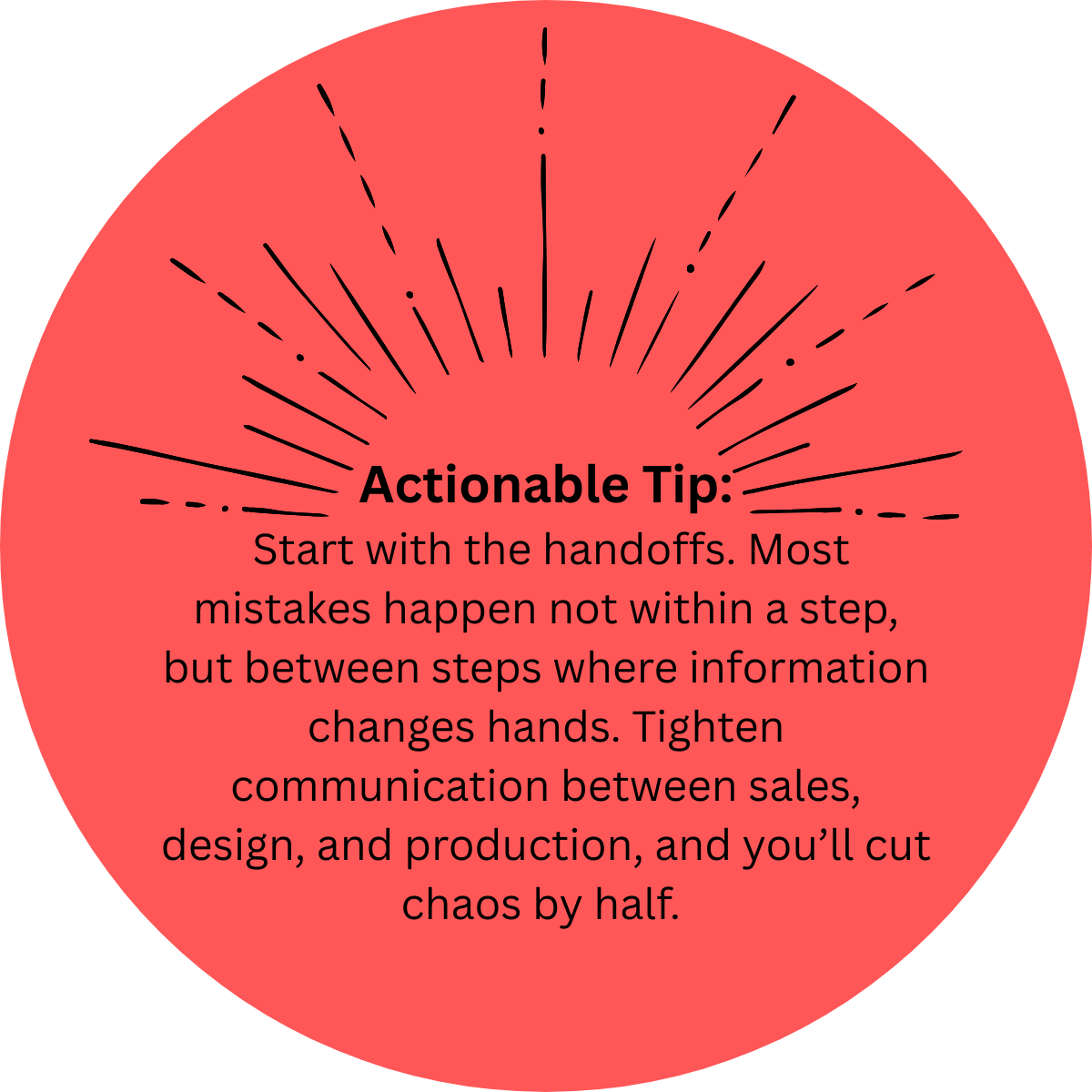
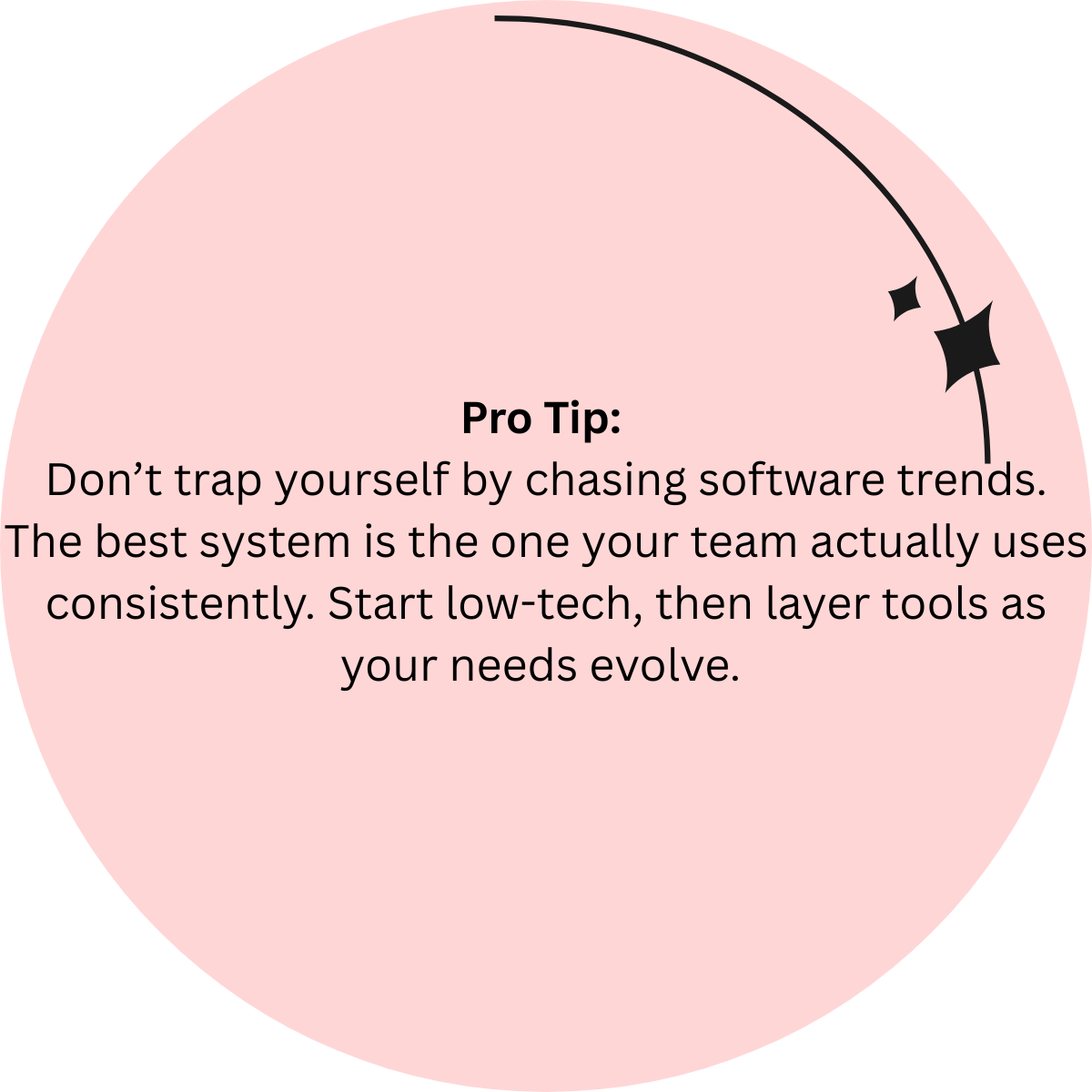
Once your flow is mapped, it’s time to support it with simple systems. For smaller teams, this doesn’t mean expensive software. It means structure that’s easy to follow and hard to skip.
Here’s where internal workflow meets production efficiency:
- Create clarity around roles: Even in a three-person shop, everyone needs to know who owns what. “Someone will handle it” is where things break.
- Use a central hub: Whether it’s a shared Google Sheet, Trello board, or a lightweight management tool, one source of truth keeps everyone aligned.
- Automate small tasks: Auto-send art proofs, use forms for orders, or connect your quote form to a simple CRM. Automation doesn’t replace people but it does remove noise.
- Document the basics: Create a short standard operating procedure (SOP) for screen prep, reclaim, or shipping. It’s insurance for when someone’s out or when you bring on new help.
My previous print shop didn’t have fancy software in the beginning. It was a complete manual system. What started as paper and pen in 2008 transitioned to a dry-erase board divided into columns:
- “Awaiting Art”
- “Ready for Press”
- “In Production”
- “Ready for Pickup”
Each job had a magnetic card that moved across the board as it progressed. It gave the entire team visibility at a glance and reduced the daily “where are we on that job?” questions. As we grew, that same system transitioned into a digital board, but the principle never changed: everyone should know what’s next and who’s responsible.
If you’re not sure where to start, here’s a simple checklist:
Can every team member explain how a job moves through your shop?
Is there one place where all order information lives?
Are you reviewing jobs weekly to spot repeat issues?
Do you know how long each job type takes from start to finish?
You don’t need to answer “yes” to all of these immediately, but even one improvement here will create momentum and clarity across your entire shop.

Align the People Behind the Process
The best workflow in the world won’t matter if your team isn’t bought in. Efficiency doesn’t come from tightening the screws. It comes from empowering your people to make better decisions within the system you’ve built.
In smaller shops, team culture and workflow are inseparable. Not only are you optimizing daily tasks, but you’re optimizing trust.
- Hold 10-minute daily huddles: Get aligned before the day starts – jobs, deadlines, potential issues. Five minutes of clarity can prevent hours of confusion.
- Encourage feedback loops: The people running the press or pulling orders often see problems first. Listen to their suggestions and act on them quickly.
- Build cross-training into your schedule: A more flexible team means fewer stalls when someone’s out.
- Model calm problem-solving: Chaos trickles down from leadership. If you stay solution-focused, so will your team.
When my shop started running full capacity with a small team in the early days, our morning huddles became the most valuable five minutes of the day. We’d review that day’s schedule, flag any orders with potential issues, and make quick decisions as a group. One morning, our press operator mentioned that a new garment style was bleeding ink in the dryer. Because it was caught early, we adjusted the run before losing an entire batch. That simple ritual created a culture of accountability and awareness that no system could replace.
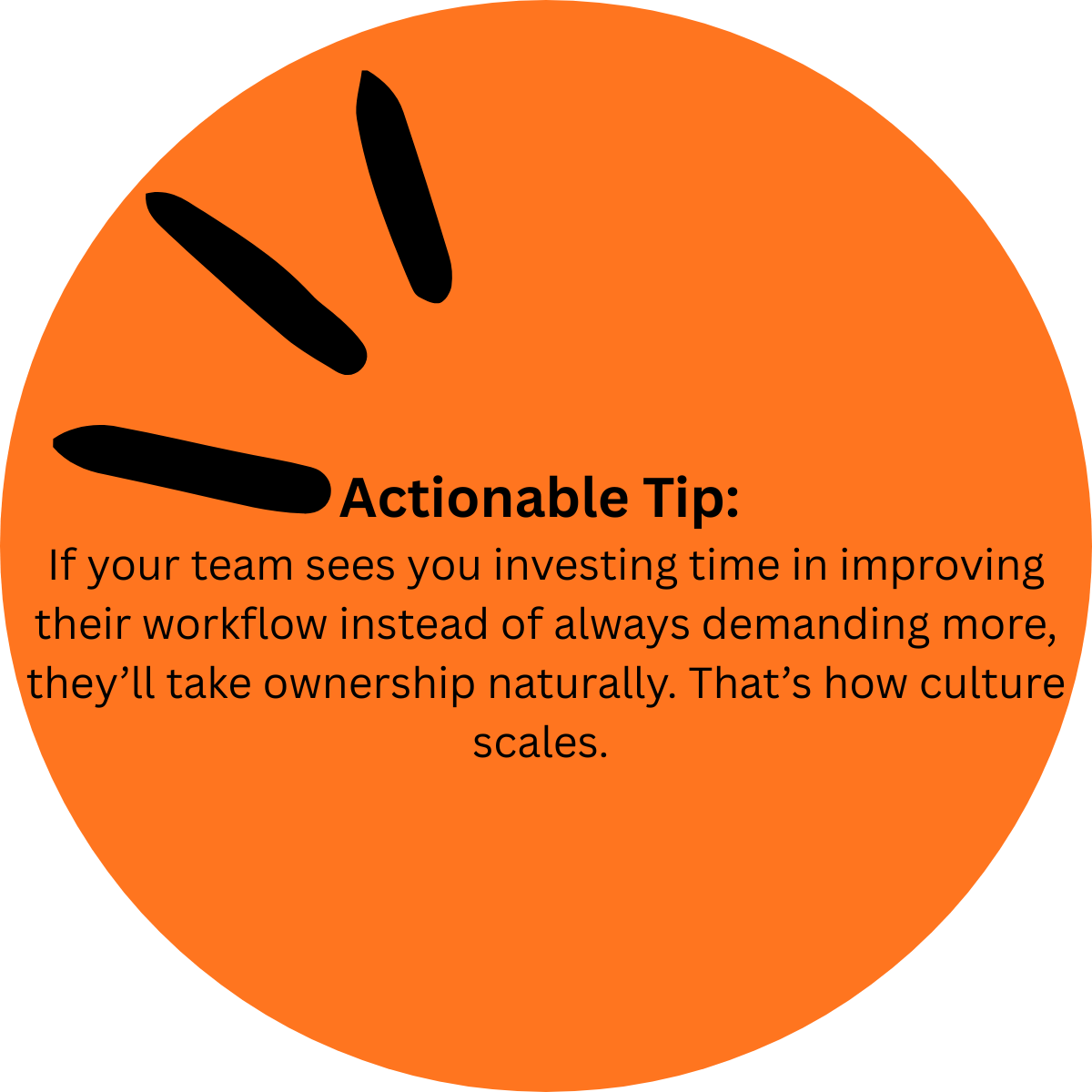
Leadership sets the tone for every system. If you treat workflow conversations as reactive by only addressing them when things go wrong, your team will, too. But if you treat systems as living, evolving parts of the business, you’ll build a culture that’s proactive instead of panicked. In my experience, when the team saw me adjusting our own processes and admitting where I dropped the ball, it made them more open to improving their own areas too.
Growth Starts with Flow
Streamlining is all about working smarter together. When your workflow supports your people and your systems support your process, you’ll not only hit deadlines more consistently but reclaim the creative energy that got you into this business in the first place.
Before you buy another piece of equipment or hire another person, fix the leaks in your workflow. Because when everything flows smoothly, growth stops feeling like survival and starts feeling like momentum.
The best shops I’ve seen, regardless of size, share one thing in common: they evolve their systems as they evolve their craft. Every time you refine a process, you buy back time to focus on what matters most — creativity, relationships, and delivering exceptional work.
Streamlining your workflow isn’t a one-time project. It’s an ongoing practice that transforms how your business feels day to day.