Pricing Strategies for Screen Printing
Most screen-printing shops don’t have a sales problem. Whether it’s the owner or a team hitting the pavement daily, moves are being made getting in front of potential customers. The challenge most shops have when it comes to numbers is clarity around pricing.
On the surface, the shop looks healthy. Orders are coming in. The schedule is full. The press is running all week. But when owners look at the bank account, payroll, owner draw, or how much stress it takes just to keep things moving, something doesn’t add up. That’s because pricing in many screen-printing businesses is built on habit instead of intention. It’s often based on what the shop charged years ago, what another local shop charges, or what feels like a number customers won’t push back on.
The challenge is that screen printing is not just a creative business, it’s a production system. Every order moves through multiple steps before a shirt ever hits the dryer: art prep, mockups, approvals, screen coating and burning, press setup, test prints, production, teardown, reclaim, and customer communication. When pricing doesn’t reflect the full production cycle, shops end up busy but underpaid.
Strong pricing strategies help shops stop surviving order to order and start building predictable profit into the workflow.
Pricing Must Reflect Production Reality
Screen printing is not just ink on a shirt. It’s a chain of processes, and if pricing is built only around garment cost plus a print charge, shops miss the true cost of operating.
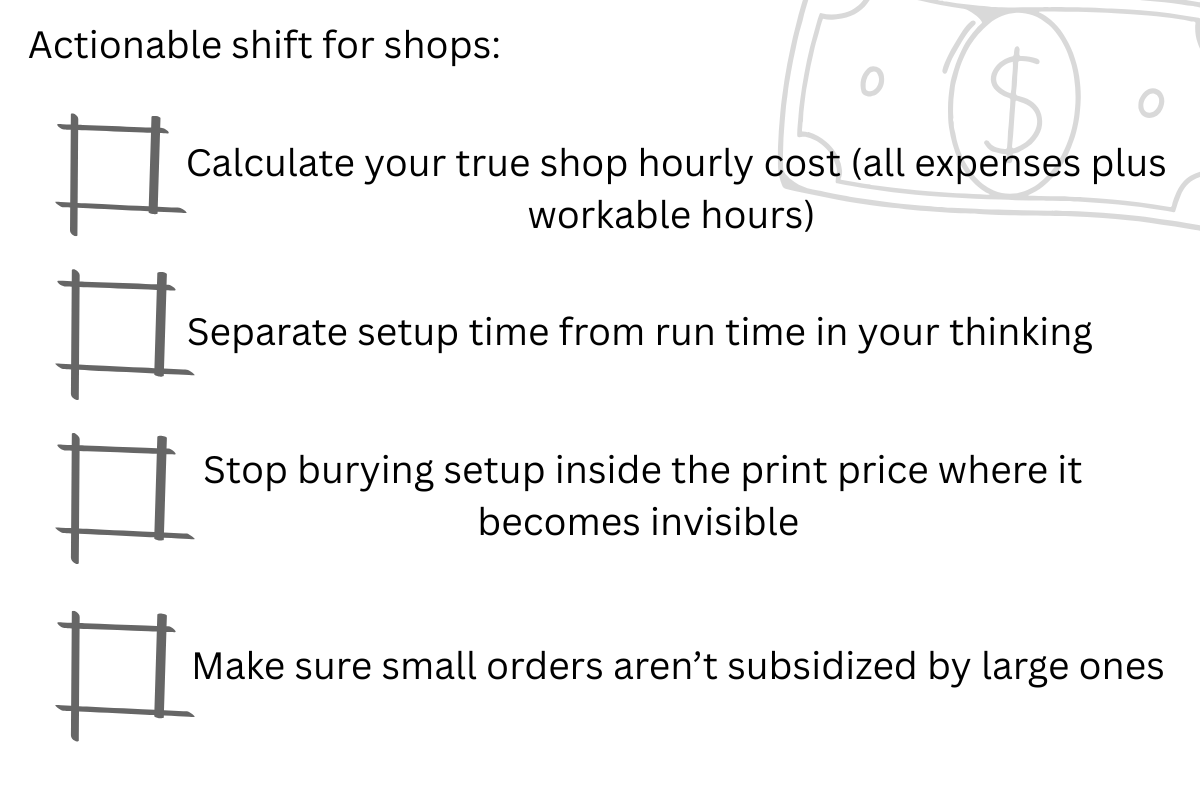
A strong pricing strategy starts with understanding what it actually costs to run your shop per hour. This includes labor (press, reclaim, art), rent, utilities, software, equipment payments, consumables, and yes, even owner compensation. Without this baseline, pricing becomes guesswork.
I remember a season early on where my shop landed a lot of small-to-mid size orders with multiple colors. On paper, the schedule looked great because it was full every single day.

What I didn’t see at first was how much time we were spending in setups, ink changes, and tear-downs instead of long, efficient press runs. By the end of the month, the press never stopped moving, but profit barely moved at all.
That’s when I understood that not all “full schedules” are created equal. Some just mean you’re busy doing low-margin work.
From there, pricing must acknowledge that screen printing has fixed time components on every job, especially setups. A 12-piece order with four colors takes just as long to set up as a 200-piece order with four colors. Treating both with the same “per print” logic leads to undercharging on small runs.
When shops price with production reality in mind, they stop treating every order as equal and start protecting the time that keeps the business running.
Setup Fees, Screen Fees, and Tiered Pricing
Setup and screen fees are often where shops hesitate, but they are one of the most important parts of a healthy pricing strategy. Each color on a design means more screens, more time on press registration, more ink management, and more chances for variables to slow production. Complexity directly affects labor, not just materials.
When shops roll setup into the print price, it becomes invisible. This works on large, simple orders but creates losses on small or multi-color jobs. Clear setup fees separate fixed labor from variable production and keep pricing consistent. Some shops keep this fee separate for their customers and some work that additional fee into their pricing. It doesn’t matter how you do it. What matters is that you aren’t losing money while doing the work.
When I stopped using “industry standard” tiered pricing and built my own tiered pricing around how my shop actually operated, that’s when significant changes started to take shape. Our press speeds, team size, and job mix were different, but I was still pricing like we were someone else’s shop. I reworked our quantity breaks and setup fees based on our real production flow and from this, the jobs that came in fit our capacity better, production was less chaotic, and margins improved dramatically.
Tiered pricing by quantity is another strategy. As quantities increase, efficiency improves. The press spends less time idle, and operators can settle into rhythm. That efficiency should be rewarded, but only after setup and fixed time are covered. If tiers drop too quickly, shops give away margin before efficiency actually shows up.
A strong screen-printing pricing model includes:
- A per-color setup/screen fee that reflects REAL labor
- A base print price built around production speed, not setup
- Quantity breaks that align with realistic efficiency gains
- Minimum order quantities that match how your shop makes money

Transparent pricing doesn’t scare serious customers. It educates them. When clients understand that more colors mean more work, they make better decisions, and shops spend less time defending numbers.
Value-Based Thinking in a Production Business
While screen printing is production-driven, customers aren’t buying press time. They’re buying outcomes: merch for an event, retail product for a brand, uniforms, or promotional apparel that carries identity. That context matters in pricing.
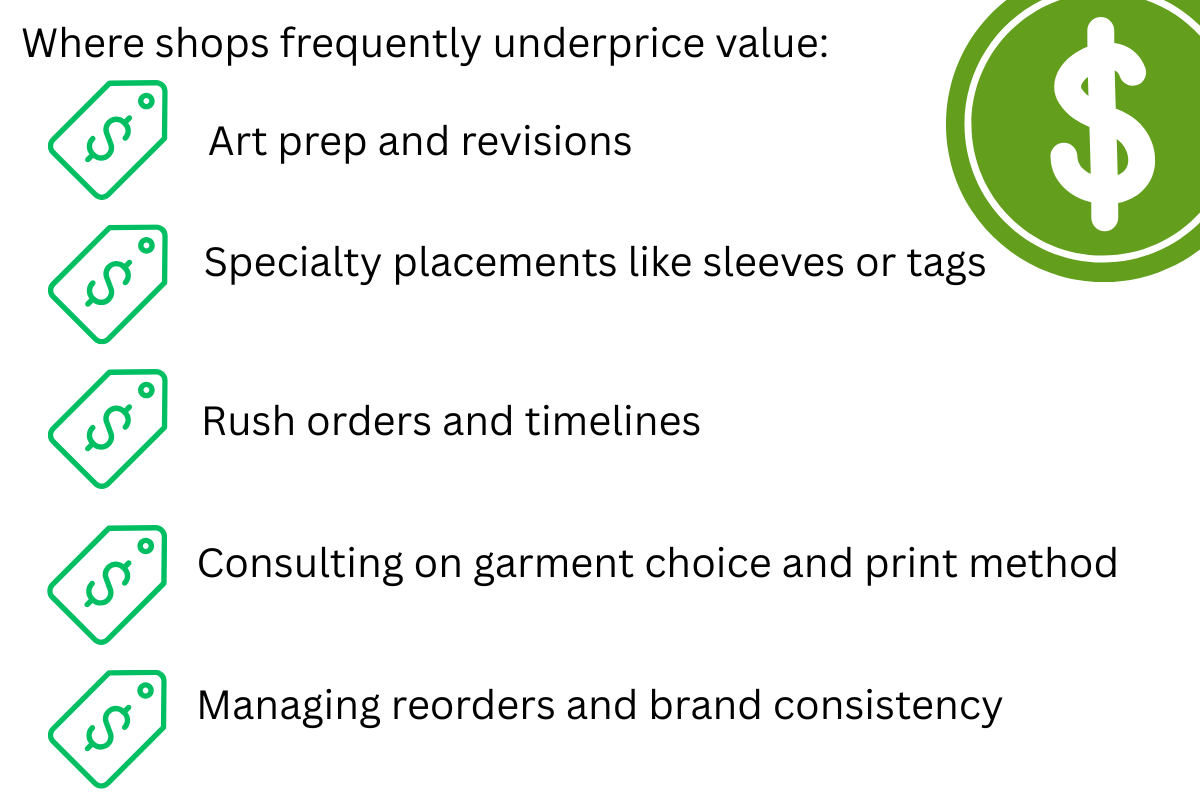
Shops often underestimate the value of the services wrapped around the print. File cleanup, art adjustments, garment consulting, and brand consistency across reorders all require skill and time. When this work isn’t priced in, it quickly turns into unpaid work.
Early on in my shop, there was a project that started as a simple print order but turned into weeks of back-and-forth on design tweaks, garment sourcing, placement adjustments, and figuring out what would actually sell for the client’s audience.
At first, I treated it like any other screen-print job and priced it that way, even though we were acting more like a brand partner than a vendor. When I finally shifted my thinking to value instead of just production, that’s when we started hitting revenue numbers I had only dreamed of.
We began positioning ourselves as a merch partner, not just a screen printer, and clients started coming to us earlier in their process, trusting us with bigger decisions. The work became more collaborative, the margins improved, and the business model evolved from transactional orders to longer-term relationships. I even built a merch consulting arm, which became a significant revenue stream for the company.

Value-based thinking means identifying where your shop reduces risk or effort for the customer. Maybe you help them avoid printing on the wrong garment. Maybe you ensure a design works at scale and waive the fees. Maybe you bring seasonal ideas to the table or have monthly meetings with certain customers. Those contributions justify structured pricing, especially for rush orders or complex placements.
This is where the difference between cost-plus pricing and value-based thinking becomes clear. Cost-plus says, “What did this cost me, and what margin do I add?” Value-based thinking asks, “What problem am I solving, and what is that worth to the customer?”
Shops that only use cost-plus tend to overwork to stay efficient. Shops that understand their value understand the role they play in their customers’ success. They recognize that they aren’t just selling decorated garments. They’re supporting launches, events, brand perception, and revenue-generating products. They become a partner, and that awareness changes how they price, how they communicate, and which jobs they say yes to.
Effective pricing strategies in screen printing don’t mean being the lowest price in town. They’re about aligning price with production reality, shop capacity, and the value delivered to customers. When shops separate setup from run time, understand their true hourly costs, build logical quantity tiers (not based on “how it’s always been”), and charge appropriately for complexity, pricing becomes a tool instead of a stress point. Jobs become more predictable, scheduling gets easier, and profit stops feeling accidental.
A lot of this sounds like screen-printing 101, and it is. Setup time matters. Hourly costs matter. Charge for complexity. None of these ideas are new, but that’s exactly the point. The fundamentals are what keep shops healthy, and they’re also the first things to get ignored when things get busy. Owners drift into “just get the job out” mode, pricing softens, and suddenly the workload is high but the bank account tells a different story. Revisit these foundations regularly, especially in seasons when you feel stretched. If the effort going out doesn’t match the money coming in, the issue usually isn’t volume. It’s pricing alignment.
Strong pricing supports the equipment, the team, and the owner. It creates a business that can grow without burning out the people running it or scaring off the customers who might become life-long raving fans. And that’s what long-term success in screen printing really looks like.