
Meeting the Growing Demand for Sustainability
Build a truly sustainable shop by going beyond “green” claims — from choosing longer-lasting garments to tracing your ink’s impact, vetting suppliers, and tapping certifications and EPR laws so you can prove (not just promise) your environmental commitment.
It is no secret that right now, in our industry, sustainability is at the forefront of everyone’s minds. As millennials and Gen Z continue to push our industry standards on sustainability, it’s no longer an option to offer eco-conscious products/have sustainable business practices; it’s a necessity. However, the question remains: How can a print operation be truly sustainable, and what keeps sustainability from just being another buzz word?
Defining Sustainability
Let’s start with the basics. Ryan Moor, founder of Ryonet, believes that sustainability is a little more complex than people think.
“Sustainability is a deep word because if you really look into what [it] means, it's more about the definition of something being sustainable versus the definition of it being eco-friendly,” Moor says. “People like to mix them up and use them interchangeably. And while eco-friendliness is part of sustainability, sustainability is way bigger than that.”
Devon Murrie, partnerships and strategic growth, Living Ink, helps define sustainability through the lens of apparel decoration.
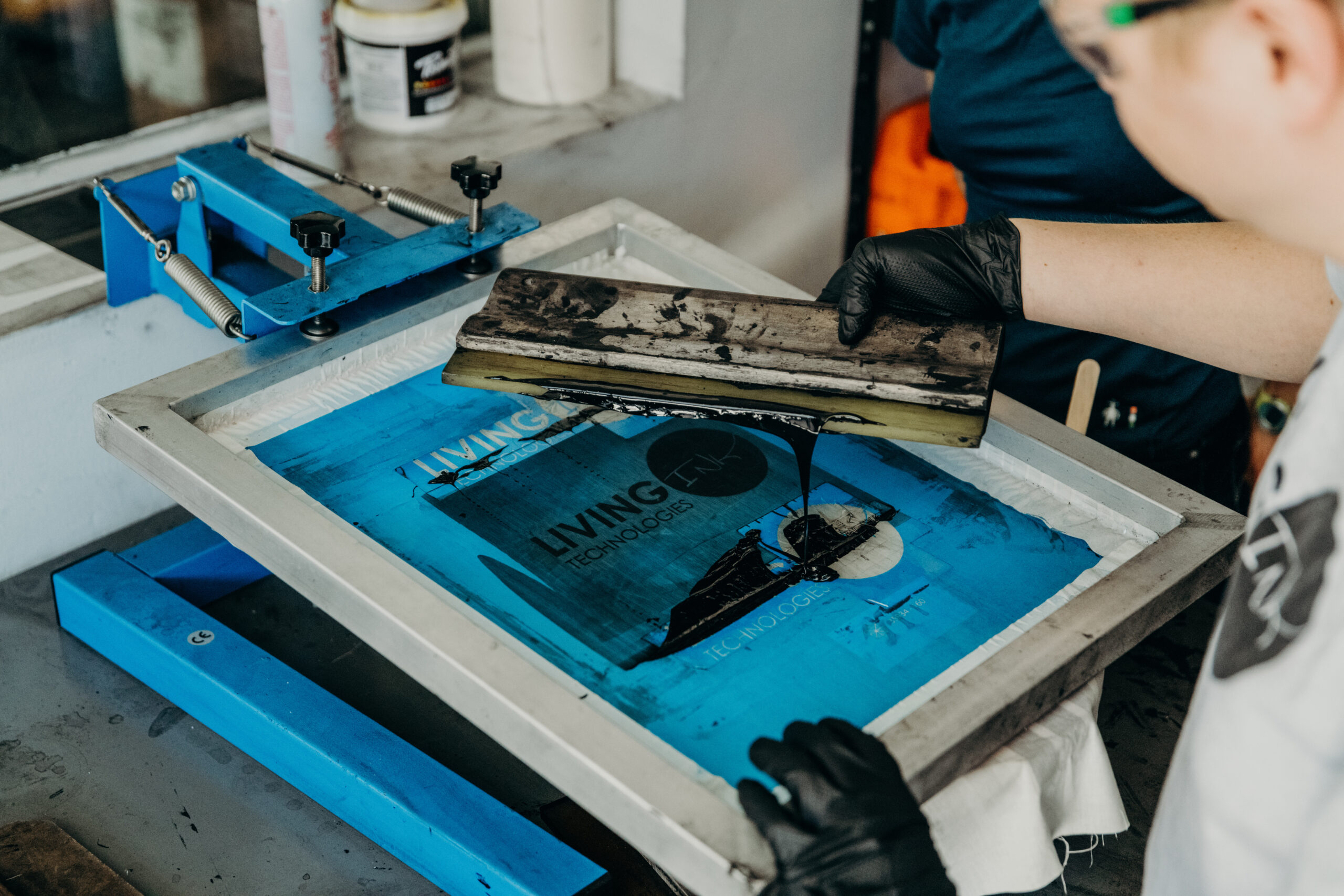
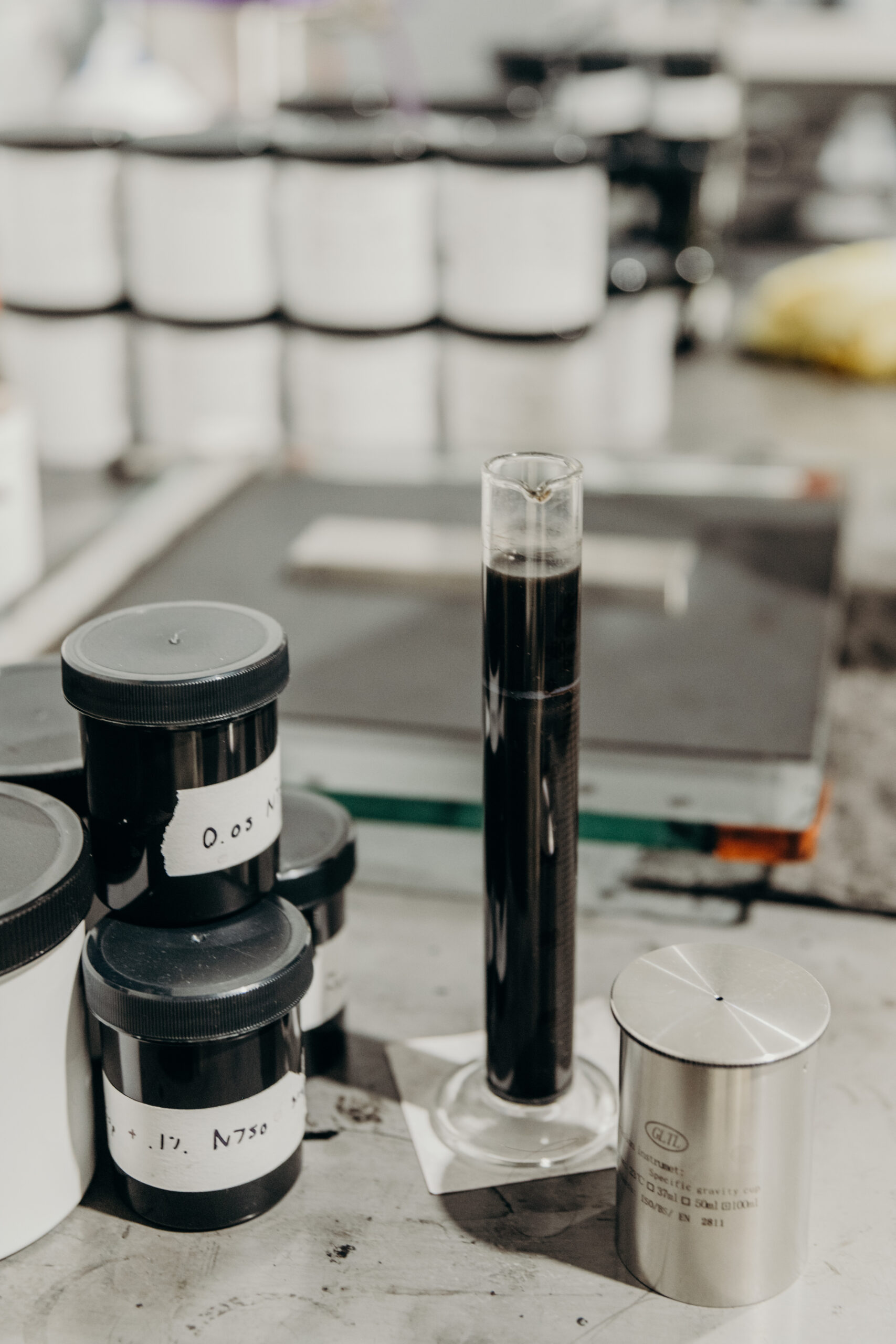
“For me, sustainability in apparel decoration means minimizing the environmental impact of every layer of design and production, down to the ink level,” Murrie says. “At Living Ink, that starts with our Algae Ink — a black ink colored with carbon-negative pigment made from algae waste. It replaces petroleum-derived carbon black and helps brands reduce reliance on fossil fuels while advancing circular, renewable material adoption.”
Sustainability vs. Greenwashing
When defining sustainability, there can often be a fine line between being truly sustainable and greenwashing. Moor points out that even though some things may look sustainable on the surface, they aren’t always upon further inspection.
“Look at water-based ink — people love to say that water-based ink is eco-friendly or sustainable,” Moor says. “Actually a lot of the ways water-based ink is used is less sustainable than using plastisol and oil-based ink alternatives because you have to waste a lot of ink, and it is harder to clean out of the screen. A lot more goes down the drain and it takes more energy to cure. And so, there's those aspects of the process that could make it less sustainable.”
Moor says he sees greenwashing happening a lot in the T-shirt landscape, and that’s why he’d like to see a better distinction between eco-friendly and sustainable so that the terms stop getting intertwined.
“There are competitors that say they are sustainable and put a green leaf next to their T-shirt on a platform because they use BCI cotton, which does use less water and more controlled chemicals, but it's not organic cotton,” Moor says as just one example.
While it’s a journey, and no one is perfect when it comes to sustainability, the point here is that a one green leaf doesn’t make a product sustainable. A T-shirt may be better when it comes to the products in it, but that doesn’t make it fully sustainable.
Steps Toward Sustainability
So, how can you avoid greenwashing allegations or practices? What’s out there that you can use/do to be sustainable and communicate those efforts to your customers? Let’s break it down.
Moor believes that in order to be sustainable, you need to increase the quality of your product, like using organic cotton T-shirts instead of polyester.
“At the end of the day, the most sustainable product in our industry is the product that lasts the longest. If you look at the actual life cycle assessment of T-shirts, the [area of highest] environmental impact of the T-shirt is after it's printed and acquired by its end wearer,” Moor says. “So, if you have shirts that don't last because they are not made well, and if you have shirts that aren't worn because they aren't printed well or the design is shit, that is not a sustainable product. I think the best thing that we can do as an industry is increase the quality of the product that we create.”

As for actually tracking sustainability, (i.e., venturing into the realm of traceability) for Living Ink, Murrie explains that it commissioned a third-party Life Cycle Assessment that revealed how the production of its Algae Black pigment reduces carbon emissions by 200% compared to conventional carbon black color.
“Our current pigment LCA shows a net removal of 4.16 kg CO₂-eq per kg pigment produced, making it a verified carbon-negative material. Additionally, our Algae Ink products for screen printing are both certified OEKO-TEX ECO PASSPORT and ZDHC (Zero Discharge of Hazardous Chemicals) compliant,” Murrie says.
And to help spread the good word on sustainable products, Murrie says that partnerships with other manufacturers and even decorators are “critical.”
“We work closely with printers and decorators to ensure our inks fit seamlessly into their equipment and processes as a drop-in replacement to petrochemical colors,” Murrie says. “Early adopters become advocates of Algae Ink and their success stories give brands and other printers the confidence to onboard our products and scale up together. Their honest feedback also helps our R&D team to continually advance our ink formulations to be better and better.”
It’s Easier Than You Think
If you’re not sure where to start when it comes to sourcing more sustainable materials, Moor says it's easier than you think.
Moor explains that when Ryonet initially began its sustainability journey, it was because his mentor passed away from liver failure from chemicals he was exposed to on the shop floor over the years. And he explains that surprisingly enough, it wasn’t as hard as people made it out to be to find sustainable alternatives.
“I started looking at what goes into the chemicals and started offering eco-friendly solutions to everything, whether it [was] soy-based or citrus-based, or [had fewer] VOC's (volatile organic compounds) in it. We even killed aerosols for a while,” Moor says. “They were pretty easy to source. Honestly, a lot of people have options.”
As Moor points out, those options aren’t limited to just T-shirts. Murrie says that Living Ink is particularly eager about the attention inks and pigments are finally getting in the sustainability realm.
“We’re excited by the growing shift toward natural color and renewable pigment technologies — from algae to bacteria to other biomass-derived sources,” Murrie says. “For years, the spotlight has been on sustainable fibers and substrates, but that’s often meant the chemistry and colorant side of the industry has lagged behind. It’s inspiring to now see serious attention being paid to the environmental impact of inks, dyes, and pigments.”
And for anyone not sure where to get started on sourcing these materials, Murrie suggests looking to credible third-party certifications to help guide decisions as well as talking to industry peers to see what works best for them.
And finally, past offering sustainable consumables, if you’re trying to make your own operations more sustainable overall, i.e. tracking your carbon emissions, cutting down on plastics with your packaging, etc., Moor suggests looking into your local EPR (Extended Producer Responsibility) laws, which are environmental policies that vary by state and help hold producers accountable for managing their products and packaging throughout their lifecycle, from design to disposal. You can also use platforms like ACLYMATE for carbon accounting.
“Just being aware and having your finger on the pulse of what’s going on and knowing that we have the option to make better choices and then putting those choices into action — that’s an easy win,” Moor says.