
Mastering Efficiency: The Blueprint for Success
How to identify where you're losing money, inefficiences, and other pain points in your business
It’s not uncommon for print shop owners to find themselves buried in the day-to-day operations, whether fighting fires for their customers, blindly making sales and follow-up calls, troubleshooting a machine that’s not functioning properly, or staying late to prep and reclaim screens to try and stay ahead.
Simply typing out those four examples sent a shiver down my spine.
Success isn't just about delivering incredible quality — it's about building a resilient business that thrives on efficiency, innovation, and strategic thinking. Keep in mind that busyness doesn’t always contribute to profitability. I have seen shops consistently run two shifts, yet show significant loss at the end of the year. I have also witnessed shops limit production capacity and their profits soar. The turning point for many print shop owners often comes when they realize that in the pursuit of perfecting their craft, they could be overlooking inefficiencies that silently eat away the profits and consume valuable time.
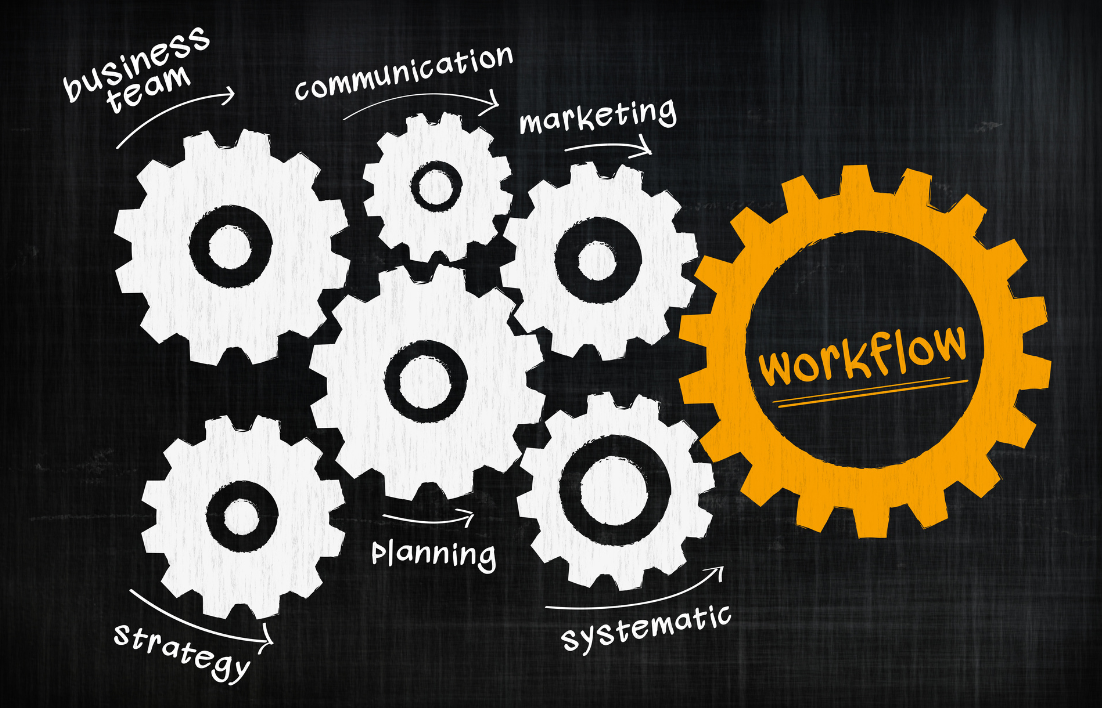
Simply identifying these inefficiencies, however, is just the beginning. The key to running a more streamlined and lucrative operation revolves around one word — systems — that can be broken down into four essential elements:

To identify where you’re losing money, wasting time, and being constantly on the move without going anywhere, it’s well worth taking a pause, stepping back, and reevaluating your operational processes, financial strategies, and where you’re wasting time.
Prioritizing Employee Development
In a fast-paced, ever-evolving industry, a strong company culture can pivot and adapt quickly to change. In turn, a company can thrive due to a like-minded team ready to take on new challenges together.
When you create an environment of collaborators who feel like they are part of something special, everyone will work towards a common goal for continuous improvement. This opens up clear channels of communication, allowing you to stay ahead of any operational challenges. Through collaboration, there can be a process of breaking down silos between different departments. When teams work together seamlessly, it becomes easier to identify inefficiencies and implement effective solutions.
Employees who feel supported and valued are more likely to be fully engaged, reducing the likelihood of burnout and enhancing overall productivity. Instead of trying to define a work/life balance, the two should work in harmony. It has nothing to do with the hours worked but everything to do with where employees feel safe and supported.
Organize continuous learning initiatives through implementing regular training sessions, workshops, or online courses paid for at the company’s expense, that align with industry trends and skill development needs. Encourage employees to explore new tech, methodologies, or tools relevant to their roles.
Establish a mentorship program where experienced team members can guide and share insights with newer members. Create a culture of collaborative learning. Create personalized development plans that align with both individual career goals and organizational objectives.
For example:
Several years ago, I had an employee who started catching shirts at the end of the dryer. He had incredible attention to detail and his quality control was impressive. He moved to loading and unloading shirts on our auto press and eventually, he became director of operations. He was an A-player that asked a lot of good questions and wanted to learn as much as he could in order to create efficiencies and new, better ways of doing things.
He didn’t mind catching shirts or assisting on the press, but he was a leader that needed ownership in order to achieve both his and the company’s goals.
Comprehensive Workflow Analysis
Regardless if you’re one person in a garage, leading a team of 10, have multiple locations, or part of a large corporation, it’s crucial that your workflow is dialed in. From the moment you begin a conversation with a potential customer, all the way to delivery and retention, that movement should be seamless. Of course, there will be times to adjust, and part of that workflow should have contingency plans in place.
To increase efficiency, deconstruct your process into manageable, well-defined stages.
Break down your production workflow – order processing, design prep, screen work, production, and quality control.
By delineating each stage, you can identify redundancies and areas where tasks might be overlapping or becoming gridlocked, leading to delays or errors.

Having worked with countless distributors, suppliers, and sourcing to other shops around the country, a common theme I’ve found with companies that have high turnover is a lack of communication, internally and customer-facing. As it is vital, when communication becomes the shortfall, it will deteriorate your systems. Find ways to keep communication easy and information accessible. Whether it’s a shared Google Doc, Slack, scheduled weekly stand-ups, or all of the above, ensure the meetings are productive and that everything else can be an email or a message. Customer support and clear communication should always be a priority.
I recently worked with a shop who was busier than ever. From the outside, it looked like they were in their prime and things couldn’t be any better. Every day was a full queue, without one delay and every customer walking through the door had the biggest smile on their face. So what was the issue?
They weren’t making money. Why?
Because they were slowly approaching six figures in uncollected invoices.
There was no AR (accounts receivable) system in place to keep up with the amount of work coming in the door, work orders were hand-written and hand-delivered, customer inquiries were backlogged, and that was just the beginning. The owners were so buried in the daily operation that they were unable to see what was causing the greatest harm. After all, they were excited about being busy.
It was well past the point of collecting 100%, so I advised them to shut down shop for two days. We spent six hours together each day, creating a strategy to collect on what they could and call the remainder a learning experience. I put systems in place, and within six months, they were able to collect on $64K and automated over half of the admin tasks, invoicing/payments, and bill pay.
In addition, they began cutting unnecessary costs and hired an expert accountant to oversee all of their finances.
Implementing a Solid (and Lean) Tech Stack
If you are in the first couple of years of your business, don’t worry so much about a tech stack as you would about dialing in your workflow for scalability. Even for a decade-long and thriving business, Google Sheets, Docs, Apple Notes, and Photoshop may suffice. There is no one-size-fits-all, so whatever you choose to utilize for your business, make sure to always assess your specific needs and processes to identify the most suitable tools that work for you.
Find ways to automate your workflow where you can in order to enhance efficiency, reduce errors, and free up valuable time for more strategic tasks. Some examples of the workflow that can be automated are:
Implementing automation for just one of the above would give you some much needed time to spend elsewhere. Don’t get me wrong, any time you can save in one place is time you can spend building and growing your business. But now more than ever, we should look at ways to grow and thrive personally.
As an owner, manager, employee, entrepreneur — we can easily get caught up in “surviving” that we end up pouring from an empty cup. It’s necessary to establish efficient systems not only for the sake of the business but also to ensure that we prioritize our physical and mental well-being.
Optimizing Your Operation → From Customer Engagement to Retention
Systems enable you to consistently overcome obstacles that hinder time and how much money you make. Knowing that your operation is running at peak efficiency gives you the confidence and clarity needed to navigate the next phases of growth effectively.
Plan strategically and set short-term incremental goals with clear steps to reach that goal. Know what tomorrow looks like before tomorrow happens. Taking on every order that comes your way because you think more work equals more money, whether in a slow or busy season, can quickly lead to overwhelm. This can cause a sense of urgency throughout the company, and if everything becomes a priority, then nothing is a priority.
Delegating is an unmatched skill and when done successfully, it empowers the team, strengthens collaboration, maximizes efficiency, and allows leaders to focus on strategic decision-making and high-impact tasks that drive the overall success.
Whether you have a great accountant, an in-house finance team, or you do it yourself, always know where you stand financially. There’s a considerable difference between gross profit and net profit. You can gross $1M and net -$20K. This is an extreme case but regardless, numbers don’t lie and this is not a sustainable business model. Knowing when and where to cut costs is a valuable skill if you’re not showing the profit to justify the expense.
In the words of Peter Drucker, “In most organizations, the bottleneck is at the top of the bottle.” He was emphasizing a critical insight into company dynamics and leadership. Effective leadership is crucial for the continued success of any company. It encourages leaders to critically evaluate their own roles, decisions, and the overall health of the company structure. By addressing any bottlenecks at the top, leaders can pave the way for a more efficient and successful company.

Regardless of how you define success, it’s ultimately an outcome of deliberate choices, informed decisions, strategic thinking, and the implementation of effective systems. Once time is no longer a limiting factor, you’ll find a sense of freedom in knowing that you can actually take that much needed vacation without things falling apart or focus on long term growth without hoping for a better tomorrow.
Continuous improvement and learning is necessary not just to maintain, but stay ahead and thrive in all aspects of a business. You can build the plane while you fly it, but flying blind is detrimental to you and the company.
I always say, without systems, you’re dead in the water. It may not happen right now, but it is inevitable and only a matter of time. When you’ve identified your goals, implemented effective systems, and committed to a culture of continuous improvement, you not only secure your present success but also pave the way for a resilient and thriving future.
Success is a marathon, not a sprint. It’s an ongoing process of adapting and innovating. When you acknowledge this, it will empower you to navigate challenges, seize opportunities, and achieve ongoing success in every facet of your business and personal life.