
How to Create Hyper Local Artwork with AI Assistance
Quick generative art use-case guide for apparel decorators on how to use AI as a complementary tool when creating local designs
Using AI, I research and create 20 T-shirt graphics per day, ready to present to clients, with six AI-assisted, multi-color separations prepared for screen printing. This output represents the average accumulated over a 45-day project, which yielded 900 usable designs and 270 separations by a single artist.
But with all that in mind, most of what AI spits out isn't ready-to-go artwork. Think of it more like custom clip art; it gets me about 75% of the way there. What sounds like a manufacturing dream in graphic output volume is something much more nuanced.
This article looks at how to use generative AI to create some awesome designs for local apparel, but as a complementary tool. Think small towns, niche landmarks, and local lore. Think hyper-local AI art generation. Towns like Sturgis, Flint, Bay City, and Marietta each have their vibe and flavor. The AI doesn’t just make things faster. It has become a new type of tool, a new digital brush, but it still needs your influence and guidance as a designer to create apparel that people in local areas want to wear.
I am well-traveled in the United States. I have lived in the Pacific Northwest and Pacific Southwest, and I grew up on the East Coast. I've lived all over the Midwest and currently reside in the Northeast. I have had technical jobs in the U.S. that required constant travel, which I loved at the time. Many parts of the U.S. have become very familiar, and local legend and lore have always held a fascination for me; it forms people. It drives people's choices.
In the early 2000’s, in my early days of screen printing at Latitudes in the Pacific Northwest, we worked with Sony on an Aerosmith tour. I designed a woman’s T-shirt with an all-over print in dark pink on light pink, featuring torn sleeves with over-seam printing. It sold out on the East Coast, which makes sense; that's where I am from. It tanked on the West Coast.
I had to refine it, less 'punk rock' and more 'hairband,' and it finally sold. Locality requires nuance and specific knowledge that, in many ways, can only be defined as experience.
Specificity
Let's be honest: A lot of AI-generated art resembles clip art, yet that's not always a bad thing. AI is a tailored clip art machine; you're generating custom assets on-demand. Just like clip art of the past, the raw results still need finesse.
The power of this tailored generation isn't in its perfection — it's in its specificity. Let’s look at an example.
At Promocentric in New Market, New Hampshire, the lighthouse series is created, with each one drawn to match its actual structure: Montauk, Acadia, and Rockland. The shape of those lighthouses matters in the real world. A tourist on vacation recognizes that silhouette.
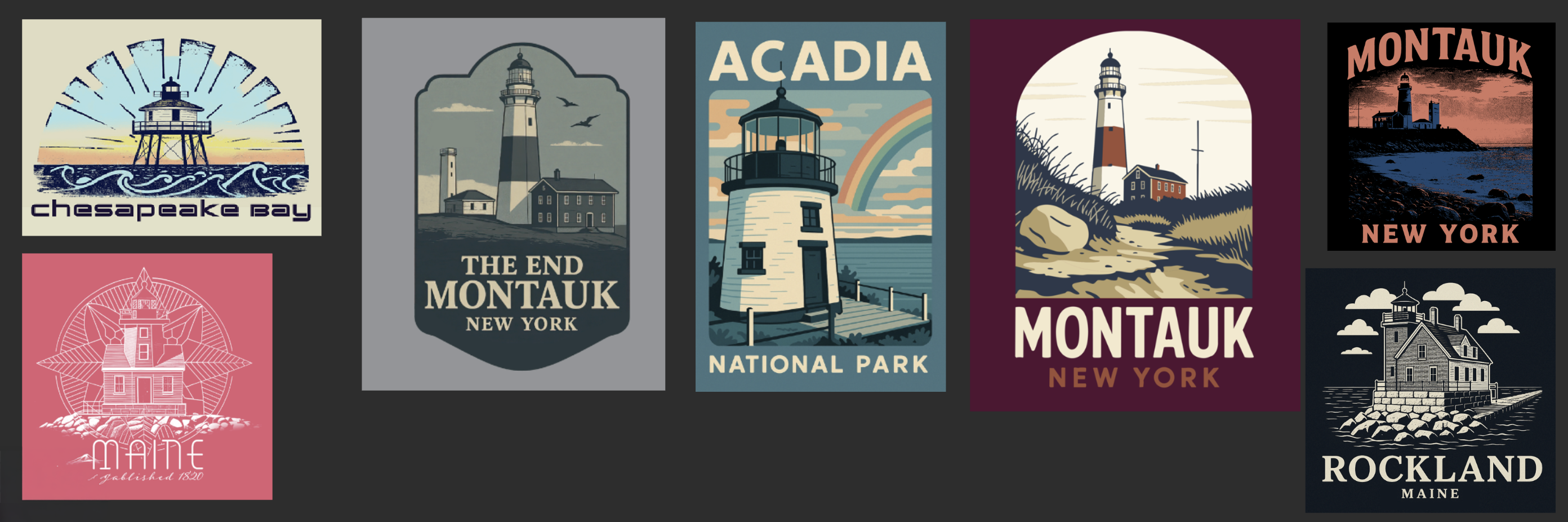
In the past, a single generic shape would fit all locations. Now, the connection you can achieve by meeting someone exactly where they are is an unexplored idea, one that finally extends beyond the boutique Ts.
Same with a fish series I recently worked on. I leaned into accurate shapes and species, not just "generic fish," but something fishermen would recognize. Same with local events, not nationally known, but locally loved and adored.
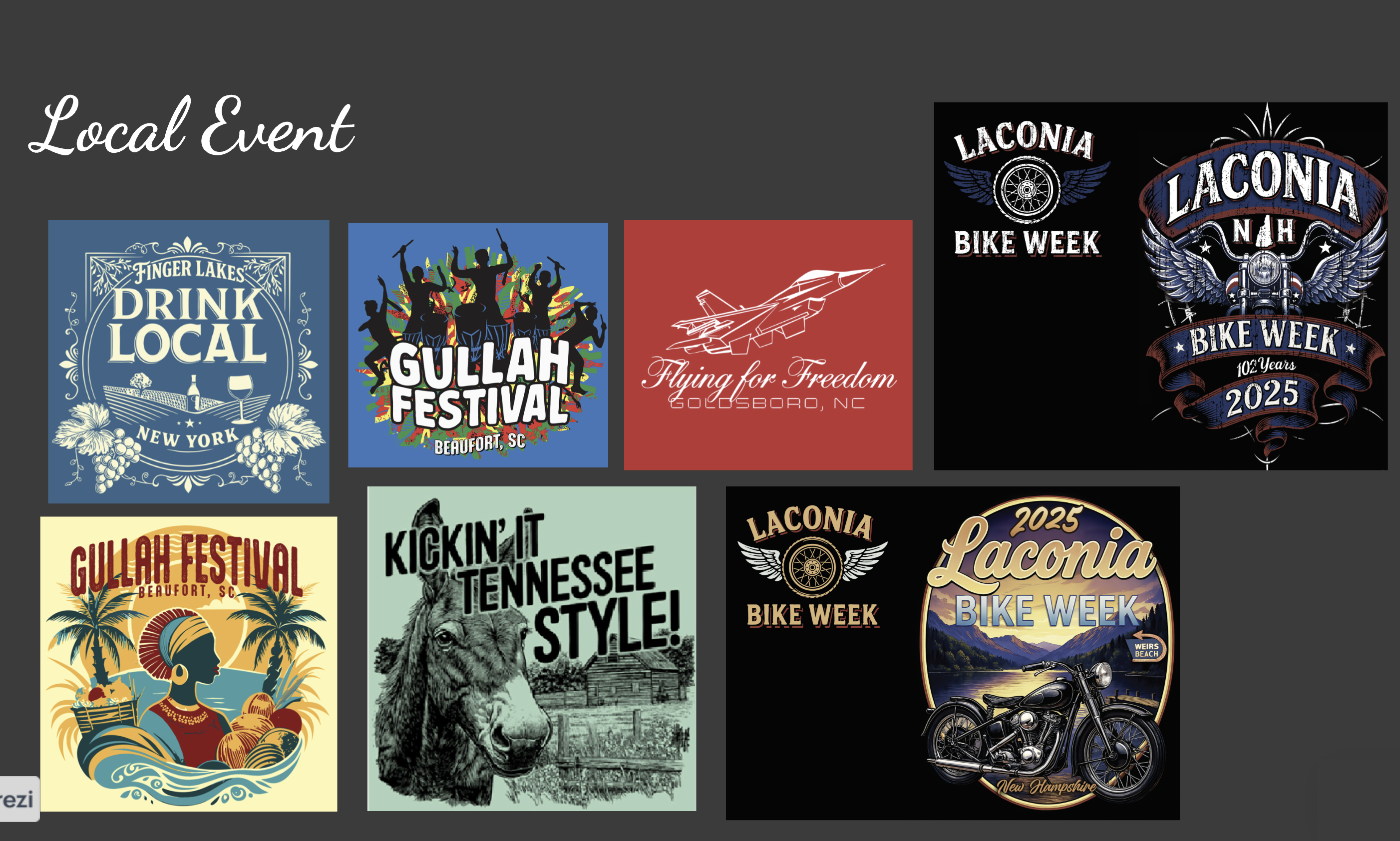
While the volume is impressive because it's novel, it's not the power behind this project. Each design is rooted in a real location, something familiar, nostalgic, or culturally embedded. Authenticity means respecting that people recognize their own stories, even in something as simple as a T-shirt graphic. Offering variations of that story on an ongoing basis is appealing. People get excited to see what's next and how well they are perceived and recognized. It becomes addictive, and people will keep coming back to see how well their world is understood, reflected, and reimagined.
Iterating
AI is a visual sketchbook that helps identify niche. One thousand town names run through four stylistic prompts can create 4,000 designs in six minutes. But none of them are ready to print. They weren't meant to be. This is where the human eye steps back in.
As an artist, I sift through the AI, refining, redrawing, and editing to craft final versions that become the work of someone who knows the town. It's AI-assisted design, but not AI-led. Each round of AI output isn't final; often, it's reiterated back through AI. This loop allows for more control and retains the original artist's eye. It's about working with AI to expand what's possible.
AI doesn't get it right the first time, but AI does communicate with AI very well. The process involves taking a generation that hints at something and feeding it back in to enhance or distort what is already there.
I don't use the same AI for everything, either. Currently, I work on seven different platforms, including building my local models, training them, learning their nuances, and deciding what will help me achieve that final vision, which often involves manual intervention without AI.
It's Not Just Flat Printing, Either
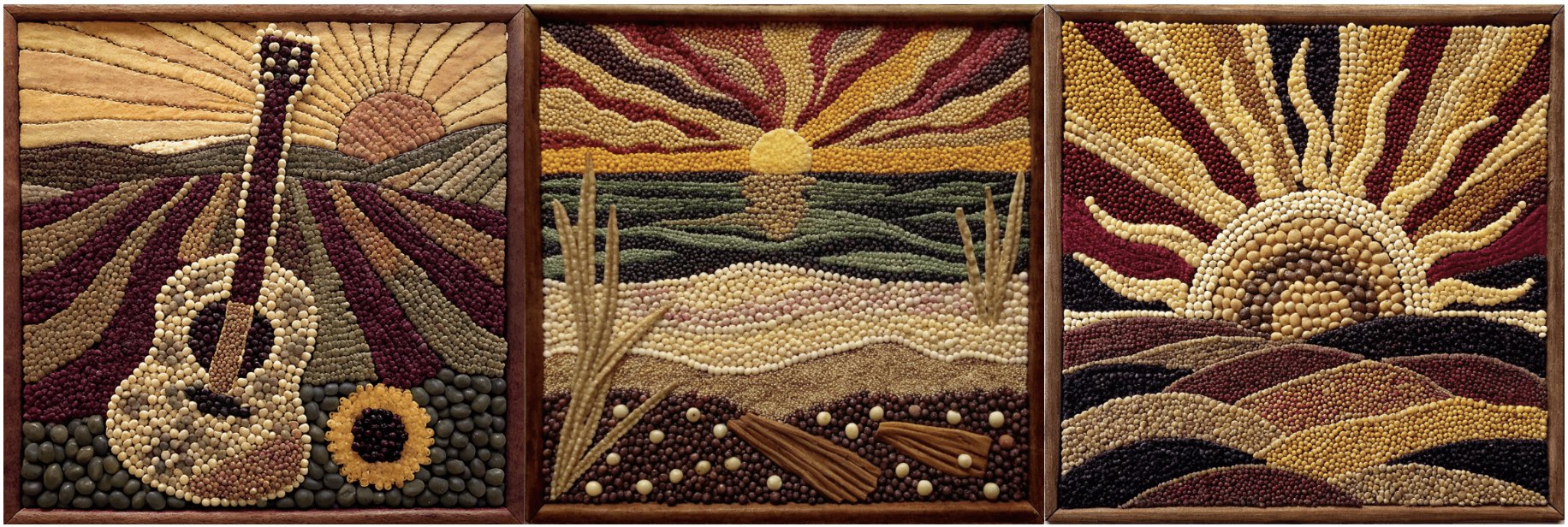
AI, when integrated into creative processes, enables artists and printers to push their limits not only to generate images but also to train AI in tactile, physical styles. Think shoelaces bent and twisted to spell "Air Jordan," or the delicate layouts of seed art, meticulously crafted by hand, that become the training ground for texture-aware AI generators.
Technique prints aren't just about visuals — they're about feel. Standard generative tools don't account for these subtleties. However, by feeding AI systems physical inputs that already embody these traits, artists can effectively instruct the machine on what to notice and what to disregard.
Inside Photoshop Beta's Parametric Embroidery Filter, you gain control over thread thickness, light angles, and stitch patterns. Meanwhile, building a model for “seed” art served as a proof-of-concept for AI-generated "sketches" that were unexpectedly usable as final prints. Training AI for technique is a new frontier.
Separations
AI-assisted separations refer to the use of AI as a coding tool. I use it to write scripts to quicken the process. It has not sped me up significantly from my previous output … yet. It is streamlining things, though.
Data entry that requires zooming or selecting different text areas of a document, with the aid of AI, becomes an automation or a simple text field. Any repetitive tasks get scripted as automation. Many steps are still actions, but I am slowly converting them into scripts. I am now developing proofing using these tools to achieve the same improvements.
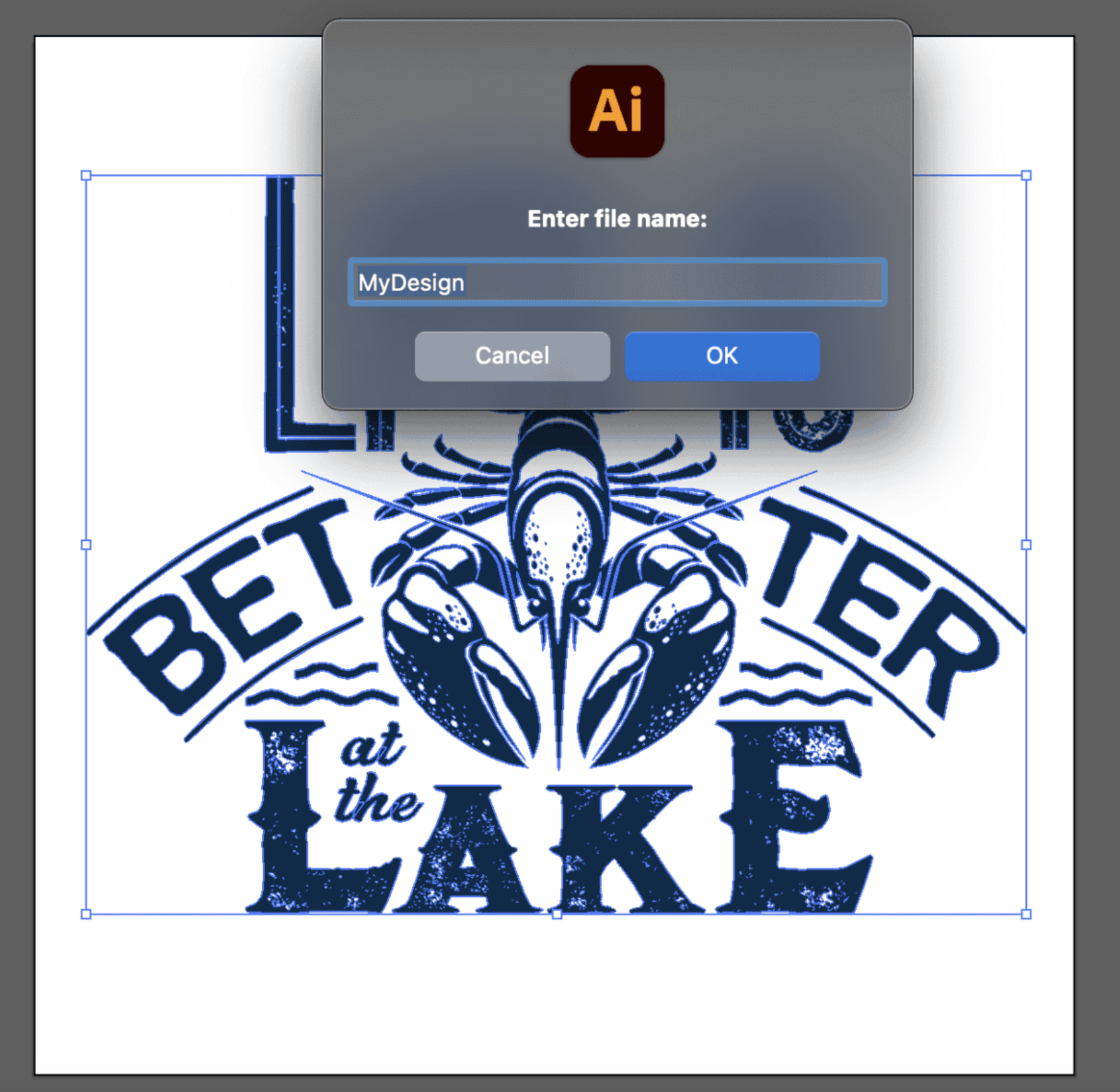
I am not yet using AI to make printing decisions when separating, though I have been developing in that area. Training an AI to make full-color simulated process separations that print well is on the horizon. For now, what is achievable and used daily in AI-assisted separation equates to cutting corners and eliminating repetitive steps.