
3 Brilliant Solutions Using HTV Decoration for Last-Minute Gifts for the Holidays

No matter how well-planned holiday gift-giving is, every year there are gifts needed for a variety of reasons. Heat transfer vinyl (HTV) is a brilliant way to personalize or customize everyday items and turn them into treasured gifts. Personalized gifts are thoughtful and can take planning using traditional monogramming and personalization services, but if you wait to use these methods until November or December, it’s already too late for that option. HTV decoration is an easy option for DIY and for decorators to offer last-minute gift personalization services.
Here is what you need to create the decorative, personalized, or customized pieces:
- A plotter or a craft cutter
- Heat transfer vinyl, suitable for application to multiple substrates
- A heat press
- Items to decorate
Numerous items can be decorated with HTV — all types of apparel and accessories, household items, home decor, items for pets, items for identification, the list is endless. The guide to follow is the substrate must be able to take heat up to 320 F and needs to fall into one of the following categories: cotton, polyester, and most acrylic blends. If you have a low-temperature application HTV, the following items can be decorated: rayon, tri-blends, leather, polyurethane leather, wood (untreated), cardboard, and cardstock. Avoid items that are waterproof or treated with a durable water-repellant or similar treatment. While these items can often be decorated, let’s ignore them for this last-minute gift guide.
Let’s decorate a baseball cap, a three-quarter zip, and socks. The methods for decorating these items can be applied to other apparel items. The step-by-step guide below will help guide you through the process.
Baseball Hat – Monogram or Name Design
If you have a hat platen (heat press), great! If not, you can still decorate one.
Step-by-Step Tutorial
- Choose a hat that is polyester or natural fiber content — avoid leather or synthetic materials unless you have a low-temperature HTV available.
- Create a monogram design, using a monogram font in the cutter design software. Or choose a fun font for a name, nickname, school name, place name, or other personal reference. Spell out the initials or the name and make sure you reverse the lettering in the plotter or cutter software.
- Cut the HTV in the cutter or plotter — before you cut, check again to make sure the design is reversed.
- Weed the excess HTV from the design and pull the centers out of the letters and monogram — check twice to make sure the centers are all out. Once the HTV design is cut and weeded it is now a transfer.
- Press the HTV transfer using the manufacturer's recommended parameters — temperature, pressure, and time — and peel according to the same recommendations.
- Gaze in wonder at the last-minute, personalized gift you have made for someone.
Three-Quarter Zip Apparel – Monogram or Name Design
A three-quarter zip is super easy to personalize and is an apparel item with longevity. They make great gifts for everyone. Choosing the perfect three-quarter zip is easy. Most have either natural or synthetic fiber content such as cotton or fleece. These materials are easy to decorate.
The nuisance with three-quarter zip apparel is the zipper! They are often made using plastics and can easily burn, melt, and become non-operational. The zipper can also interfere with good transfer adherence if steps are not taken to ensure even pressure over the transfer area. The steps below will help mitigate transfer failure.
Step-by-Step Tutorial
- Choose a low-temp, less-time application HTV material to make the process of decoration easy. Traditional HTV application can also be used, especially for mixed-media applications, to add a little glitter, mirror effect, or flock. Most standard HTV films can be layered and used as the base layer, allowing for layering glitter or similar HTV as the top layer, adding dimension and style.
- Create a monogram design, using a monogram font in the cutter design software. Or choose a fun font for a name, nickname, school name, place name, or other personal reference. Make sure you reverse the lettering in the plotter or cutter software.
- Cut the HTV in the cutter or plotter — before you cut, check again to make sure the design is reversed.
- Weed the excess HTV from the design and pull the centers out of the letters and monogram — check twice to make sure the centers are all out. Once the HTV design is cut and weeded it is now a transfer.
- Position the apparel so that the zipper (or buttons) is off the press, the same with any large seams. To achieve even pressure, which is required for HTV adherence, the substrate must lay flat in the press. Teflon pillows, made specifically for heat press application of transfers, can be used to even out the pressure if seams, buttons, zippers, cords, appliques, etc., are in the way.
- Cover the transfer and apparel while pressing to protect the buttons or zipper. Press the HTV transfer using the manufacturer's recommended parameters — temperature, pressure, and time — and peel the liner according to the same recommendations.
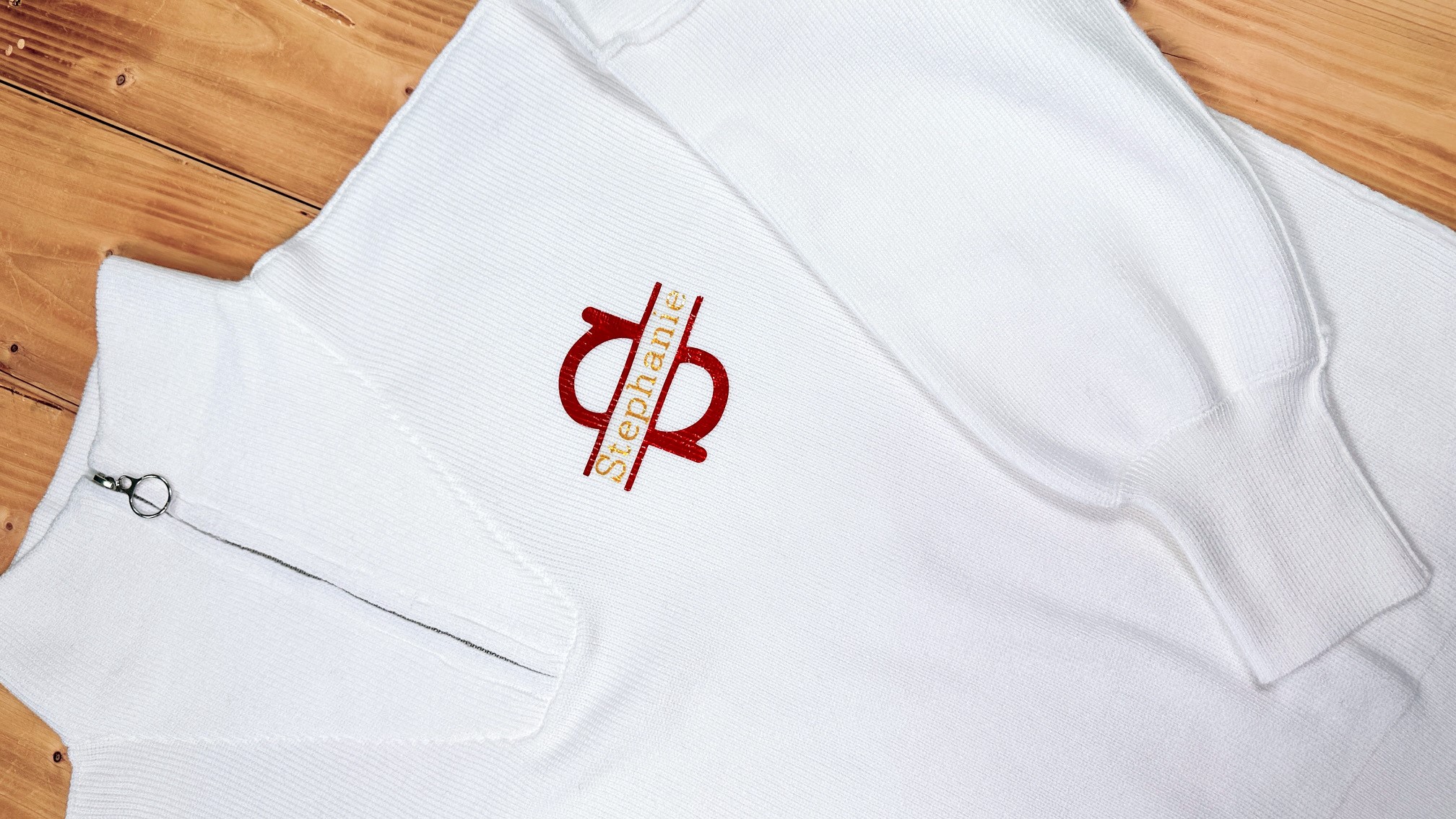
Pressure Side Notes for Step 5: Make sure the pressure between the press platens is set correctly and adjust for pillows or no pillows to achieve the correct pressure. Pressure will change as well from garment to garment, such as from a plush hoodie to a thin T-shirt cotton material. Pressure is an important application parameter and is often overlooked.
Socks – Monogram or Name Design
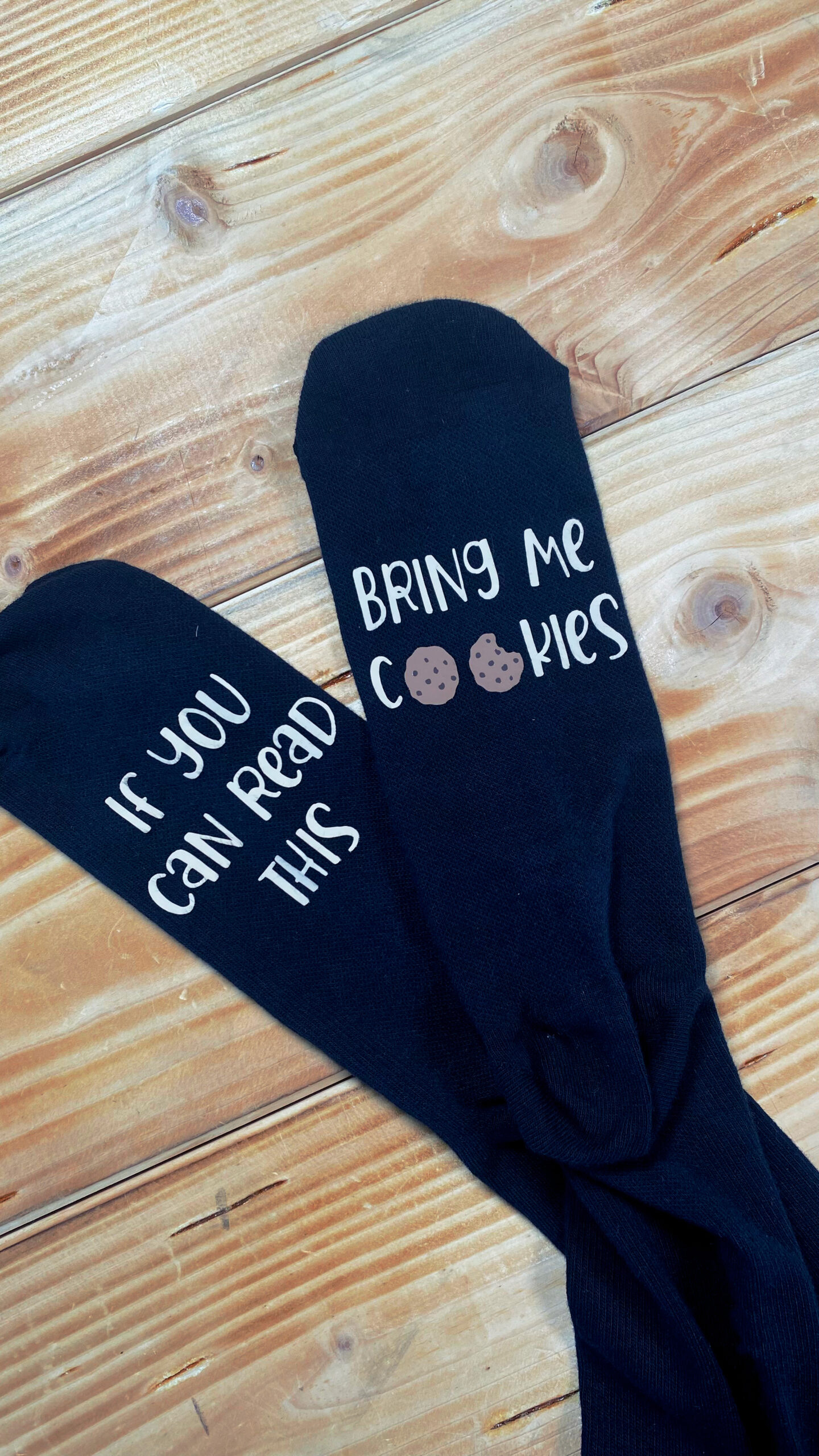
Socks are fun to decorate. While we will go through the steps assuming they’re being personalized with a monogram or name design, socks can be way more than that. For socks, and the other two apparel items listed above, fun and inspirational ideas will follow.
Cotton, cotton/poly, 100% polyester, wool, and synthetic blends are all great fiber content for socks. There are two main limiting factors for sock decoration: sublimated socks and elastic.
Socks that have already been decorated using the sublimation process require either a low-temp, less time, lower pressure HTV, or an HTV with a blockout layer or properties.
The elasticity of socks can be lessened through the application of too much heat. Applying HTV to socks will not make a huge difference. However, in the case of compression socks, heat can degrade the compression properties of the socks, something to consider when decorating socks using heat-applied techniques such as HTV.
Step-by-Step Tutorial
- Choose a low-temp, less-time application HTV material to make the process of decoration easy. Traditional HTV application can also be used, especially for mixed-media applications, to add a little glitter, mirror effect, or flock. Most standard HTV films can be layered and used as the base layer, allowing for layering glitter or similar HTV as the top layer, adding dimension and style. Flock is a great detail to add to socks.
- Create a monogram design, using a monogram font in the cutter design software. Or choose a fun font for a name, nickname, school name, place name, or other personal reference. Make sure you reverse the lettering in the plotter or cutter software.
- Cut the HTV in the cutter or plotter — before you cut, check again to make sure the design is reversed.
- Weed the excess HTV from the design and pull the centers out of the letters and monogram — check twice to make sure the centers are all out. Once the HTV design is cut and weeded it is now a transfer.
- Socks easily lay flat in a heat press. Apply the transfer to the socks and press and peel the liner as per the manufacturer’s recommended application parameters.
Heat Press – Non-Dimensional (Flat) Apparel Side Note: The technique for decorating a three-quarter zip or socks using a heat press can be used to decorate pants, shorts, ribbons, journals, belts, bags, and many other flat items that will fit in the heat press.
BONUS: How to Decorate with HTV Without a Heat Press
Even if a heat press is available, having a larger hand-held heat press and a mini heat press allows for the decoration of almost any item without having a special hat press, ball press, and shoe platen. The handheld press and mini press can be set to a specific temperature or at least a tight temperature range. A domestic household iron can be used, just realize setting the temperature is a guessing game.
Use an HTV with low temperature, less time, and lower pressure application parameters, as this will allow for easier application for a variety of items, whether using a heat press or handheld heat press. The application techniques for the baseball hat can be used for decorating shoes, backpacks, gym bags, balls, gloves, headbands, and other dimensional items that cannot be pressed in a heat press.
Watch your fingertips as the iron or mini press will certainly sizzle them if you are not careful. Roll up hand towels or washcloths to hold inside the hat and to insulate your fingers from the heat of the iron. Silicone potholders can also be used.
Decorating a Baseball Hat with a Mini Press or Iron
- While applying firm pressure from the inside of the hat brim, pre-heat the area to be decorated for a few seconds.
- Use a silicone sheet, Teflon sheet, or craft paper to protect any heat-sensitive areas of the hat.
- Place the transfer onto the area of the hat to be decorated, and try avoiding any seams under the transfer. Apply firm pressure with the iron from the outside of the hat crown to the inside, slowly applying pressure and holding the transfer in place. Move the iron to the next area of the transfer, repeating pressure until the entire transfer has been pressed.
- Let the transfer cool to lukewarm and test an edge to peel to check for the fastness of the transfer to the hat. If it sticks, slowly peel the rest of the liner from the transfer.
- Cover the transfer and the hat again with a silicone sheet, Teflon sheet, or craft paper and repress the transfer for a few seconds to ensure adherence of the transfer. Test the adherence by trying to lift the transfer on an edge. If you doubt the fastness of the transfer, repress again for a few seconds. Let the transfer completely cool before trying to lift it again.
Decorating a Three-Quarter Zip or Socks with a Mini Press or Iron
- A handheld press or a domestic iron can be used for this application. Work on a hard, fixed surface. Place a heat-absorbing pad on the hard surface. Towels can be used here as well, or a Teflon pillow.
- Place the item on the pad, towels, or Teflon pillow and smooth out the fabric to eliminate wrinkles.
- Place the transfer onto the area to be decorated. Apply firm pressure with hand-press or the iron for the recommended press time. If the area to be decorated is larger than the surface area of the iron, lift the iron to move it from one area to another and repeat by applying pressure again for the recommended amount of time until the entire transfer has been pressed.
- Let the transfer cool to lukewarm and test an edge to peel to check for the fastness of the transfer to the item. If it sticks, peel the rest of the liner from the transfer.
- Cover the transfer and the item with a silicone sheet, Teflon sheet, or craft paper and repress the transfer for a few seconds to ensure adherence of the transfer. Test the adherence by trying to lift the transfer on an edge. If you doubt the fastness of the transfer, repress again for a few seconds. Let the transfer completely cool before trying to lift it again.
Final Comments for a Successful Outcome
Use good, quality HTV. There is nothing more frustrating or disappointing than having HTV fall off the apparel after only one wash or lift of the hat, blister, crack, or fade. Quality HTV is available in a wide variety of colors, special effects, finishes, and thicknesses.
It is easy to combine HTV materials for multi-media designs, layering or nesting the different HTV materials to add a little something extra to the finished look. Layering HTV follows very simple rules. If the HTV is neon, metallic, textured, or has a special effect such as reflective or glow-in-the-dark properties, it needs to be the top layer. With more than five layers, the HTV film becomes heavy and stiff and does not breathe. Check the manufacturer's specifications for layering HTV.
Go for more than names, numbers, and monograms. Add a small reflective HTV smiley face to the back, bottom hem of the three-quarter zip — now it has a safety element for runners, cyclists, and kids walking at night. Add glitter to a name in the form of a heart, star, or font overlay to make it bling. Add flock to the ears and tail of a simple bunny design and the super soft touch makes it something fun on socks for the kids. Use a carbon fiber finish HTV to make a checkered flag along with a red HTV for a racing enthusiast. The small touches and elements add the personal to personalization.
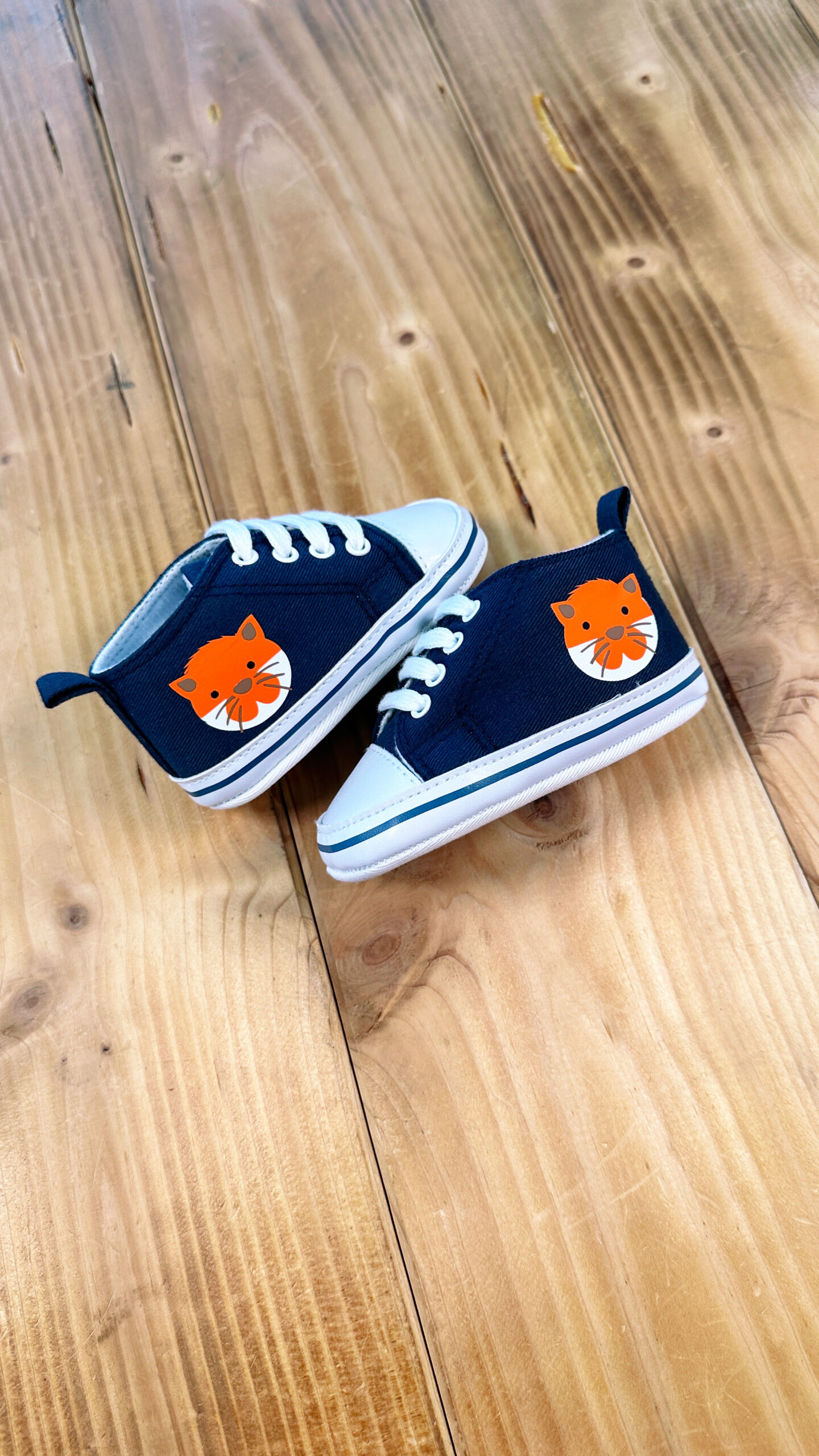
HTV materials with application parameters close to 265 F, five-second application, and low pressure are ideal to work with due to their versatility and ability to adapt to heat-sensitive substrates. For last-minute gifting, whether you are decorating for profit or yourself, having a good quality HTV at hand is the perfect decoration technique to create memorable, personalized, thoughtful gifts for anyone.