
2024 Brings Both Opportunities and Challenges to Apparel Decorators
Understanding key economic conditions, retail trends, and buyer preferences set the stage for apparel decorators to set themselves apart from competitors this year.
As we step into 2024, the decorated apparel industry finds itself at the crossroads of change, facing a complex interplay of economic shifts, lingering supply chain challenges, and evolving consumer preferences. From an increasing buyer demand for sustainable products and unique decoration options, to booming online retail sales, check out the trends shaping the industry, providing screen printers, embroiderers, and digital decorators with insights to stay ahead in a competitive landscape.
1. We’re still facing an uncertain economy and rising costs.

Experts predict an ongoing slowdown in global economic growth for the new year. The potential for a recession in the U.S., a deceleration in China’s commercial expansion, and ongoing conflicts in Ukraine and the Middle East contribute to a complex scenario for many industries. Simultaneously, growing markets in emerging nations like Brazil, India, Mexico, and Turkey are poised to usher in a transformative period, reshaping worldwide power dynamics.
“Inflationary pressures are pushing up production and materials costs, which may also impact consumer spending power,” says Aaron Montgomery, CEO and co-founder of Our Success Group. “This will certainly remain a challenge in 2024, especially with the upcoming presidential election and more people holding out on discretionary spending.”
Decorators should highlight the custom solutions they provide to customers’ problems, preventing them from becoming mere “printed shirt” commodities. “If the only selling point your customers have to go by is whether you can give them the lowest bid, you’ll struggle this year,” Montgomery says. “Make your services more about the value you bring and less about the price they pay.”
2. Supply chain disruptions are still causing ripple effects for decorators.
The industry is still grappling with issues in global supply chains that affect the availability and cost of materials. “Some of this stems from the missteps suppliers made before COVID-19 hit, which then allowed them to use the ‘pandemic excuse’ to bolster their profits,” Montgomery says. “As decorators, we must re-examine our vendor relationships, and get creative with how that relationship is leaning. If your relationship with your key product vendors is merely a ‘website login’ and you’re forced to play by their rules, that’s a telltale sign it’s time to make changes. Your suppliers play in a competitive market just like you do.”
3. Online stores are an important business expansion opportunity for decorators.
The move toward online sales has been significant. From $3.5 trillion in 2019 to $6.5 trillion in 2023, a notable increase in global e-commerce sales illustrates that this trend isn’t slowing down. Even more significantly, in the U.S., online T-shirt purchases will overtake offline sales for the first time in 2024, accounting for 50.7% of the market revenue this year.
“As decorators, we should help every single one of our customers capitalize on their online presence, be it through setting up online stores for local organizations or becoming merchandise suppliers for online influencers,” Montgomery says.
4. Look for ways to offer even more customization and personalization options.
The growing demand for personalized apparel is a huge opportunity to stand out from competitors. “The key lies in efficiently managing numerous individual orders instead of large bulk ones,” Montgomery says, “which means a deeper dive into understanding fulfillment, forming robust partnerships with shipping companies, and adopting a more customer-centric business model.”
5. Buyers care about sustainability AND affordability.
Data consistently shows that younger generations list climate change and global warming as a top concern — and prefer purchasing products with sustainable materials and footprint. In fact, a 2023 study found that a massive 68% of sustainable apparel revenue in the U.S. in 2022 came from Gen Z and Millenials put together. While 54% of Gen Z will pay 10% more on a sustainable product, they’re still concerned they can’t afford to follow their values with the high cost of living.
“We’re still experiencing economic uncertainties, but there’s also a shift toward buyers wanting long-lasting apparel and lifetime personalized products,” Montgomery says. “As buyers move away from ‘fast fashion,’ decorators will need to find the balance of quality, sustainability, and price sensitivity to meet their customers’ needs.”
Decorator shops should also focus on their own sustainability efforts. “Transparency is increasingly important,” says Rick Roth, partner at Ink Kitchen. “There’s too much greenwashing out there and frankly, people are fed up with it.
“Sell cotton shirts or those made from regenerative products,” he says, “since blended products are the hardest to recycle.” He also encourages printers to try avoiding plastic and extraneous packaging materials, as well as heat and cool facilities in the best way possible, from fans that take in cool air at night to heat pumps.

6. “New Prep” core is majorly trending this year.
Whether you call it Preppy Collegiate, Ivy League, or Varsity style, buyers’ interest in vintage and thrifting continues to fuel this style category of raglan Ts, varsity jackets, and more. “When suppliers design new products, you get preppy-with-a-twist, or New Prep,” says Vicki Ostrom, a futurist and trends analyst with SanMar, who notes that one of the most interesting adaptations of classic varsity styles is in the decoration.
“Once the item isn’t tied to a specific school, the letters on the jacket, for example, can spell anything — like a company name or a sentiment. Or on a varsity-inspired T with stripes on the sleeve or a contrast ringer at the neck, the colors can be more lifestyle than strictly collegiate. That’s the best of what vintage finds and thrifting are all about — taking something that was for one use and adapting it to a new storytelling style narrative, which personalizes the look.”
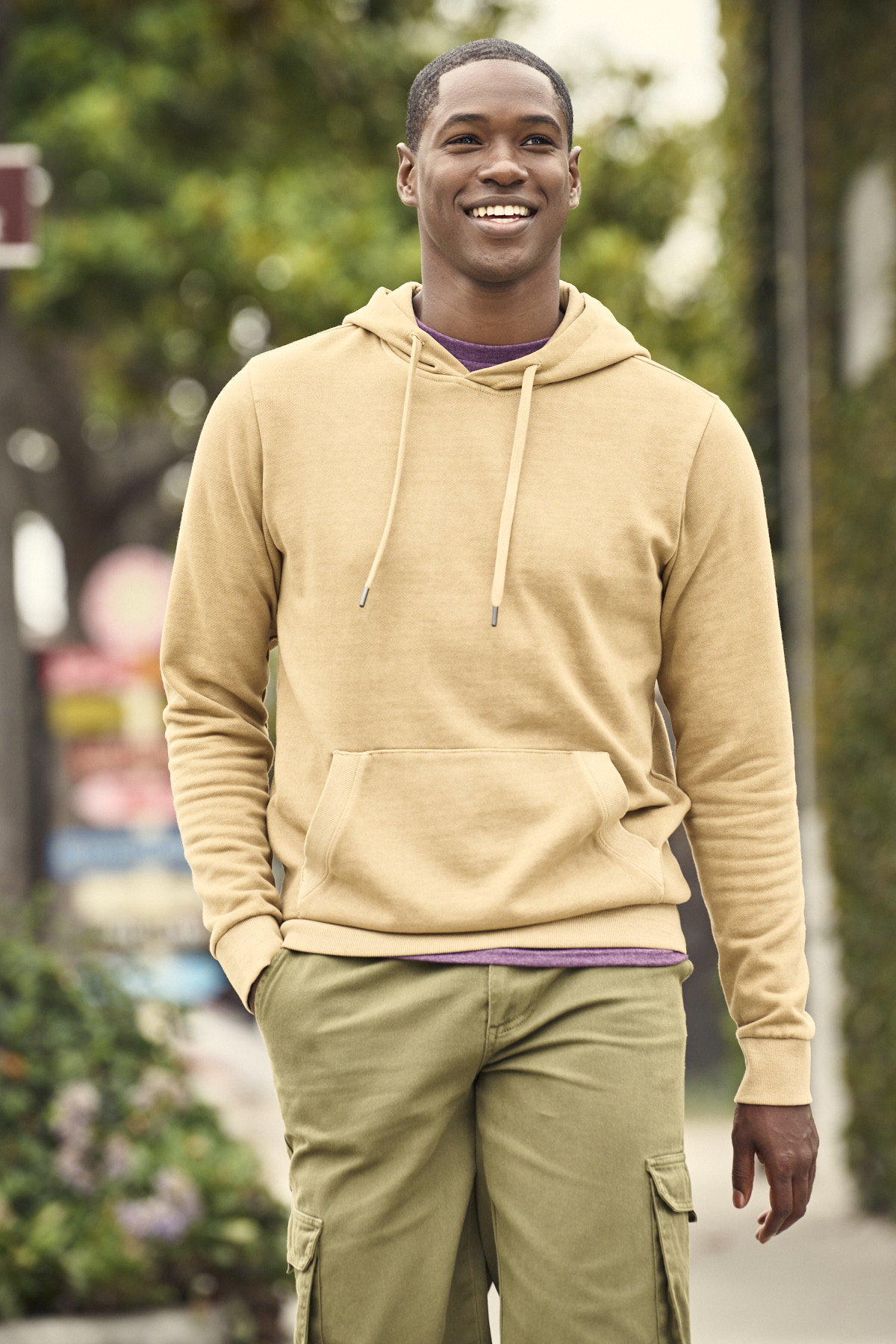
7. Buyers want softer, lived-in, gender-neutral hues.
Partly due to the thrifting trend, softer colors that look like they’ve been washed and worn in “just right” also are influencing new products that transcend seasons for year-round wear. Another reason softer, calming pastels are the colors du jour lately stems from people’s focus on wellness. “There’s also a deep desire for clothing to be less gender specific,” Ostrom says. “A more inclusive garment may have a longer lifespan and not go into a landfill, since more people can use it — that’s an important consideration for many consumers. The rules are quickly vanishing when it comes to what color can be worn when or by whom.”
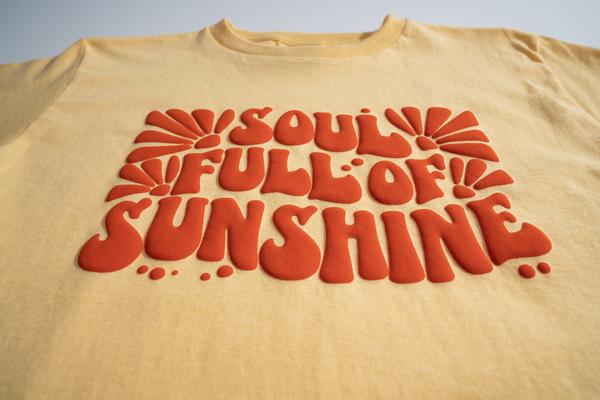
8. Fonts and graphics trends span a unique spectrum, with something for everyone.
Ostrom points out that studies show 88% of buyers want brand experiences that bring joy and make them smile. “There’s a loneliness epidemic globally, and certainly nationally in the U.S.,” Ostrom says. “Consumers know it and are hoping for businesses to help.”
Here are Ostrom’s top predictions for the fonts, graphics, and embellishment placement that will appeal to buyers and end-users most in 2024:
- Thought-provoking statements: Still going strong from 2020, people continue to share their beliefs, advocate for important causes, and signs of protest on their garments using bold, simple fonts or emotive, hand-written fonts.
- Default fonts: Arial, Times New Roman, Calibri, Helvetica, Verdana, and Tahoma are popular typography choices on the runways and at retail for brands to communicate their message in a get-noticed and easy-to-read way.
- Larger fonts and logos: Big logos and text are all the rage, in contrast to 2023’s more understated approach to branding. Don’t be afraid to get excessive in your designs, with oversized logos, different fonts, and busy collaged or layered text.
- Maximalist collages: Collaged graphics and fonts speak to consumers’ current love of craft, thrifting, and creativity. You can tap into this eclectic aesthetic with unique takes on fonts and branding, with cut-out lettering, checkered patterns, dye splotches, and geometric shapes.
- Nostalgic and retro designs: Whether it’s 2D hand-rendered cartoon characters from our childhoods, humorous slogans in throwback fonts, or vintage-inspired prints, we’re all about sentimentality and happy memories these days, so tap into the vibe for your artwork this year
- Blurred branding: As intentionally pixelated visuals gain popularity, swap out crisp and easily legible fonts for softened alternatives.
- Front-and-center placements: Following the statement trend, decorators are embracing large real estate on garments, with easy-to-read fonts to promote messaging.
- Unexpected placements: Experiment with unique, off-kilter print and embroidery text placements for interest, newness, and playfulness — including on a shirt or hoodie’s neckline.
The Proof’s in the Profits This Year
Considering 2024’s economic outlook and business spending trends, experts predict decorators could experience a moderate growth in profits, especially for those who adapt to changing consumer preferences, pitch e-commerce options to customers, and invest in new technologies. “However, this growth might be tempered by cost increases and economic uncertainties, so it’s crucial that decorators make decisions based on their unique business foundation, not based on a guru’s ‘general get-rich formula,’” Montgomery says. “Decorators need to be very clear about what their reason and values are, who exactly their ideal customers are, and what specific challenges they can solve for their ideal customers. The decorators who have clarity and confidence can look forward to a rewarding 2024, especially those focused on service and fulfilling their reason for existing as a company.”
Overall, we can feel optimistic about the upcoming year. “Any economic downturn will lead to an upturn next, as the economy is basically sound,” Roth says. “Investments in infrastructure will help our sector.”