
Beyond Green: Exploring the Multifaceted Realm of Sustainability in Printing
With current challenges, new progress, and evolving education, navigating the realm of sustainability in the printing industry can be tough; here’s where printers must rise to the occasion.

It’s a topic that has been hashed out, examined, and discussed almost endlessly in the printing industry over the last several years. It’s been dissected, defined, redefined, implemented, and strategized by manufacturers, suppliers, and printers.
Sustainability isn’t a new term to the printing industry. In fact, it’s become part of the daily vocabulary. Yet for all the talks and efforts, there’s still a lot of work to be done. And there’s still a lot of unknowns when it comes to what sustainability truly means and what its role in printing is. As the industry continues to implement realistic changes, it helps to have some understanding of what sustainability is, examples of what other companies are doing, and goals to work toward.
Defining Sustainability
First things first: what is sustainability? While it’s loosely defined across multiple industries — and can be tweaked and formatted to fit individual goals — there are a few basic principles that the term encompasses.
According to Garry Bell, Chasing Better Consultants Inc., it can be a challenge to pinpoint a true definition. Bell is currently involved in assisting the US Cotton Trust Protocol to complete the development and rollout of its sustainability program.
“Sustainability in all industries means the adoption of practices and processes that reduce the environmental impact, improve social outcomes, and have no effect or improve economic outcomes for the parties adopting the practice,” he says. “[That’s a] very vague response, but if these three elements are not achieved, then the practice may not be retained when overall market conditions deteriorate.” Often sustainability is tied to environmental impact, but Bell lists two other key factors in his definition: social and economic outcomes.
“Sustainability goes outside just the environmental section,” says Paige Goff, vice president, sustainability, for Domtar, a provider of a variety of fiber-based products. “What we have seen in the past several years is that the social part of sustainability is very important. It goes into your personal life with your relationships, with your family.”

That might seem outside the realm of the print industry, but the point here is that these global trends influence what sustainability is for our industry. “Global standards unite us under a shared objective,” Steven Reid, compliance and sustainability manager at Showdown Displays states. “These standards have not only prompted customer inquiries about our products and manufacturing practices, but they’ve also spurred evaluation based on their alignment with worldwide initiatives.”
In that sense, Gary Jones, vice president, environmental, health, and safety (EHS) affairs for PRINTING United Alliance, notes that sustainability is often personally defined by many as a way of living. “Sustainability for me is not a set of discrete actions, but a lifestyle that involves making choices that support reducing my personal impact on the environment and purchasing products and services that don’t exploit vulnerable populations,” he says.
As for what that means in the printing industry specifically, that personal view often carries over, whether it belongs to Jones or any number of print shop employees, owners, and customers. “Sustainability for a printing operation is like my personal view in that it should be a framework for operating a business,” Jones believes. “The framework needs to include the three key aspects of sustainability: people, planet, and profit. All three are equally important as they impact how viable a company will be in today’s economic environment.”
Sustainable Solutions in the Printing Industry

While it might seem that the definition of sustainability is somewhat abstract, what is more concrete are the programs already being implemented in the printing industry. Many manufacturers, suppliers, and print businesses already have programs in place, with others following suit.
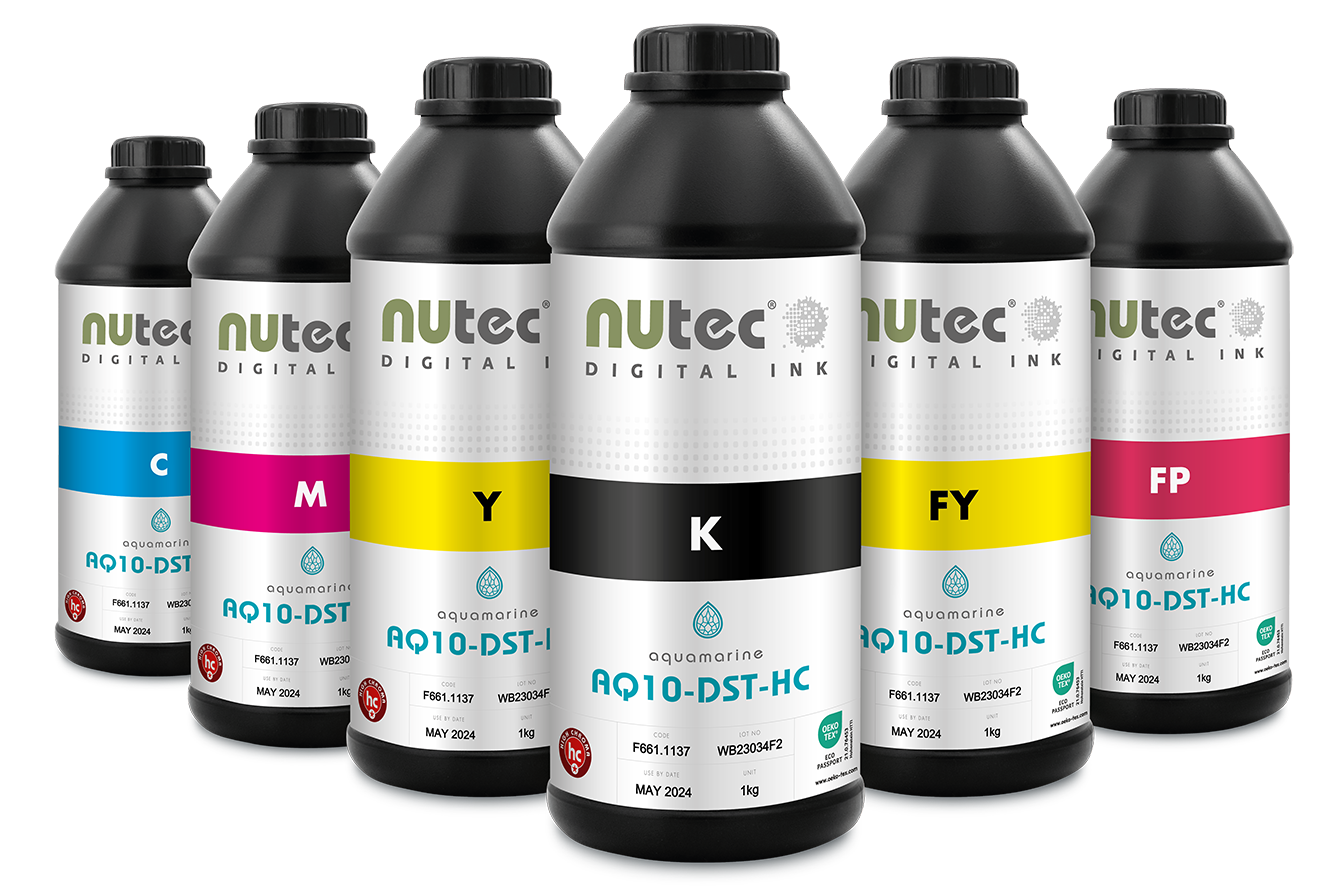
For starters, Bell points to materials. “Sustainable solutions include more environmentally friendly materials (inks, solvents, etc.),” he says, “as well as more sustainable substrates.” His list includes:
- Sustainable fiber apparel, recycled or recyclable packaging, etc.
- Innovative practices that reduce environmental impacts by creating less waste, using less energy and resources.
- Adoption of new technologies that consume less energy, like infrared dryers.
- Changes to business practices that positively impact outcomes such as virtual sampling instead of physical sampling (direct-to-screen software, direct-to-garment printing, etc.).
This is also happening on the social side of the discussion. “On the social compliance side, the recent changes such as the U.S. Government’s UFLPA (Uyghur Forced Labor Prevention Act) places the responsibility on all importers of products into the USA to be able to document and prove the origin of the raw materials and the locations of each supply chain participant connected to the overall value chain of any imported product,” explains Bell. One of the largest items imported from the region? Cotton.
Jones has done extensive work in the area of legislation, which ultimately affects printers of every kind, from large format to direct mail to apparel and more. “A pattern that we have been seeing emerging over the past several years has been that governments are now getting involved and passing legislation mandating that companies wishing to conduct business in their country now meet certain requirements,” he notes, adding that much of the progress is currently being experienced in the European Union (EU).
Why is that important for the U.S., particularly printers? “Even though these regulations were adopted in the EU, they apply to any U.S. company that either provides covered products or does business in the EU and meets the threshold for compliance,” Jones explains. “In addition, these new requirements will require EU-based companies to request information and assurances from anyone in their supply chain, so they are very impactful.”