
Taking the Dive into Direct-to-Film
One shop’s firsthand experience with in-house DTF printing
Beeze Tees has been in the printing business for a little over 12 years. We have two retail locations, which have driven our average order down from 100 pieces to around 24. Many of our orders are webstore orders or smaller (under 12 piece) orders.
We have two autos, eight heads of embroidery with another six on the way, digital printing, vinyl, and we used to do direct-to-garment (DTG).
When I first came across direct-to-film (DTF), I was amazed by the quality of the prints. Most of our small-run stuff was done with screen-printed transfers, which we did in-house, and digitally printed vinyl, which is typically not ideal.
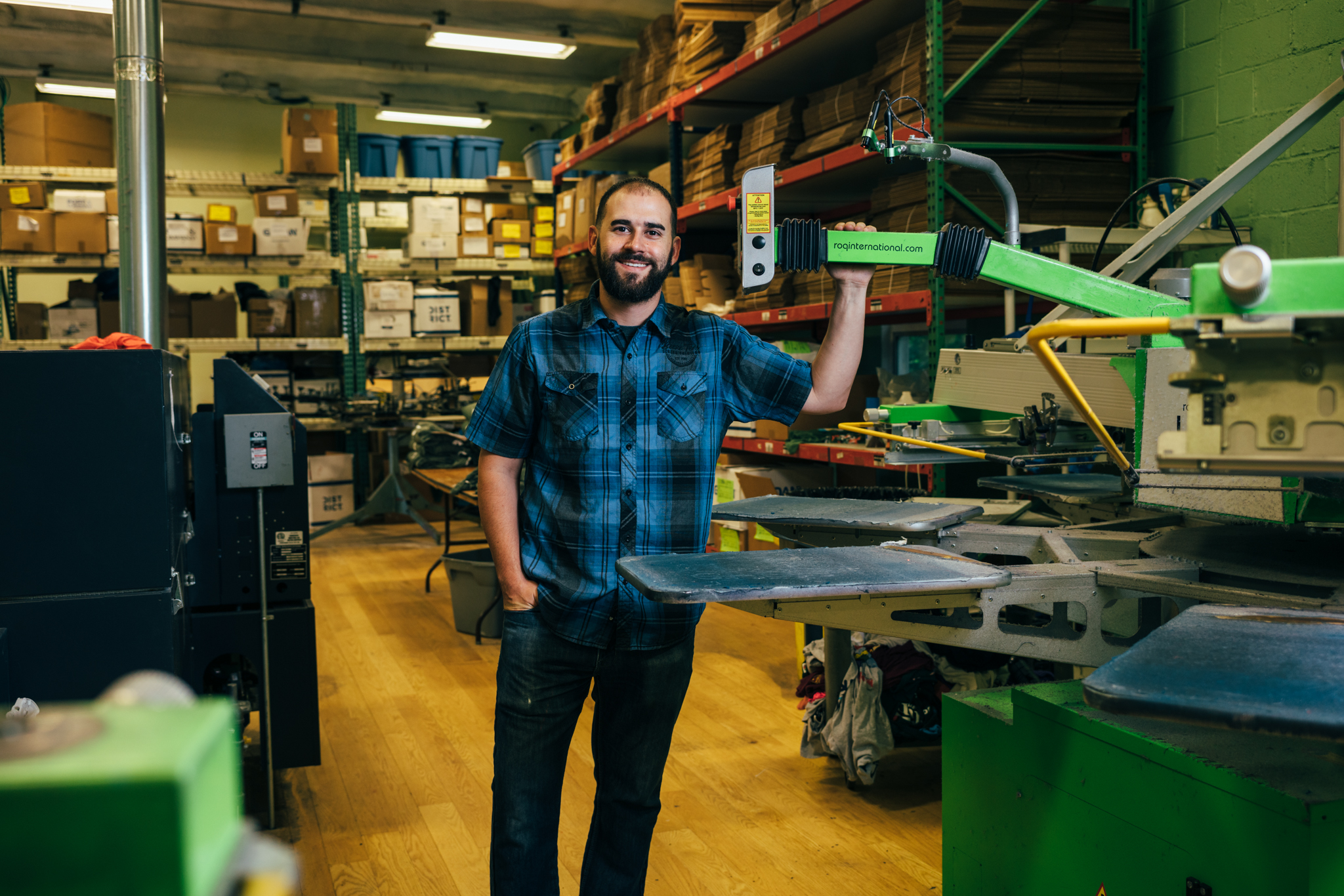
We were iffy at best when a customer would come in and ask to make one item. We would ask too many questions:
- How busy is the design?
- How many colors?
- When do you need it?
- Is this hard-feeling vinyl ok for you?
It almost felt like we were trying to talk them out of it. With DTF printing, we don’t bother with those questions (at least, not in a way to discourage our customers!). Instead, we typically show them a sample and move on to the sale.
Where the Journey Began
In the beginning of our DTF journey, we outsourced all our transfers. We partnered with about six vendors, some bigger ones and a few smaller ones. Buying a machine didn’t make sense as we weren’t sure how much we would print or need. Plus, the technology is so new, we weren’t positive that it was worth buying a machine. That, though, quickly changed for me.
We were spending over $1,000 a week on transfers after only doing it for a few months. Some of the time they were coming in wrong, whether because of printer issues, missing sheets, poor quality, or other factors. Plus, it took on average over a week to get them. If there was an issue, it was another week.
Editor’s note: This isn’t always the experience. Partnering with a trusted business that knows what they’re doing will lead to excellent transfers and quality customer service. Like any partnership, do your research.
I started doing hard research in March of 2022 and talked to a number of folks with machines or considering a machine. I spent hours on the phone or video calls to do walkthroughs and finally decided on the ColDesi two-head machine. A few reasons I chose this one:
- I have worked with ColDesi in the past
- They were quick to respond to my questions and very helpful during a private walkthrough
- They are on the East Coast — in Florida — and I am in New Hampshire, whereas a few others were West Coast
- I know some other people who have a machine from them and are happy
- The price seemed in the ballpark we wanted to stay in
- Getting supplies sounded easy as we had our initial conversations
I wasn’t overly concerned about price — I really wanted the right machine for us. I went with the two-head for that reason. I want to reiterate: We are new into it. But if I can fill it up 40-plus hours a week, we will get another one. Right now, we are around 20-30 hours a week, so we still have room for growth in that aspect.
Part of my plan going into this early was to wholesale material to other printers. Based on my previous experience with ordering from other places, turnaround time and making sure the prints are right is super important. We turn most orders around same-day or within 24 hours. We have flat-rate ground shipping ($15) or free next-day air shipping on $200 or more.
We try to make it very easy to order online where you can upload your art, or even gang on our site, checkout, and then in a day or two, get your order no matter where you are located.
First-Hand DTF Printing Experience
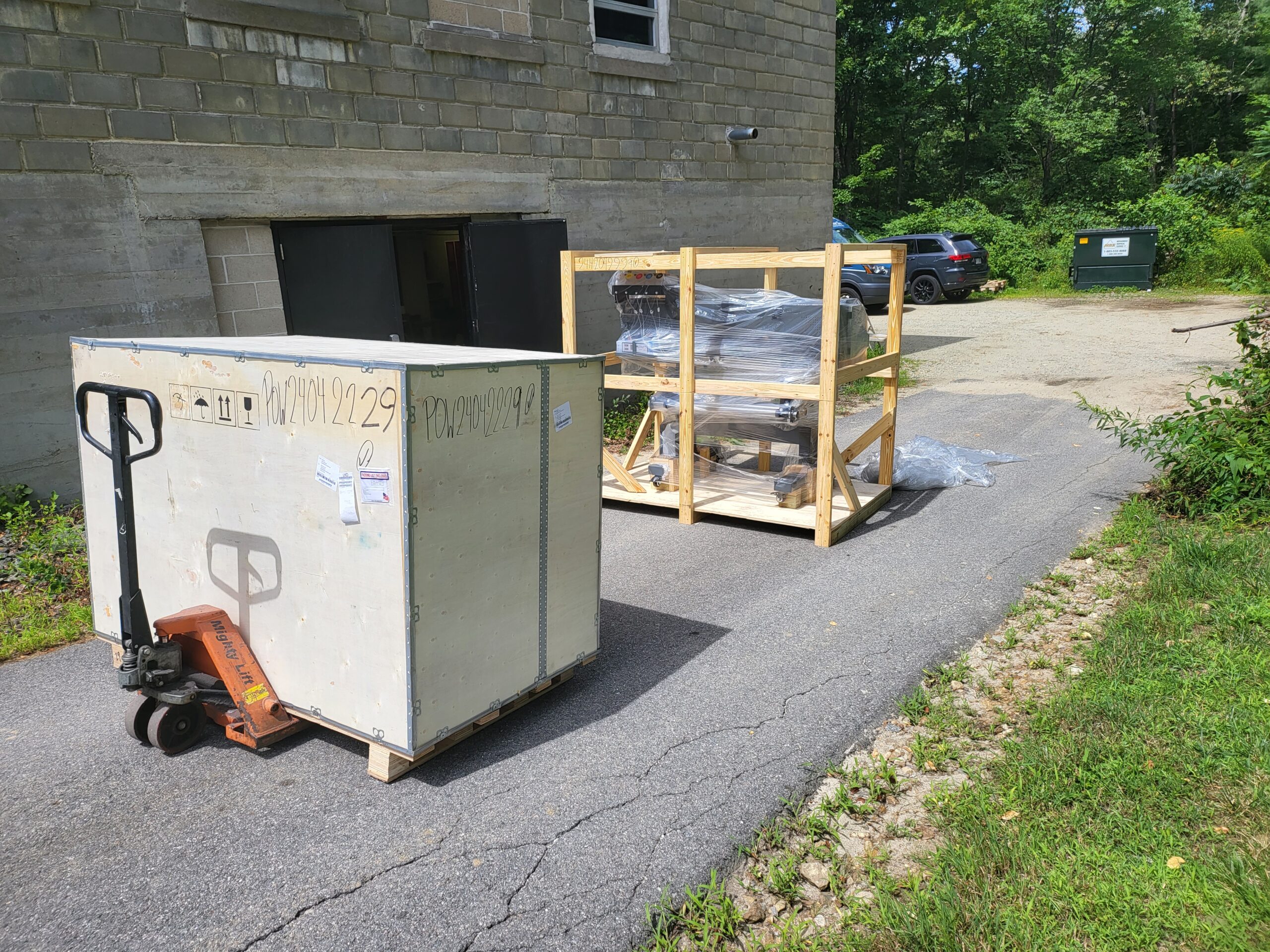
We ordered our machine around March 2022 and received it at the end of July. Before the machine shipped, our operator had gone through ColDesi’s online training, which was well done. We updated our computer to handle the program and were ready to start printing when it got in.
Once the machine arrived, we had electric installed at its location and were able to start printing on day one.
The one thing we had not heard about was ventilating the machine. The first week, we had it vented with the included dryer vent pipe to outside but had no fan, so our space was very cloudy, and the machine put off a lot of moisture. I ended up ordering a fume extractor, and that eliminated the issue. The machine puts out an oily discharge, so cleaning the filters and wiping it down are important.
Humidity is the biggest challenge for us. The machine needs to be around 60-70%. We print in a pretty humid basement (don’t worry, it’s not a creepy dungeon-type basement), but the winters in New Hampshire are very dry. We have a few humidifiers going at all times to keep the air moist.
There is a total learning curve just like with any new equipment. We were lucky to have used and worked on digital printing equipment in the past. One of our DTG printers was a nightmare, so this was a walk in the park as far as operation.
What it Looks Like Going Forward
I believe the technology is in its infancy and has a long way to go. Our printer doesn’t talk to our dryer at all. The speed is all based on what you print, and the operator needs to speed up or slow down the dryer based on that. The powder is pretty much the same: You need someone to keep an eye on that. Feeding the material to start and finish is also a manual task that will hopefully be addressed over time.
In the end, DTF is the future of smaller quantity, higher color, and harder-to-print areas. You can print on almost anything and at a lower temp. No pretreat like DTG, no setup or screens like screen printing, a soft hand and no weeding, no minimums, and the number of colors doesn’t matter … these are all huge benefits to the technology.
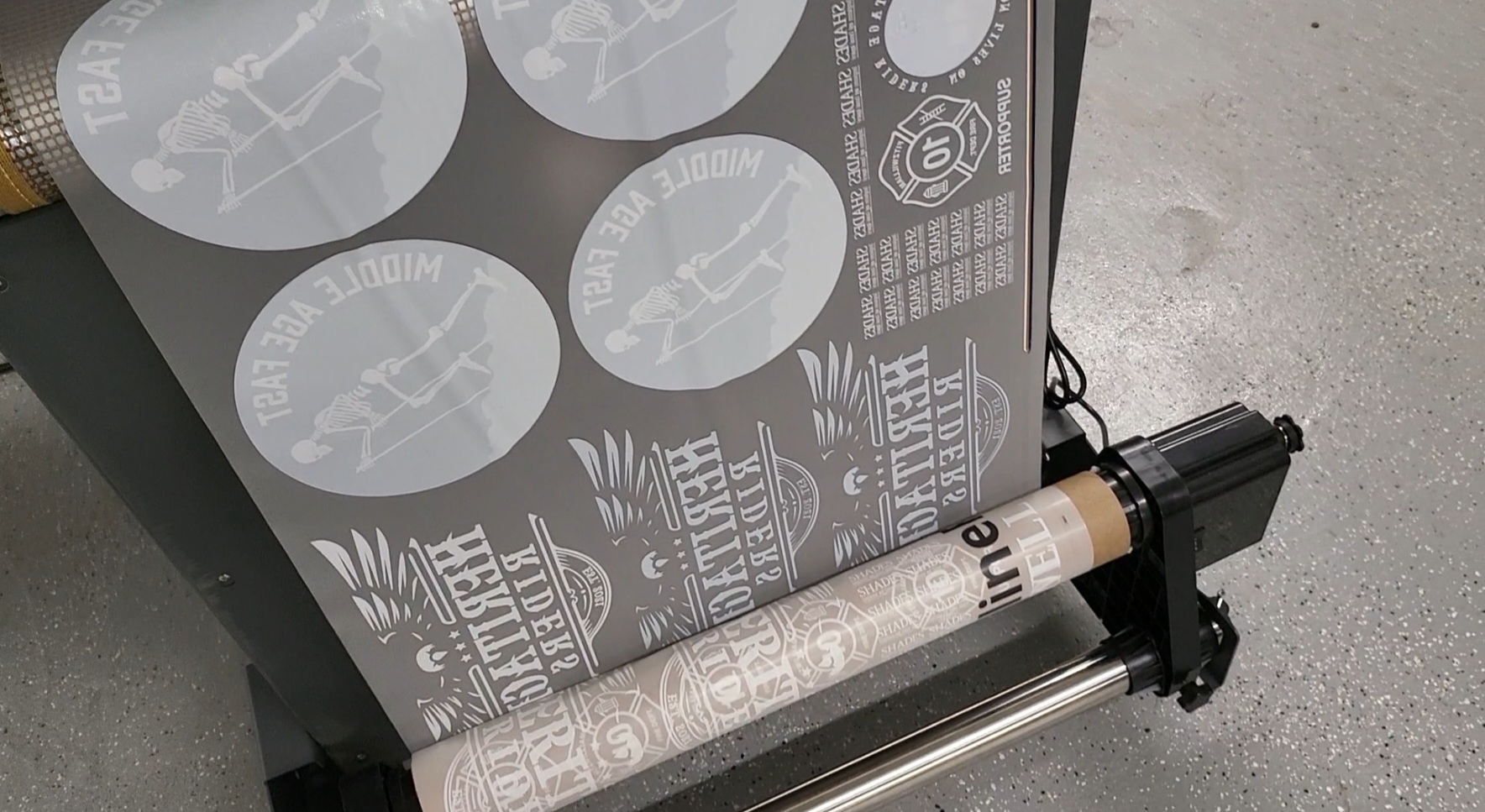
We have freed up our screen-printing presses by moving smaller orders to DTF, and we stopped printing screen-printed transfers to now focus on larger jobs in screen print and still knock out the smaller runs with DTF.
Overall, there have been challenges and benefits. We can’t wait to see what the future of DTF is!