Controlled Chaos: A New Alternative in Apparel Decoration
In a market craving originality, Stain Imaging proves that uniqueness never goes out of style
All images courtesy Stain Imaging
All the ‘90s nostalgia is on full display right now. From colorful, tactile prints to wide-leg cargo pants, those of us that grew up in the 1990s are currently enjoying all of our favorite retail fashion that dominated the decade.
Among the neon explosion and stone-washed jeans was Tim Lunt, president of Stain Imaging. As he immersed himself in the latest fashions around 1989, he also made an interesting observation: “The distributors were carrying just the same old basic colors, and people were buying white products to have them neon dyed and black products to be stonewashed.” Lunt turned this observation into an opportunity inspired by some old-fashioned hard work mixed with a desire to bring something new to the market. From those roots, Stain Imaging ultimately came to life.

The Rise of Custom Creations
Tim notes that from the beginning, his focus never changed from bringing something unique to the market. It was all about creating something cool that elevated the perceived value of a garment, which apparel decorators could then pass along to their customers. And you know what they say about dedicated focus: it often yields the best results.
As he was developing ways to bring logos and branding a breath of fresh air, others around him weren’t necessarily doing the same. “I started to play with all kinds of ideas to do anything to a blank shirt to give it some life, uniqueness, and interest,” he says. “I started to get some strong response to shirts I was spraying with dye on my parents back lawn, and never looked back.”
Fast forward through the ‘90s, and that rock-solid focus on how to elevate the perceived value of the basic T became a jumping off point. Tim noted that with trends like tie-dye and dye houses offering alternatives, he knew his unique take was going to stand the test of time.
“A good idea coupled with a lot of hard work and long hours, the lightbulbs went on, and I invented a way to transform a basic T-shirt with controlled chaos to produce several abstract looks that found a place alongside the weathering/distressing techniques, but in a much milder way,” Tim explains. “With the onset of the computer, and more hard work, I was able to produce just about any random texture, which ultimately led to the ability to control imagery to be able to develop themes, concepts, and ultimately, logos and branding.”
Today’s consumer is still looking for that unique branding touch. While the traditional left chest logo on a basic T will always have its place, people currently seek something that is beyond basic. From personalized looks to eye-catching products that intentionally pique an interest, the rise of custom creations touches more than the retail world — everyone wants branded merch that stands out.
Stain Imaging brings that unique flare that was created so many years ago to today’s buyers to meet that need. As Tim explains it, it goes much deeper than just providing something “cool.” Distributors and decorators must truly offer the cream of the crop. That’s where his technique comes into play.
“The technique is a very gentle, eco-friendly method that bonds within the cotton (like a dye), leaving the surface friendly for further traditional decoration such as heat press, DTG, DTF, and of course, screen printing to collectively increase that coveted ‘high-perceived value,’” he explains. This ticks a few boxes: the increasing need for eco-friendly products and services as well as more profit for decorators. End-users might want all the nostalgia of the ‘90s, but if it’s not earth-friendly in some shape or form, they feel less inclined to purchase a garment, much less wear it to represent a brand they love.
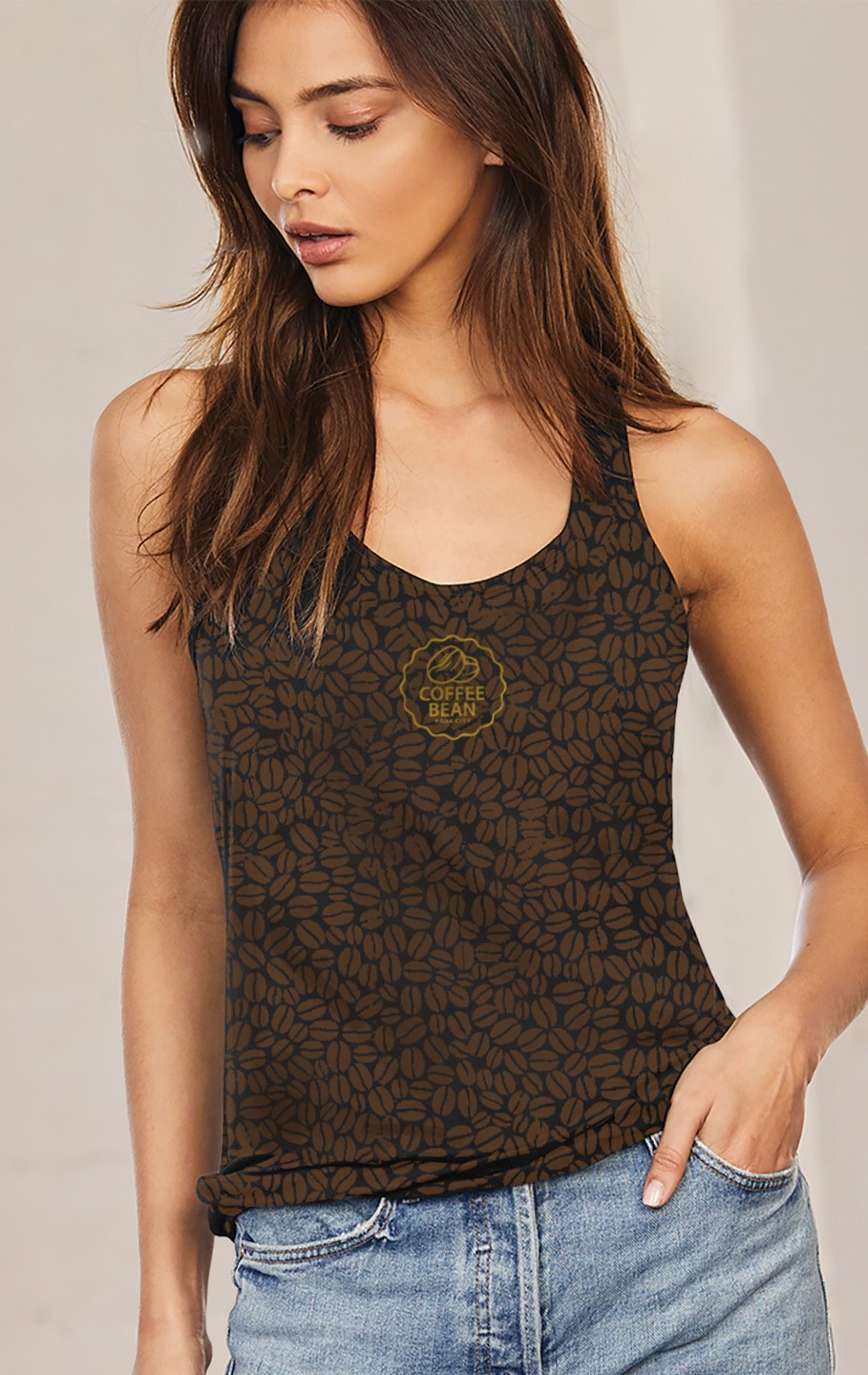
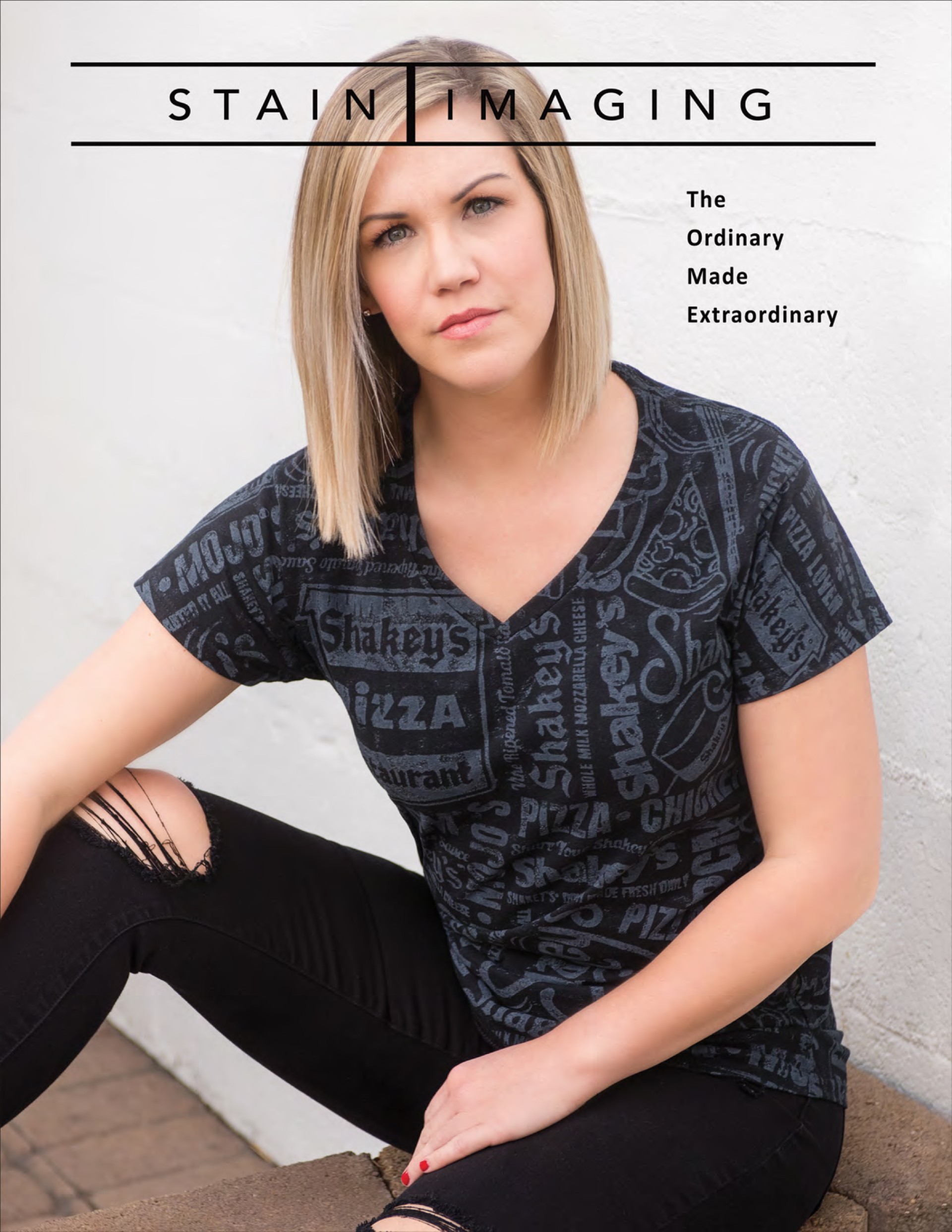
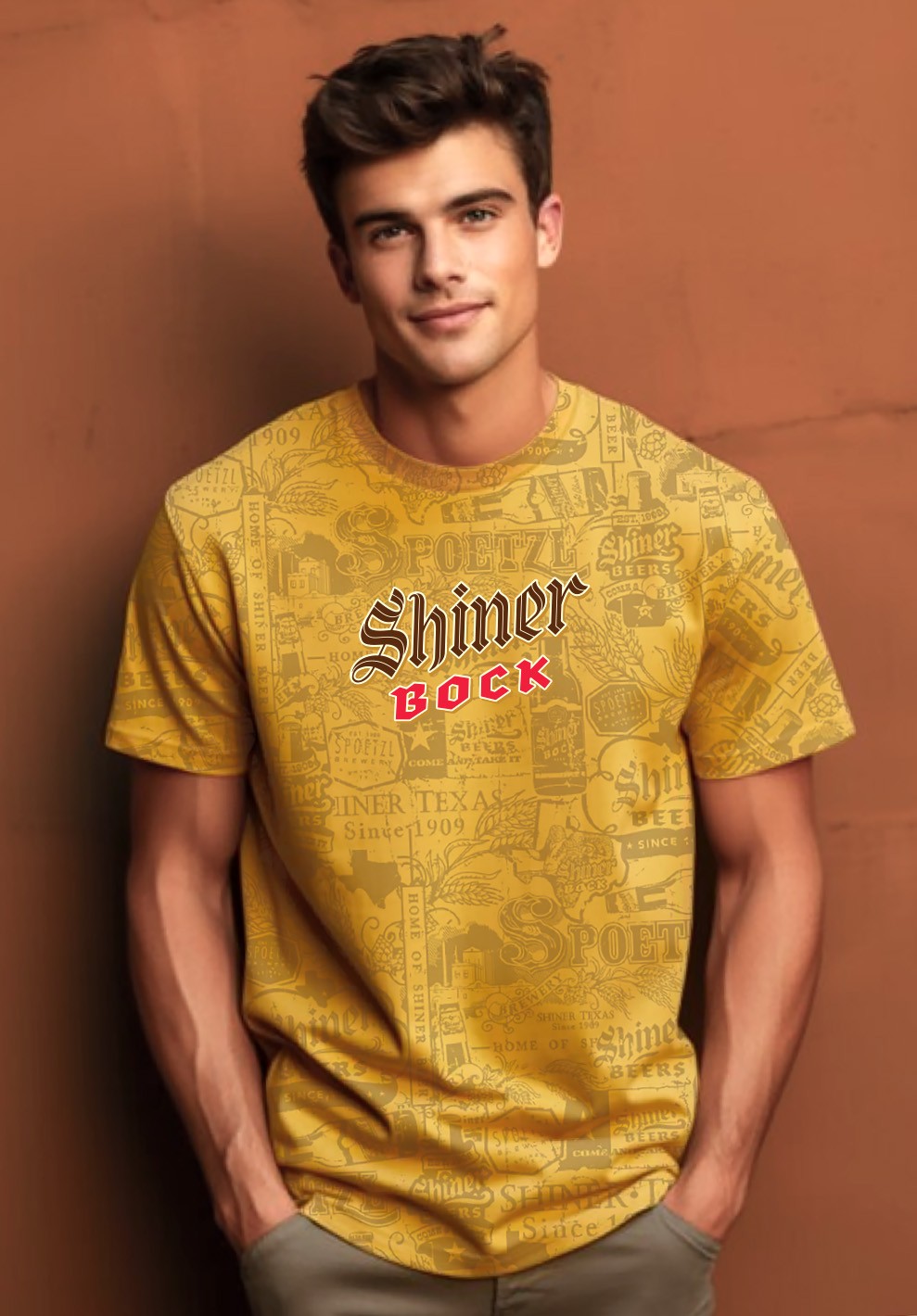
If you haven’t seen the apparel Stain Imaging produces, it really does paint a unique picture. “Think more along the lines of a dye-like garment wash as opposed to a full body sublimation, two-sided jumbo screen print, or even cut-n-sew,” Tim explains.
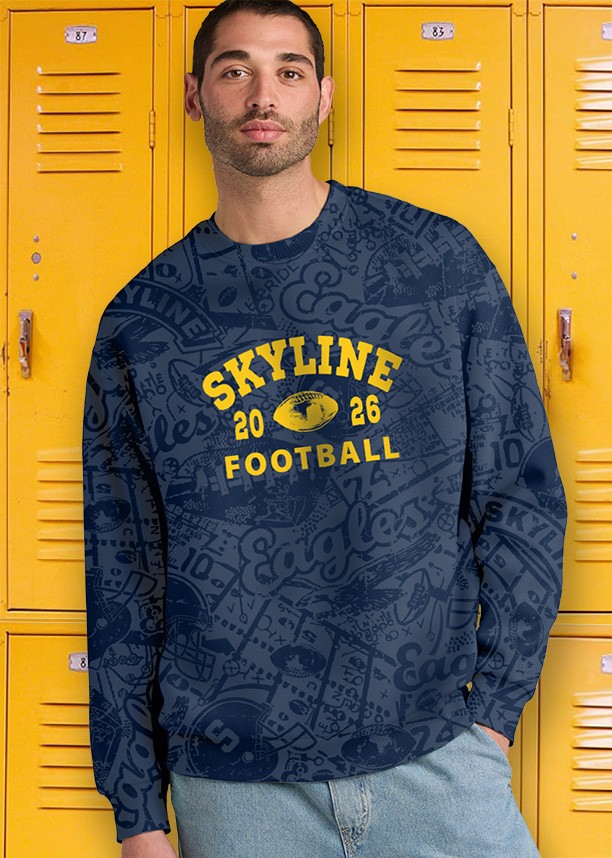
Not to say those options don’t add value to a decorator’s options, but if the industry has proved anything over the last decade, it’s that those who go the extra mile and offer something truly unique will win more business. Stain Imaging is a completely alternative decorating technique for T-shirts that shares many characteristics with the familiar methods, but is still its own process.
Personalization, Printing, and Partnerships
Throughout the years, Tim has worked hard to get this creative take on T-shirts into the spotlight. And today, the importance of bringing something unique to the market is more crucial than ever. Customers don’t want what other people have — branded merch needs to help tell a deeper story, and everywhere you turn, people are trying to avoid those garments that just get tossed because they’re too boring.
“The main goal has always been to become a legitimate, alternative technique for transforming shirts from their solid state to something lively, interesting, and unique with high-perceived value,” Tim explains.
But perhaps deeper than bringing something different to the market is also his desire to create lasting partnerships. “As indicated by our A+ rating with SAGE, we strive hard to make sure folks are taken care of well,” he says. “That is what I believe it is all about. As a contract service, we see ourselves as alliance partners with our customers. If we take care of our partners, they'll take care of us.”