
Efficiently Managing Production Downtime in Your Apparel Decorating Shop
Every shop owner I know has been there — standing on a quiet production floor, watching the clock tick while orders trickle in and overhead costs keep mounting. After 20 years in this business and 17 running my own operation, I've learned that how you handle downtime separates the shops that thrive from those in constant survival-mode.
Most owners waste these precious slow periods complaining about the market or frantically cutting prices to drum up work. That's backward thinking, and it's costing you money you can't afford to lose. Instead of seeing downtime as a problem, reframe it as an opportunity to build the foundation that will carry you through your next busy season stronger than ever.
Downtime Doesn’t Equal Dead Time
The biggest mistake I see shops make is treating slow periods like they're in suspended animation, waiting for orders to magically appear. Meanwhile, other shops are using this time to sharpen their operations and grow their customer base.
There are fixed costs whether you're printing 100 shirts or 10,000, so every hour spent idle is money down the drain unless you're investing it strategically.
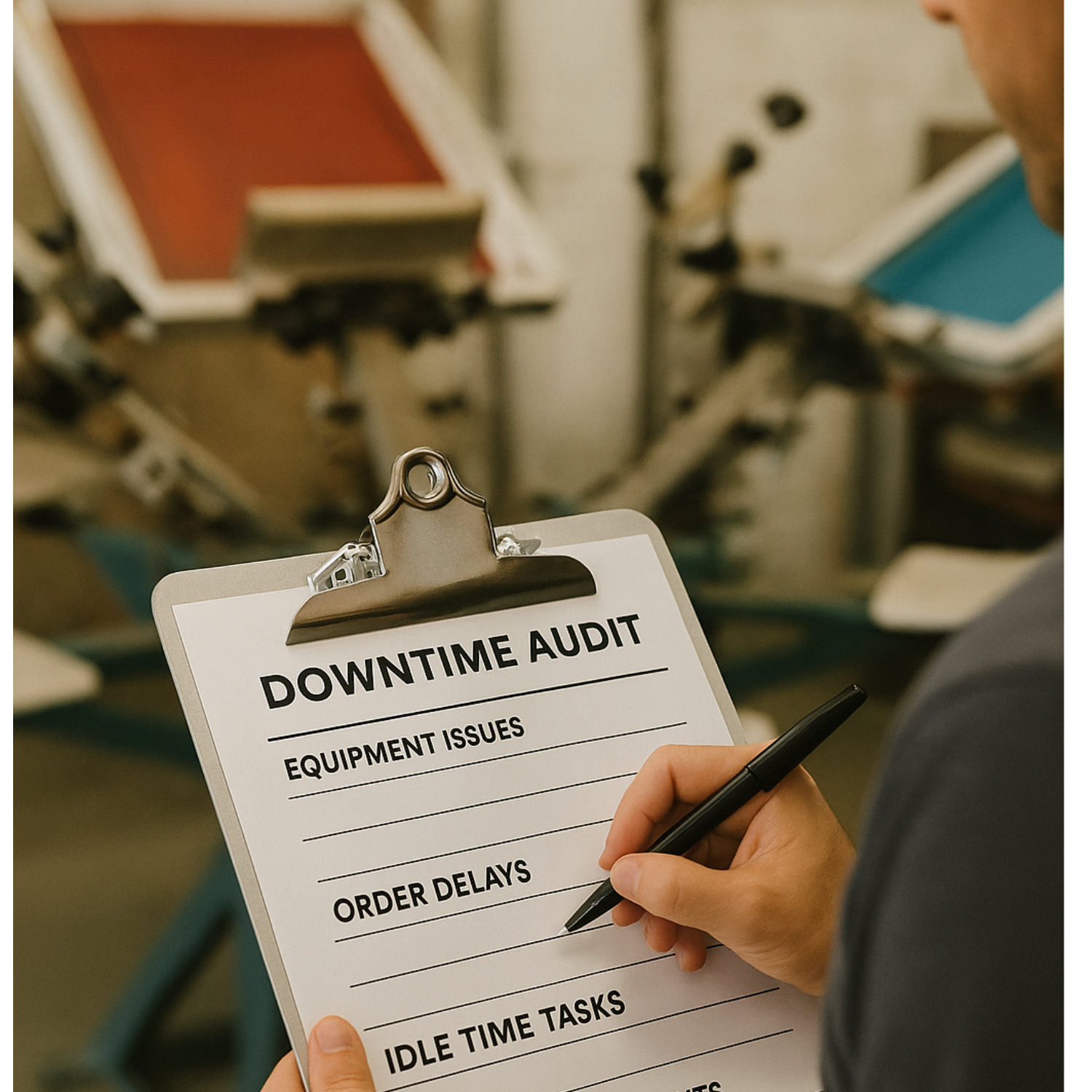
Start by auditing exactly where your time goes during slow periods by tracking it for a week. Most shop owners are shocked to discover how much time gets burned on work that generates zero value. It's the trap of reorganizing supplies for the third time, accepting any order for the sake of staying busy regardless if it's profitable, or simply hoping for something big to happen without a plan.
Create a downtime priority list and stick to it.
Customer retention should go at the top, followed by creative marketing, process improvements that save you time during busy periods, routine equipment maintenance, then everything else. Refuse staying busy for the sake of being busy. Instead, systematically build competitive advantages that will position you as a leader in the industry.
The shops that survive market downturns aren't the ones with the lowest prices or fancy toys. They're the ones that use quiet periods to become more efficient, more reliable, and more valuable to their customers than anyone else in their market.
Double Down on Customer Retention When Others Go Silent

While your competitors cut marketing budgets and go radio silent during slow periods, smart companies know this is prime time to strengthen customer relationships. Your existing customers are worth five to 10 times more than new prospects, yet most shops spend downtime chasing new business instead of securing the customers they already have.
Pull your customer data and identify everyone who hasn't ordered in the last six months. Don't blast them with desperate discount offers, but provide genuine value. Create content that helps them succeed — design trends for their industry, best practices for ordering custom merch, or case studies showing how similar businesses used branded merchandise effectively.
Position yourself as a strategic partner, not just another vendor fighting for their attention.
Use downtime to systematize your customer communication. Set up automated follow-up sequences for different customer types, create templates for common scenarios, and build processes that ensure no customer falls through the cracks during busy periods. When orders start flowing again, you'll be the shop that customers remember stayed engaged and helpful.
Don't underestimate the power of simple gestures during slow periods. A handwritten note checking in on a major client's business, a quick phone call to discuss their upcoming needs, or sharing an article relevant to their industry can cement relationships in ways that discounts never will. These activities cost almost nothing but generate loyalty that survives price wars and market fluctuations.

Marketing Risks Worth Taking During Production Downtime
Busy seasons leave almost no room for marketing experiments. When you're drowning in orders, most shops stick with what works and hope it keeps working. Use downtime to test new ideas, try different approaches, and find creative ways to stand out from the sea of shops posting the same tired before-and-after photos.
Stop playing it safe with your marketing just because business is slow. This is exactly when you should be taking calculated risks and trying unconventional approaches. Create content that showcases your personality, not just your products. Film quick videos explaining why certain techniques work better for different applications, share behind-the-scenes glimpses of problem-solving in action, or tell personal stories about how you got into merch and why you do what you do.
People buy from businesses they know and trust, and downtime gives you the chance to build that connection without the pressure of immediate sales.
Partner with local businesses for cross-promotional opportunities that benefit both parties. Offer to create custom shirts for a restaurant's staff in exchange for displaying your work and contact information. Design sample pieces for local gyms, salons, or retail stores that showcase your capabilities to their customers. These partnerships cost you materials and time, but they put your work in front of potential customers in environments where they're already thinking about their own business needs.
Use slow periods to build your portfolio with spec work that demonstrates your range and creativity. Create designs for fictional companies, showcase different decoration techniques, or collaborate with local artists on unique pieces. Think of it as investing in marketing assets that will differentiate you when prospects are comparing shops.
Ruthlessly Improve Processes While You Have Time to Think
Busy seasons expose every weakness in your operation, but don't give you time to fix them. Downtime is perfect for auditing every step of your production process and eliminating inefficiencies that cost you money and stress when volume picks up. Identify the bottlenecks that consistently slow you down and systematically remove them without obsessing over perfection.
Start with your biggest pain points from the last busy period. Was it artwork approval delays? Inventory management chaos? Communication breakdowns between sales and production? Pick one major process and document every step, no matter how obvious it seems. You'll be amazed at how many unnecessary steps exist simply because "that's how we've always done it."
Time yourself completing common tasks and look for patterns. If order entry consistently takes 15 minutes but occasionally takes an hour, figure out what's different about those problem orders and create systems to handle them more efficiently. Small improvements compound dramatically over hundreds of orders.
Create standard operating procedures for everything, not just production.
How quotes get generated, how rush orders get prioritized, how customer changes get communicated — every recurring task should have a documented process that any team member can follow. This isn't bureaucracy for its own sake; it's insurance against the chaos that destroys profit margins when you get busy again.
Prepare Your Team and Equipment for the Next Rush

The shops that handle busy seasons smoothly aren't the ones scrambling to manage chaos when orders start pouring in. They're the ones that use downtime to identify natural leaders, establish clear communication protocols, and build a culture where problems get solved instead of passed around.
Identify team members who step up during stressful situations and officially recognize their leadership roles. Observe how people handle challenges during slower periods and start developing those natural leaders. Give them decision-making authority in their areas and hold them accountable for results. When the next rush hits, you'll have collaborators who can manage their departments instead of everything funneling through you.
Use downtime to establish communication systems that prevent information from getting lost in the shuffle.
Create protocols for how changes get communicated, how priorities get shifted, and how problems get escalated. Practice these systems during slow periods so they become automatic when pressure builds. The shops that fall apart during busy seasons aren't usually lacking skilled workers — they're lacking systems that allow talented individuals to coordinate effectively.
Establish preventive maintenance schedules and actually follow them. That squeaky bearing might be manageable when you're printing 200 pieces a day, but it becomes production-stopping when you're trying to hit 2,000. Replace worn parts, calibrate equipment, and address minor issues before they become major problems.
Downtime Is a Choice, Not a Circumstance
Production downtime isn't something that happens to your business — it's part of your business, and how you handle it determines whether you're building a sustainable operation or just riding the ups and downs until something breaks.
After two decades in this industry, I can tell you that the shops still growing today are the ones that learned to use slow periods strategically. Stop treating downtime like a necessary evil and start treating it like the competitive advantage it can be. Your team, your customers, and your bank account will thank you for it.