
DTG and DTF: How to Choose the Best Printing Method for Your Customer’s Order
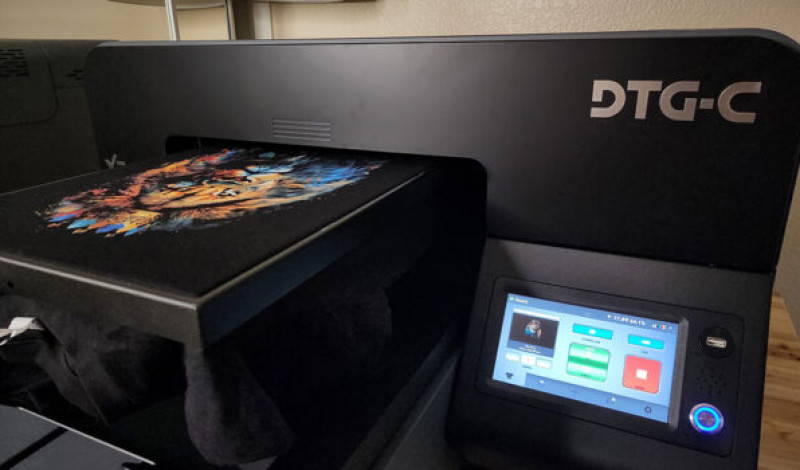
When it comes to fulfilling a client’s custom apparel order, choosing the right printing method is crucial for ensuring your customer’s satisfaction and overall product quality. Currently, two of the most popular digital printing methods are direct-to-garment (DTG) and direct-to-film (DTF). (Note: Some DTG printers are now considered “hybrid printers” because they have the capability to do both.)
With all these options, it can get overwhelming to decide which method is best for the job at hand. But don’t worry, I’ve created a guide to help you decide which printing method to use for your customer’s order.
Differences Between DTG and DTF Printing
DTG Printing
- Process: DTG applies ink directly onto the fabric with inkjet technology.
- Best for: High-quality, detailed designs onto 100% cotton or low poly/cotton blends. Since the ink is water-based, it needs a natural fiber that it can absorb into for best results.
- Pros:
- Excellent graphic detail – you are able to print graphics with feathered edges
- Extremely soft hand for light and dark garments
- The ability to print one-offs and large production runs (depending on how many printers you have)
- Cons:
- Slower production time for large orders (if you have only one printer)
- The need to pre-treat dark garments to utilize white ink
- Limited to high cotton blends (unless you have a tunnel dryer)
DTF Printing
- Process: DTF involves printing onto a film that gets coated with a powder, which is then transferred onto a garment with a heat press.
- Best for: Nearly all fabric types.
- Pros:
- Vibrant colors and excellent graphic detail
- Durable and flexible prints
- Efficient for large orders
- Cons:
- Can have a heavier, papery feel on the fabric compared to DTG
- Inability to print graphics with feathered edges, must do halftone graphics for a similar look
- Requires additional steps (printing onto the film, applying and melting powder, and then transferring)
Questions to Ask When Choosing Between DTG and DTF
-

DTF can print gang sheets. | Credit: Deana Iribe
What is the order size?
- Small to Midsize Orders: DTG is more cost effective and efficient for smaller batches and one-offs due to its direct application process (unless you have multiple printers or a larger DTG machine — then you are able to do large scale production).
- Large Orders: DTF can handle large bulk orders more efficiently due to the capability of printing large square footages of gang sheets with an industrial DTF printer (or printing a bunch of pocket prints onto one sheet if utilizing a hybrid printer).
- What fabric is it getting applied to?
- Cotton and High Cotton Blends: DTG excels on high cotton content fabrics due to its soft feel and ability to print feathered edges.
- Varied Materials: DTF is more versatile with fabric types; you are capable of printing onto a wider range of fabrics including polyester and synthetic blends.
- Do you want to sell finished goods or just transfers?
- Finished Goods: DTG can only be sold as a finished good, and you can also run your business this way as DTF as well.
- Customer Only Wants to Buy Transfers: This is where you would offer DTF by the sheet or roll.
- What feel and finish are you trying to achieve?
- Soft Hand: DTG prints have the softest hand between the two processes — especially onto light garments when you don’t utilize the white ink.
- Slightly Heavier: DTF prints may feel slightly thicker due to the film and powder, but they still remain flexible and durable.
- What does the customer want?
- You can try to guide the customer to which method you believe is a better process for their project, but in reality, it’s truly up to them and what they choose. Some are adamant that they prefer one method over the other.
Remember, This is Only a Guide
Credit: Deana Iribe
Please don’t think that these answers are set in stone. Every case can be different, and I’d like to share a personal experience that I recently had.
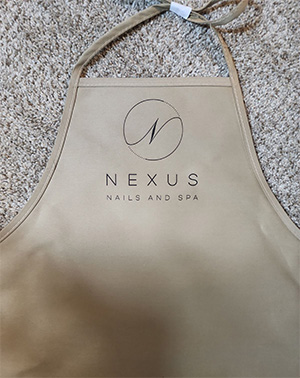
A new client of mine requested to have their logo printed onto an apron for her nail salon. The apron was composed of 60% polyester and 40% heavy cotton twill. I followed the advice I had written for the above guide and decided DTF was the best approach. I was wrong. Her logo was thin, and the ink lifted as I peeled the transfer. I thought I didn’t have enough pressure on my heat press, so I figured increasing the pressure on the heat press should do the trick. Nope. Same result.
After a wave of panic (and maybe some tears) I decided to pivot and do DTG. Since the logo was black and the apron was a tan color, I was able to use a light formula pre-treatment and print directly onto the apron without the use of white ink. They came out beautiful. The customer loved them and now wants me to do more merch for her.
So, as you can see, not everything is as cut-and-dry as it may seem. You still need to carefully consider the various factors when deciding on the correct print method, but don’t feel discouraged if you didn’t get it right the first time. Sometimes mistakes can help you get the better product in the end and isn’t that what we wanted to begin with?


