
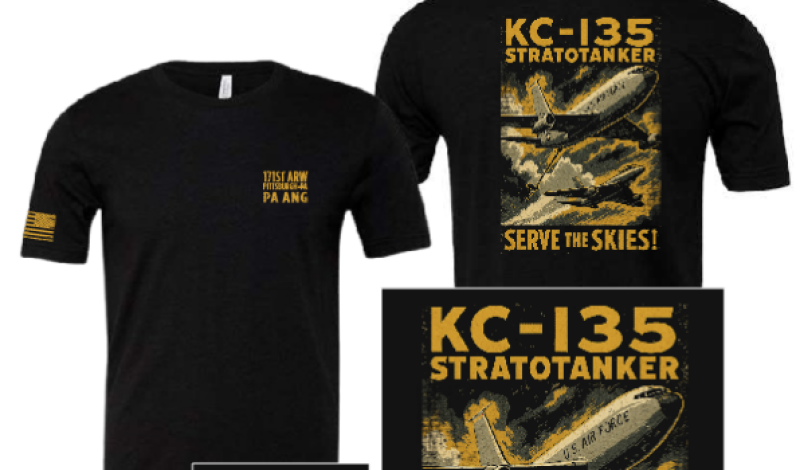
Inside the Creation of AI-Generated T-Shirt Designs
 It’s one thing to talk about using AI to generate designs for custom T-shirts. It’s quite another to get an inside look at how it actually happens. BeeGraphix (Fredericktown, PA), which manufactures custom apparel, let Apparelist peek behind the curtain at how it all goes down.
It all started with the desire of a client, the 171st Air Refueling Wing (a unit of the Pennsylvania National Air Guard), to sell T-shirts at their booth at the 2025 Pennsylvania Air Show. “They wanted it to be designed in the style of a WWII propaganda poster,” notes Davis Slagle, vice president of BeeGraphix. “It was a perfect opportunity to use AI, not to design the t-shirt for us, but to use it to shorten the timeline.”
Slagle handed off the project to his creative director, Julia Saxon. BeeGraphix frequently uses MidJourney for AI-generated images, so Saxon started there. She located an image of a WWII propaganda poster in the right style, then uploaded it to ChatGPT and asked it to analyze the image and create the prompt for input into MidJourney.
The Prompt Before the Prompt
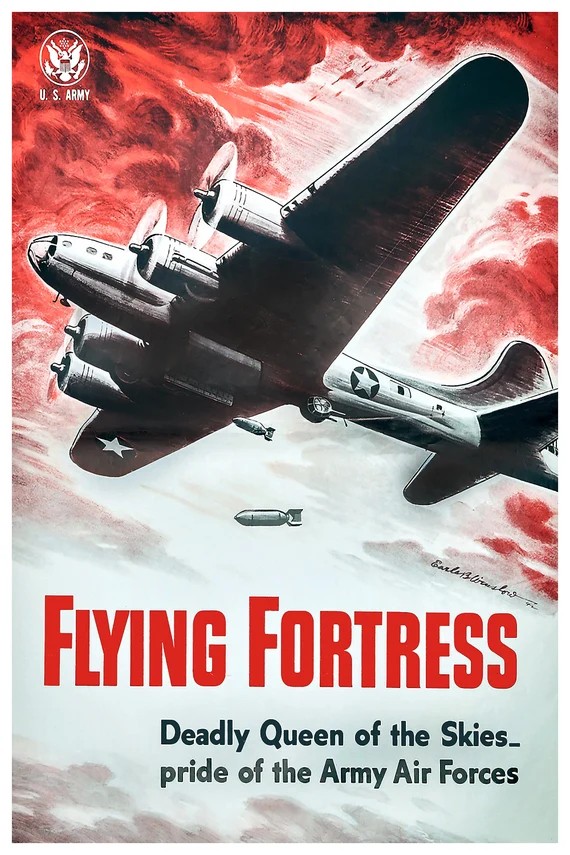
Saxon located an image of a WWII propaganda poster in the right style, then uploaded it to ChatGPT and asked it to analyze the image and create the prompt for input into MidJourney. All images courtesy BeeGraphix, Julia Saxon, and AI
Based on its analysis, ChatGPT suggested the following prompt:
“WWII propaganda poster featuring a dramatic B-17 Flying Fortress in mid-flight, dropping bombs, intense clouds in the background, dynamic perspective, bold red and black color scheme, vintage war art style, high contrast, retro typography, distressed paper texture, heroic and powerful composition, inspired by classic 1940s U.S. Army Air Forces recruitment posters.”
Ultimately, however, BeeGraphix decided not to use the B-17 on the T-shirts. It used the Boeing KC-135 Stratotanker instead. So Saxon gave ChatGPT a new prompt, “Reword the prompt to reflect the plane being a Boeing KC-135 Stratotanker, and the colors are black, gold, grey, and white.”
ChatGPT adjusted the prompt as follows:
“Vintage military propaganda poster featuring a dramatic Boeing KC-135 Stratotanker in mid-flight, refueling another aircraft, intense clouds in the background, dynamic perspective, bold black, gold, grey, and white color scheme, vintage war art style, high contrast, retro typography, distressed paper texture, heroic and powerful composition, inspired by classic 1940s U.S. Air Force recruitment posters.”
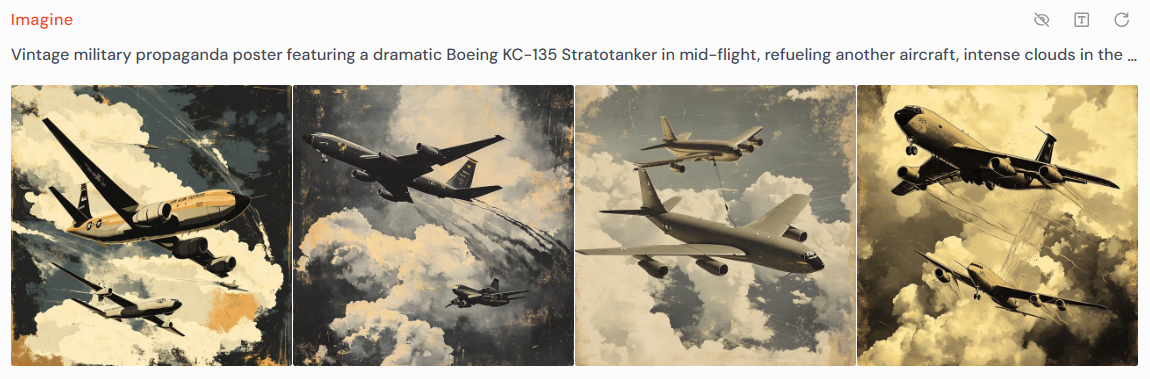
Saxon then took the final, refined prompt and input it into MidJourney’s image generator. From this prompt, Midjourney created four images:
Ditching MidJourney for ChatGPT
While Saxon found these images interesting, they weren’t exactly what she was looking for. So she decided to input the prompt into ChatGPT’s own image generator (which, for the paid versions of ChatGPT, is now based on the highly sophisticated Dall-E 3) and came up with this:
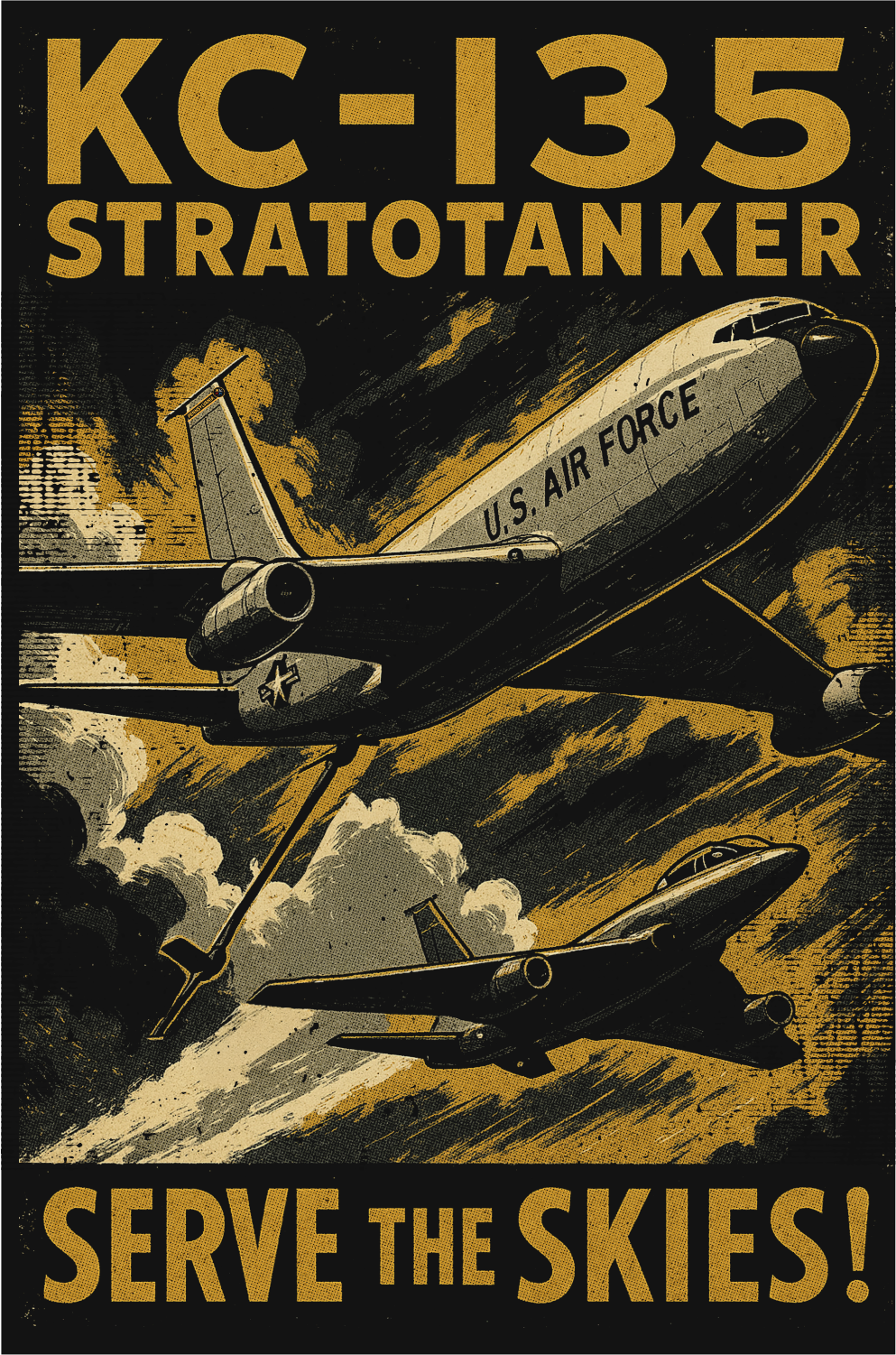
This was more in line with what Saxon envisioned. She could work with this. Next, Saxon took this image into Photoshop to finalize it. “Finalization” included removing the second engine on the right side and moving the air refueling wing towards the back of the plane.
This was the result:
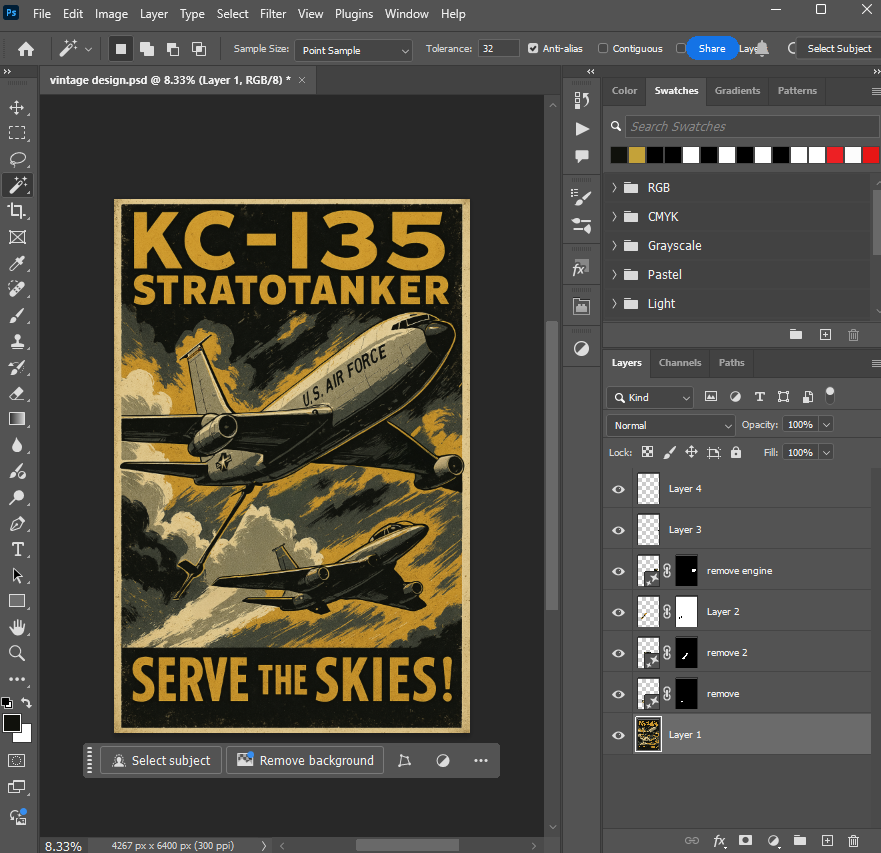
This image was now ready to prep for printing on a T-shirt. “I darkened all of the black too 100% black for easy removal,” notes Saxon. “Then I halftoned the design to go on a black shirt. I also went back in and added a distressed texture to the sides to help the design fade into the shirt a bit more.”
Like this:
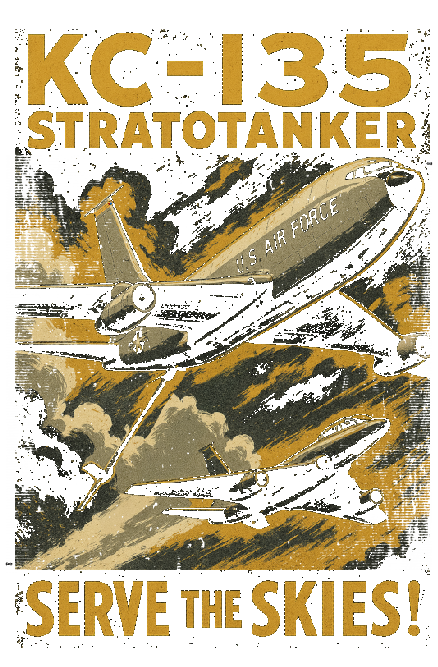
The design was now ready to apply to the T-shirts for the show. Here is the final result:
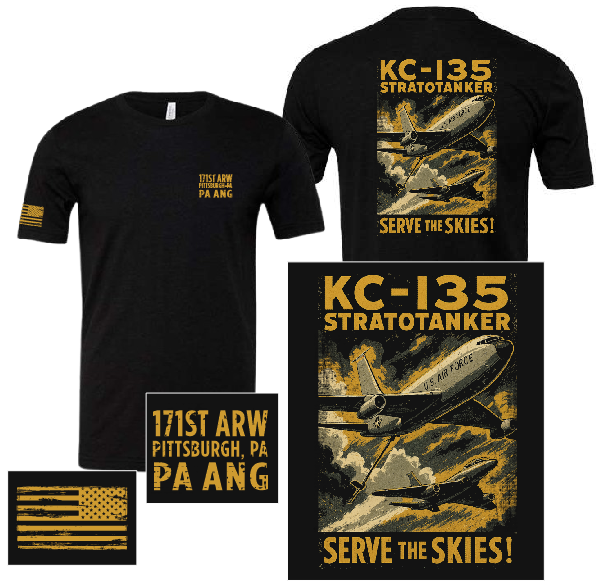
“Everyone was thrilled with how it came out,” concludes Slagle. “Even though we used AI in the process, AI is just a tool in the hands of a skilled designer. The final result rarely looks anything like the original reference image, but being able to use AI during ideation shortens the ‘process’ steps. For this project, it freed Julia to focus her time doing what only a human being can do—design.”


