
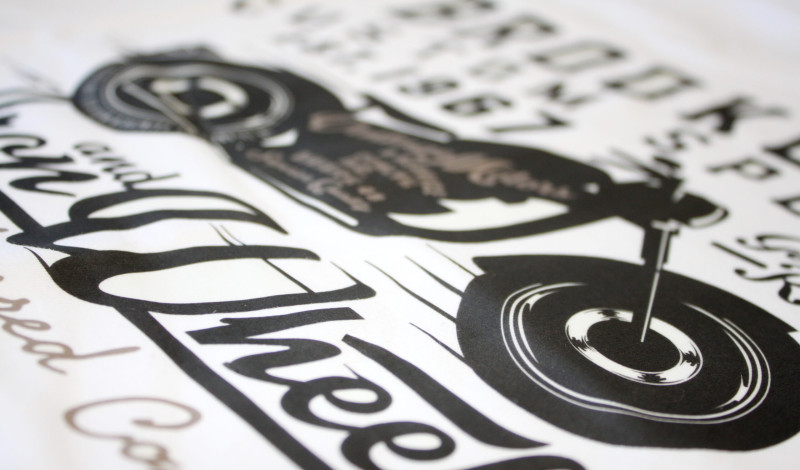
HTV – A Reliable Apparel Decorating Technique for Print-on-Demand
Heat transfer printing techniques offer a variety of time-tested and emergent technologies — screen print, DTG, HTV, and direct-to-film (DTF) — all of which are complementary and can be used in industrial and small-scale applications. In both industrial and small-scale operations, these apparel decoration techniques are used in high- and low-volume production in the print-on-demand (POD) space.
All printing technologies come with benefits and limitations. However, with the proper knowledge and understanding of these printing technologies, you can run a profitable business with a wide range of print decoration finishes and possibilities. HTV is a workhorse in this space, allowing for mass decoration, special effect extras, personalization, and customization.
Basic Benefits of HTV for POD
Sixty-three percent of consumers say they want personalized products. While this is not news to professionals in the POD space, it may be news to those who turn down personalization work because of the perception of low volume associated with it. Understanding the HTV printing processes available will help you make a well-informed decision, whether you’re a creative entrepreneur or someone wanting to personalize your products.
Heat transfer vinyl (HTV), heat transfer material, and iron-on are all names for the same technology. Modern HTV is made of polyurethane film offering a highly durable, long-lasting print when applied to textiles and other substrates. HTV comes in a variety of colors, special effects, textures, dimensional finishes, and designs. High-quality HTV is extremely durable, making it an excellent choice for clothing that is expected to be high quality, is worn frequently, or is exposed to rugged conditions.
HTV used alone as a printed film, discussed further in this article, or used to provide additional graphic interest is a simple process to add to a POD offering.
Basic HTV film — single color, special effect, special property — can be housed in ready-to-cut formats to be used alone or added to a garment already printed with a complementary digital technology such as DTG, DTF, screen print, or sublimation. Having access to and understanding the methods of application of HTV may be the difference between accepting a lucrative project and having to pass on it.
It is easy to understand the benefits and appeal of using special effect HTV. Special effect HTV is all that glitters, shimmers, changes color, provides dimension, holographic effect, or velvety texture. A DTF print-on-demand shop can immediately expand its offering and increase prices by offering sparkly glitter on cheer wear, velvety flocks on children’s wear, and dimensional HTV on sportswear.
Single-color HTV is a core decoration technology used to produce vivid, durable designs for all types of garments and materials. Logo creation, customization, personalization, names, and numbers are the obvious outputs of single-color, CAD-cut HTV. Adding this technology to a POD shop is crucial.
The equipment needed to create the artwork, cut the film, and apply it is likely something every apparel decoration business already has on hand.
Use Cases
HTV allows for wider coverage of textiles to be decorated. There are special HTV films developed specifically for application to diva fabrics including nylon, performance polyester, leather, silk, spandex, and Lycra. There are films with special properties allowing for application to fabrics treated with durable water repellants, which have moisture-wicking properties, are treated with flame retardants, or will be exposed to extreme temperatures and weather conditions. Workwear, survival gear, sportswear, backpacks, and inflatable rafts are only a few of a wide variety of special property materials and finished items that need decoration.
One special garment type or finished material that is notoriously difficult to decorate is sublimated fabric. The process of dying or decorating a garment using dye-sublimation requires heat. Popular decoration techniques may not be an option for customizing, personalizing, or identifying a sublimated garment as the ink will migrate out of the garment and into the transfer. This ink migration will permanently stain and ruin the heat-applied graphics.
The solution for decorating sublimated substrates is to use HTV with special blockout properties that prevent ink migration. The most common technique used to color sports uniforms is sublimation. Uniforms need names and numbers, and sometimes additional designs that before the advent of blockout HTV films were impossible to achieve.
A Word on Film Type
HTV is uniquely available in a variety of blank canvas films that can be printed using solvent, eco-solvent, latex, UV, sublimation, and aqueous inks. The combinations of blank canvas options, special effects, crucial special properties, and ink types provide limitless possibilities for finished design options.
Printable HTV is an exciting, approachable, and easy print technology to add to a print-on-demand offering. Many POD shops will already have the printers and inks needed to produce detailed graphics with clean lines ideal for logos, graphic art, writing, photo images, and graphic art.

The solution for decorating sublimated substrates is to use HTV with special blockout properties that prevent ink migration. | Credit: POLI-TAPE USA
Printable HTV is available in opaque white, transparent, and metallic finishes. Printable films are available with special properties such as blockout to prevent ink migration and reflection to increase visibility. Eco-solvent, solvent, latex and UV printable HTV are the most abundant and available.
There are polyurethane films as well as heat transfer flocks and polyester materials that can be printed using sublimation ink. The newest and, in my opinion most interesting, films available are aqueous ink printable films, which offer eco-friendlier print options and often pass tough standards for infant and toddler clothing and bedding.
Printable HTV is available for hard-to-decorate fabrics or garments with special requirements. Items that require flame retardant contents can now be decorated using HTV that’s tested and certified to international standards for application to these crucial garments. Like single-color HTV, printable films are available for many difficult-to-decorate fabrics such as nylon and treated fabrics where other decoration techniques fail.
HTV in Print-on-Demand
HTV is not a competitive technology to DTG or DTF; instead, it is complementary. Implementing HTV decoration into a POD offering will increase the number of projects that can be completed. Exploiting the nature of HTV film and the wide offering available of unique colors, patterns, effects, finishes, and usages will add margin to finished item costs and increase profitability.
The set-up costs associated with HTV decoration are low. When the golf tournament project that just finished at the last minute adds a sponsor, it is no effort to print, cut, and apply the sponsor’s logo to the wide variety of blanks already decorated without additional set-up costs. Imagine a happy customer after going through a cringe-worthy situation such as this. Anything is possible and economical when HTV is part of the POD offering.


