
Event Recap: WB/WEEK Doesn’t Disappoint
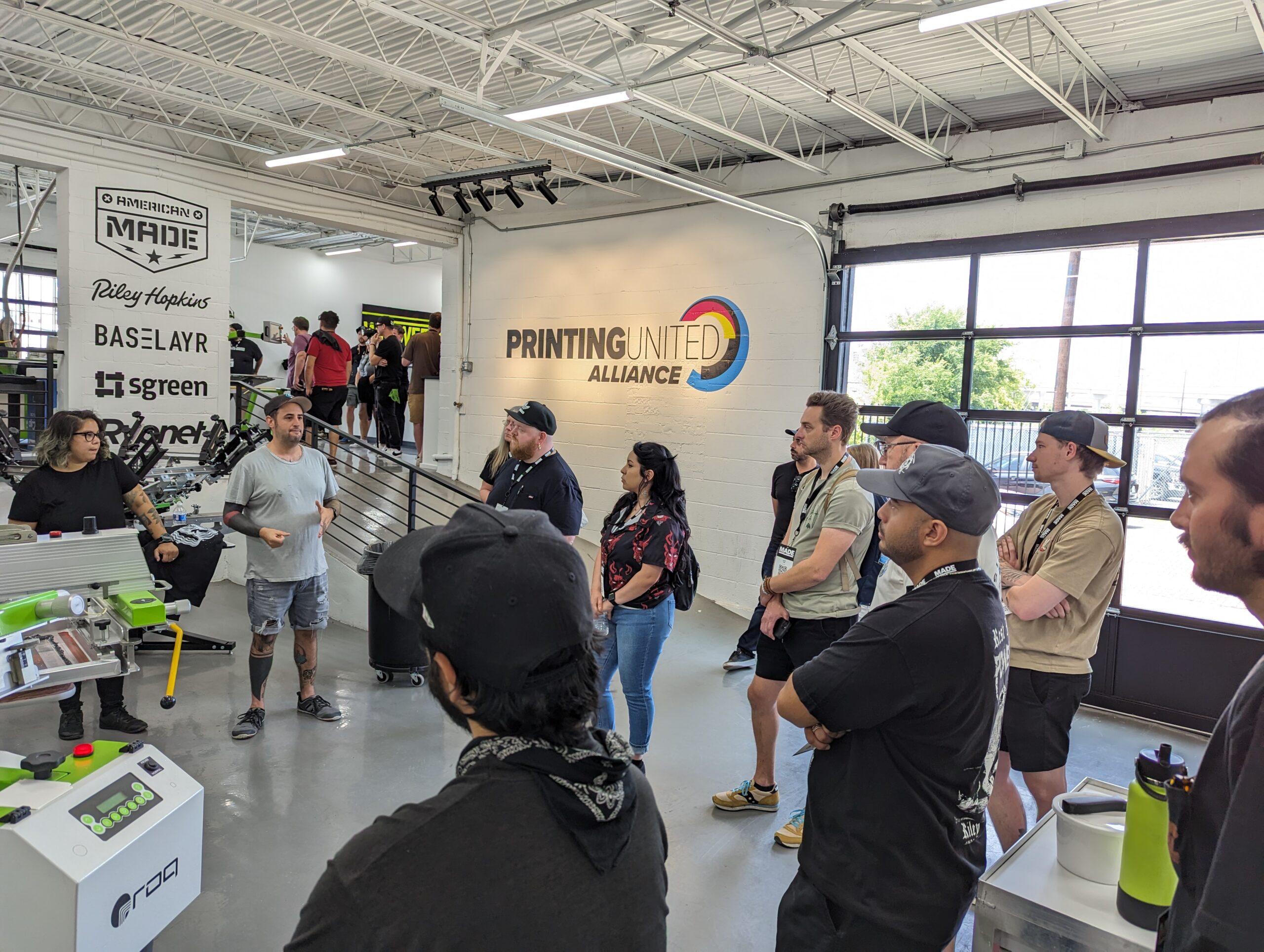
Eric Solomon, Night Owls, gives a demo at WB/WEEK. | Credit: Toni McQuilken
On July 19-22 in Ft. Worth, Texas, apparel decorators from around the country came together to learn more about water-based printing at the annual WB/WEEK event hosted by MADE Lab and sponsored by PRINTING United Alliance. And the high level of education and hands-on experience did not disappoint.
This year, the event was split into two two-day sections:
- WB/BASIC, which covered the fundamentals of screen printing in general, and water-based inks in particular.
- WB/CAMP, which was a more advanced look at some of the techniques and tips needed to get the best results using these inks.
It also had a host of industry sponsors on hand to both lead sessions, as well as answer questions attendees might have. This year they included Avient, Matsui, Green Galaxy Systems, SAATI, GSF, PMI Tape, SanMar, BELLA+CANVAS, Supacolor, ROQ, Inktavo, Hirsch Solutions, and Reece Supply Co.
All four days were packed with incredible content, including both educational sessions on the main stage, as well as hands-on experience on the equipment, with attendees making several shirts each day using different inks and techniques to take home and compare. Additionally, they were able to see equipment such as an automated reclaiming system, as well as a precision laser screen making system, in action, and ask questions from the manufacturers about how these advances could fit into their own operations.
Here’s a look at just a few of the things attendees learned at this year’s event.
The Blanks Behind Your Print
As part of the WB/BASIC portion of the event, Ryan Moor, partner at MADE Lab and founder of Ryonet and Allmade; along with Brett Bowden, co-founder of MADE Lab and owner of Printed Threads, took to the stage to educate attendees about things they should look for when it comes to choosing shirts for screen printing, especially when using water-based inks.
They highlighted a few different elements to keep in mind:
First, is fabrication. Are the fibers natural or synthetic — cotton is great for printing water-based inks, but polyester tends to not accept the ink. Blends can work, they noted, but it can create a heathered look, which might be what the client is looking for, but if not, could cause disappointment.
Takeaway tip: Make sure you know exactly what the makeup of your shirts are, and don’t be afraid to test every new batch that comes in so you know how they will work on the press.
Next, they noted printers should pay attention to the dyeing process. It’s important to understand if the shirt itself has been dyed, and if so, what types of dye were used in the process since it can impact dye migration when it gets onto the press.
Takeaway tip: If the tag in the shirt is white, it probably won’t migrate, but if the tag is the same color as the shirt, you might have issues and will want to run a few additional tests to ensure you plan your printing accordingly.
“Ghosting is one of the spookier things that can happen on the press,” Bowden joked. “It just shows up.” Like with migration, ghosting is a case of the dyes in the shirt having a chemical reaction with the inks used, and when finished shirts are stacked, creating a “ghost” reverse image on the backside of the shirt above it. This is another issue that can be easily fixed if you are aware of it by ensuring the shirts are completely cool before stacking them, but you won’t know it’s a problem unless you test first, or you have a batch ruined and have to re-print.
Finally, Moor stressed that all screen printers should watch YouTube videos of how shirts are made — it will make you a better printer, he said, because you will have an understanding of how that garment was put together and the different processes used to get it there. “It really helps you set customer expectations of what it will look like in the end,” he noted.
Important Factors When Making Screens
One great session during the advanced portion of WB/CAMP took a closer look at the important factors to keep in mind when creating screen for water-based printing. It was led by Keith Perkins, technical manager at SAATI.
“If you do your mesh prep properly up front, you will have a lot fewer headaches on press,” he told the audience. “We all need to spend more time on being better screen makers in order to be better screen printers. Don’t settle — perfect the art of making the screen.”
There are six important things to consider when preparing these screens, he noted:
- Mesh Choice — He noted that the smallest details in the design must be a minimum of two threads, and two mesh openings to reproduce, which impacts which screens you choose. For example, a 50 DPI/LPI image must be printed on a 200 mesh screen or higher. Lower counts will result in a significant loss of detail.
- Mesh Preparation — When it comes to the preparation of the mesh, first make sure it has been properly degreased. With water-based inks, this is a critical step to ensure a proper adhesion of the inks where you want them — and not where you don’t.
- Proper Emulsion — When it comes to getting the right emulsion for your screen, Perkins noted that every ink manufacturer does have a product that will work. He stressed that attendees shouldn’t be afraid to experiment to find the one that works best for their equipment, environment, and ink choices.
- Coating Procedure — For the actual coating process, Perkins said that having that high-solids content in the emulsion will make a difference, and then using the rounded edge of the coater, rather than the sharp edge, is the best practice for most applications. Then dry horizontally with the squeegee side up.
- Correct Exposure — Ideally, Perkins noted, you want a system that can evenly expose the entire screen at the same time, which can be difficult to achieve with some light sources. This is where testing comes in again — take the time to really experiment with your equipment, since everything from the humidity levels in your shop, to the type of light bulbs you’re using can have an effect on the end result.
- Post Exposure — Post exposure, for example, setting your screens out in the sun if you live in a bright climate, can help harden screens a bit more from where they are when they come out of the main exposure. However, he cautioned, they can’t fix underexposure. This process will only help harden screens further for longer press runs, not bring out more details in the image.
These were just two of the sessions and demonstrations attendees were able to experience at the event this year. One of the key takeaways that threaded throughout the event was stressing that when it comes to water-based printing, everyone needs to become a mad scientist. Experimenting with everything from the ink choice, to the additives, to the drying time, to the exposure levels, to the screen hardening, and even how the screen is taped can all vary from shop to shop.
Things like humidity can impact how well the inks perform on press, and how quickly they dry, and there are different things that can be added to inks to compensate, but what works for one shop — even in the same city or state — won’t be optimal for another. The ink manufacturers stressed that they have consultants who can help get you started, but it can be a long process of trial and error to get the exact formulas that will work best for you. The most successful water-based screen printers never stop experimenting, and never stop improving.


