

Bass Pro Sues North Carolina Apparel Brand for Trademark Infringement
There’s a common misconception in the apparel decoration and custom goods industries that small businesses can fly under the radar when it comes to trademark infringement and large companies don’t bother with taking legal action. The latest infringement news proves that’s not the case. Outdoor retailer Bass Pro Shops files a lawsuit against a North Carolina apparel brand for unlawfully using trademarks, brand colors, and other identifying marks.
Bass Pro Intellectual Property LLC vs. Ascend Apparel LLC
The court document, shared by Law.com, states:
This is an action for trademark infringement and dilution, unfair competition, and deceptive trade practices arising from Defendants’ unlawful use of Bass Pro’s trademarks, color schemes, and other source-identifying indicia on Defendants’ apparel and other merchandise.
In the document, Bass Pro maintains that it has marketed and sold apparel under its Ascend brand since 2010. Bass Pro’s federally registered trademarks include the Ascend name and marks for various goods from bags and apparel to camping gear. The U.S. Patent and Trademark Office issued the trademarks in 2010, 2011, 2012, and 2015.

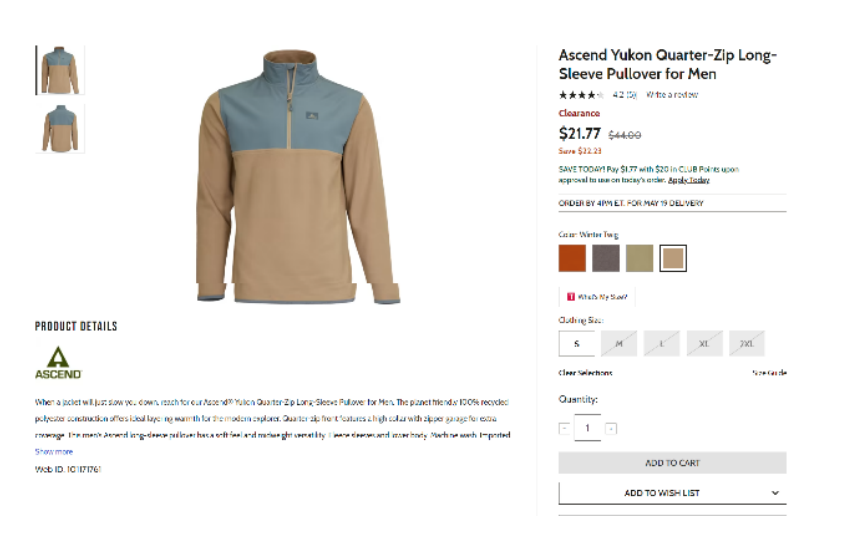
Items from Bass Pro’s Ascend Apparel line. | Credit: Law.com
“Bass Pro’s customers and the public, in general, have come to know and recognize the Ascend Marks and associate the same exclusively with Bass Pro and/or goods sold or offered by Bass Pro,” states the complaint. Further, Bass Pro argues that it has established “substantial goodwill” associated with the marks.
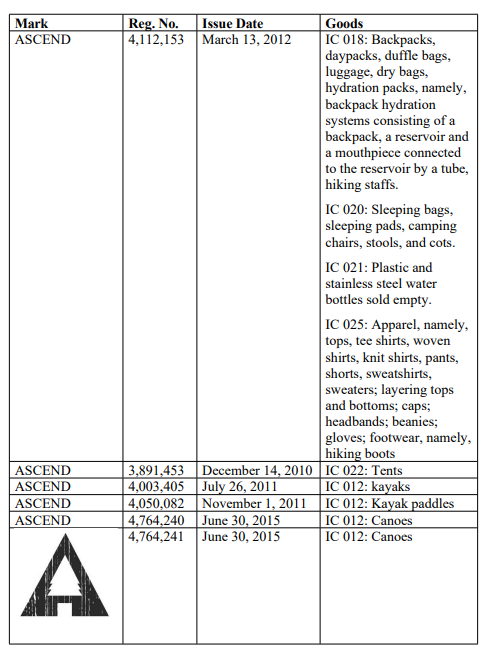
The registered Ascend Marks. Credit: Law.com
Ascend Apparel’s Infringements
Bass Pro alleges that following its adoption and registration of the marks, the defendant Ascend Apparel sold apparel and other items that infringe on Bass Pro’s rights and marks without consent or permission. Sales happened on the brand’s website ascendapparelllc.com.
“Defendants’ merchandise incorporates the Ascend Marks or confusingly similar imitations thereof,” the document states. “Consumers are likely to believe that Bass Pro would naturally include in its offerings — or expand its offerings to include — designs similar to those produced by Defendants.”

Items for sale on Ascend Apparel’s website. | Credit: Law.com
The plaintiff Bass Pro argues that the defendants should have been aware of the registered trademarks. “A simple search on the U.S. Patent and Trademark Office website would have shown Bass Pro’s federal registrations for the Ascend Marks, and an internet search would have shown Bass Pro’s extensive prior use in commerce,” the document states.
The document also notes that Bass Pro notified Ascend Apparel of its exclusive rights to the Ascend Marks before filing the lawsuit and asked that it stop using the marks in its apparel and merchandise. “Defendants have nonetheless continued using the Ascend Marks and declined to engage in any substantive dialog with Bass Pro,” states the complaint, and the defendants have continued to promote said products via social media.
What Happens Next
Bass Pro demands a jury trial and asks for relief as follows:
- The defendants be prohibited from further infringement of the Ascend Marks or any other trademark, service name, logo, design, color scheme, etc., in connection with Bass Pro’s goods, clothing, or services.
- An order requiring all of Ascend Apparel’s products and advertising materials using Ascend Marks to be seized, impounded, and destroyed.
- An accounting/judgment against the defendants for Bass Pro’s incurred damages and all profits received by Ascend Apparel due to unlawful conduct for products violating Bass Pro’s rights.
- Treble and punitive damages, as well as an award to Bass Pro for costs associated with attorney’s fees.
The complaint was filed on May 31. No information was shared about a court date at this time, but according to the U.S. Patent and Trademark Office website, “it can take years before a court delivers a decision.” Even then, there could be appeals, adding further time and expense. Needless to say, it could be a long road ahead. The case stresses the importance of legal fundamentals — a topic Apparelist will explore more in the future.


