
Adding an ERP System to Your Decorated Apparel Business
How Business Management Software Benefits Your Shop
Many businesses in the apparel decoration industry rely on inefficient tools such as Excel spreadsheets, handwritten orders, or basic accounting software like QuickBooks to maintain the actual business side of their shops. While these tools may track cash flow, they do not integrate all the necessary details.
For example, it can be difficult to quickly find a previous order for a customer and access information such as the blank used, the ink used, and the size of the image. We’ve found that this crucial information is often stored in someone’s memory, often referred to as “tribal knowledge.”
This problem is not unique to the apparel decoration industry — it’s common in any industry where data management practices vary.
The idea of implementing comprehensive business management software may seem daunting. Perhaps your business has managed to operate successfully by taking orders through any means such as napkins, faxes, or phone calls. However, it’s important to consider whether this inefficient approach is sustainable in the long run.
How can you be sure you’re truly profitable, and what happens if you need to pivot your business strategy? By familiarizing yourself with the concept of business management software, you can gain valuable insights into whether your business is ready to take the next step to optimization and scale up.
Evaluating Your Business Needs
The apparel decoration industry tends to follow a standard process similar to other printing segments:
- A customer inquiry leads to a discussion and possibly a quote, which is then approved and scheduled for production.
- If inventory is insufficient, blanks are ordered and added to the schedule.
- After production, items are added to inventory or prepared for shipping, with packing and labeling followed by invoice creation.
This end-to-end process is known as “quote-to-cash.”
How easy and efficient is your quote-to-cash process currently? How many time-consuming manual steps are involved? Are there duplicate data entry points? Did you make a profit? Is it easy to onboard new staff to your process? And, most importantly, how many orders can you process within a day, a week, or a month? These are crucial questions to consider when evaluating your business’s readiness for growth and scalability.
Enterprise resource planning, commonly referred to as ERP, is a software solution designed to streamline and integrate all business processes. The roots of ERP can be traced back to the 1960s when J.I. Case, a manufacturer of tractors and construction machinery, collaborated with IBM to develop one of the first material requirements planning (MRP) systems. Since then, many large manufacturers have created their own MRP solutions.
In the 1980s, ERP systems reached a significant turning point as they expanded beyond inventory and production. By 1990, the term ERP was coined by Gartner, a research firm, acknowledging that many businesses — not just manufacturers — were utilizing this technology to optimize the efficiency of their entire operation and driving down costs.
Modern ERP Systems for Apparel Decorators
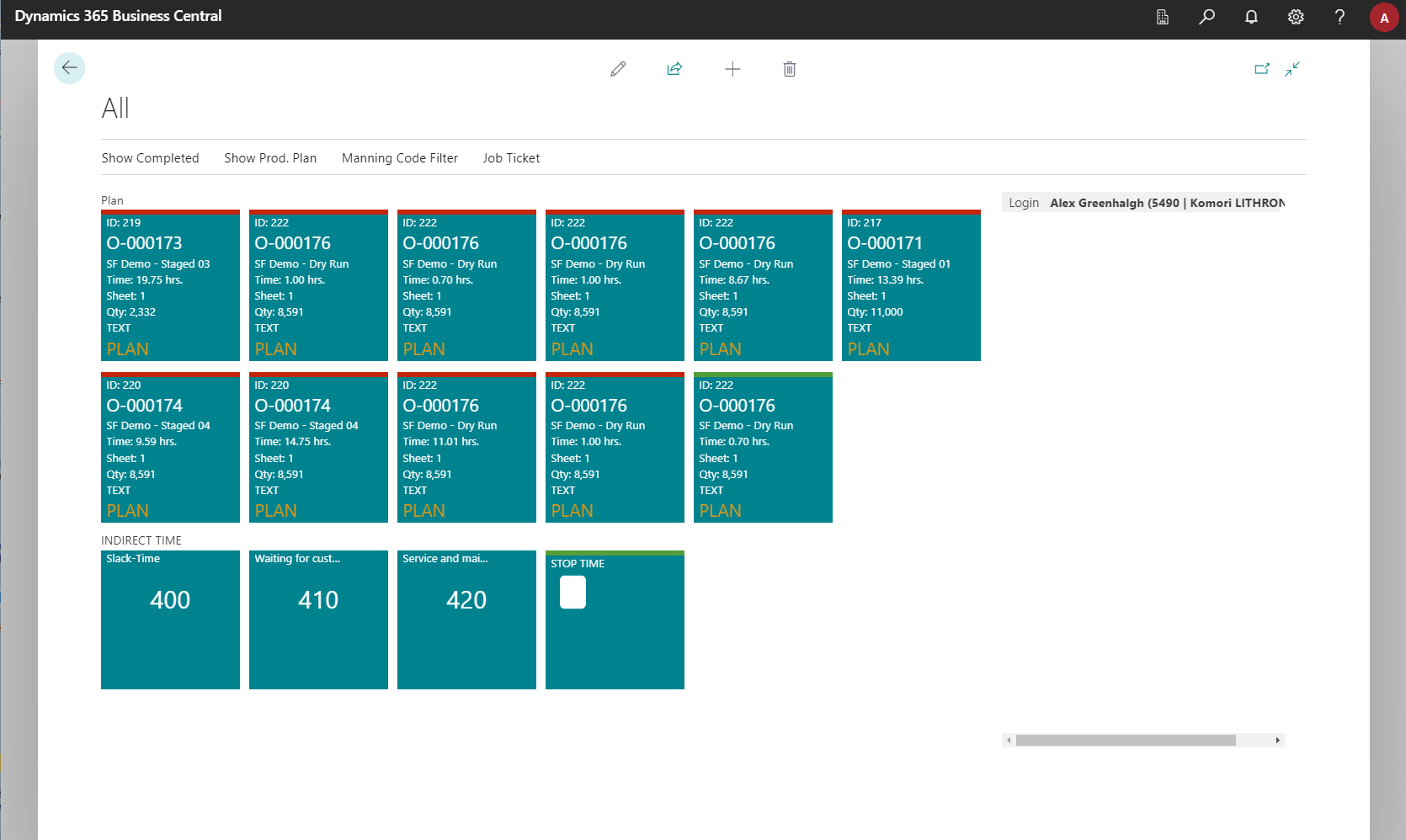
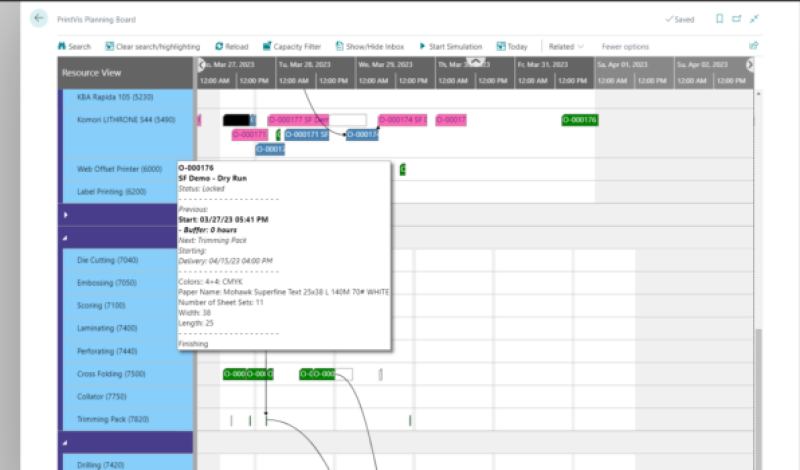
ERP systems ensure that information entered by planning and scheduling departments is instantly available and up to date for the shop floor and shipping departments. | Credit: Clients First Business Solutions
Apparel decorators can greatly benefit from modern ERP systems, which offer a variety of features to streamline operations. With the ability to create purchase orders for blanks specific to jobs, an ERP system ensures that the right location and machine resources are used for each job.
Additionally, an ERP system provides a robust inventory management system for inventoried blanks, allowing you to easily track variants of sizes and colors within a single item record. This reduces confusion and order entry time while providing full visibility of your supply chain down to the smallest details.
By bringing communication together into one platform across all departments, an ERP system ensures that information entered by planning and scheduling departments is instantly available and up to date for the shop floor and shipping departments. Machine operators have current and accurate job parameters at their fingertips, while logistics operators have current and accurate packing and shipping instructions.
An ERP system also provides account management staff with powerful tools, such as a coded inventory of art files, and flexible and rapid order entry via templated job creation and Web2Print order consumption. Overall, implementing an ERP system can enhance the operations of your entire business and improve your bottom line and customer service.
Modern ERP applications are typically cloud-based, which means you can access your system from any device with a browser. Usually utilizing a monthly subscription, you’ll receive automatic updates, upgrades, server maintenance, and security.
Plus, mobility is available for those who need it. Many ERP systems offer app versions, making it easy for users to access the platform on the go without being tied to a workstation. In fact, many people can perform a large portion of their job from a phone or tablet.
When it comes to technology, apparel decorators readily embrace the latest heat-transfer vinyl or digital printing machine as tangible tools. However, the high value of business management or ERP software may not be as immediately apparent since it is not something you can physically create with. Nevertheless, it is crucial because it provides valuable knowledge and data that can lead to informed business decisions. In other words, while knowledge is power, ignoring the potential benefits of ERP software means missing out on valuable opportunities for growth and improvement.
Business Management Software Benefits
ERP technology is revolutionizing the print industry, albeit quietly. It has become an essential tool for businesses looking to stay relevant and grow. Implementing ERP software can feel like a daunting task and may initially cause business disruption. The key is to find a reliable value-added reseller (VAR), such as Clients First Business Solutions, who can help guide you through the process. Their expertise will help mitigate risks, manage the project efficiently, and deliver the expected functionality within the agreed-upon timeline and budget.


