

University of Michigan Alum Gets Cease and Desist Related to T-Shirts
University of Michigan alum and Tennessee Titans football tackle Taylor Lewan is caught up in an unlicensed merch snafu. His Barstool Sports-owned podcast “Bussin’ With The Boys” (BWTB) received a cease-and-desist letter from the University of Michigan regarding T-shirts promoted and sold by the podcast, which he co-hosts with University of Nebraska alum and NFL linebacker Will Compton.
The podcast covers various topics, including exclusive NFL content and stories, guest episodes (including Michigan football coach Jim Harbaugh), and hot takes.
Lewan took to Twitter as soon as he heard the news, stating in a video post:
“Am I a little frustrated with the University of Michigan? I’d be lying if I said I wasn’t. Nebraska does want to do a licensing deal with ‘Bussin’ With the Boys.’ They want to put us in their stores, and it’s amazing to see Nebraska buying into the culture of ‘Bussin’ With the Boys’ and what we’re trying to do for that program. We’re also trying to help out the program of University of Michigan.”
Lightning T-Shirts
As with many podcasts, BWTB sells merch, including everything from branded drinkware and hats to T-shirts. Some of the Ts in its online store feature lightning bolt graphics and mascots similar to those that represent well-known universities, like Texas Christian University’s Horned Frogs or the University of Iowa’s Herky the Hawk.
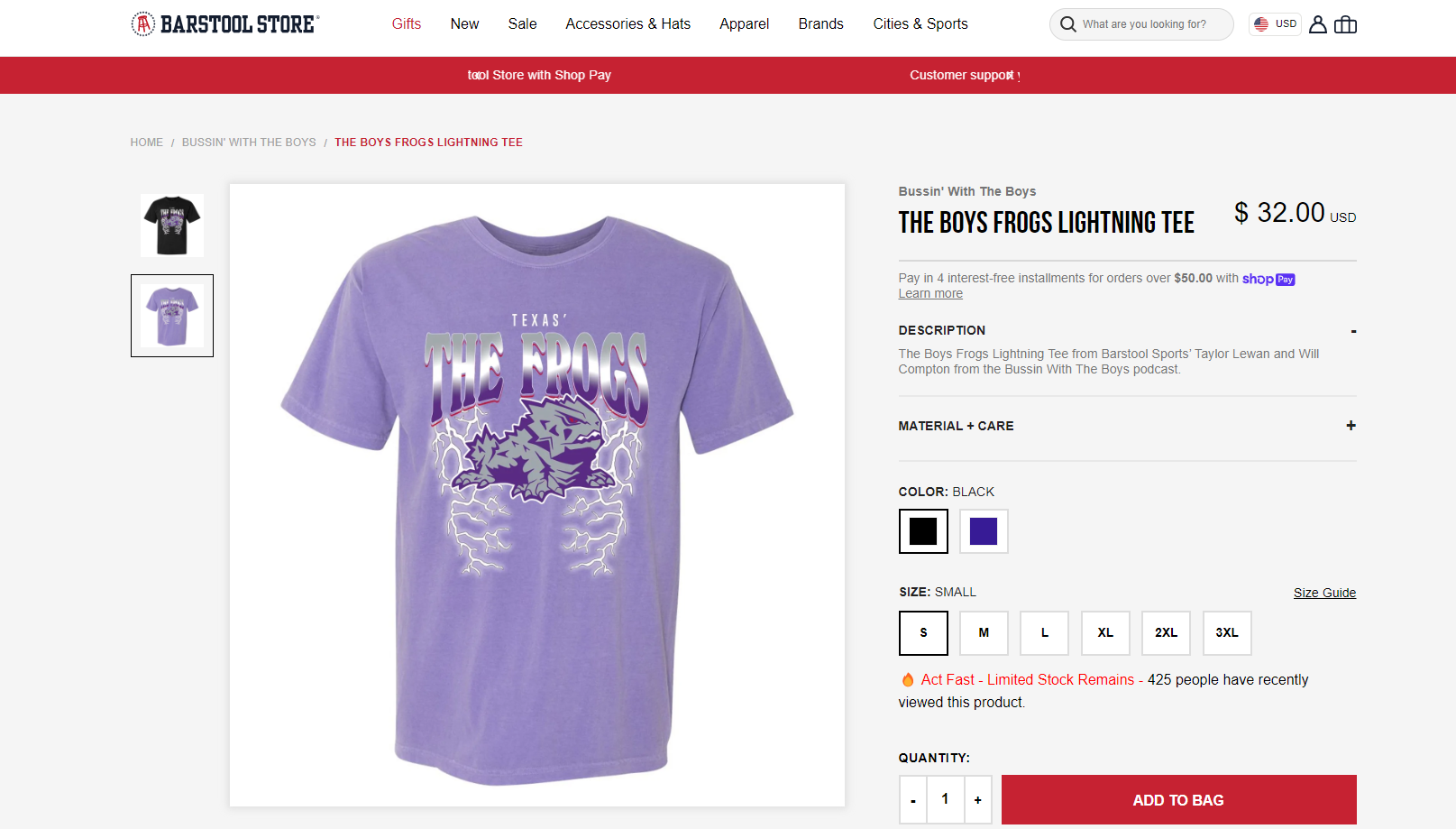
Credit: store.barstoolsports.com
According to MLive.com, a Michigan news website, the merch in question includes “a white T-shirt that read ‘Michigan’s The Boys’ in yellow and blue writing and a cartoon wolverine, an apparent trademark owned by the University of Michigan, with ‘BWTB’ printed on the cap.”
If you’re looking for the shirt, it was pulled from the Barstool Sports website, but MLive.com says it retailed for $32 — the same price as other “Lightning Tees” currently posted on its site.
“It hurts when your alma mater gives you a C&D …,” Lewan says in his Twitter video, adding that the situation breaks his heart. “We put ourselves out there, we love these guys, we like to think they love us back, but it just seems like a hassle sometimes.”
Trademarks and Licensing
While Lewan is hopeful BWTB can “work something out” with the University of Michigan, the cease-and-desist letter highlights the importance of understanding intellectual property, trademarks, and licensing. Although it can be perceived as a hassle, it’s something every apparel decorator and brand needs to be aware of when designing and printing merch for sale.
The University of Michigan’s Trademarks and Licensing webpage outlines what qualifies as a trademark, who needs a license to produce products with those trademarks, and what types of products can be licensed. According to the site, a trademark qualifies as “any name, word, symbol, or device used to identify the goodwill and/or services of the University of Michigan,” which includes “artwork and/or graphic representations.”
The university’s program includes state and federal registrations of “all pertinent designs and marks,” which have been in place since 1980. The aim was to “protect and control the use of all marks” and ensure no damage to the university’s image. Further, the website states that manufacturers making products with the university’s marks must get a license to do so before selling anything. Additionally, any retail outlet carries the responsibility of ensuring the merchandise they sell is properly licensed.
“The University has the authority to approve or disapprove any product submitted,” the Michigan Trademarks and Licensing webpage states. “No product using the University’s marks may be produced without the approval of a representative of the University of Michigan Licensing Program.”
With these rules outlined, it begs the question: Does the BWTB Michigan merch infringe on these policies?
This isn’t the first case of a retailer using the likeness of a university or sports team, and it certainly won’t be the last. In July 2022, a case between Penn State and Vintage Brands highlighted these very issues and called into question what’s considered intellectual property.


